
Stretch hood is usually the first system to evaluate when a pallet line needs heat-free film application, repeatable automation, and a hood that can maintain containment as a compatible load settles. Shrink hood may still fit when thermal contraction around difficult contours is valuable and the product, primary packaging, and facility can tolerate a controlled heat process. Neither choice should be approved from a generic film thickness or machine brochure. The safe decision combines the exact film, equipment settings, pallet geometry, distribution hazards, total cost, and results from representative-load trials.
How Stretch Hood and Shrink Hood Work
For polymer background, consult the NIH PubChem polyethylene overview before comparing finished-film claims.
For polymer background, consult the NIH PubChem polyethylene overview before comparing finished-film claims.
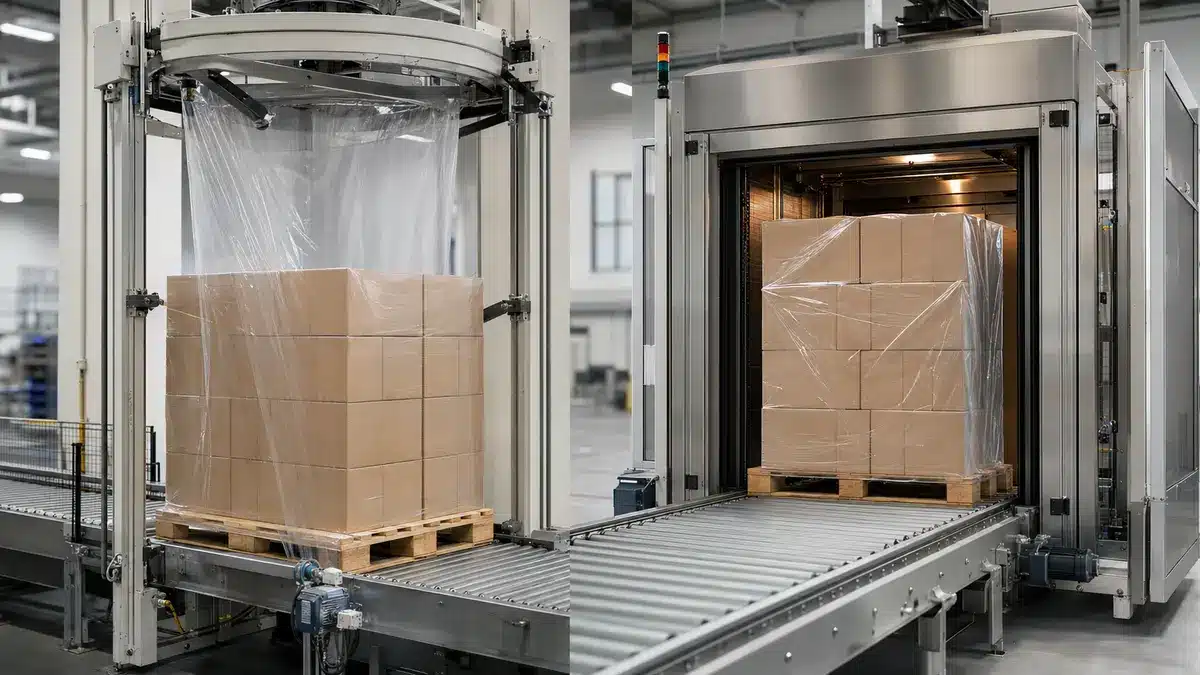
The two systems may both start with tubular film, but they generate force in different ways. That physical distinction affects the equipment, the product’s exposure during application, the film properties that matter, and the variables that must be controlled during qualification.
Stretch hood: mechanical stretching and elastic recovery
A stretch-hood machine opens a tubular film, forms a hood to the required length, mechanically stretches its circumference, and lowers it over the pallet load. When the stretching elements release the film, elastic recovery draws the hood toward the load. Depending on the selected configuration, the hood can cover the top and sides and can be positioned around the pallet base.
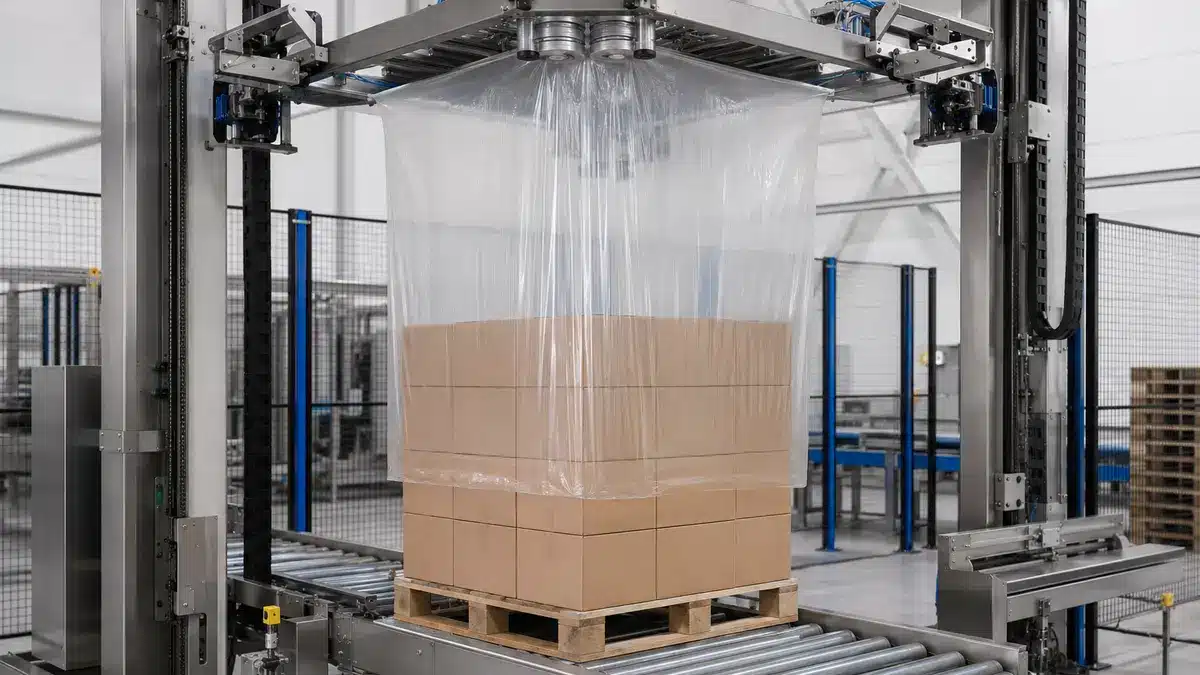
The resulting containment is not.
Shrink hood: thermal contraction around the load
A shrink-hood process places a comparatively loose tubular hood over the pallet and then applies controlled heat The film contracts as its molecular orientation is released drawing the hood toward the contours of the load The result depends on the film’s shrink behavior in both machine and transverse directions the applied temperature-time profile hood size sealing airflow.
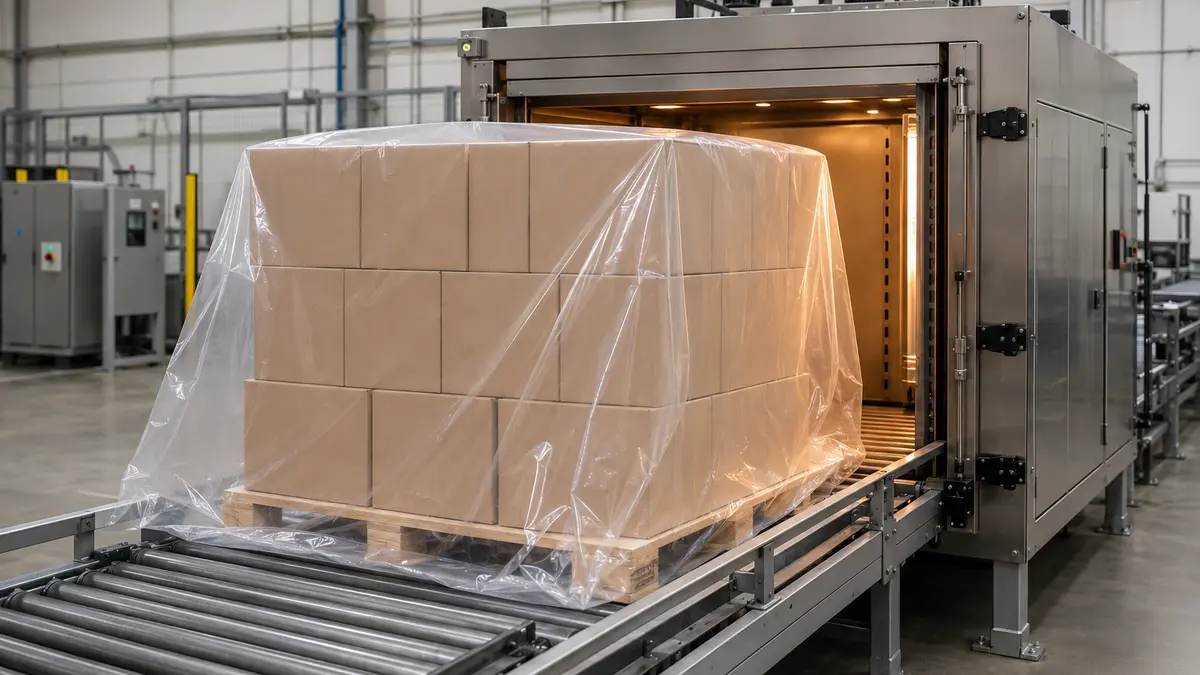
Thermal conformity can be useful but a close visual fit does not by itself prove load stability or protection Uneven heating can produce local thinning wrinkles incomplete shrink holes or inconsistent force The buyer must also confirm the heat tolerance of the product and every primary or secondary packaging material exposed during the cycle A laboratory shrink value is meaningful only with.
Side-by-Side Comparison for Technical Buyers
Use the table as a screening tool. Each row identifies a likely difference and the evidence needed before it becomes a purchase conclusion.
| Comparison axis | Stretch hood | Shrink hood | What the buyer should verify |
|---|---|---|---|
| Force-generating mechanism | Mechanical stretching followed by elastic recovery | Heat activates film contraction around the load | Applied settings, resulting force distribution, and performance after conditioning |
| Product heat exposure | No film-shrinking heat step | Product and packaging are exposed to a defined heat process | Maximum surface and internal temperatures at representative locations |
| Fit to load geometry | Requires a compatible hood size, stretch window, and corner profile | Can draw toward contours when heating is sufficiently uniform | Regular, irregular, recessed, protruding, and worst-case load trials |
| Response to settling | Elastic recovery may help maintain contact as a compatible load settles | Final behavior depends on the shrunk film, load movement, and relaxation | Retained containment after storage, vibration, handling, and settling |
| Equipment and utilities | Hood forming and mechanical stretching equipment; no shrink tunnel or burner | Hood application plus a gas or electric shrinking system, depending on design | Installed power, fuel, ventilation, heat management, guarding, and line footprint |
| Film specification | Stretch, recovery, puncture, tear propagation, seal, and friction behavior matter | MD/TD shrink response, shrink force, thermal exposure, seal, and puncture behavior matter | Exact construction, dimensions, tolerances, methods, directions, conditions, and units |
Important: No row proves that either system is better for a specific pallet. Film gauge alone is not a fair comparison, and a visually tight hood is not evidence of safe distribution performance. Compare complete, approved configurations under the same acceptance criteria.
Where Stretch Hood Is Usually the Better Starting Point
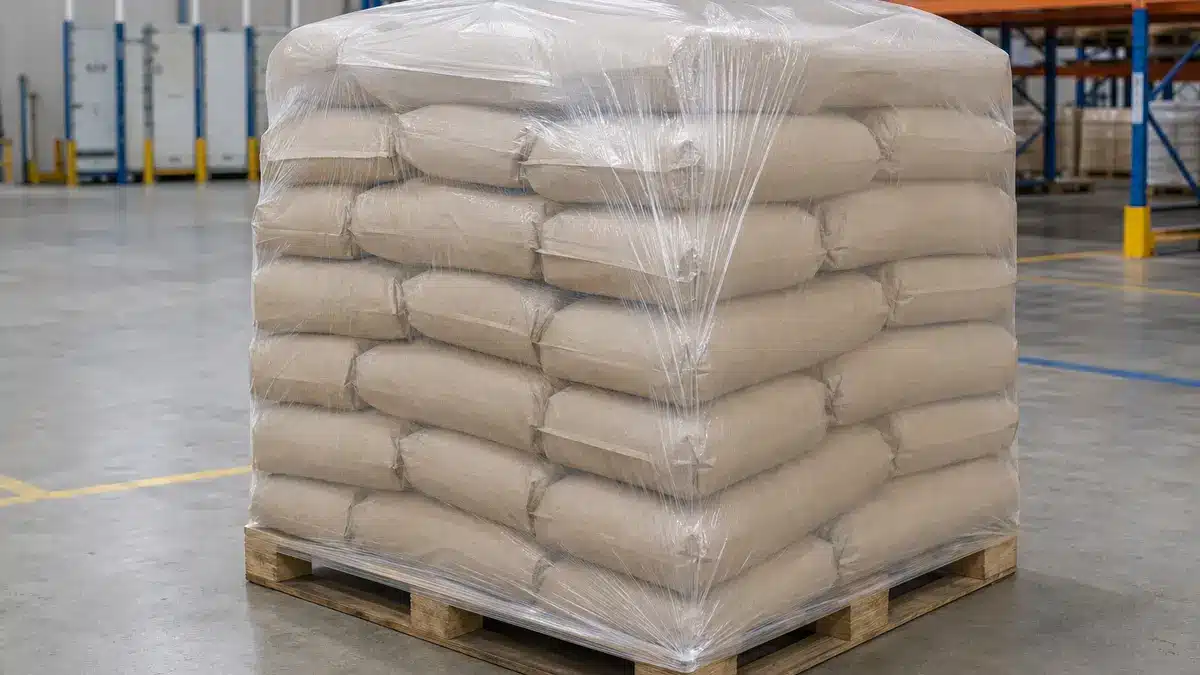
Stretch hood is commonly the stronger first trial candidate when the operating brief favors a cold application process and the load fits a repeatable stretch window. Useful screening conditions include:
- The product, label, adhesive, coating, or primary packaging has a restricted or uncertain heat tolerance.
- Boxed or bagged loads have a reasonably controlled footprint and may settle during storage or distribution.
- The line needs automated format handling across a defined range of pallet heights or sizes.
- Top-and-side coverage, visual inspection, or barcode reading is required, subject to the actual hood design and film optical properties.
- The facility wants to avoid adding a gas-fired or electrically heated shrinking stage and its associated utility and heat-management requirements.
- The plant can control sharp edges, protrusions, pallet condition, film centering, and the stretch program.
The main limitation is compatibility, not a lack of promotional advantages. Stretch hood can fail when the selected tube size is wrong, the film’s stretch and recovery window does not match the machine, corners initiate punctures, the load deforms under compression, or the hood cannot engage the pallet as intended. Very irregular loads can cause bridging and concentrated stress. A successful trial therefore needs more than a sample that looks acceptable immediately after application; it needs retained performance after the expected conditioning and handling sequence.
Where Shrink Hood May Still Fit
Shrink hood remains a credible option when controlled thermal conformity solves a load problem that a practical stretch-hood configuration does not. It may deserve a trial when:
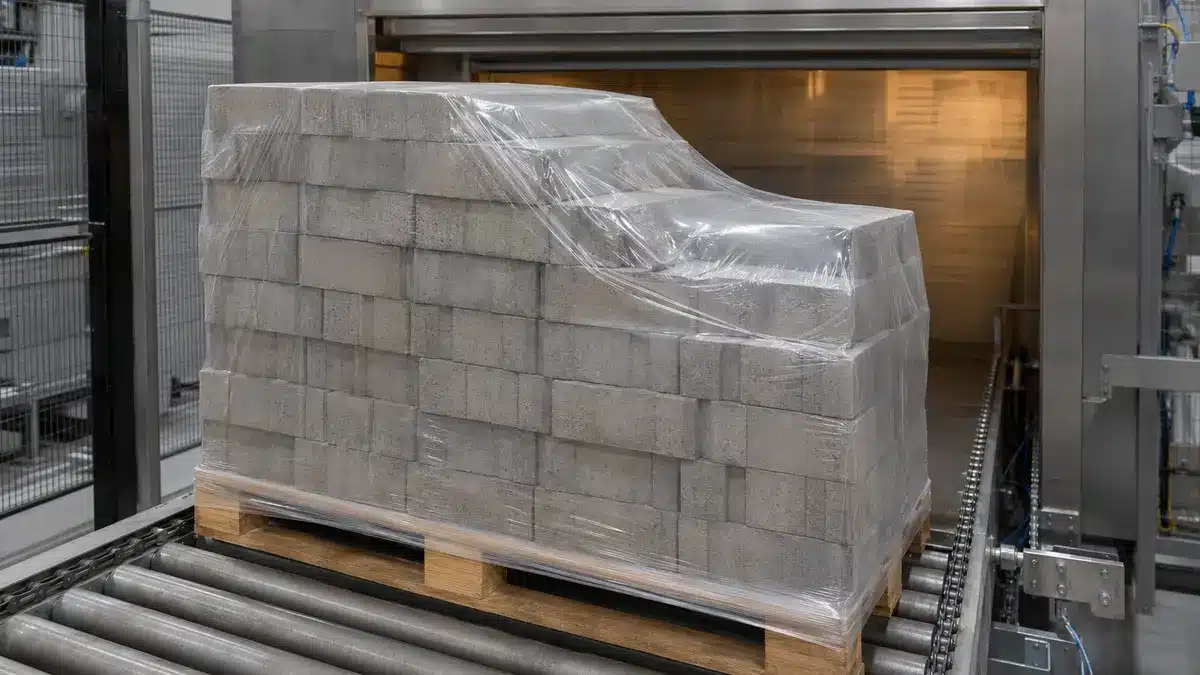
- The load has deep recesses, changing cross-sections, or a footprint substantially smaller than the pallet, and drawing the film toward those contours has a defined functional value.
- The product and all exposed packaging components can tolerate the measured heat profile without distortion, adhesion, discoloration, loss of strength, or other damage.
- An existing shrink-hood line already has validated recipes, trained operators, adequate ventilation, and an acceptable maintenance history.
- The protection or containment requirement has already been demonstrated with a specific hood design and heating pattern.
These conditions do not make shrink hood inherently more stable. Heat can be shadowed by the load, concentrated at edges, or applied unevenly. The resulting film thickness and force may vary by location. The process also introduces a heat source, thermal controls, and facility loads that must be included in safety review, utilities, maintenance, and cost.
Warning: Do not use “the product did not visibly deform” as the heat-acceptance criterion. Define temperature limits for the product and packaging, measure representative hot spots and shielded areas, and inspect function after the full conditioning period.
Compare Total Cost with Plant Data
The useful economic question is not which film has the lower price per kilogram. It is which approved configuration produces an acceptable pallet at the lowest verified total cost and risk for the required output.
Use one accounting boundary for both systems:
Cost per accepted pallet = (film + application energy + direct labor + planned maintenance + unplanned downtime + changeover loss + scrap/rework + allocated capital + measured damage cost) ÷ accepted pallets
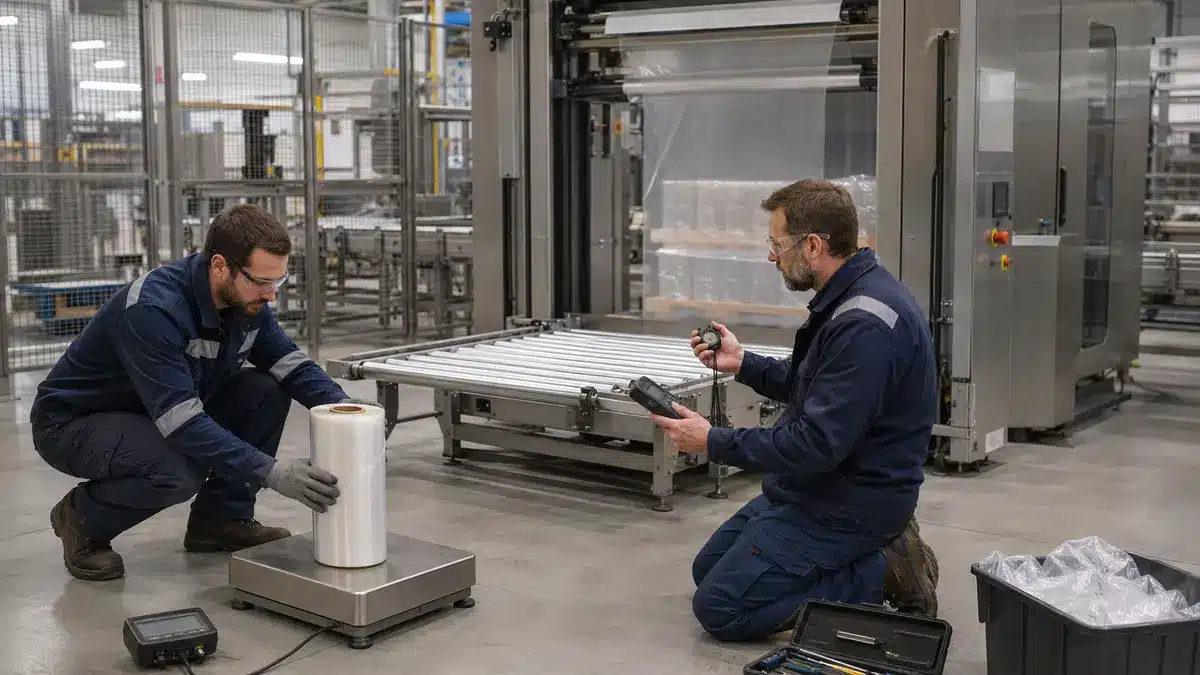
Define the currency, time period, production volume, allocation method, and acceptance rule before collecting data. Then measure:
- Film mass per pallet, including seals, tails, rejected hoods, start-up scrap, and changeover scrap.
- Electricity and fuel attributable to the hooding process, using consistent units and a stated tariff period.
- Labor for operation, roll changes, cleaning, adjustment, quality checks, and rework.
- Planned parts and service, plus the duration and cause of unplanned stops.
- Changeover time and the number of nonconforming pallets before the process returns to control.
- Damage, contamination, water entry, load shift, label-reading failure, and other defects defined by the buyer.
- Accepted throughput at the required load mix, rather than a brochure’s maximum mechanical cycle rate.
This model can show why a higher-priced film may still reduce cost, or why a familiar machine may remain economical at modest volume. It can also reveal that a claimed saving disappears when scrap, heat management, changeovers, or failed pallets are counted. The calculation is an input to approval, not a substitute for technical validation.
Specify the Film, Machine, and Load Together
Hooding performance is an interaction among material, equipment, load, and distribution environment. A useful RFQ keeps those inputs connected so that suppliers are not comparing different assumptions.
Film data to request
Request a product-specific specification rather than a generic resin description:
- Polymer and layer construction at the level the supplier is permitted to disclose, plus total thickness, tolerance, and the thickness method.
- Layflat width, gusset dimensions, roll length, core, roll diameter, winding direction, and dimensional tolerances.
- Seal construction and the test used to evaluate it.
- For stretch hood, the recommended machine stretch window, recovery or retained-force definition, and the time and conditions used for measurement.
- For shrink hood, MD and TD shrink behavior and shrink force over stated temperatures and exposure times.
- Tensile, puncture or impact, tear, and coefficient-of-friction data only when the report identifies specimen direction, thickness, conditioning, method edition, procedure, and units.
- Additives, print, surface treatment, UV stabilization, perforation, slip, or anti-block features only when they are part of the offered construction.
ASTM D882 addresses tensile properties of thin film, ASTM D1709 addresses free-falling dart impact under its stated procedures, and ASTM D1894 addresses static and kinetic coefficients of friction under specified conditions. ASTM D2732 addresses unrestrained linear thermal shrinkage at a given specimen temperature. These methods measure different properties; none independently proves final pallet stability.
Equipment and facility data to request
Require the equipment proposal to state:
- Minimum and maximum pallet and load dimensions, permitted offsets, and validated load shapes.
- Film formats, automatic or manual format changes, roll-change procedure, splice handling, and reject logic.
- Cycle definition and tested rate for the buyer’s actual load mix, including upstream and downstream constraints.
- Stretch settings or heating recipes, controlled parameters, alarms, data capture, and recipe access.
- Electrical load, compressed air, fuel, ventilation, heat rejection, floor space, guarding, and required safety interfaces.
- Preventive-maintenance tasks, wear parts, expected service access, troubleshooting support, and critical spares.
For shrink hood, include the heat source, airflow control, exhaust, surface-temperature checks, and product heat limits. For stretch hood, include the stretching mechanism, stored-energy controls, film-opening reliability, and force-setting repeatability. These are equipment questions; they cannot be answered by the film data sheet alone.
Load and distribution data to supply
Give every bidder the same load profile:
- Pallet material, dimensions, deck condition, under-clearance, and any sharp or damaged features.
- Minimum, nominal, and maximum load height and footprint; weight; center of gravity; overhang or underhang.
- Stack pattern, layer count, compressibility, settling behavior, surface friction, voids, recesses, protrusions, and sharp corners.
- Product and primary-packaging heat limits, pressure limits, moisture sensitivity, abrasion sensitivity, and acceptable appearance.
- Handling equipment, number of transfers, stacking, storage duration, outdoor exposure, temperature and humidity range, and transport mode.
- Defined damage, allowable deformation, seal or hood defects, water-entry limits, and other acceptance criteria.
Without these inputs, two quotations may use different hood sizes, film masses, machine rates, or protection assumptions and appear comparable when they are not.
Validate the Choice Before Approval
Approval should follow a controlled sequence:
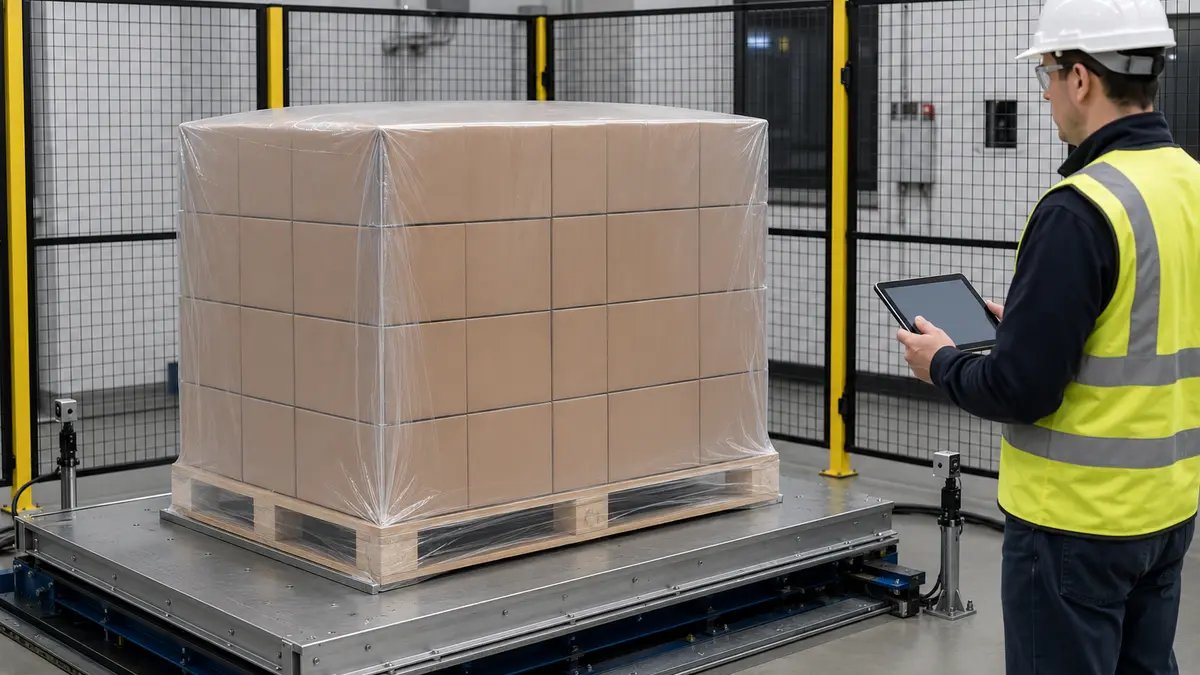
- Choose representative and challenging loads. Include dimensional extremes, the least stable stack pattern, sharpest acceptable corners, expected pallet variation, heat-sensitive components, and loads that settle.
- Freeze the trial configuration. Record the film identification and batch, construction or declared specification, dimensions, machine recipe, stretch settings or heat profile, ambient conditions, and operator.
- Inspect application quality. Check hood opening, seal, centering, top coverage, corner stress, pallet engagement, holes, wrinkles, local thinning, product compression, and evidence of heat effects.
- Condition the unit loads. Use the expected storage time and environmental sequence before judging retained containment. Include settling, stacking, and outdoor or humidity exposure when they are part of the real route.
- Run handling and distribution tests that match the objective. ISTA Procedure 3E is scoped to similar packaged products in unitized loads for full-truckload delivery; it is not a universal route test. EUMOS 40509:2020 addresses load-unit rigidity under its specified dynamic method. Select any procedure with a qualified laboratory or packaging engineer and state what it covers and omits.
- Measure operational inputs during the same trial. Record film mass, energy, cycle time, changeover, rejects, interventions, downtime, and rework using consistent definitions.
- Approve a bounded configuration. Link the accepted film, dimensions, machine recipe, load family, route, and pass criteria. Define which changes require review or requalification.
Important: A film-property report and a unit-load test answer different questions. Requalify when a material construction, thickness, hood dimension, pallet pattern, machine recipe, heat profile, product, or distribution route changes enough to affect the approved evidence.
Final Selection Rule
Choose stretch hood as the provisional first trial when heat-free application, compatible load geometry, elastic recovery, and automated format control align with the operating brief. Keep shrink hood in the comparison when measured thermal conformity solves a defined geometry or protection problem, the full load tolerates the heat profile, and the facility can support the required controls.
The final winner is the bounded film-machine-load configuration that passes the agreed handling and distribution criteria at the lowest verified cost per accepted pallet. If neither configuration passes, revise the load, pallet, edge protection, hood design, film specification, or machine recipe and test again. A system label is not an approval.
Related Bestypack Resources
- Shrink Wrap vs. Stretch Wrap: What’s the Difference?
- How Many Pallets Can One Roll of Stretch Film Cover?
- Machine Stretch Film Blown & Cast
- Select the Appropriate Stretch Film Width and Thickness
- How to Reduce Stretch Film Thickness to Cut Costs?
- Stretch Film Thickness: What You Need to Know
 English
 Japanese
 French
 Spanish
 Korean
 Italian
 Portuguese
 Dutch
Dutch Arabic
 Russian
 German