
PE stretch film is normally the usual starting point for industrial pallet unitizing, while flexible PVC film is more often considered for high-cling retail, food, or small-item overwrap. That distinction is useful, but it is not a complete specification. Formulation, thickness, stretch and recovery, application equipment, food-contact status, temperature, and end-of-life route can change the result. A sound choice therefore compares the complete film-and-package system and verifies it under the intended conditions.
What PE and PVC Stretch Films Actually Mean
For U.S. food-contact context, review the eCFR polymer provisions before approving a finished-film claim.
PE and PVC name polymer families, not finished-film performance. A sales description may omit the resin blend, layer structure, additives, plasticizer system, surface treatment, thickness tolerance, and intended application. Those missing details matter because “stretch film” can refer to industrial load-unitizing film, hand bundling film, or thin cling overwrap for food and retail display.
PE Stretch Film
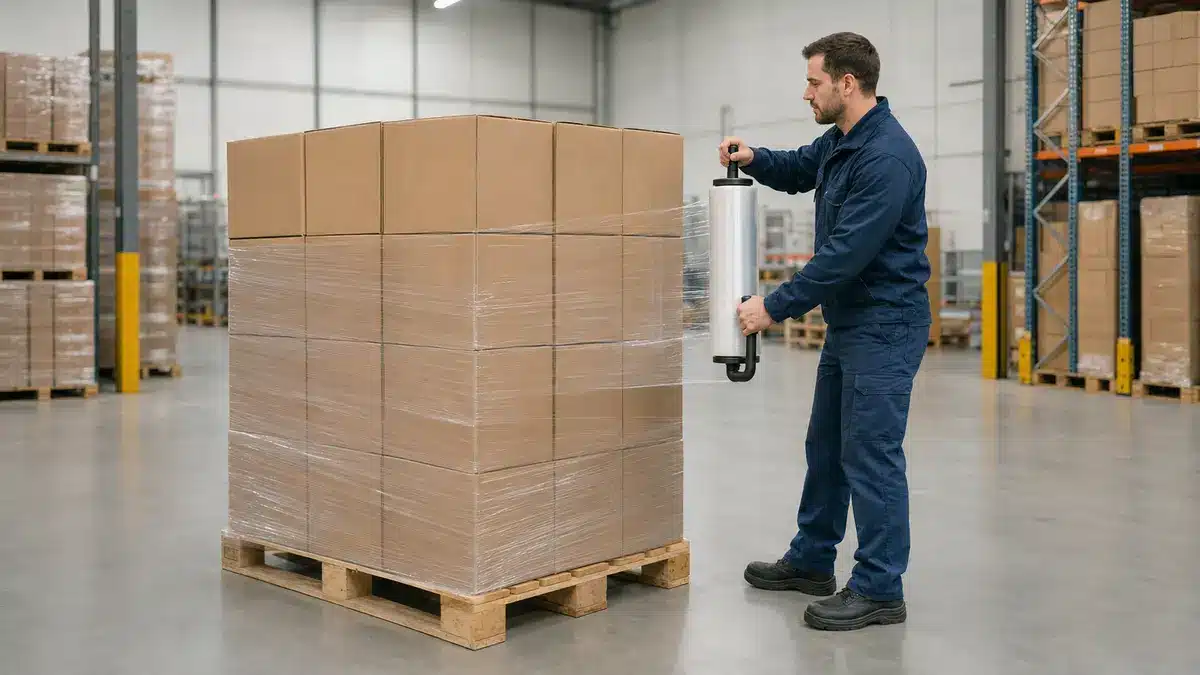
Industrial PE stretch film is commonly based on linear low-density polyethylene, sometimes blended with other polyethylene grades or produced as a multilayer film. The formulation can use tackifiers or other additives to control film-to-film cling, slip, processing, optics, and stability. Cast and blown production routes can also produce different unwind, gauge profile, clarity, and mechanical behavior.
The defining application mechanism is extension followed by elastic recovery. Film is stretched as it is applied, then its tendency to recover contributes to a snug wrap. In pallet applications, however, final containment also depends on film force, overlap, wrap count, reinforcement zones, pallet geometry, and time-dependent relaxation. The label “PE” alone does not predict any of those results.
PVC Stretch Film
Unmodified PVC is relatively rigid, so flexible PVC films use a formulation that provides the required softness and extensibility. Plasticizers are commonly part of that formulation, but the chemical system is grade-specific; buyers should not assume that every flexible PVC film uses the same plasticizer or that every PVC food-contact article contains a phthalate. The U.S. FDA notes both the historical use of phthalates in PVC and the continued authorization of certain substances for defined food-contact uses, while also reporting a move toward alternatives.
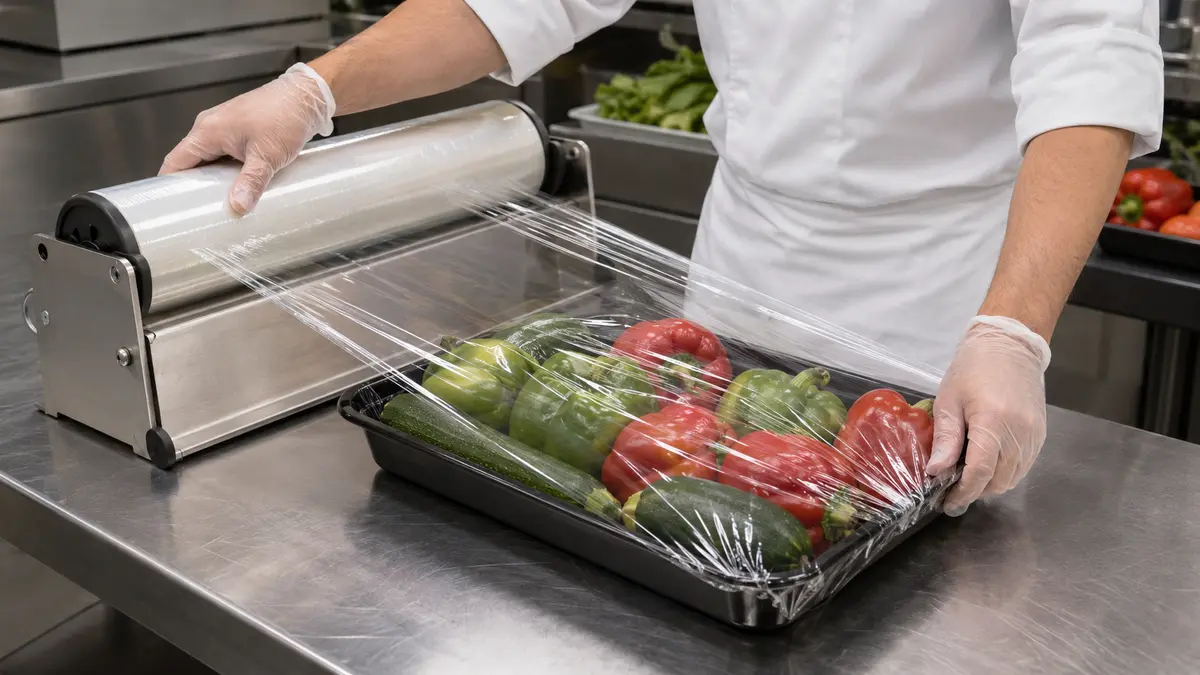
PVC stretch or cling films are often valued for conformability, surface cling, and optical presentation in food-service, retail, or light bundling applications. Those traits do not automatically make a PVC grade suitable for high-tension pallet wrapping or automated equipment. Its roll format, stretch window, unwind, strength, and machine approval must match the task.
Why Product Category Matters
A pallet wrap and a food cling film may both stretch and cling, yet they solve different packaging problems. Pallet stretch film unitizes a load through controlled tension and layered application. Food or retail overwrap conforms around an individual product, tray, or container and may prioritize clarity, seal or cling behavior, hygiene, and food-contact documentation.
Important: Before comparing PE and PVC quotations, ask each supplier to state the intended package type: pallet unitizing, industrial bundling, retail overwrap, or direct food-contact cling film. If the categories differ, the comparison is not like for like.
PE vs. PVC Stretch Film at a Glance
The table below summarizes common decision tendencies. It is a screening tool, not a product guarantee. The supplier’s technical data, regulatory documents, and trial results control the final decision.
| Decision factor | PE stretch film | Flexible PVC stretch or cling film | What the buyer must verify |
|---|---|---|---|
| Typical formulation context | Often LLDPE-based, sometimes blended or multilayer | PVC formulated for flexibility, commonly with a plasticizer system | Exact resin or polymer description, layer statement, additives relevant to use, and grade identity |
| Common application context | Pallet unitizing, industrial bundling, hand or machine wrapping | Food, retail, tray, or small-item overwrap in markets and grades where permitted | Intended package, load, contact type, equipment, and market |
| Stretch and recovery | Often engineered for substantial extension and recovery in load wrapping | Grade-specific; may prioritize conformability and cling at lower application force | Test method, extension level, MD/TD, dwell, temperature, and stress retention |
| Cling and unwind | Controlled by formulation, layer design, surface, and cast/blown process | Often selected for strong surface cling and presentation | Cling side, stretched or unstretched condition, unwind force, noise, and contamination sensitivity |
| Clarity and appearance | Can range from high-clarity cast grades to hazier blown or specialty films | Frequently selected where clear presentation is important | Haze or transmittance method, thickness, specimen, and acceptance limit |
| Puncture and tear behavior | Formulation, thickness, direction, stretch state, and load edges all matter | Formulation, plasticization, thickness, temperature, and package geometry all matter | Same method, thickness, conditioning, direction, and representative package trial |
PE is therefore not automatically “better,” and PVC is not automatically “unsafe.” PE is usually the more relevant family for pallet stretch wrapping, while PVC may remain relevant for a narrower overwrap task. The exact grade and evidence package decide whether either option is suitable.
Material and Performance Differences
Performance comparisons should separate film properties from package results. ASTM publishes different methods for tensile behavior, peel cling, recovery and stress retention, protrusion puncture, and applied stretch-wrap performance because no single number describes the whole system.
Stretch, Recovery, and Holding Force
Stretch is the extension imposed during manufacture or application. Recovery is the film’s tendency to return after extension. Stress retention describes how much tension remains over time under specified conditions. Holding or containment force is an applied-package result influenced by the film, stretch level, film force, wrap pattern, and load.
PE pallet films are commonly.
For film-level comparison, ASTM D5459-95(2025) addresses machine-direction recovery, permanent deformation, and stress retention. Record the extension, dwell, conditioning, thickness, direction, result, and unit. For the wrapped package, use an applied test plan rather than treating a film-strip result as proof of load stability.
Cling, Clarity, and Unwind
Cling keeps adjacent film layers together; it is not the same as an adhesive bond to the product. PE stretch film may use a dedicated cling layer or formulation, while flexible PVC overwrap can exhibit strong surface cling. In both cases, dust, oil, moisture, temperature, stretch state, contact time, and which film sides meet can change the result. ASTM D5458-95(2025) measures peel cling between two layers in stretched and unstretched conditions, so a reported value should identify the actual test state.
Clarity is likewise not a polymer-only property. Gauge variation, crystallinity, additives, surface texture, orientation, processing route, and stretch state affect appearance. If product visibility matters, specify the optical method, specimen thickness, orientation, conditioning, and acceptance criterion. Do not accept “crystal clear” as a technical result.
Unwind behavior affects operator handling and machine consistency Ask for roll winding cling orientation unwind-force data where relevant and a trial.
Puncture, Tear, and Temperature Response
Puncture and tear are different failure modes. Puncture begins where a concentrated feature presses through the film; tear propagation describes how damage grows after a nick or cut. Results depend on thickness, MD/TD orientation, test geometry, strain rate, temperature, conditioning, and whether the film is already stretched.
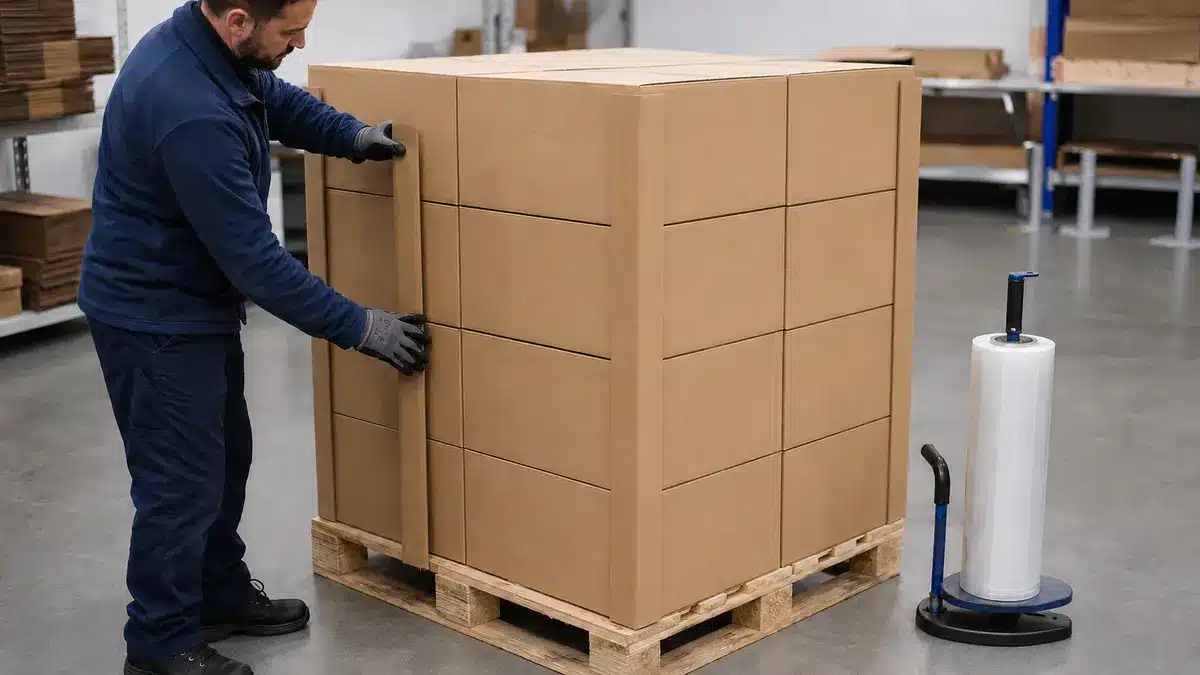
ASTM D5748-26 provides a controlled protrusion-puncture method for stretch film, but its own scope does not claim to reproduce every field event. Sharp carton corners, pallet splinters, overhang, voids, and product movement still require representative package trials. Edge protection or a corrected pallet pattern can be more effective than simply increasing gauge.
Temperature can change modulus, extensibility, cling, relaxation, and resistance to damage in both polymer systems. ASTM D4649 is scoped to indoor unitizing and notes that extreme temperatures may negatively affect stretch-film performance. Buyers should therefore condition samples and packages across the real storage and distribution range instead of relying on broad claims such as “cold resistant” or “heat resistant.”
Warning: Tensile, puncture, and tear values are not comparable when the method, specimen direction, thickness, conditioning, or test speed differs. ASTM D882 specifically warns that tensile results vary with these controls.
Applications and Equipment Fit
The material decision becomes clearer after the package task is defined. PE and PVC can both be flexible films, but common grades are optimized for different application forces, roll formats, hygiene expectations, and equipment.
Pallet Unitizing and Industrial Bundling
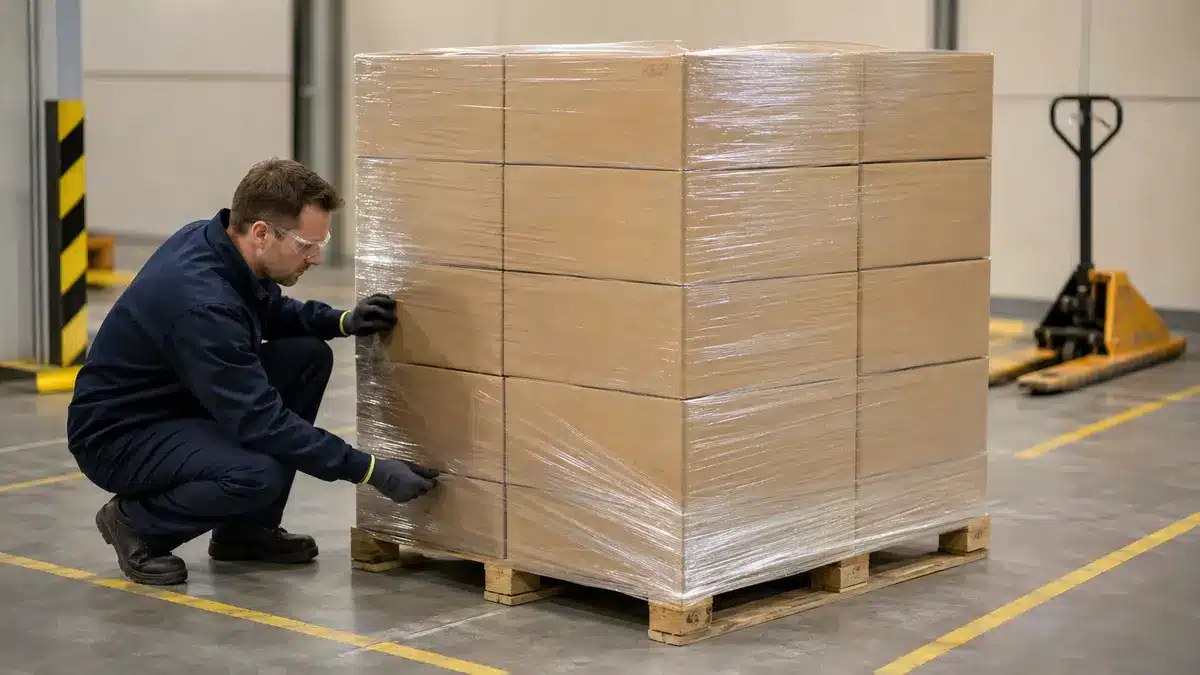
PE stretch film is the usual starting point for palletized loads because industrial grades are widely available for hand wrapping, pre-stretched hand rolls, and powered stretch wrappers. Appropriate applications can include unitizing corrugated cases, bundling profiles or other products, and protecting a consolidated load from ordinary dust and handling exposure.
A material name still does not secure a pallet The load must have a stable pattern acceptable overhang protected sharp features and a documented wrap recipe For hand use define the dispenser operator path overlap wrap count and reinforcement zones For machine use record the wrapper carriage pre-stretch or film-feed.

ASTM D4649-20(2025) supports buyer-seller selection and specification for indoor unitizing, while ASTM D8314-20(2025) covers testing after film is applied by hand or machine. Neither standard supplies a universal film, recipe, or pass threshold.
Food, Retail, and Small-Item Overwrap
Flexible PVC films may be considered where a compliant grade offers the required cling, conformability, and presentation around trays, produce, prepared foods, or small retail items. PE-based cling films also exist, and neither family is automatically food-contact compliant. The exact formulation and intended contact conditions control.
For food overwrap, verify the wrapper or dispenser, tray geometry, contact with fatty or acidic food, storage temperature, contact time, stretch around corners, film release, and the way the package is opened. A high-cling film that performs well at a service counter is not automatically suitable for long storage, heating, freezing, or direct contact with every food.
Important: Do not place a food cling roll on a pallet stretch wrapper, or a pallet film into direct food contact, merely because the roll appears to fit. Require explicit supplier approval for the equipment, package, and regulatory use.
Food-Contact and Regulatory Considerations
“PE,” “PVC,” “food grade,” and “FDA approved” are not complete compliance statements. Food-contact status belongs to a specific formulation, finished construction, manufacturing controls, target market, food type, contact area, time, temperature, and repeated- or single-use condition.
For the European Union, Commission Regulation (EU) No 10/2011 requires plastic materials covered by the measure to have a written declaration of compliance and supporting documentation. It also establishes specific and overall migration limits and assigns food simulants and test conditions. A valid file should therefore identify the exact material or article and show that the intended food and conditions fall within the documented scope.
In the United States, the FDA’s current phthalates information explains that certain phthalates remain authorized for defined uses in food-contact polymers and that industry must ensure the substances it sells are safe and meet legal requirements. This does not mean all PVC film contains phthalates, all authorized substances fit every use, or a generic PVC roll is approved for food.
For either polymer family, request:
- the declaration or regulatory basis for the exact grade and finished film;
- full intended-use conditions, including food type, direct or indirect contact, time, temperature, and any heating or freezing;
- specific and overall migration support where the market requires it;
- restrictions for fatty, acidic, alcoholic, or dry foods;
- disclosure of relevant additives or plasticizers within the legally shareable documentation route;
- manufacturing-site, formulation, and document version or date; and
- a change-notification commitment that triggers reassessment.
If the evidence does not cover the target use, narrow the use, obtain additional documentation or testing, or reject the film. Do not fill a documentation gap with a supplier’s generic certificate, logo, or statement about the polymer family.
Sustainability and End-of-Life Reality
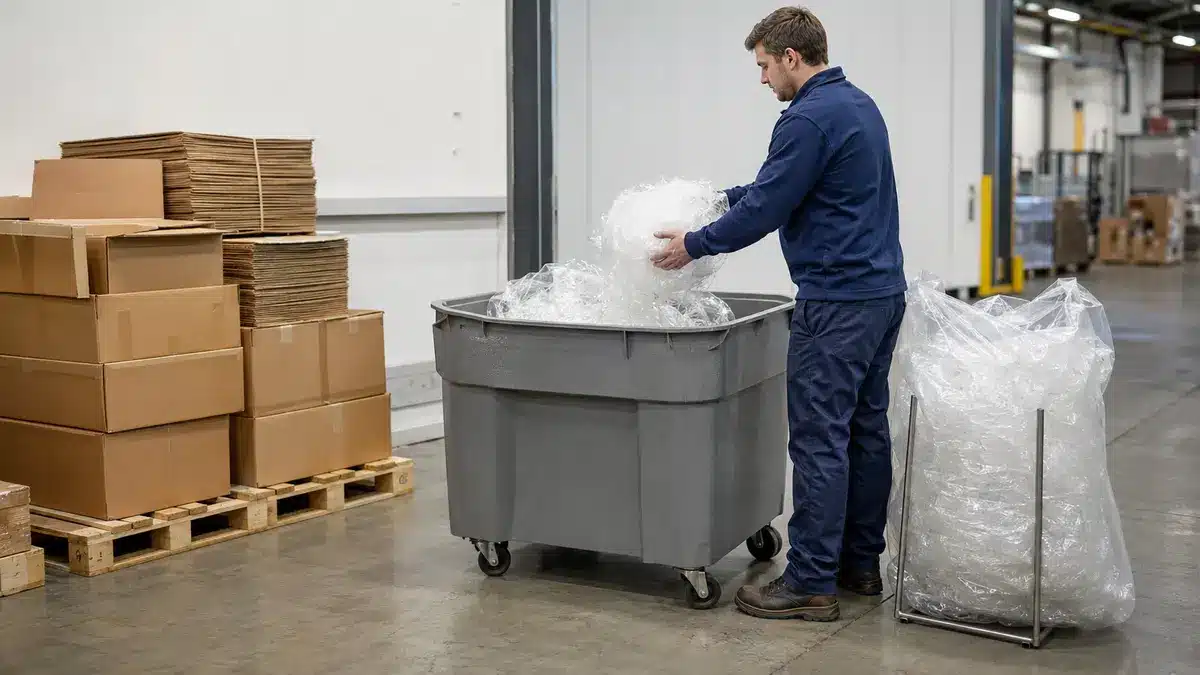
PE usually has a clearer route into dedicated PE film recycling systems than PVC, but “PE” does not mean a used film will actually be collected, sorted, cleaned, and recycled. Stretch wrap can be contaminated by labels, tape, dirt, product residue, incompatible polymers, colorants, or other components. Commercial back-of-store collection can also differ significantly from household collection.
RecyClass’s PE-film evaluation protocol treats PVC layers as disqualifying for a PE-film recyclability assessment and requires testing for many non-PE layers, coatings, labels, inks, adhesives, and additives. That supports one practical conclusion: PVC and PE film streams should not be mixed when a PE recycler requires a compatible feedstock. It does not establish that every standalone PVC film lacks a local recovery route or that every PE film is recyclable everywhere.
A defensible end-of-life comparison should follow this chain:
- Question: What exact film and package components enter the waste stream?
- Risk: Mixed polymers, contamination, or unsupported consumer assumptions can make a technically compatible film unrecoverable in practice.
- Control: Confirm the collection channel, sorter or recycler acceptance, preparation rules, and package-level design criteria.
- Claim boundary: State the market, stream, conditions, and evidence date instead of using an unconditional environmental label.
Source reduction should also be measured in the complete package system. Compare film mass per accepted pallet or package together with damage, rewraps, rejected loads, shelf-life outcomes, and disposal or recovery. A thinner film that increases failure or food waste may not reduce total impact; a heavier film should not be accepted without proof that its additional mass solves a defined risk.
How to Choose Between PE and PVC Stretch Film
Use an ordered process so that the package task controls the material choice:
- Define the package. State whether the job is pallet unitizing, industrial bundling, retail overwrap, or direct food-contact cling film. Record dimensions, mass, shape, sharp features, compressibility, contact surfaces, and required presentation.
- Define the environment. Document application temperature, storage range, dwell time, humidity, outdoor exposure, handling, transport, retail display, and any heating or freezing.
- Set the compliance boundary. Identify the destination market, food-contact status, food type, contact time and temperature, restricted substances, and documentation needed before a sample can be approved.
- Screen the material family. PE is normally the first candidate for industrial pallet wrapping. PVC or PE cling film may be considered for a compliant retail or food-overwrap task. Treat exceptions as supplier- and trial-specific.
- Match the roll and equipment. Confirm width, core, diameter, winding, cling orientation, stretch window, film path, dispenser or wrapper model, and speed. Reject a physical or operating mismatch before performance testing.
- Compare equivalent data. Require the same units, methods, thickness basis, MD/TD direction, conditioning, and specimen state. Compare total cost per accepted package, not roll price or nominal length alone.
- Run and document the trial. Freeze the wrap or overwrap recipe, acceptance criteria, sample count, dwell, and representative hazards before comparing candidates. Approve the exact grade and recipe that passes.
Important: A polymer name can narrow the search, but it cannot replace grade identification, supplier documentation, equipment confirmation, or package testing.
What to Put in the RFQ and Validation Plan
An RFQ should make supplier responses comparable. A validation plan should then connect those responses to film-level tests and final-package evidence. Keep these three layers separate so that a strong laboratory value is not mistaken for a successful pallet or food package.
Comparable Film and Roll Data
Ask every supplier for the same fields:
- grade or SKU, polymer description, disclosed layer or construction statement, and lot traceability;
- nominal thickness, tolerance, unit, measurement method, sampling plan, and whether the value describes supplied or post-stretch film;
- roll width, usable length, core inside diameter, roll diameter, roll mass, winding direction, and splice policy;
- cast or blown process where relevant, cling side, inside/outside orientation, and unwind guidance;
- intended application, approved dispenser or machine range, recommended stretch or force window, and application temperature;
- storage conditions, shelf-life basis, and change-notification practice;
- food-contact or restricted-substance documents for the exact market and use, when applicable; and
- end-of-life claim scope, collection route, test or design basis, limitations, and evidence date.
Do not accept a generic family data sheet when the supplied grade, thickness, roll, or formulation is different from the trial material.
Film-Level Tests
Select tests around the failure risks and compare like with like:
- Thickness: report instrument, sampling positions, unit, average, range, and tolerance assessment.
- Tensile behavior: use a method such as ASTM D882 with identical specimen dimensions, thickness, MD/TD direction, conditioning, test speed, grips, result, and unit.
- Recovery and stress retention: use a defined extension, dwell, temperature, direction, and method such as ASTM D5459.
- Peel cling: state film sides, stretched or unstretched condition, dwell, environment, and method such as ASTM D5458.
- Protrusion puncture: state specimen, conditioning, speed, probe method, result, and unit under a method such as ASTM D5748.
- Optical properties: when presentation matters, identify the haze or transmittance method, thickness, stretch state, and acceptance limit.
- Unwind and application behavior: record force, speed, roll condition, film path, blocking, noise, breaks, and neck-down under the intended equipment.
Film tests can support identification, quality control, and comparison. They do not reproduce the complete pallet, tray, food, wrapper, storage period, or distribution route.
Applied-Package Trials
For pallet wrap, document the pallet pattern, product and case condition, total load mass, height, center of gravity, overhang, corners, voids, compressibility, wrapper or dispenser, recipe, film mass, overlap, layers, reinforcement, tail treatment, dwell, and representative handling or distribution sequence. Predetermine acceptable load shift, film damage, carton deformation, tail release, containment readings, rewraps, and product damage.
For retail or food overwrap, document the product and tray, contact area, food type, fill temperature, storage conditions, film tension, clarity, cling or sealing behavior, corner integrity, fogging where relevant, leakage or contamination risk, opening behavior, and shelf-life study design. Regulatory evidence and package performance must both pass.
Calculate cost per accepted package using film mass, labor, downtime, rejected packs, rework, damage, and disposal or recovery costs. Report the trial conditions and sample count so the result is auditable and repeatable.
Frequently Asked Questions
Is PVC Stretch Film Banned?
No, not as a universal statement. PVC and particular additives may be restricted, authorized, discouraged, or subject to documentation requirements depending on the market and use. Check the current rules for the exact country, formulation, package, and contact condition. A retailer or brand policy may also be stricter than the law.
Can PE and PVC Stretch Films Contact Food?
It depends on the exact grade and intended use. Both polymer families can appear in food-contact articles, but a polymer name does not prove compliance. Require a current declaration or regulatory basis and migration support covering the food type, direct or indirect contact, time, temperature, processing, and market.
Is PE Stretch Film Always Recyclable?
No. PE can be technically compatible with a PE film stream, yet collection, contamination, color, labels, adhesives, multilayers, and local acceptance can prevent actual recycling. Confirm the package design and the real collection and reprocessing route before making a claim.
Can PVC Film Run on a Pallet Stretch Wrapper?
Only if the exact grade and roll are approved for that machine and recipe. Many PVC cling films are designed for manual, food-service, or specialty overwrap and may not tolerate powered pre-stretch, film force, speed, or the roll geometry of a pallet wrapper. Do not trial an unspecified roll on production equipment.
Conclusion: Choose the Package System, Not Just the Polymer
PE is usually the practical starting point for pallet unitizing; flexible PVC may remain suitable for a documented retail, food, or small-item overwrap. Neither conclusion eliminates the need to verify the exact grade.
Before approval:
- confirm the package category, load or food-contact conditions, and destination market;
- compare the same film, roll, test, direction, thickness, and conditioning fields;
- match the grade to the dispenser or wrapper and freeze the application recipe;
- verify food-contact and end-of-life statements for the exact product and supply chain; and
- approve only after representative film-level and applied-package evidence meets predetermined criteria.
That approach turns “PE vs. PVC” from a broad polymer debate into a controlled packaging decision.
Related Bestypack Resources
- Stretch Film vs. Cling Film: What’s the Difference?
- How Many Pallets Can One Roll of Stretch Film Cover?
 English
 Japanese
 French
 Spanish
 Korean
 Italian
 Portuguese
 Dutch
Dutch Arabic
 Russian
 German