
PVC film is used in flexible wraps, shrink sleeves and bands, thermoformed packaging, pharmaceutical blister packs, protective curtains and covers, printable graphics, and decorative laminates. Those uses do not come from one universal grade. A buyer must first distinguish rigid from flexible PVC, then match the formulation, gauge, surface, and converting method to the finished application. Food contact, medical use, outdoor exposure, and recycling claims also require evidence for the exact film and package—not the PVC name alone.
What Is PVC Film?
For U.S. food-contact context, review the eCFR polymer provisions before approving a finished-film claim.
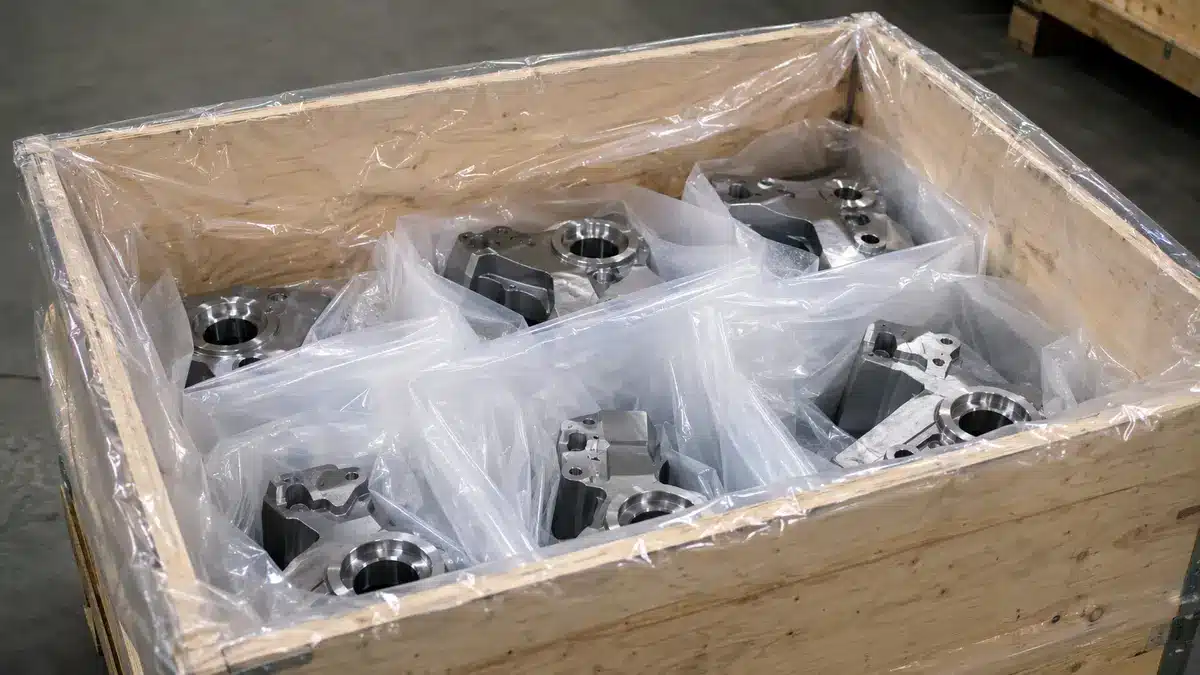
For U.S. food-contact context, review the eCFR polymer provisions before approving a finished-film claim.
PVC film is a thin, continuous material made from polyvinyl chloride resin plus a formulation selected for a particular processing route and end use. It may be rigid, semi-rigid, or flexible; clear, tinted, or opaque; smooth, matte, gloss, or embossed. Film producers can use extrusion, blown-film processing, calendering, or casting, and the selected process influences thickness range, surface, orientation, dimensional behavior, and downstream converting.
That variety explains the long list of applications. PVC is not a single film specification. Plasticizers, stabilizers, pigments, processing aids, coatings, print treatments, adhesive systems, and gauge can all change how a finished film behaves. A general application list is therefore a useful starting map, but suitability must be confirmed against an exact construction and the real package or product.
Why Do Rigid and Flexible PVC Films Serve Different Uses?
The first practical split is between rigid or semi-rigid film and flexible film. Flexible PVC normally uses a formulation designed to bend, drape, cling, or weld; rigid PVC is designed to retain shape and support forming, printing, or structural presentation. The comparison is functional rather than a universal property table.
| Selection dimension | Rigid or semi-rigid PVC film | Flexible PVC film |
|---|---|---|
| Typical form | Stiff web or thin sheet that holds a formed shape | Pliable web that bends, wraps, folds, or drapes |
| Common uses | Thermoformed blisters, clamshells, trays, cards, print substrates | Cling wrap, shrink applications, curtains, covers, liners, bags, flexible components |
| Common converting focus | Thermoforming, die-cutting, scoring, printing, lamination | Sealing, welding, shrinking, sewing, printing, lamination |
| Critical specification questions | Forming window, thickness distribution, clarity, impact behavior, surface treatment | Flexibility, tack or slip, cold behavior, shrink response, weld or seal behavior, migration limits |
| Validation boundary | Formed-part geometry and complete package must be tested | Final seam, closure, package, or assembly must be tested |
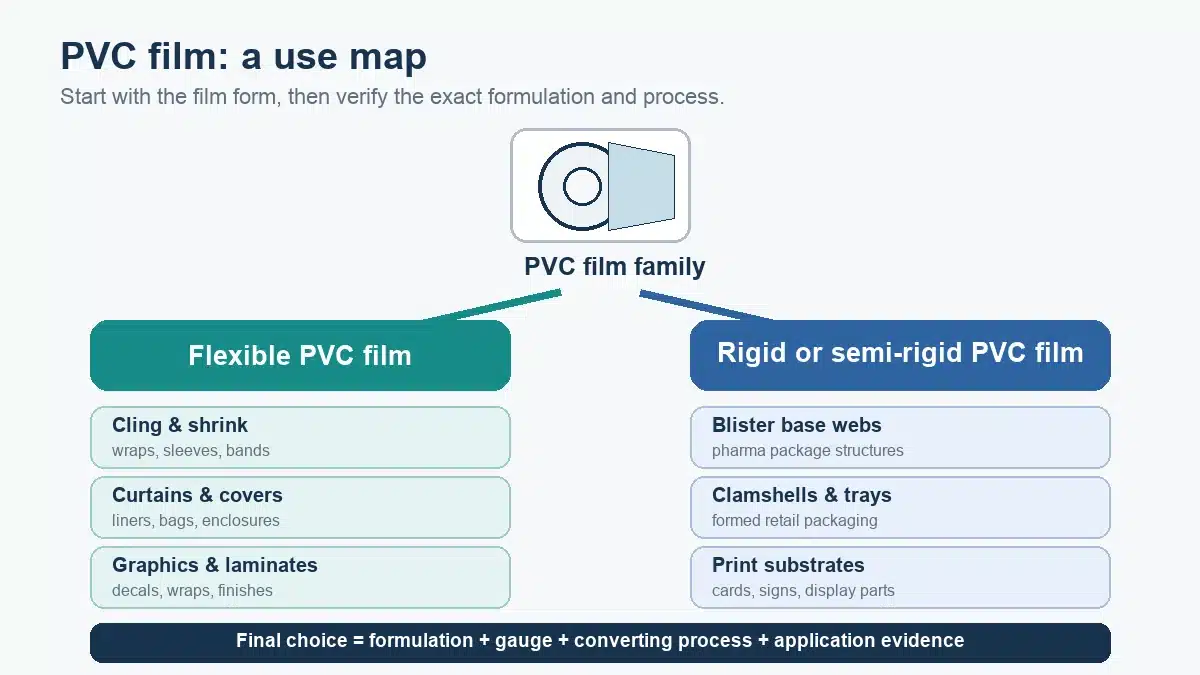
The Vestolit film and sheets technical brochure illustrates how different PVC processing routes lead to application families such as cling and shrink films, rigid thermoformable films, medical bags, industrial films, graphics, liners, and flexible covers. It should be read as a general supplier reference, not as evidence that every PVC formulation shares those uses or properties.
Important: “Rigid” and “flexible” are only the first branch. Two films in the same branch may use different additives, gauges, surfaces, or processing histories and may not be interchangeable.
Where Is PVC Film Used in Packaging?
Packaging is one of the most visible PVC film application groups. It includes very different tasks: a flexible wrap must conform and hold around a product, a shrink band must respond predictably to heat, and a rigid web must form into a cavity without unacceptable thinning or distortion. Treating those formats as one specification is a common sourcing error.
Cling and food-service wrap
Flexible PVC formulations are used for manual and machine-applied cling films in food service and selected retail wrapping. The film is expected to drape over trays or containers, cling to itself or a compatible surface, remain workable at the use temperature, and provide the clarity and handling behavior required by the operation.
The RFQ should define:
- the food or non-food product and whether contact is direct;
- manual, dispenser, or machine application;
- operating and storage temperatures;
- tray or container material;
- target width, length, gauge, core, and roll format;
- desired cling, unwind, fogging, clarity, and seal behavior;
- the destination market and required food-contact documentation.
PVC as a material name does not establish food-contact suitability. In the United States, the FDA explains that a food-contact substance must have an applicable regulatory basis for its intended use. The formulation, contact conditions, migration basis, and finished package all matter.
Shrink sleeves, bands, and overwrap
Engineered PVC shrink films are used for full- or partial-body sleeves, tamper-evident bands, label applications, bundle overwrap, and presentation packaging. Heat makes the oriented film recover toward its pre-stretched dimensions so it conforms around a container or product.
The word “shrink” does not describe every PVC film. A buyer needs a shrink curve or test data for the exact film, including machine and transverse directions, test temperature and time, gauge, and any printing or seaming effects. The package geometry, steam or hot-air tunnel, conveyor speed, airflow, ink system, seam, and container heat tolerance determine whether the film will shrink evenly in production. A generic shrink percentage without those conditions is not enough to set a line.
Blisters, clamshells, and thermoformed packs
Rigid and semi-rigid PVC films are used as thermoformable webs for blister cavities, clamshells, trays, and presentation packs. The web is heated, formed into a tool, filled, and closed with a lidding material or another formed part. Clarity can support product visibility, while stiffness helps the package keep its shape.
Selection must go beyond appearance. Forming depth, corner radii, wall-thickness distribution, trim behavior, impact risk, lidding compatibility, sealing conditions, and the packaged product all affect the result. A film that forms a shallow retail tray may not suit a deep blister. Barrier performance belongs to the complete structure and test conditions; an uncoated PVC base web should not be described as a universal high-barrier package.
How Is PVC Film Used in Medical and Pharmaceutical Packaging?
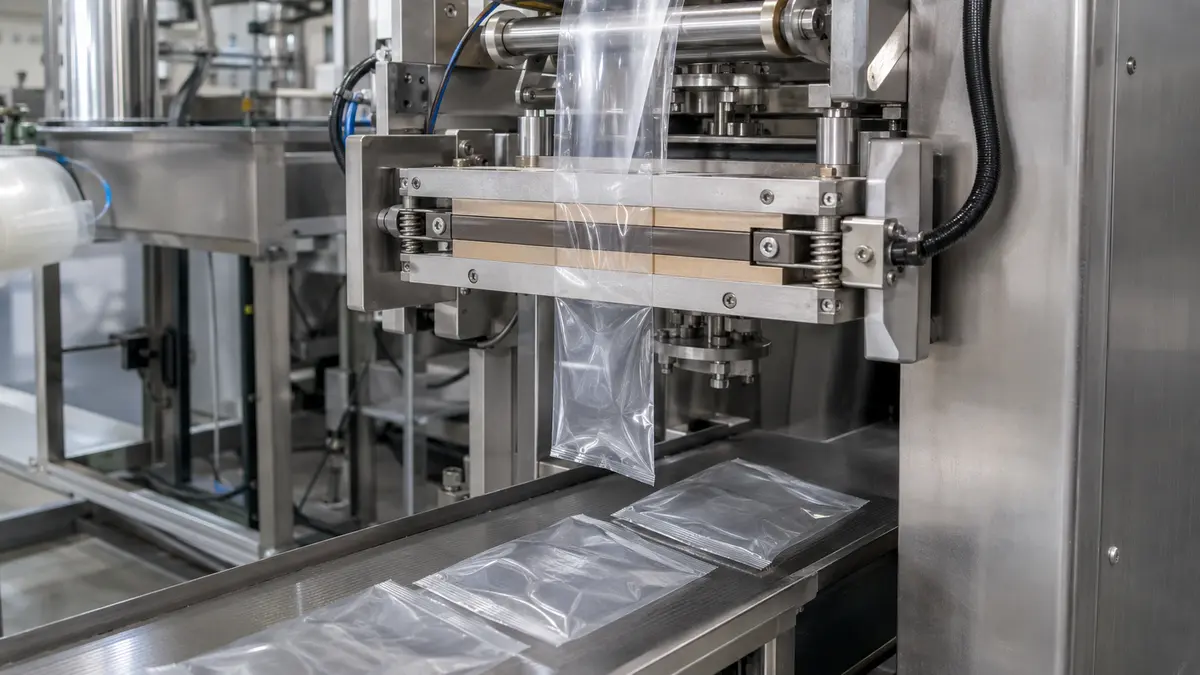
PVC appears in established healthcare and pharmaceutical application families, but that history does not make an unspecified roll “medical grade.” These uses require exact formulation control, traceability, contamination controls, packaging-system validation, and market-specific documentation. The risk depends on whether the film is a secondary package, a sterile-barrier component, a fluid-contact component, or a pharmaceutical blister base web.
Pharmaceutical blister base films
Rigid PVC is commonly used as the thermoformable base web in blister packs for tablets and capsules The cavities are formed in the PVC web and closed with a compatible lidding material For products needing more moisture or gas protection the.
Blister selection should start with the medicine’s stability requirements, cavity geometry, forming conditions, lidding system, seal design, storage climate, and intended shelf life. OTR or WVTR values are meaningful only when the method, temperature, relative humidity, test side, thickness, and unit are reported. A value for one coating weight or structure cannot be transferred to a different film.
Medical-device packaging and flexible components
Flexible and semi-rigid PVC films are also used in selected medical-device packages, pouches, bags, and flexible healthcare components. In these settings, clarity, flexibility, welding or sealing, sterilization exposure, extractables or migration, and compatibility with the contents may be relevant.
The complete device or package system must be evaluated. A film supplier’s general application statement cannot prove sterile-barrier performance, biocompatibility, fluid compatibility, or regulatory clearance. Buyers should define the film’s exact role and request only the documents and tests that apply to that role.
Warning: Do not use a generated image, a generic certificate, or a resin-level statement as evidence that a specific film is suitable for a medical or pharmaceutical application.
Industrial and Protective Uses of PVC Film
Flexible PVC film is used in industrial curtains, transparent partitions, machine covers, furniture covers, protective enclosures, liners, bags, and similar fabricated products. These applications value the ability to see through the material, join panels, clean surfaces, and tailor flexibility or finish. The service environment, however, determines whether a particular film is appropriate.
| Application | Main service need | What to verify | Important limitation |
|---|---|---|---|
| Industrial curtain or partition | Visibility, flexibility, repeated movement | Gauge, clarity, cold behavior, edge reinforcement, attachment method | Draft control is not the same as an airtight barrier |
| Equipment or furniture cover | Fit, handling, abrasion exposure | Surface finish, flex cycles, seam construction, cleaning agents | Film data alone does not prove the finished cover’s service life |
| Liner or containment bag | Seam integrity and contents compatibility | Welding or sealing method, puncture risk, chemical-contact test | Generic chemical-resistance claims are unsafe |
| Outdoor cover or enclosure | Rain exposure, UV, wind, temperature cycling | Stabilization package, seam design, attachment, accelerated and field testing | “Waterproof” and outdoor-life claims apply to the tested assembly, not PVC generally |
| Cold-room strip or flexible barrier | Low-temperature flexibility and repeated impact | Cold-crack method, thickness, overlap, installation conditions | One laboratory temperature does not guarantee installed performance |
For outdoor or demanding industrial work, buyers should ask for grade-specific data and test the fabricated assembly. Water can enter through seams, fasteners, openings, or damage even when the film surface itself is impermeable. Flame behavior, weathering, chemical resistance, and low-temperature flexibility likewise depend on formulation, thickness, method, and use conditions.
Decorative, Graphic, and Lamination Uses
Calendered and cast PVC films are widely used where the film’s surface, print response, embossing, color, or conformability carries value. Common applications include signs, labels, decals, point-of-purchase graphics, protective overlaminates, furniture and wall finishes, and vehicle or equipment graphics.
Key decisions include:
- Surface and appearance: clear, white, colored, matte, gloss, textured, or embossed;
- Print process: solvent, eco-solvent, UV, screen, offset, flexographic, or another qualified system;
- Adhesive or lamination: permanent or removable adhesive, liner, lamination temperature, and substrate compatibility;
- Geometry: flat panels, simple curves, rivets, corrugations, or compound curves;
- Exposure: indoor handling, cleaning, sunlight, weather, abrasion, and expected service period;
- Dimensional behavior: shrinkage, edge lift, tunneling, curl, and registration after printing or laminating.
Calendered films are often selected.
How to Choose PVC Film for an Application
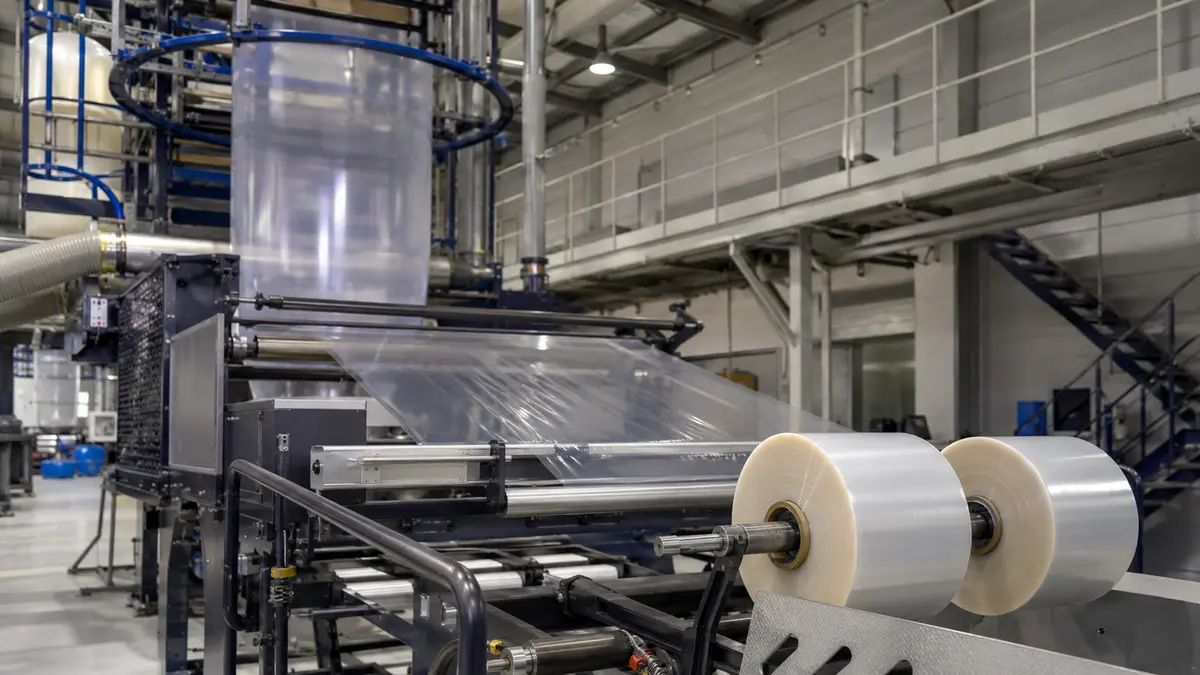
A useful PVC film specification begins with the finished job and works backward. The following sequence prevents a buyer from locking onto a resin name before defining the package, converting line, and evidence required.
- Define the end use and its service conditions.
- Match the film to the converting process and equipment.
- Verify exact-grade documents, representative samples, and agreed tests.
1. Define the end use and service conditions
State what the film will become cling wrap sleeve blister web cover curtain liner graphic laminate or another format Record the product it will contact direct or indirect food contact medical or pharmaceutical role indoor or outdoor.
This step converts broad words into testable requirements. “Clear” may need a haze or transmission method; “flexible in cold storage” needs a grade-specific low-temperature method; “protective” needs defined abrasion, impact, puncture, or barrier conditions. If the requirement cannot be described, a supplier cannot reliably select or validate it.
2. Match the film to the converting process
List every downstream operation: printing, coating, laminating, thermoforming, heat sealing, high-frequency welding, sewing, shrinking, die-cutting, embossing, slitting, or winding. Include equipment type, web width, speed, temperature, pressure, dwell time, tension, tooling, and any critical surface-treatment or adhesive requirement.
Then run a representative trial. A laboratory result cannot automatically predict performance on a production line, especially when heating profile, tension, cooling, cavity geometry, seam design, or ink coverage changes. Record the approved machine settings and acceptance criteria so a later batch can be compared under the same conditions.
3. Verify documents, samples, and test conditions
Request a TDS and specification for the exact grade, including material or layer structure, total thickness and tolerance, width and roll format, surface and treatment, color or optical requirements, and any controlled additives relevant to the application. For regulated use, request the declaration, authorization basis, migration or test report, and scope that match the destination market and intended conditions.
Performance reports should identify the method and edition, sample construction and thickness, machine or transverse direction where relevant, temperature, humidity, units, equipment, and acceptance rule. Keep the approved sample and test plan linked to the specification. Typical data can guide screening, but agreed specification limits and representative trials control purchasing decisions.
Important: A declaration for one formulation, thickness, market, food type, temperature, or contact time cannot be assumed to cover every PVC film or every finished package.
What Should Buyers Verify About Food Contact and Recycling?
Food-contact and recycling claims are especially easy to overgeneralize. Both depend on information beyond the polymer name, and the answer can change with formulation, package components, intended use, destination market, and local collection system.
Food-contact status is formulation- and use-specific
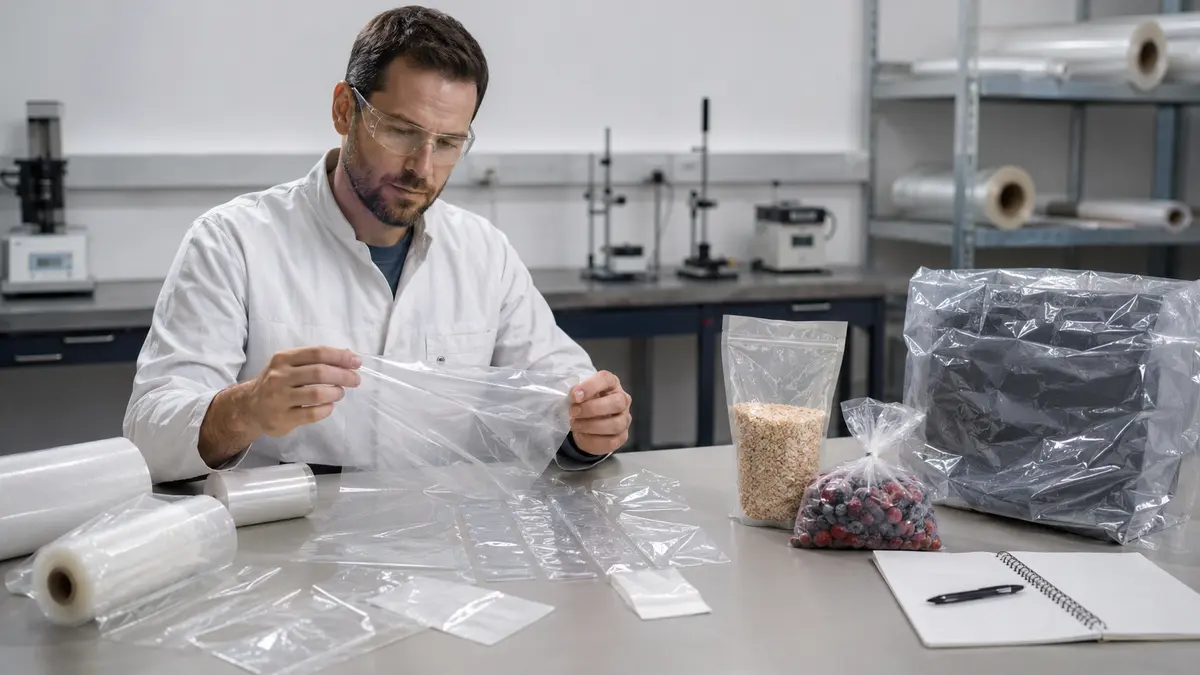
In the United States, FDA’s framework focuses on the food-contact substance and its intended use. Where a substance is a food additive, the intended use needs an applicable authorization, supported by migration and safety information. A buyer should identify the exact formulation, food type, contact duration, temperature, and whether the claim applies to the film alone or the complete package.
In the European Union, the European Commission’s food-contact legislation page points to the Framework Regulation (EC) No 1935/2004, plastics Regulation (EU) No 10/2011, and good manufacturing practice under Regulation (EC) No 2023/2006. Composition restrictions, migration, intended conditions, traceability, supporting documents, and a declaration of compliance may all be relevant. A U.S. position cannot simply be reused as an EU conclusion, or vice versa.
Recyclability depends on the complete package and local system
PVC can be mechanically recycled where the particular product format is collected, correctly sorted, and accepted by a reprocessor with an end market. That statement does not prove that a finished package is recyclable in every location. Labels, lidding, coatings, printing, adhesives, colors, closures, and contamination affect the result.
Designers must also consider interactions with other recycling streams. The Association of Plastic Recyclers’ PET rigid guidance identifies PVC components as detrimental to PET recycling because PVC can be difficult to separate from PET and can damage recycled PET quality during processing. This is a PET-stream design warning, not proof that every PVC item is unrecyclable. State the package design, market, collection route, sortation path, and applicable guidance before making a claim.
Important: Avoid unconditional terms such as “eco-friendly,” “100% recyclable,” or “zero waste.” Use a narrow claim supported by the complete package and the intended local system.
Frequently Asked Questions About PVC Film Uses
Can PVC film be used for direct food contact?
It depends. Use an exact PVC film for direct food contact only when its documentation covers the destination market, food type, temperature, and contact time, and verify that basis for the finished package.
Is PVC film the same as PVC shrink film?
No. PVC shrink film is one engineered category within the wider PVC film family. Other PVC films are designed for cling, thermoforming, graphics, lamination, protective covers, or medical and industrial components. A non-shrink PVC film should not be expected to deliver controlled shrink behavior.
When should a buyer evaluate another film material?
Evaluate alternatives when an exact PVC construction cannot meet the project’s regulatory, converting, temperature, performance, recycling, or customer-policy requirements. Compare candidates under the same package design, test methods, conditions, and end-of-life system; there is no single universal replacement for every PVC film use.
PVC film is used across packaging, healthcare, industrial fabrication, and surface graphics because its formulation and processing can be tailored to very different jobs. The safe selection path is always the same: define the finished use, choose the rigid or flexible branch, match the converting process, and verify the exact grade with documents, samples, and representative tests. That approach shows where PVC fits—and where another construction deserves evaluation—without turning a material name into an unsupported promise.
Related Bestypack Resources
- Reliable PVC Shrink Film
- The ultimate guide: what is PVC shrink film
- Differences Between Polyolefins, PVC And Polyethylene
- PVC Film Manufacturer&Supplier
- PVC
 English
 Japanese
 French
 Spanish
 Korean
 Italian
 Portuguese
 Dutch
Dutch Arabic
 Russian
 German