
Plastic food packaging includes flexible films and pouches, semi-rigid trays and tubs, and rigid bottles, jars, and closures. The right choice is not simply “PET versus PP” or “pouch versus tray.” Buyers must specify both the package format and the complete material construction, then qualify that combination for the food, filling process, distribution route, shelf-life target, consumer use, and destination market. This guide provides that classification framework and shows what evidence and trials should support a commercial decision.
Plastic Food Packaging Has Two Classification Layers
For regulatory context, consult the U.S. FDA’s food-packaging guidance before approving an intended food-contact use.
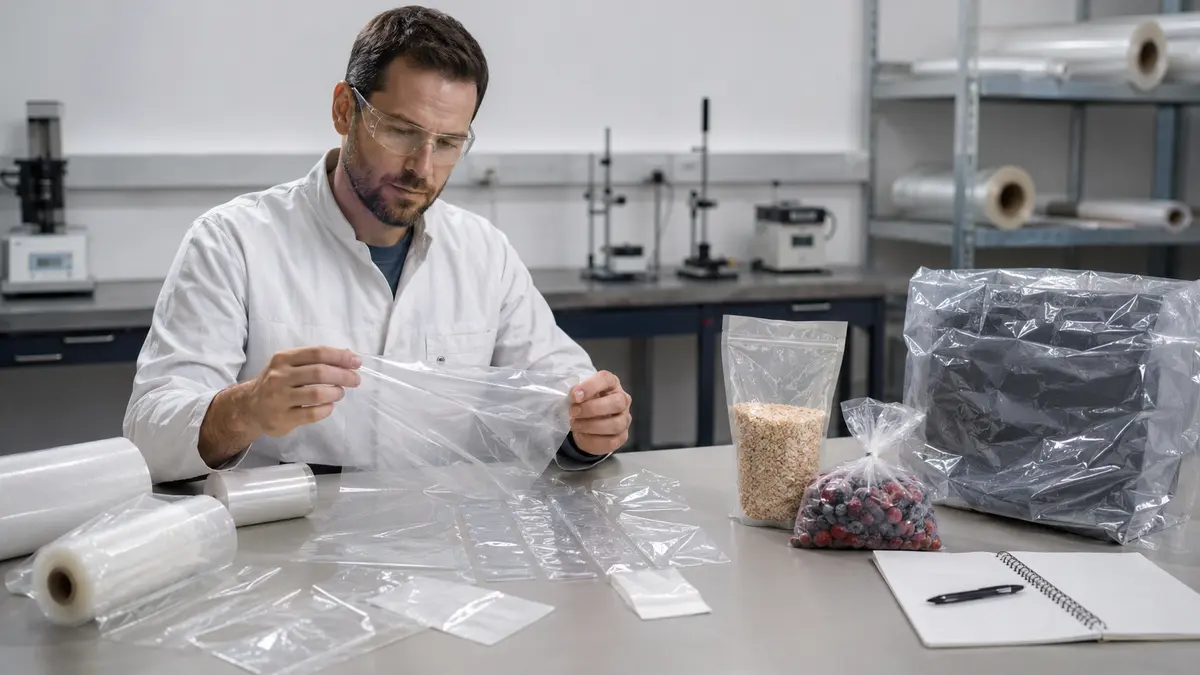
For regulatory context, consult the U.S. FDA’s food-packaging guidance before approving an intended food-contact use.
Packaging discussions often mix physical formats with polymer names. A pouch is a format; polyethylene is a material family. A tray may be made from one polymer, a multilayer sheet, or a coated construction. Separating these two classification layers makes an RFQ clearer and prevents a common mistake: assuming that a familiar resin name predicts the performance of the finished package.
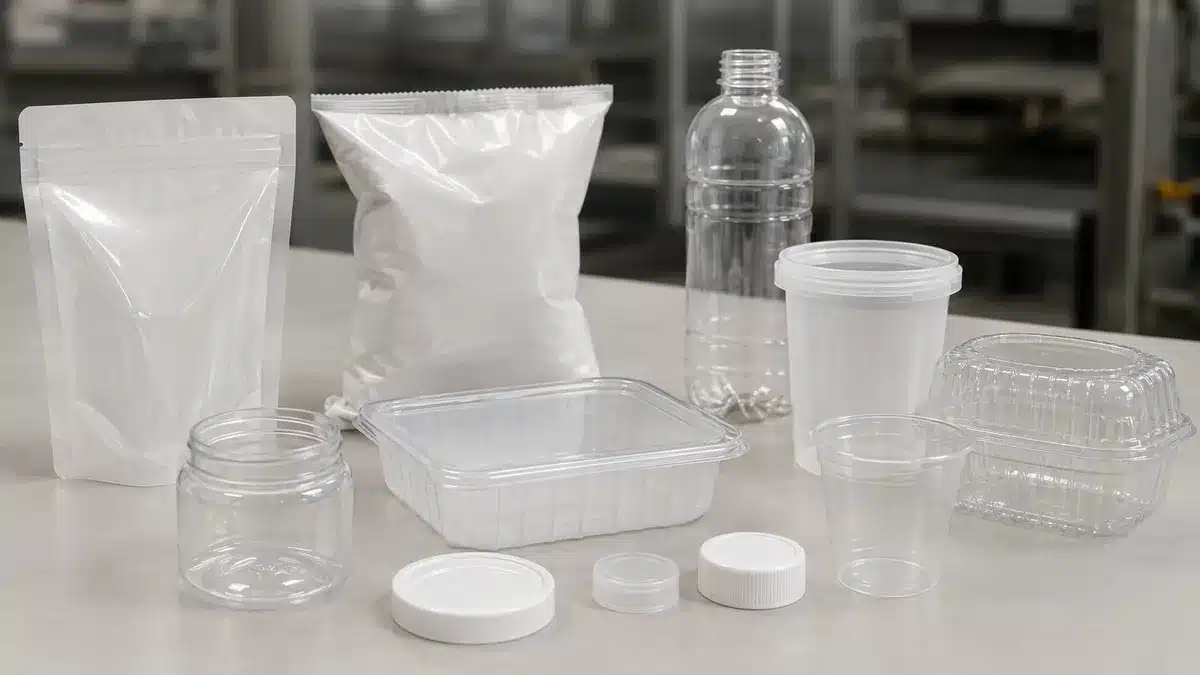
Start with package format
The first layer describes how the package holds its shape and how it moves through converting, filling, closing, distribution, and use.
- Flexible packages include rollstock films, wraps, lidding webs, bags, sachets, and pouches. They readily change shape when filled or handled.
- Semi-rigid packages include many formed trays, tubs, and cups. They retain a defined shape but can flex under load.
- Rigid packages include many bottles, jars, closures, and thick-wall containers. They maintain their geometry through normal handling, although the degree of rigidity still depends on design and material.
These categories are practical rather than absolute. A thin formed tray and a thick pouch can overlap in stiffness, so buyers should describe the actual geometry, wall or web thickness, filled weight, stacking load, and handling conditions instead of relying on a label alone.
Then define material and structure
The second layer describes what the package is made from and how its components are assembled. For a flexible web, that can include polymer family, grade, orientation, individual layer thickness, sealant layer, surface treatment, ink, adhesive, coating, and layer order. For a rigid container, it can also include the forming or molding route, colorant, closure, liner, tamper-evident feature, and any lidding or induction-seal component.
| Classification question | Examples of possible answers | What it does not establish |
|---|
|—|—|—|
| What is the package format? | Pouch, lidded tray, tub, clamshell, bottle | Polymer grade, barrier, seal window, or compliance |
| What is the material family? | PE, PP, PET, PA, EVOH, PS, PVC, PLA | Complete layer structure or final package performance |
| How is it constructed? | Monolayer, coextruded, laminated, coated, printed | Suitability for a specific food, temperature, or contact time |
| How is it closed? | Heat seal, snap lid, screw closure, liner, induction seal | Leak resistance or package integrity without testing |
The finished article—not the category name—is the unit that must work. Even a component that does not provide the main structure, such as an adhesive, ink, coating, or closure liner, can affect converting, migration assessment, appearance, package integrity, and recovery options.
Flexible Plastic Food Packaging
Flexible packaging can use little material relative to the volume it contains and can run at high packing speeds, but those benefits depend on the web, seals, equipment, and product behaving as one system. “Film” is therefore a starting category, not a purchase specification.
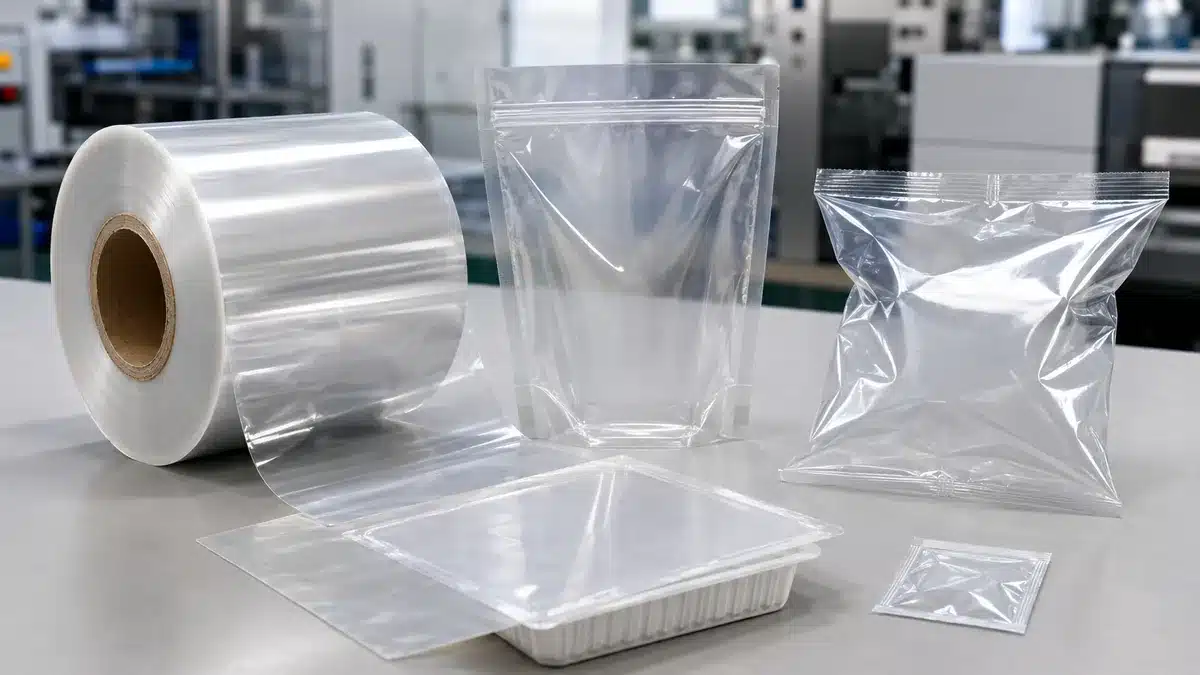
Films, wraps, and lidding
Rollstock film can be converted before delivery or formed and sealed on the food producer’s line. Common routes include horizontal or vertical form-fill-seal, overwrapping, flow wrapping, and tray lidding. Each route places different demands on web tracking, stiffness, friction, heat response, sealing surface, print registration, and machine tension.
Buyers should distinguish the job of the web:
- A primary wrap directly contains the food and needs a closure or seal suitable for that contact and distribution condition.
- An overwrap may provide bundling, surface protection, display, or tamper evidence, but it does not automatically create a hermetic package.
- A lidding web must match the tray flange, sealant chemistry, sealing equipment, contamination conditions, opening force, and intended peel behavior.
- A shrink application also requires the correct distinction between shrink temperature, shrink force, final appearance, and the heat tolerance of both food and underlying package.
The same visible format can use very different constructions. A clear lid for chilled produce, a retortable lidding web, and an easy-peel dairy lid may all look like “film,” yet their structures, sealing conditions, tests, and compliance documentation are not interchangeable.
Bags and pouches
Bags and pouches may be supplied premade or formed from rollstock. Common examples include pillow packs, flat bags, gusseted bags, sachets, vacuum bags, and stand-up pouches. Features such as zippers, spouts, valves, tear notches, and laser scoring become part of the package system and can introduce additional seal and integrity interfaces.
Format selection should follow the filling and use sequence:
- Dry snacks may prioritize machinability, print presentation, seal integrity around product particles, and protection from moisture or oxygen as justified by shelf-life work.
- Frozen foods may require flexibility and impact resistance at the lowest expected distribution temperature, plus seals that tolerate product and ice contamination.
- Sauces and liquids require control of seal channels, flex cracking, closure torque or fit, drop performance, and consumer dispensing.
- Vacuum or modified-atmosphere formats require the complete package to maintain the intended internal condition; material barrier is only one part of that result.
A supplier can propose a construction, but the buyer still needs trials on the actual filler, sealing jaws, speeds, product, and distribution route. A film that seals well in a clean laboratory test may behave differently when the seal area contains oil, powder, moisture, wrinkles, or product fragments.
Semi-Rigid and Rigid Plastic Food Packaging
Shape-retaining packages can provide product presentation, stacking geometry, portion control, and resistance to crushing. Their performance depends on geometry and closure design as much as on the nominal polymer.
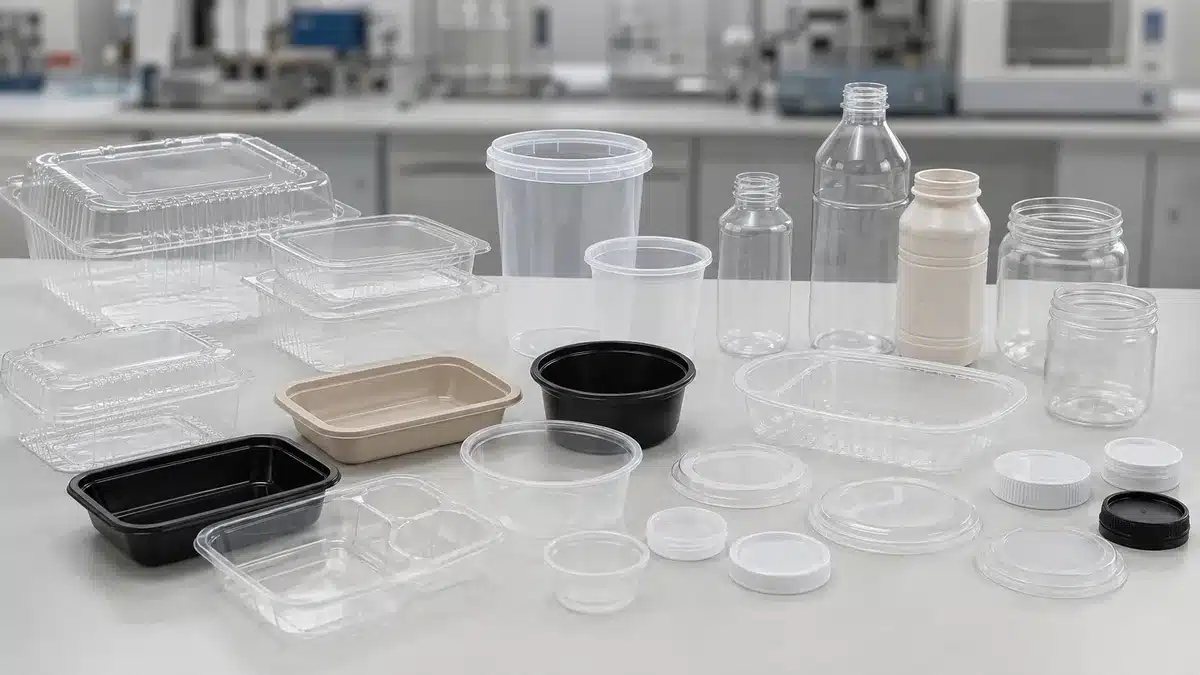
Trays, tubs, cups, and clamshells
Trays may be thermoformed from sheet or produced by another forming process, then paired with a lidding film, snap lid, overwrap, or skin film. Tubs and cups often use snap-fit, foil, film, or molded closures. Clamshells combine a formed base and hinged cover, sometimes with additional labels or tamper-evident features.
The buyer should define:
- Flange width, flatness, and surface condition where a heat-sealed lid is used.
- Top load, sidewall strength, nesting, denesting, and stack behavior.
- Product temperature at filling and the lowest and highest expected storage or reheating temperatures.
- Transparency, color, anti-fog, light protection, and display requirements.
- Seal type, opening force, leak target, and how the package will be inspected.
Terms such as “ovenable,” “microwaveable,” “freezer suitable,” or “easy peel” require a specific construction, use condition, and validation method. They cannot be assigned safely from a broad resin family or visual appearance.
Bottles, jars, and closures
A bottle or jar should be evaluated with its neck finish, closure, liner, tamper-evident system, and filling process. Container wall distribution, panel design, headspace, internal pressure or vacuum, cap application, hot or cold filling, and cooling can all affect dimensional stability and seal integrity.
The package brief should address the full closing sequence:
- The container arrives and feeds consistently on the line.
- Filling does not distort the container or contaminate the sealing surface.
- The closure is applied within a controlled torque, force, or seating condition.
- Any liner or induction seal is compatible with the finish and product.
- The closed package survives handling, transport, storage, and consumer opening.
Resin identification is therefore only one input. A bottle body that is suitable for its intended contents can still fail if the closure fit, liner, sealing process, or distribution load is wrong.
Common Plastics and What They Contribute
Polymer families contribute different combinations of sealing, stiffness, toughness, clarity, heat response, and barrier. Those roles are conditional. Grade, molecular design, orientation, crystallinity, thickness, additives, processing history, and the other layers can change the result substantially.
PE, PP, and PET
PE, PP, and PET appear in both flexible and rigid food packaging, but they do not perform one fixed job.
| Material family | Typical roles in food packaging | Qualification questions |
|---|
|—|—|—|
| Polyethylene (PE), including LDPE, LLDPE, and HDPE families | Flexible sealant layers, bags, liners, squeeze bottles, closures, and some rigid containers | Which grade and density? What sealing, stiffness, friction, impact, and temperature behavior is required? |
| Polypropylene (PP), including cast and oriented forms | Tubs, cups, closures, thermoformed items, seal layers, and printed oriented webs | Is the PP cast, oriented, injection molded, or thermoformed? What heat, hinge, impact, seal, and clarity conditions apply? |
| Polyethylene terephthalate (PET), including amorphous, oriented, and crystallized forms | Beverage and food containers, trays, outer webs, and lidding components | Which PET form and process? What forming, dimensional, heat, barrier, and recycling-system conditions apply? |
PE is often selected where flexibility and heat sealing are useful, but a PE family name does not define seal initiation, hot tack, stiffness, puncture resistance, or friction. PP can provide a different heat and stiffness balance, yet not every PP container is suitable for microwave or hot-fill use. PET can provide clarity and dimensional stability in many constructions, while amorphous PET, oriented PET film, and crystallized PET trays are distinct forms with different processing and use limits.
Important: A resin identification code is not a food-contact authorization, performance specification, or guarantee that the final package will be collected and recycled in a particular location.
PA, EVOH, PS, PVC, and bio-based options
Other polymers can address a specific function or format, but they introduce their own qualification questions.
| Material family | Potential role | Boundary to verify |
|---|
|—|—|—|
| Polyamide (PA or nylon) | Toughness, puncture resistance, thermoforming behavior, or a structural layer in some flexible packages | Grade, moisture conditioning, orientation, layer position, sealing interface, and mechanical test conditions |
| Ethylene vinyl alcohol (EVOH) | Oxygen-barrier layer in some multilayer structures | Grade, thickness, humidity exposure, protective layers, forming, and the OTR test conditions for the final structure |
| Polystyrene (PS), including foamed and non-foamed forms | Cups, lids, trays, and other formed items in markets where the intended use is permitted | Impact behavior, temperature, chemical compatibility, local restrictions, and recovery route |
| Polyvinyl chloride (PVC) | Certain cling films, formed packages, seals, or closures in markets and uses where the construction is permitted | Formulation, additives, migration evidence, temperature, market restrictions, and end-of-life route |
| Bio-based or compostable plastics, such as some PLA constructions | Selected rigid or flexible formats where processing and disposal conditions are defined | Heat and impact behavior, barrier and seal needs, certification scope, industrial versus home composting, collection system, and food-contact documentation |
EVOH is a useful example of why a material name is not a finished-package claim. Its oxygen-barrier contribution can depend strongly on humidity, thickness, grade, and protection by adjacent layers. An OTR value is meaningful only when the report identifies the complete structure, thickness, temperature, relative humidity, test side, gas, method, and unit.
Likewise, “bio-based,” “biodegradable,” and “compostable” describe different attributes. A bio-based polymer is not automatically biodegradable, and a certified compostable package may require a defined industrial process that is not available in the buyer’s market. The complete package—including ink, adhesive, coating, label, zipper, or closure—must be considered.
Single-Layer, Multilayer, and Coated Structures
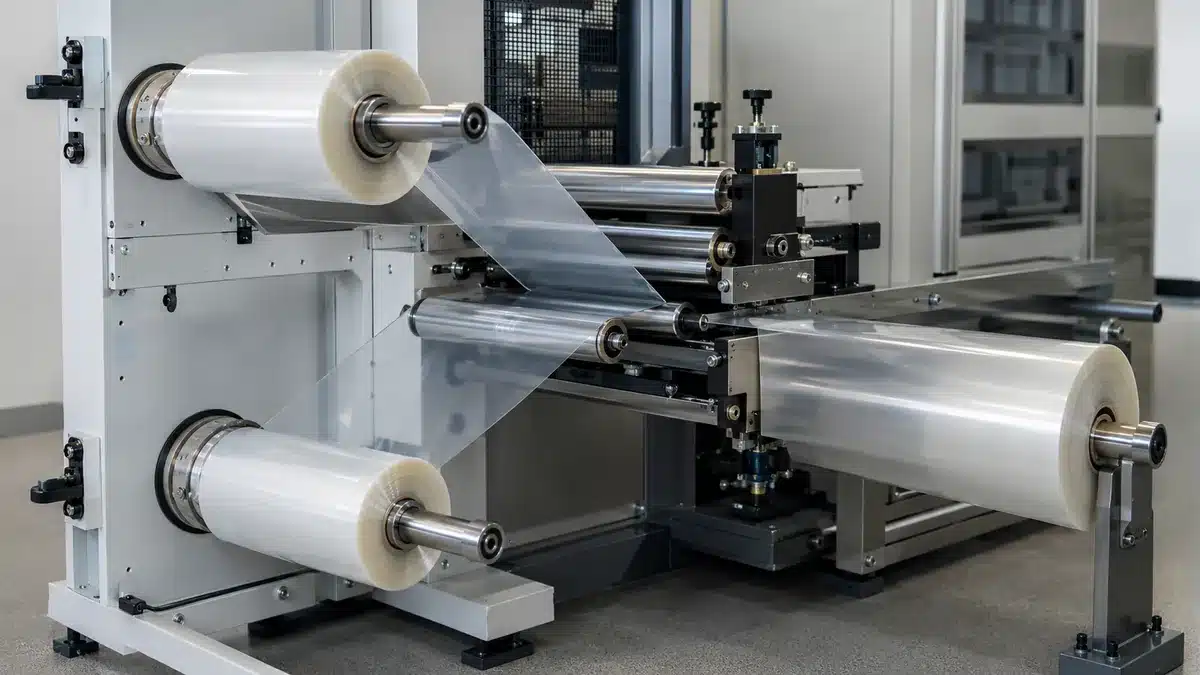
A monolayer package uses one continuous material layer, although that layer may still contain additives, colorants, or surface treatment. A multilayer package combines functions through coextrusion, lamination, coating, or separate package components. More layers are not inherently better; the design is justified only when it meets the brief with acceptable processing, safety, quality, and recovery tradeoffs.
Why one polymer may be insufficient
A package may need several functions at once: a printable surface, stiffness for machine handling, toughness during distribution, a controlled seal response, and protection against oxygen, moisture, aroma, grease, or light. One polymer and one thickness may not deliver the required balance.
In a multilayer flexible structure, an outer layer might support printing and machine handling, a middle layer might contribute toughness or barrier, and an inner layer might provide food contact and heat sealing. In a tray-and-lid system, the tray supplies geometry while the lidding web provides closure and opening behavior. These are functional examples, not fixed recipes; the actual layer sequence and thickness must come from the approved specification.
The qualification chain should follow the failure risk:
- If shelf life depends on oxygen control, test the final structure under defined OTR conditions and confirm it with product shelf-life work.
- If leakage is the primary risk, characterize the seal window and test package integrity under realistic contamination and distribution conditions.
- If puncture or flex cracking is likely, test the converted package and filled distribution unit, not only a flat film sample.
- If consumer opening matters, define an acceptable peel or opening range and verify it after aging and distribution.
Tradeoffs added by adhesives, inks, coatings, and tie layers
Every added interface can solve.
The U.S. FDA explains that food-contact substances include packaging components such as adhesives and colorants, and that authorization is connected to the intended use and migration assessment. In the EU, Regulation (EU) No 10/2011 addresses plastic food-contact materials and includes provisions relevant to layered, printed, coated, and adhesive-containing constructions. Neither framework makes a generic polymer name sufficient evidence for every application.
Important A nominal mono-material design.
How to Select a Plastic Food Package
Selection should move from requirements to evidence, not from a supplier catalog to a broad promise. The sequence below keeps format, construction, compliance, and commercial trials connected.
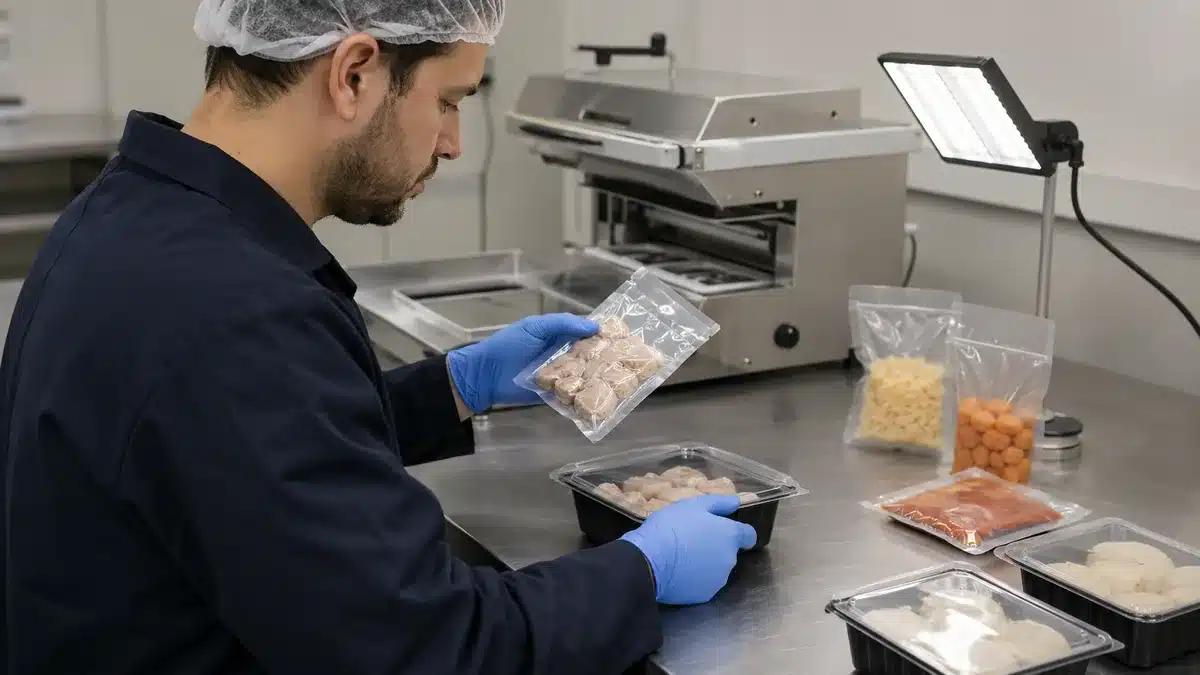
Map food and distribution conditions
- Describe the food. Record whether it is dry, aqueous, acidic, fatty, oily, alcoholic, aromatic, sharp-edged, carbonated, or otherwise demanding. Note particle size and whether product can enter the seal area.
- Define the process. State fill temperature, sterilization or pasteurization conditions, cooling, freezing, gas flushing, vacuum, and line speed. Identify the forming, filling, and closing equipment.
- Set the life cycle. Define target shelf life, storage temperature and humidity, light exposure, transport mode, altitude or pressure changes, stacking, drops, vibration, and secondary packaging.
- Describe consumer use. Include opening, reclosing, dispensing, reheating, freezing, and any direct contact with ovens or microwaves. Separate intended use from misuse scenarios that the pack must reasonably resist.
- Name the market. Food-contact documentation, labeling, restricted substances, recycled-content rules, and recovery claims are market-specific. A declaration for one jurisdiction or use condition should not be generalized to another.
This input set should become part of the RFQ. Without it, suppliers may quote structures that look similar but were designed for different temperatures, contact times, foods, or equipment.
Validate sealing, barrier, line performance, and compliance
After screening candidate formats and constructions, use a staged qualification plan.
| Qualification area | What to define | What the result can support | What it cannot prove alone |
|---|
|—|—|—|—|
| Seal and package integrity | Sealant and mating surface, temperature, pressure, dwell time, contamination, peel method, aging | A seal window and integrity response for the tested construction and conditions | Performance on every line speed, food, or production lot |
| Oxygen and moisture barrier | Complete structure, total and layer thickness, temperature, RH, test side, gas, method, and units | OTR or WVTR under the reported conditions | Commercial shelf life without product studies |
| Mechanical performance | Sample direction, thickness, conditioning, method, speed, and package geometry | Comparative tensile, tear, puncture, impact, or compression behavior under stated conditions | Finished distribution performance by itself |
| Machinability | Web tension, friction, tracking, forming, cutting, registration, sealing, filling, and reject rate | Compatibility on the tested equipment and settings | Transfer to another machine without review |
| Food-contact compliance | Complete formulation or construction, intended food, contact time and temperature, target market, and supporting declaration/test records | Regulatory review for the stated use and document scope | Universal “food grade” status |
| Distribution and shelf life | Filled package, secondary packaging, transport profile, storage, sampling plan, and acceptance criteria | Performance of the tested pack/product system | Results for a different food, route, or shelf-life target |
Useful test methods depend on the package and market Examples may include ASTM F88 F88M for seal strength ASTM F1921 F1921M for hot tack ASTM D3985.
Line trials should use representative production material and record settings, speeds, temperatures, forces, downtime, scrap, defects, and inspection results. Final approval should also address filled-package aging, distribution, and change control. If a resin, additive, layer thickness, adhesive, ink, forming condition, or supplier site changes, the buyer should decide which evidence and trials must be repeated.
Questions Buyers Should Ask Suppliers
The most useful supplier questions request a defined evidence package and connect it to the buyer’s own approval work. They do not ask for an unsupported promise that one material is “best.”
What evidence should a supplier return?
Ask for evidence that identifies the exact item being offered and the scope of every statement:
- Product or grade identification, material family, layer sequence, total and layer thickness, dimensions, tolerances, treatment, print, coating, adhesive, and closure details as applicable.
- A specification or data sheet that distinguishes typical values from guaranteed limits and names the relevant methods and conditions.
- Food-contact documentation for the target market, food type, contact time, temperature, and final construction, including the scope and date of declarations or migration work.
- Test reports that identify the sample, batch, method edition, conditioning, direction, environment, units, results, and limitations.
- Recovery or environmental evidence tied to the complete package and target market, with bio-based content, recycled content, recyclability, and compostability treated as separate claims.
- Change-control terms explaining which material, formulation, process, site, or specification changes trigger notice and requalification.
Generic brochures, resin codes, certification logos, or a declaration that omits intended use are not substitutes for this package. Management-system certificates can support the named organization and scope, but they do not prove barrier, seal, migration, shelf life, or complete-package performance.
What should a package trial confirm?
A package trial should confirm that representative material runs on the intended equipment closes consistently around the real product and survives the defined life cycle Acceptance criteria should be written before the trial and should.
The trial plan should also.
Related Bestypack Resources
- BOPP Thermal Lamination Film
- Laminating Film Guide: What You Need to Know
 English
 Japanese
 French
 Spanish
 Korean
 Italian
 Portuguese
 Dutch
Dutch Arabic
 Russian
 German