
Laminating film is a film web used to cover another material or become one layer of a multi-layer laminate. The right choice depends on more than gloss, thickness, or polymer name. Buyers must define the receiving substrate, bonding process, equipment, downstream conversion, end use, and approval tests. This guide explains the main constructions and methods, then turns them into a practical RFQ and validation path for print finishing and flexible packaging.
What Is Laminating Film?
For regulatory context, consult the U.S. FDA’s food-packaging guidance before approving an intended food-contact use.
For regulatory context, consult the U.S. FDA’s food-packaging guidance before approving an intended food-contact use.
“Laminating film” is a functional description, not one material specification. It can describe a pre-coated film applied to printed paper or board, or a film web bonded to another flexible web during package conversion. Those uses share a purpose—combining surfaces or layers—but they do not necessarily use the same adhesive, equipment, process window, or test plan.
Before comparing options, state what will be laminated, which surface will face outward, how the bond will be created, and what the finished item must withstand. That context prevents a common purchasing error: treating products with similar names as interchangeable.
Print-Finishing Laminating Film
In print finishing, laminating film usually covers a printed sheet, paper, paperboard, photograph, label, or graphic. A thermal film carries a layer that activates under controlled heat and pressure. A pressure-sensitive film bonds under nip pressure without the same heat-activation step. Some uncoated films are applied with a separately supplied liquid adhesive.
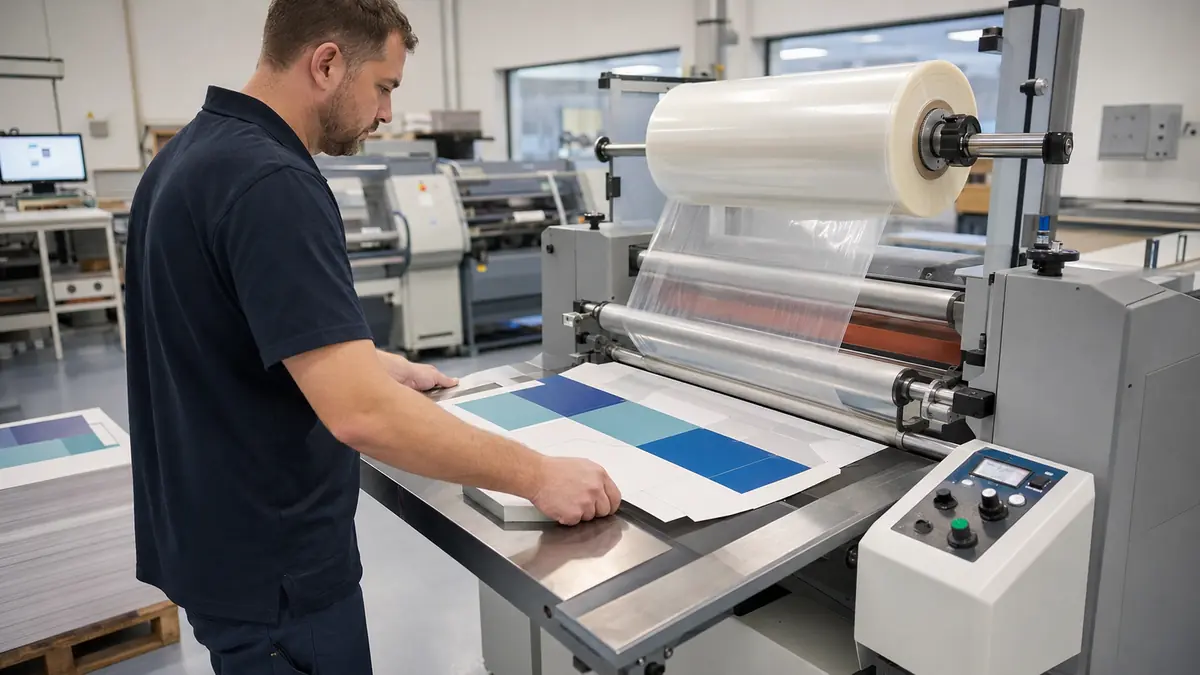
The finished surface may be gloss, matte, textured, or tactile, but appearance is only one selection axis. Film width, roll diameter, core, thickness, activation behavior, printed surface, ink system, and later operations such as folding, creasing, foil stamping, coating, or die cutting also influence suitability.
Flexible Packaging Lamination Film
In flexible packaging, the term may refer to one web in a laminate rather than a ready-to-use adhesive-coated product. A converter can join printed or unprinted plastic film, paper, or foil using a separately metered adhesive or an extrusion layer. The resulting structure may distribute printability, toughness, sealing, optical, barrier, or handling functions across different layers.
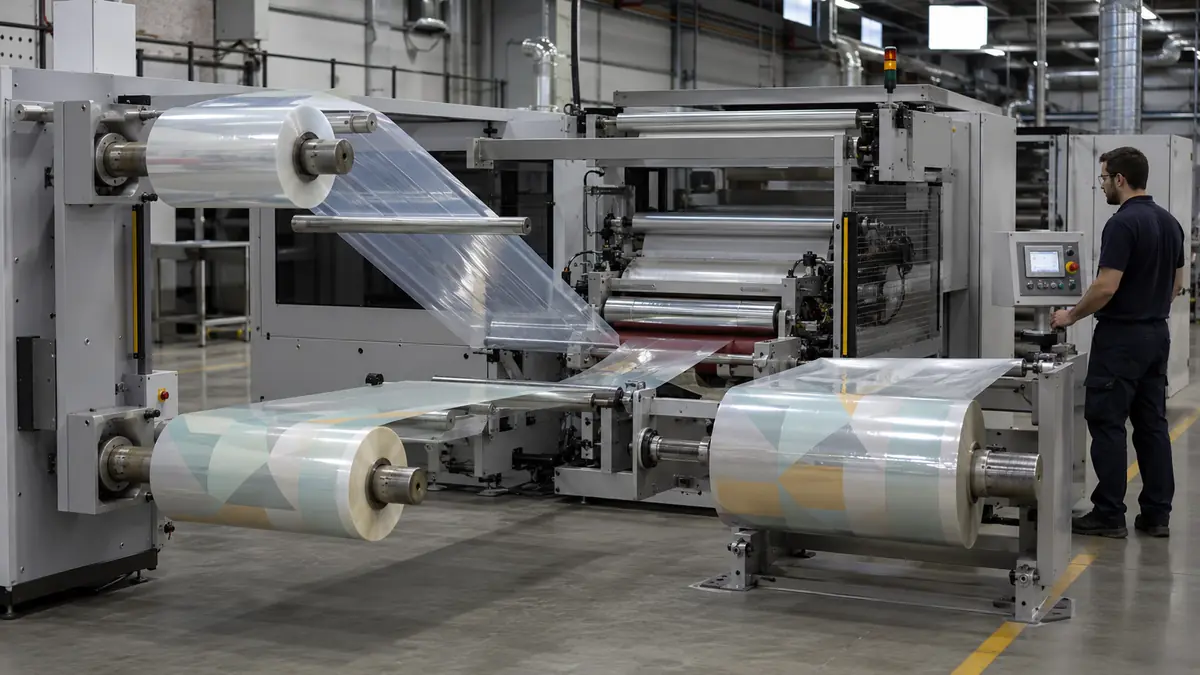
The material name alone does not establish those functions. Polymer grade, orientation, layer sequence, individual and total thickness, surface treatment, ink, adhesive, curing, and final conversion all matter. A structure intended for food, medical, or other controlled use also needs product- and market-specific documentation; the polymer name is not evidence of compliance.
How Laminating Film Is Constructed
A useful specification separates the base film, bonding layer, and receiving substrate. The interfaces between those components are as important as the components themselves. A supplier therefore needs the full construction and process, not just a request for “PET laminating film” or “matte BOPP.”
Base Film
The base film is the continuous web that carries the finish or contributes a function to the laminate. Print-finishing products commonly use oriented plastic films, while flexible packaging structures may use BOPP, PET, PA, PE, other polymer webs, paper, or foil in different combinations. These abbreviations identify polymer families, not complete performance.
For purchasing, record the exact grade or approved equivalent, orientation, surface or coating, thickness and tolerance, width, winding direction, treated side, and relevant roll dimensions. If optical, mechanical, or dimensional properties are important, specify the test method, specimen direction, conditioning, units, and acceptance range rather than relying on adjectives such as “clear,” “strong,” or “stable.”
Adhesive, Coating, or Tie Layer
The bonding layer may be factory-applied to a thermal or pressure-sensitive film, applied by the converter as a liquid adhesive, or formed as a molten extrusion or tie layer. These are not equivalent routes. Each has its own chemistry, storage requirements, application controls, interaction with inks and coatings, and readiness time.
For a separately applied adhesive, the controlled inputs can include component identity, mix ratio where applicable, coating weight and measurement method, viscosity or temperature, drying conditions, nip conditions, and cure history. For a pre-coated film, the applicable supplier data sheet should define compatible activation and storage conditions. In both cases, actual production settings must be established on the intended machine and substrate.
Receiving Substrate
The receiving substrate is the surface to which the film bonds. It may be porous paper, coated board, a digitally or conventionally printed sheet, another plastic film, foil, or a coated web. Surface chemistry and condition can change after printing, storage, handling, or treatment, so naming the substrate is not enough.
The RFQ should identify the substrate grade, coating or ink system, treated or print side, relevant surface preparation, age of the print or web, and any heat or pressure sensitivity. Contamination, additives, residual solvent or moisture, and insufficient or decayed surface treatment can affect wet-out and adhesion. A trial using representative production material is therefore more meaningful than a trial on a generic clean sheet.
Main Lamination Methods
The four methods below differ mainly in where the bonding layer comes from and how it is activated. The table is a screening tool; it does not replace the product data sheet or a machine trial.
| Method | Bonding route | Typical project question | Critical controls |
|---|---|---|---|
| Thermal lamination | A pre-applied layer is activated with controlled heat and nip pressure | Can the printed substrate and film tolerate the required thermal and pressure window? | Film orientation, roller temperature, pressure, speed, nip condition, print age, curl |
| Pressure-sensitive lamination | A tacky adhesive bonds under pressure | Is the substrate heat-sensitive, and can the process control entrapped air and alignment? | Release handling, nip pressure, cleanliness, tension, application speed, adhesive wet-out |
| Adhesive lamination | A liquid or reactive adhesive is metered between webs | Which adhesive family and cure schedule fit the films, ink, end use, and line? | Mix or dilution, coating weight, drying where required, nip, tension, curing, residuals |
| Extrusion lamination | A molten polymer or tie layer is introduced between moving webs | Can the webs and extrusion layer form the required bond and conversion behavior? | Resin or tie-layer selection, melt and nip conditions, web temperature, tension, treatment, layer uniformity |
Thermal Lamination
Thermal lamination is common in print finishing because the film and activation layer arrive as one roll. Heat softens or activates the bonding layer while nip pressure brings it into contact with the printed substrate. The usable window belongs to the exact film, print, and machine combination; a temperature copied from another product is not a safe setup value.
Low temperature can leave incomplete wet-out or weak areas, while excessive heat can distort sensitive prints, increase curl, or create other appearance problems. Speed, roller condition, nip pressure, sheet moisture, and ink coverage interact with temperature. Record the complete setup during approval so a good trial can be reproduced.
Pressure-Sensitive Lamination
Pressure-sensitive film is often selected when the print or substrate should not pass through a thermal activation step. The adhesive is already present and forms contact under nip pressure. This avoids one source of heat exposure, but it does not eliminate process control.
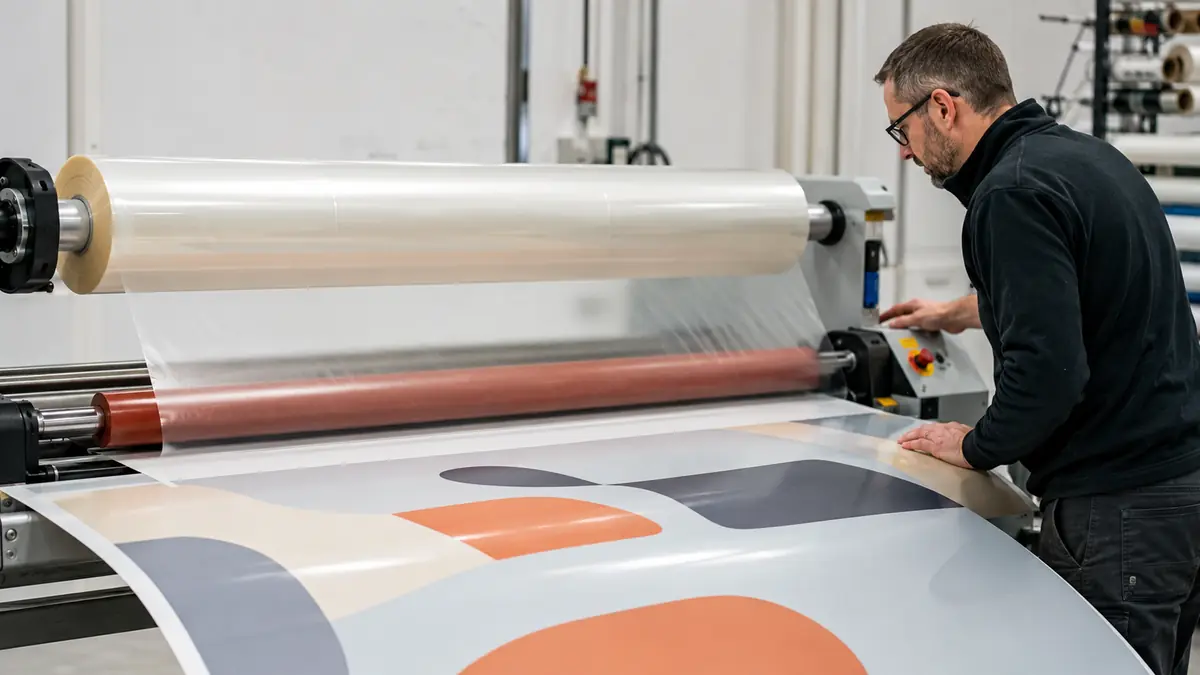
Dust, surface texture, poor alignment, uncontrolled tension, insufficient nip, and trapped air can remain visible under a clear film. Adhesive choice also has to match the substrate, expected handling, outdoor or indoor environment where relevant, and any later cutting or forming. Do not assume that “cold” means universal substrate compatibility.
Adhesive Lamination
Adhesive lamination is central to many flexible packaging structures. Solventless, solvent-based, and water-based systems are among the available families; the appropriate choice depends on the exact films, ink and coating system, equipment, production controls, end use, and required documents. The adhesive supplier’s technical data and regulatory documentation must match the proposed construction.
Metering, mixing, drying, nip, winding, and curing all affect the final interface. A laminate can look acceptable immediately after production but fail later if cure, residuals, or interfacial compatibility are not controlled. Sampling plans should therefore include the specified conditioning or cure interval and, when relevant, checks after downstream conversion or environmental exposure.
Extrusion Lamination
Extrusion lamination joins webs by introducing a molten polymer layer between them before the nip. That layer can bond the substrates and contribute thickness or another functional role. The route requires the films, surface treatment, extrusion material, melt delivery, nip, cooling, and web handling to work as one system.
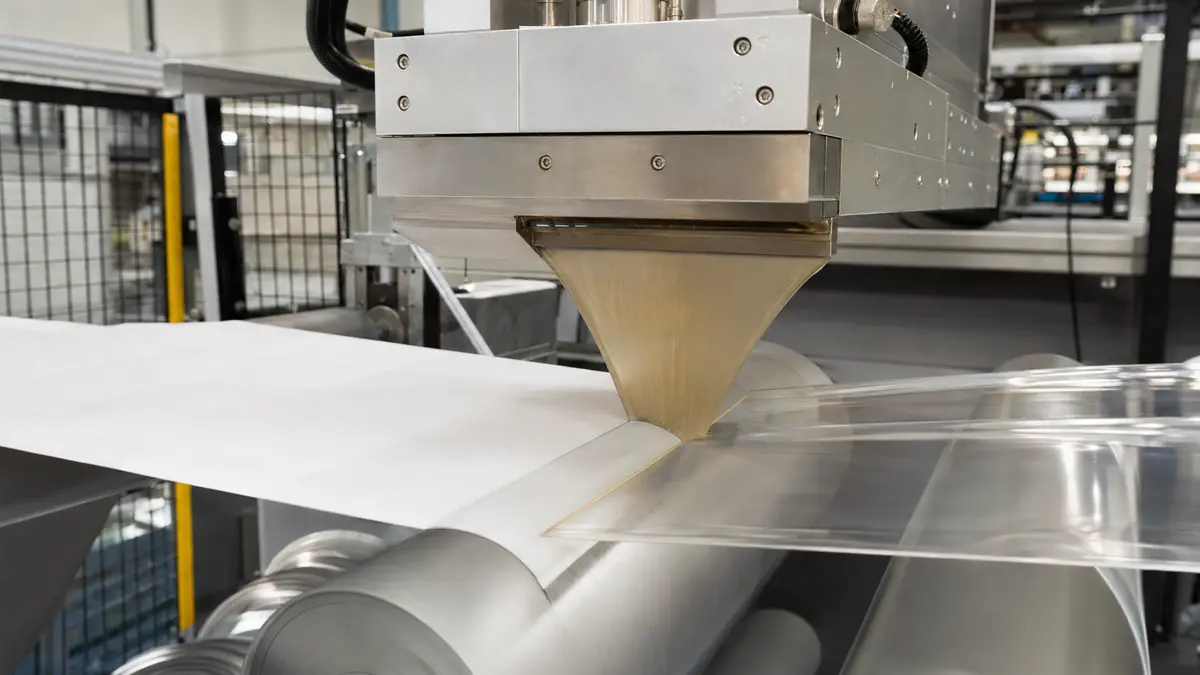
It should not be confused with simply buying a thicker single film. The extrusion layer becomes part of the laminate construction, and its identity and thickness need to be specified. Adhesion, gauge uniformity, curl, appearance, and downstream sealing or forming should be checked on representative production material.
What the Laminate Must Do
Start with functions, then choose the construction and process. A laminate may need to satisfy several of the following requirements, but none should be assumed merely because another layer has been added:
- Present the print correctly: define gloss, matte, haze, clarity, color shift, texture, scuff behavior, and acceptable cosmetic limits with agreed samples or methods.
- Handle as intended: define stiffness, flexibility, lay-flat behavior, fold or crease performance, puncture or tear needs, and the relevant MD/TD direction.
- Protect the surface: identify exposure to abrasion, moisture, light, chemicals, cleaning, temperature, or repeated handling, along with a test or use simulation.
- Run through conversion: confirm slitting, rewinding, cutting, folding, die cutting, pouch making, forming, or other operations on the intended equipment.
- Seal where required: identify the sealant layer, mating surface, machine, temperature, pressure, dwell time, and peel or strength method. Lamination bond and package seal are separate interfaces.
- Provide measured barrier where required: state OTR or WVTR with method, temperature, relative humidity, specimen thickness, test side, gas or vapor, and units.
- Meet end-use and market requirements: define contents, contact type, time, temperature, sterilization or retort exposure if applicable, target market, and required declarations or reports.
A project specification should distinguish mandatory acceptance criteria from desirable features. That makes trade-offs visible and prevents a surface finish from receiving more attention than bond integrity, conversion, or documentation.
How to Choose Laminating Film
Use a fixed sequence so that material, process, and validation decisions remain connected.
- Define the application and receiving substrate.
- Match the candidate film and bonding layer to the process and equipment.
- Check every downstream operation and end-use exposure.
- Agree on trial conditions, test methods, and acceptance criteria.
- Lock the approved structure, process window, and documentation.
Define the Application
Describe the finished item before naming a film. Include whether the job is a printed sheet, folding carton, label, graphic, pouch, lidding web, or another laminate; whether one or both sides are laminated; and which surface is visible or sealable. Add expected handling, storage, service temperature, contents, and shelf-life objective where relevant.
Then identify the receiving substrate precisely. For print, include the print process, ink or toner, coating, ink coverage, paper or board, and age before lamination. For flexible webs, state the complete proposed layer sequence, print location, treated sides, individual thicknesses, and which interface is being bonded.
Match the Film to the Process
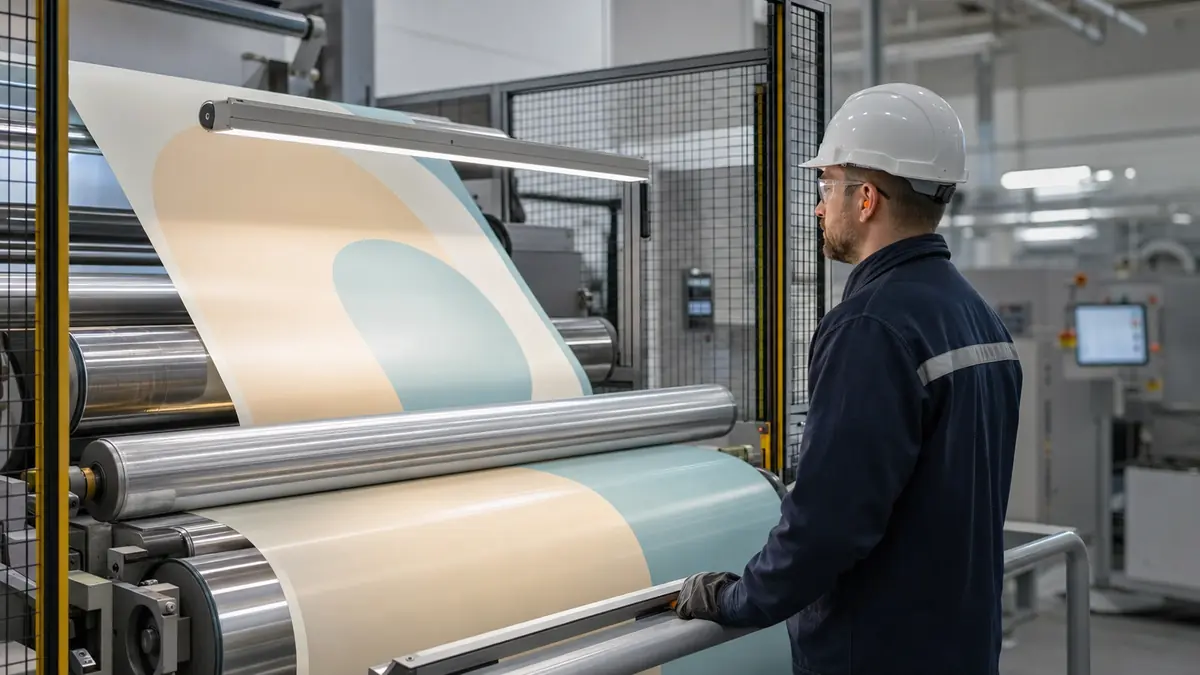
Confirm that the laminator can handle the film width core roll diameter web tension range winding direction and activation or coating route For thermal film use the supplier’s specified operating guidance as the starting point For pressure-sensitive film verify release handling and nip control For adhesive.
Compatibility must include the ink, coating, primer, and adhesive—not only the base film. Request current technical and safety data from the relevant suppliers, then run a controlled trial. Record material lots, settings, ambient conditions, and observed results so the comparison is reproducible.
Check Downstream Conversion
A visually acceptable laminated roll may still fail during folding, slitting, bag making, heat sealing, forming, or use. Include those steps in the trial. Watch for crack, lift, curl, tunneling, ink interaction, blocking, loss of registration, seal contamination, or unacceptable stiffness.
If the package relies on barrier, sealability, peel, puncture resistance, or another functional property, test the actual laminate or finished package under the agreed method and conditions. Do not substitute a resin data sheet or a result from a different structure, thickness, direction, or test environment.
Common Lamination Problems and What They Indicate
Visible symptoms narrow the investigation but rarely prove one cause. Preserve defect samples and compare them with the material, machine, environment, and cure records before changing settings.
| Symptom | Possible cause families | Controlled checks |
|---|---|---|
| Silvering, haze, or poor clarity | Incomplete wet-out, surface texture, air, contamination, incompatible coating or adhesive, insufficient activation | Compare treated and printed surfaces, inspect nip and roller condition, review activation or coating data, check representative control samples |
| Bubbles or blister-like areas | Entrapped air, moisture or volatiles, drying or cure issue, contamination, thermal sensitivity | Note when the defect appears, review substrate conditioning, drying and cure history, and inspect the interface without assuming one cause |
| Curl or poor lay-flat | Unequal web tension, thermal shrinkage, moisture imbalance, asymmetric construction, winding conditions | Record MD/TD orientation, tension, temperature, substrate moisture, layer thickness, and roll condition |
| Wrinkles or tunneling | Web handling, tension imbalance, dimensional change, weak or incomplete bond, storage or cure conditions | Map defect direction and timing, verify alignment and tension by web, compare before and after cure or storage |
| Delamination or edge lift | Low surface energy, contamination, incorrect adhesive choice or mix, low or uneven coat, insufficient activation or cure, ink or coating incompatibility | Identify the failure interface, review treatment and coating data, condition specimens consistently, and compare like-for-like bond tests |
| Blocking or transfer in the roll | Excess heat or pressure, winding stress, incomplete cure, surface interaction, storage temperature | Review rewind and storage records, inspect both contacting surfaces, and confirm release or cure requirements |
Change one controlled factor at a time where practical. If several variables move together, the next sample may look better without revealing why, and the problem can return during scale-up.
How to Validate a Laminated Structure
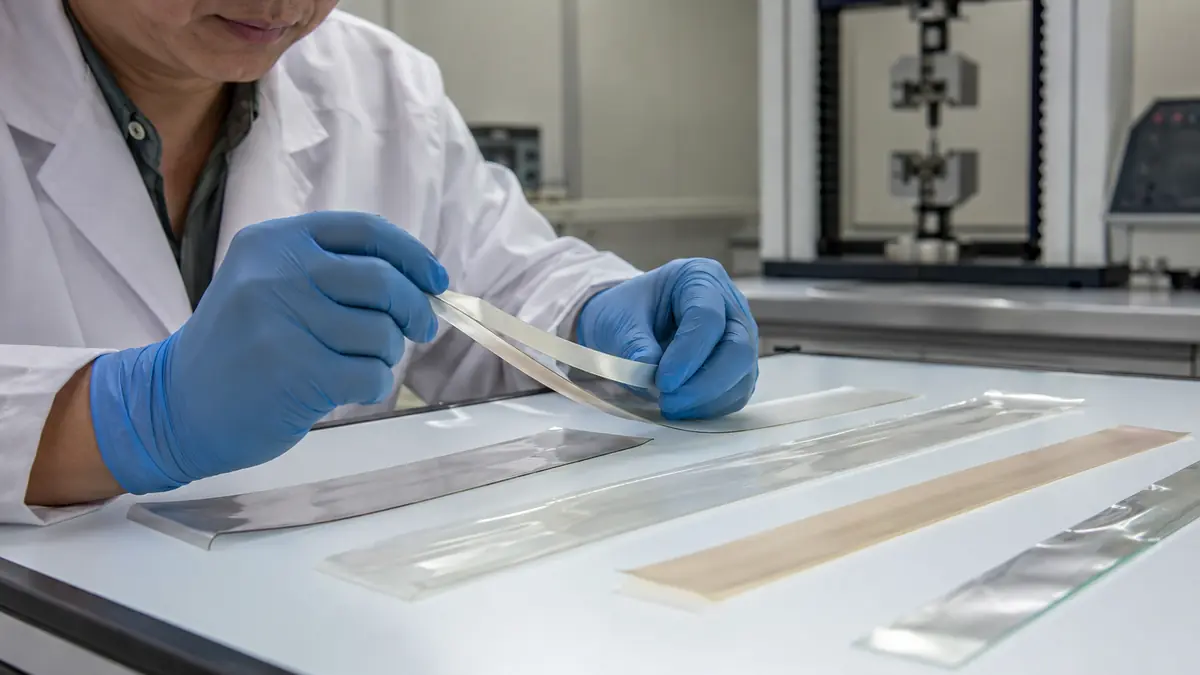
Validation should connect a test to a decision. Define the specimen, conditioning, method version, equipment, direction, units, and acceptance criterion before testing. Use the same construction and thickness for comparisons, and preserve the failure mode as well as the numerical result.
Bond and Appearance
Visual inspection should use agreed lighting, viewing distance, background, and defect limits. Bond evaluation should identify which interface separated and whether failure occurred cohesively, adhesively, in ink or coating, or by tearing or stretching the substrate.
ASTM F904-22 is one possible reference for separating plies and comparing the bond strength of similar flexible laminates. Its scope cautions against direct comparison across different materials or thicknesses because bending force contributes to the result. The project specification still needs specimen width, separation preparation, conditioning, test geometry and rate, reporting units, and acceptance criteria.
Converting and Package Performance
Run the approved laminate through the intended downstream process at representative conditions. Check dimensional stability, registration, cutting, folding, forming, sealing, and finished-package handling. Where package seals matter, ASTM F88/F88M-23 is a possible method for measuring the force required to separate a seal and recording failure mode; it is not, by itself, a whole-package integrity test or a universal pass limit.
For barrier requirements, use a method suitable for the target property and structure. For example, ASTM D3985-24 addresses oxygen transmission through film and related sheet materials. A report must retain temperature, relative humidity where applicable, specimen thickness, test side, gas, units, conditioning, and the exact structure. WVTR needs the same discipline with its applicable method and conditions.
Compliance and Sustainability Evidence
Food-contact or other regulated-use claims require documentation for the exact product or structure target market contents or contact type temperature and time A supplier statement about a resin or one layer.
Environmental claims also belong to.
Important: Standards define methods or guidance; they do not supply your project’s acceptance criteria and do not prove BestY Pack product performance. Approval requires the exact material, structure, process, report scope, and buyer-supplier specification.
What to Include in a Laminating Film RFQ
A useful RFQ gives the supplier enough information to propose a testable construction and identify evidence gaps. Include:
- finished application, contents, target market, service conditions, and expected shelf life where relevant;
- complete proposed layer sequence, print position, outward and inward faces, and the interface to be bonded;
- base film or substrate grade, orientation, individual and total thickness, tolerance, width, core, maximum roll diameter, winding direction, and treated side;
- print process, ink or toner system, coating or primer, coverage, and minimum aging time before lamination;
- lamination method, machine model or configuration, web and temperature limits, speed range, nip and tension capabilities, drying or cure constraints, and available metering controls;
- required appearance, handling, mechanical, barrier, seal, chemical, thermal, and conversion performance, each with method, conditions, units, and acceptance criteria where applicable;
- downstream operations such as slitting, folding, die cutting, foil stamping, pouch making, forming, filling, sealing, sterilization, pasteurization, retort, freezing, or transport simulation;
- required TDS, SDS, declaration, migration or compliance documents, test reports, change-control terms, and target market scope;
- sample or trial quantity, representative substrate to be used, trial plan, approval responsibilities, and approved-reference retention.
Ask the supplier to state assumptions and exclusions. A technically honest “not yet verified” is more useful than a broad claim that cannot be tied to a structure, method, or report.
Frequently Asked Questions
Is Laminating Film Always Pre-Coated With Adhesive?
No Thermal and pressure-sensitive print-finishing.
Can One Laminating Film Run on Every Laminator?
No. Equipment differs in usable width, core and roll limits, heating, nip, pressure, web tension, release handling, coating, drying, curing, and speed control. Even if the roll physically fits, the film, adhesive, ink, and substrate still need a controlled machine trial.
Does Lamination Automatically Improve Barrier Performance?
No Barrier depends on the exact materials layer thicknesses coatings adhesive defects conversion and test conditions Adding a.
Is Laminated Film Recyclable?
It depends on the complete.
Final Selection Checklist
Before approving a laminating film, confirm that:
- the print-finishing or flexible-packaging context is explicit;
- the base film, bonding layer, receiving substrate, layer sequence, thicknesses, treated sides, and print position are defined;
- roll format and the full lamination route match the intended equipment;
- downstream conversion and end-use exposures are included in the trial;
- appearance, bond, seal, barrier, mechanical, and package requirements use agreed methods, conditions, units, and acceptance criteria;
- compliance and environmental statements are supported for the exact structure, use, market, and document scope;
- material lots, machine settings, conditioning or cure, and failure modes are recorded;
- the approved sample, specification, reports, and change-control responsibilities are retained.
Completing this checklist means the project is ready for a controlled sample and approval program. It does not replace that program. The safest laminating-film decision is the one that links every requested function to a defined construction, compatible process, and reproducible evidence.
Related Bestypack Resources
- The Complete Guide to PET Metallized Films
- Metalized PET film
- BOPET Film Manufacturer&Supplier
- Manufacturing Process of Flexible Packaging Film
- BOPP
 English
 Japanese
 French
 Spanish
 Korean
 Italian
 Portuguese
 Dutch
Dutch Arabic
 Russian
 German