
PVA film is a family of synthetic, film-forming materials whose water response can be engineered for applications such as unit-dose packs, soluble bags, release films, and barrier coatings. Its value comes from combining controlled dissolution with useful strength, clarity, and resistance to oils or gases under defined conditions. Those benefits are not universal: grade, formulation, thickness, humidity, water temperature, and the receiving environment all matter. A sound specification therefore treats environmental claims and packaging performance as separate questions that both require evidence.
What Is PVA Film?
For environmental claims, compare the design with the U.S. EPA’s recycling guidance and the actual local collection system.
For environmental claims, compare the design with the U.S. EPA’s recycling guidance and the actual local collection system.
PVA film is made from polyvinyl alcohol a polymer with many hydroxyl groups along its carbon backbone Those groups create strong interactions with water and with neighboring polymer chains This chemistry helps the material form coherent.
Commercial films are rarely defined.
PVA vs. PVOH terminology
In the water-soluble film industry, PVA and PVOH usually refer to polyvinyl alcohol; PVOH makes the alcohol group more explicit. PVA is nevertheless an ambiguous abbreviation because it is sometimes used informally for polyvinyl acetate. Polyvinyl acetate is more precisely abbreviated PVAc and is the precursor from which polyvinyl alcohol is commonly made.
For an RFQ or technical review, do not rely on the abbreviation. Record the full chemical name, grade designation, degree of hydrolysis, a molecular-size indicator such as solution viscosity or degree of polymerization, and the complete film formulation status. A resin data sheet and a finished-film specification are different documents.
How hydrolysis changes the film
Polyvinyl alcohol is normally produced by polymerizing vinyl acetate and then converting acetate groups to alcohol groups. The degree of hydrolysis describes how far that conversion has proceeded. Together with molecular size and chain arrangement, it influences crystallinity, water sensitivity, solution viscosity, adhesion, and film behavior.
Higher hydrolysis generally increases intermolecular association and can improve resistance to cold water and humidity while a partially hydrolyzed grade may dissolve more readily under selected conditions That trend is not a dissolution specification Molecular size drying history heat treatment plasticizer level thickness.
Key Characteristics of PVA Film
PVA film attracts packaging engineers because several useful properties can coexist in one material. The same hydrophilic chemistry that enables water-triggered release, however, also creates moisture sensitivity. The table shows the correct way to turn a generic characteristic into a project question.
| Characteristic | Why it can be useful | What changes the result | What to validate |
|---|---|---|---|
| Water response | Enables dissolvable packs, bags, and release layers | Hydrolysis, molecular size, crystallinity, additives, thickness, water temperature, pH, hardness, and agitation | Disintegration, dissolution, release, and residue under actual use water |
| Moisture uptake | Can support flexibility and aqueous processing | Ambient relative humidity, conditioning, plasticizer, heat treatment, and storage barrier | Dimensional stability, blocking, tack, and strength after storage |
| Mechanical behavior | Can provide a coherent, flexible film | Grade, plasticizer, thickness, orientation, humidity, seals, and notches | Tensile, elongation, tear, puncture, drop, and seal performance using agreed methods |
| Clarity and surface | Can support product visibility or inspection | Crystallinity, additives, thickness variation, moisture, and surface quality | Haze, transmission, gloss, printability, and appearance after conditioning |
| Oxygen and aroma barrier | Dry PVOH can restrict gas transmission | Relative humidity, temperature, thickness, coating continuity, defects, and laminate design | OTR or aroma tests with temperature, humidity, thickness, side, and units reported |
| Oil and grease resistance | Useful for selected coatings and contact layers | Grade, formulation, coating weight, pores, substrate, and chemical composition | Contact test on the final structure and intended product |
Water solubility and moisture sensitivity
“Water-soluble” describes an intended response, not an instantaneous or universal event. A cold-water detergent film, a hot-water soluble bag, and a humidity-resistant barrier layer can all use PVOH chemistry while behaving very differently. The use case must define water temperature, volume, hardness, pH, agitation, contact time, product concentration, and the acceptable endpoint. Disintegration into fragments is not necessarily complete dissolution, and release of the contents is not the same as disappearance of the polymer.
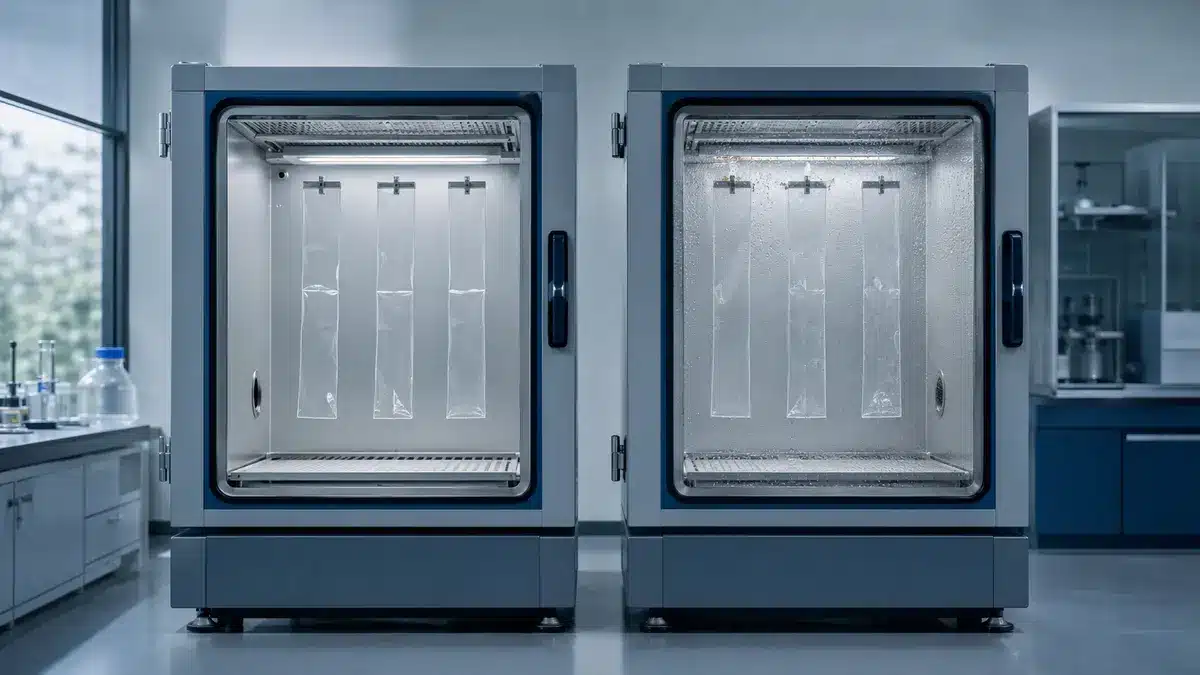
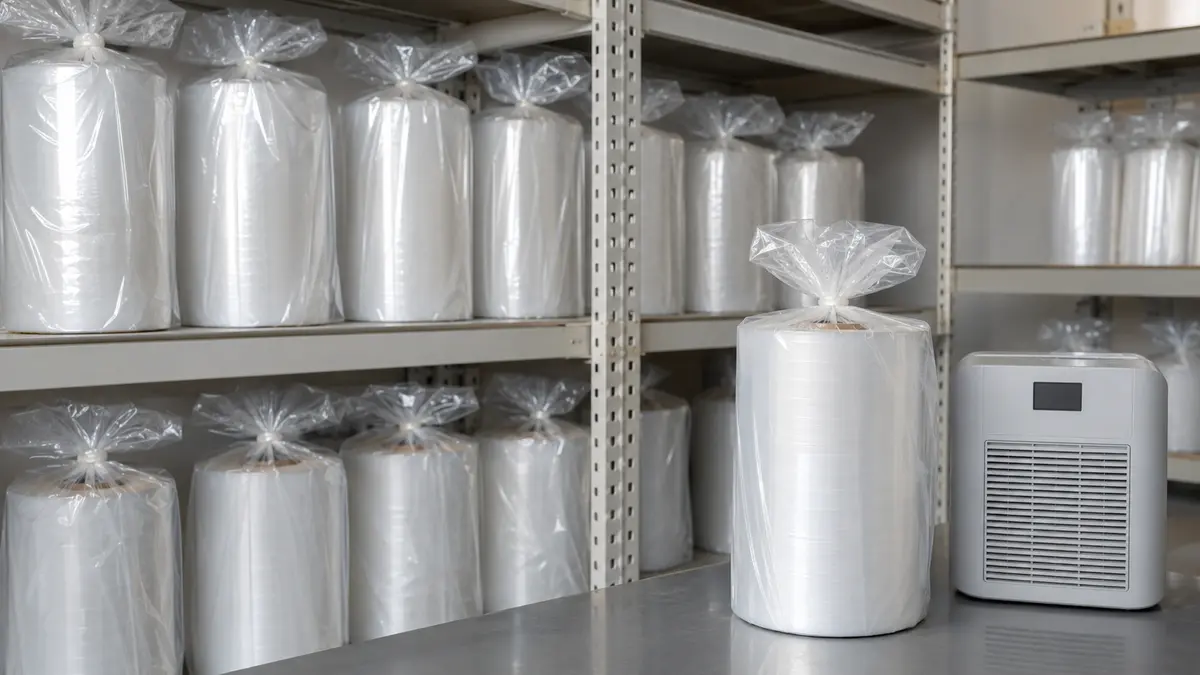
Storage conditions are the other half of the specification. Water vapor absorbed from humid air can soften a film, change its dimensions, increase tack, reduce stiffness, or affect sealing. Very dry conditions can shift flexibility in the opposite direction. Roll and pouch packaging therefore need a defined conditioning range, moisture-barrier overwrap, resealing practice, and maximum open exposure based on testing.
Mechanical, optical, and barrier behavior
PVA films can be strong, clear, flexible, and resistant to oils or many organic liquids, but the words describe tendencies rather than guaranteed values. Plasticizers may improve flexibility while changing water response and moisture uptake. Greater thickness may raise puncture resistance and slow dissolution. Humidity can alter tensile behavior and gas transmission. Coatings and blends may improve one property while moving the material away from the behavior of unmodified PVOH.
The oxygen-barrier claim needs particular care Supplier technical literature shows that PVOH can provide very low gas permeability when dry but absorbed moisture increases molecular mobility and can sharply reduce barrier performance A buyer should request OTR for the actual coating or.
Important: compare films only when specimens have been conditioned to the same moisture state and tested by the same method. A result from a dry, unplasticized laboratory film is not directly comparable with a plasticized commercial pouch at high humidity.
How PVA Film Is Made and Modified
The production sequence explains why two films sold under the same material label can perform differently.
- Vinyl acetate is polymerized to form polyvinyl acetate, the usual precursor.
- The precursor is hydrolyzed or alcoholyzed to a controlled degree, producing a PVA grade with a defined residual acetate level and molecular-size range.
- The resin is dissolved or compounded with a controlled package of plasticizers and other permitted modifiers. The package depends on the target film and cannot be inferred from the resin name.
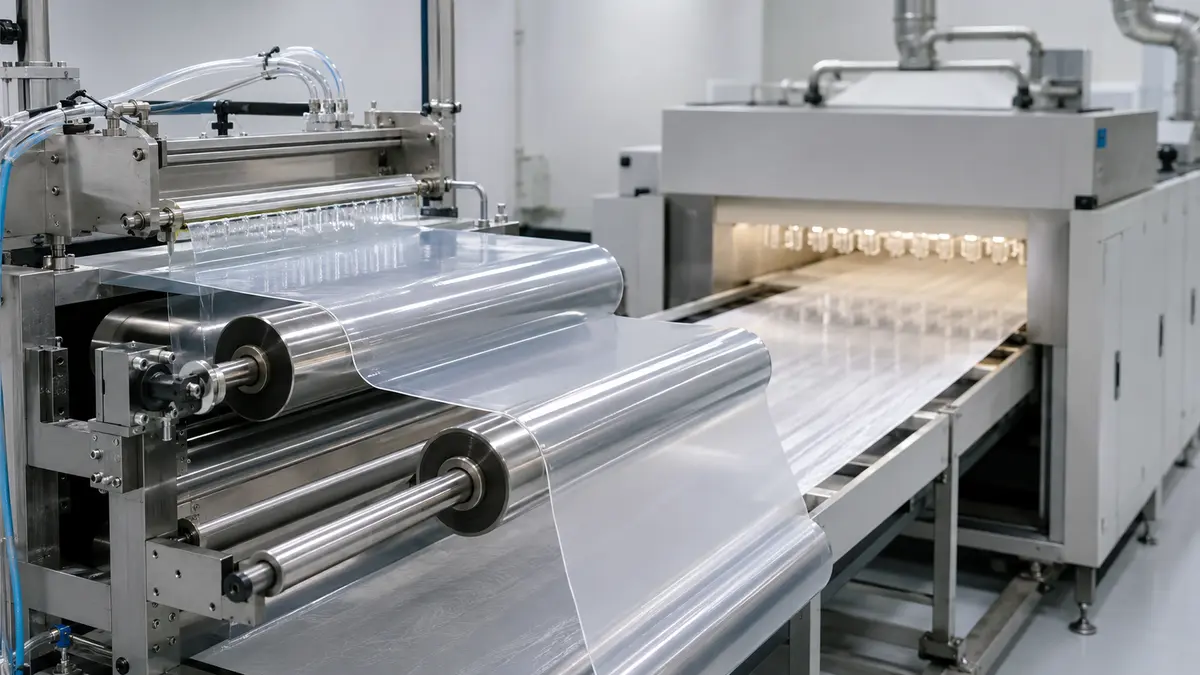
- A continuous film is formed and dried. Drying rate, temperature, thickness uniformity, and any heat treatment influence moisture content and crystallinity.
- The web is conditioned, converted, sealed, printed, coated, or laminated as required, then protected from uncontrolled humidity until use.
Crosslinking or blending may improve water resistance, thermal behavior, compatibility, or barrier retention, but it can also slow dissolution and change biodegradation. Plasticizers may reduce brittleness and support processing while increasing moisture sensitivity. A formulation change therefore needs a complete requalification rather than a single resin check.
Common Applications of PVA Film
The best applications use water response as a functional trigger or use dry-condition barrier properties within a protected structure. The film is not automatically suitable whenever a project has a sustainability objective.
| Application | Functional role | Main risk | Required validation |
|---|---|---|---|
| Laundry or dishwashing unit doses | Contains a measured dose, then releases it in the wash | Premature softening, poor seal compatibility, or residue in short/cold cycles | Formula compatibility, storage aging, seal integrity, and dissolution across intended cycles |
| Industrial cleaning or chemical sachets | Limits direct handling and meters concentrate into water | Chemical attack, operator exposure if a pack fails, or incomplete release | Compatibility, drop/leak tests, handling procedure, use-water profile, and regulatory review |
| Water-soluble laundry or infection-control bags | Contains soiled items until a wash step | Humidity damage, wrong wash temperature, or inappropriate handling claim | Bag strength, closure, transport conditions, wash release, and facility procedure |
| Agricultural input packs | Delivers a measured input into a dilution system | Misuse, local wastewater or field-release concerns, and chemical incompatibility | Product authorization, compatibility, mixing behavior, operator instructions, and environmental assessment |
| Mold-release or embroidery films | Provides a temporary support layer removed with water | Residue, excessive water demand, or damage to the substrate | Removal conditions, residue limit, substrate compatibility, and wastewater handling |
| Oxygen- or grease-barrier coating | Adds a functional layer to paper, board, or a laminate | Humidity-driven barrier loss or disruption of the package end-of-life route | Coating continuity, barrier at use humidity, converting, repulpability or recycling assessment, and full-structure compliance |
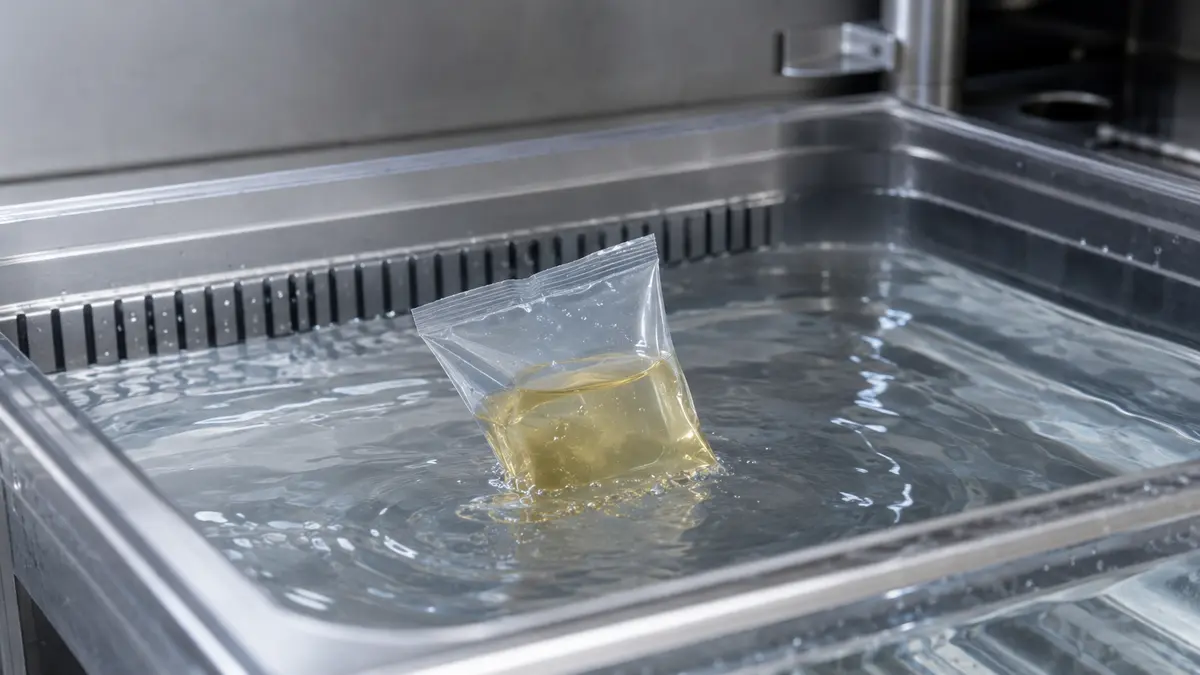
These examples describe general functions. They do not establish that a particular supplier’s film is suitable for detergents, pesticides, medical handling, food contact, or any other regulated use.
Environmental Impact: What Dissolves, What Biodegrades, and Where
Environmental performance cannot be read from a water-soluble label. It must be evaluated as a sequence: how the pack is made, what function it replaces, whether it prevents product waste or exposure, what happens during use, where the dissolved polymer travels, and what evidence exists for that formulation in that receiving system.
Dissolution is a physical step
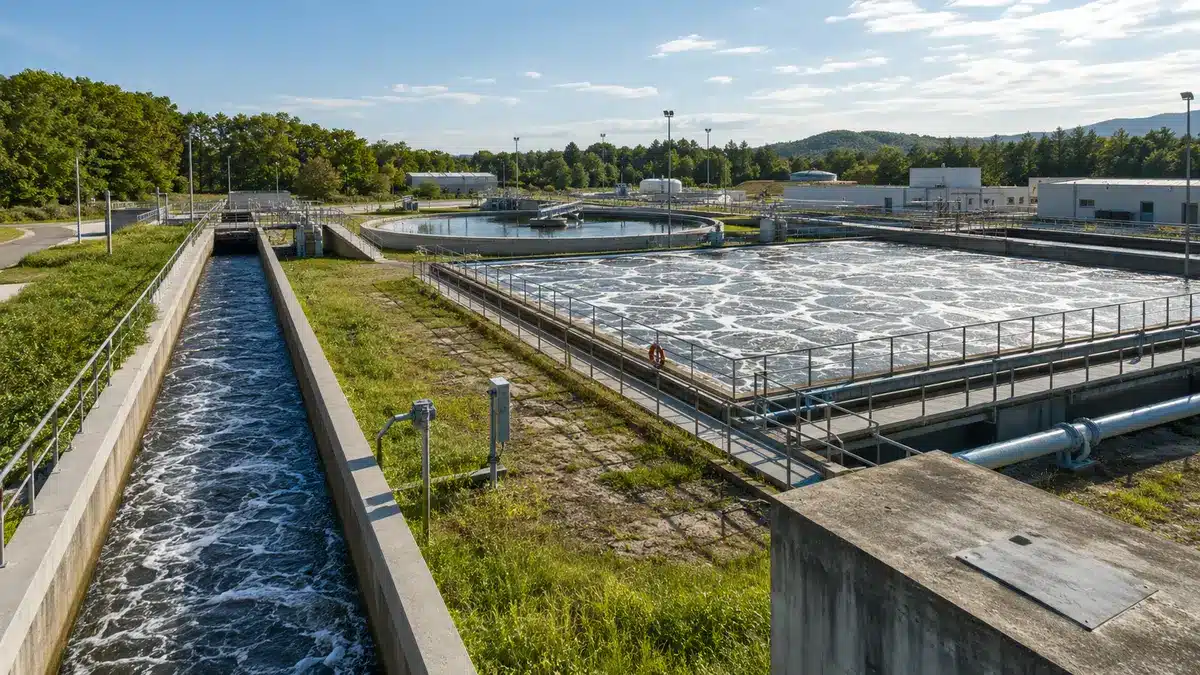
When an appropriate PVA film dissolves, solid film loses its macroscopic form and polymer chains disperse in water. That can prevent a persistent film fragment from entering a conventional solid-waste stream, but the polymer matter has not vanished. It remains in the aqueous phase until it is biodegraded, captured, transformed, or discharged.
This distinction changes test design. A dissolution test measures film opening, disintegration, dissolved solids, or residual film under a defined water profile. A biodegradation test measures biological conversion, commonly through oxygen demand, carbon dioxide evolution, dissolved organic carbon removal, or another method appropriate to the claim. Passing one test does not automatically pass the other.
Biodegradation depends on the grade and receiving environment
The OECD Test Guideline 301 series screens chemicals for ready biodegradability in an aerobic aqueous medium. A test report is meaningful only when it identifies the test item, method, inoculum, concentration, controls, result, and pass criterion. Results for a detergent-film formulation cannot be transferred to a highly hydrolyzed fiber, a crosslinked coating, or an unspecified PVA blend.
In 2023, the U.S. EPA’s Federal Register response concluded that the soluble PVA structures reviewed for Safer Choice-certified applications met that program’s polymer criteria and that evidence supported biodegradation of the relevant structures. The same document repeatedly limited its conclusions to the structures and uses under review. It also noted that behavior varies with polymer size, hydrolysis, solubility, and other characteristics.
Receiving environment matters. A marine study reported limited biodegradation for the materials under its tested natural seawater conditions, while detergent-film studies using aerobic screening methods reported much greater biodegradation for their tested films. Those observations should not be collapsed into “PVA biodegrades” or “PVA persists.” They describe different materials, inocula, concentrations, times, and environments.
For a down-the-drain application, ask whether the intended market commonly routes the product to an aerobic wastewater treatment plant, a septic system, direct discharge, or another pathway. For a soil, compost, landfill, or marine claim, use evidence designed for that environment. Do not treat a wastewater screening result as a littering license.
Feedstocks, dosing benefits, and trade-offs
Most commercial PVA begins with industrial vinyl acetate chemistry and is commonly fossil-derived, although bio-derived feedstocks may be possible. “Biodegradable” and “bio-based” describe different attributes. A fossil-derived polymer may biodegrade under defined conditions, and a renewable feedstock does not guarantee biodegradation or a lower life-cycle footprint.
PVA film can create system benefits when it enables a precise dose, reduces spills, limits worker contact, or avoids overuse of a concentrated product. These benefits depend on the pack actually preventing waste and on the environmental burden of the film, secondary packaging, production, transport, water use, and treatment. They should be compared with a realistic alternative through a defined life-cycle or system assessment, not assumed from the material name.
Environmental wording also needs a market-specific review. The FTC Green Guides warn against misleading general environmental and unqualified degradability claims. A defensible statement identifies the exact product, test method, environment, timeframe, and limitation. Terms such as “eco-friendly,” “zero waste,” “100% biodegradable,” “plastic-free,” or “leaves no residue” are unsafe without evidence that supports the full meaning a buyer could reasonably take from them.
Limitations and Failure Risks
PVA film fails when its water response, formulation, package design, and handling environment are not treated as one system.
- Premature softening or blocking can occur when the film absorbs moisture during storage or converting. The result may be roll damage, poor feeding, seal contamination, or early leakage. Control the storage range, overwrap, open exposure, and line conditions.
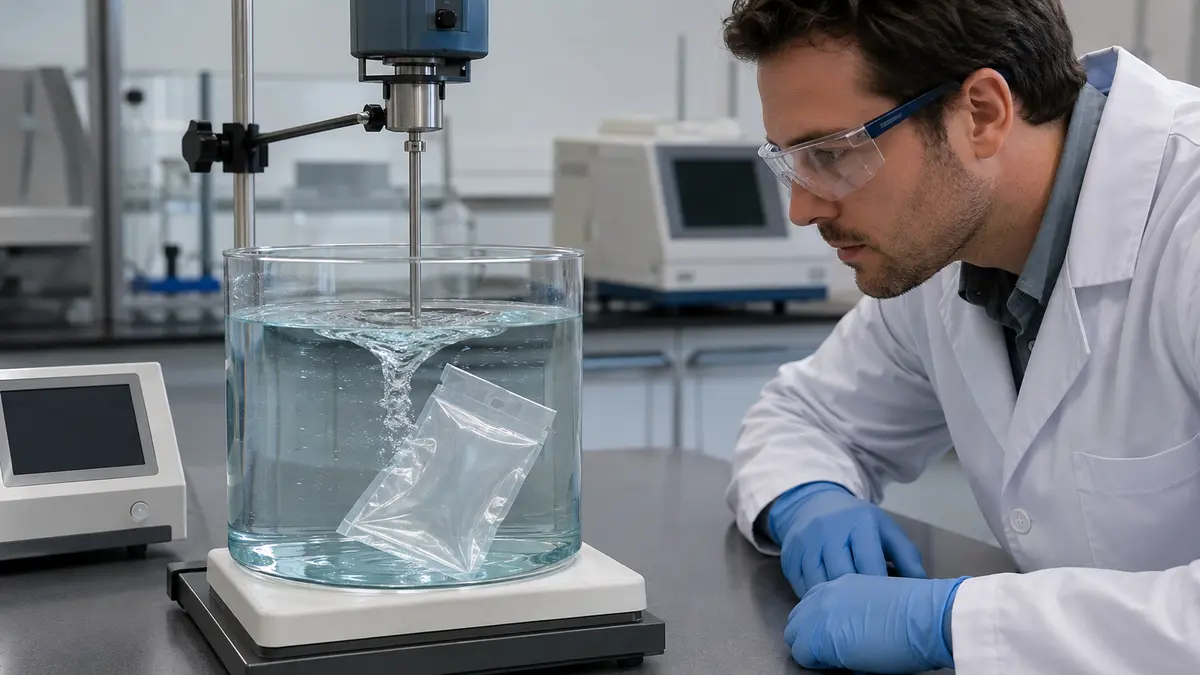
- Incomplete dissolution can result from the wrong grade, thick film, low water temperature, short contact time, low agitation, hard water, concentrated chemistry, or a pack trapped in folds. Test the least favorable intended cycle, not only a warm laboratory beaker.
- Loss of barrier can occur when humidity plasticizes the polymer or when a coating has pinholes and cracks. Measure the final structure at the use humidity and after realistic flexing, sealing, or aging.
- Product incompatibility can cause swelling, embrittlement, discoloration, seal weakening, or migration of components. Conduct compatibility aging with the exact formula and the intended contact duration and temperature.
- Conversion problems can come from unstable moisture content, static, web stretch, tack, or a narrow sealing window. A laboratory film sample does not prove performance on the target forming, filling, sealing, printing, or winding equipment.
- Misleading end-of-life claims can arise when a dissolution result is presented as universal biodegradation, recycling, compostability, or environmental safety. Tie every claim to the full formulation, pathway, test, market, and disposal instruction.
How to Evaluate PVA Film for a Packaging Project
Use a staged validation plan so a promising film is not approved on one attractive property.
- Define the package task. Record contents, dose, package form, dimensions, target thickness range, storage life, distribution climate, use sequence, and failure consequences.
- Identify the film completely. Request the full polymer name, grade, hydrolysis range, molecular-size indicator, formulation status, layer structure, thickness tolerance, and whether the film is coated, blended, crosslinked, printed, or laminated.
- Define the water profile. Specify minimum and maximum temperature, volume, pH, hardness, agitation, contact time, product concentration, and the endpoints for opening, release, dissolution, and visible residue.
- Validate storage and conversion. Condition samples at agreed temperature and humidity limits; then test blocking, tack, dimensional stability, tensile behavior, sealing, print or coating adhesion, and machine performance.
- Validate the filled package. Use the exact product and package geometry for compatibility aging, seal integrity, leakage, drop, compression, transport, and use-cycle trials. Film-property data cannot replace package testing.
- Define the end-of-life claim Identify the actual pathway in each market and select a biodegradation.
- Lock the evidence. Put test methods, conditions, acceptance limits, sampling, report ownership, change-control triggers, and allowed marketing wording into the approved specification.
At minimum, the supplier evidence pack should distinguish typical information from guaranteed specification limits and include:
- a current TDS and finished-film specification;
- formulation and layer-structure disclosure at the level needed for safety and compliance review;
- dissolution data under buyer-defined water conditions;
- conditioned mechanical, seal, optical, and barrier data using identified methods;
- compatibility and filled-package results;
- market- and use-specific food-contact, chemical, or other regulatory documentation where applicable;
- biodegradation or end-of-life reports for the exact grade or a justified, documented equivalent; and
- change-control rules covering resin, additives, thickness, process, and manufacturing site.
Frequently Asked Questions About PVA Film
Is PVA film plastic?
Yes. Polyvinyl alcohol is a synthetic polymer and a PVA film is a plastic film in the broad materials-science sense. A water-soluble or biodegradable grade does not cease to be a polymer. Regulatory programs may define or exclude materials differently for a specific rule, so “plastic-free” should not be inferred from water solubility.
Does PVA film leave microplastics?
It depends on the definition, grade, dissolution conditions, and evidence. A properly dissolved water-soluble PVA film becomes a molecular solution rather than a suspension of solid film particles, so it may fall outside definitions that require insoluble solid particles. That classification does not prove complete biodegradation or zero environmental impact. Verify dissolution, biodegradation, and receiving-environment fate separately for the exact formulation.
Can PVA film be recycled or composted?
Not by default A water-soluble pouch sent down a drain is not recovered through conventional film recycling A PVOH coating may be compatible with a particular paper or plastics recycling process at a controlled level but inks adhesives other layers concentration and the local mill or reprocessor matter Compostability requires evidence.
Is PVA film safe for food or chemical packaging?
The material name is insufficient Safety and legality depend on the grade additives residuals layer structure packaged substance migration potential contact time and temperature target market and intended use For food contact.
Related Bestypack Resources
- PVA Water-Soluble Film: How Is It Produced?
- PVA Shrink Film Water Soluble Shrink Film
- PVA Water Soluble Film Manufacturer&Supplier
- PVA Water Soluble Seed Tape
- PVA Guide: What You Need to Know
 English
 Japanese
 French
 Spanish
 Korean
 Italian
 Portuguese
 Dutch
Dutch Arabic
 Russian
 German