
BOPP, BOPET, and BOPA are all biaxially oriented films, but they are not interchangeable. BOPP is oriented polypropylene, BOPET is oriented polyethylene terephthalate, and BOPA is oriented polyamide, often called oriented nylon. The different base polymers give each family a different balance of moisture resistance, gas barrier, stiffness, toughness, heat response, density, surface behavior, and converting options.
For a packaging buyer, the safest short answer is: shortlist BOPP when moisture resistance, clarity, yield, and a broad range of packaging finishes matter; shortlist BOPET when stiffness, dimensional stability, print registration, or heat-exposed converting is important; and shortlist BOPA when puncture resistance, toughness, flexing, vacuum packing, or sharp-edged contents create the controlling risk. Then test the exact grade and complete laminate. Coatings, metallization, sealant layers, thickness, humidity, orientation balance, and the finished package can change the result.
Quick Comparison: BOPP vs BOPET vs BOPA
For U.S. food-contact context, review the eCFR polymer provisions before approving a finished-film claim.
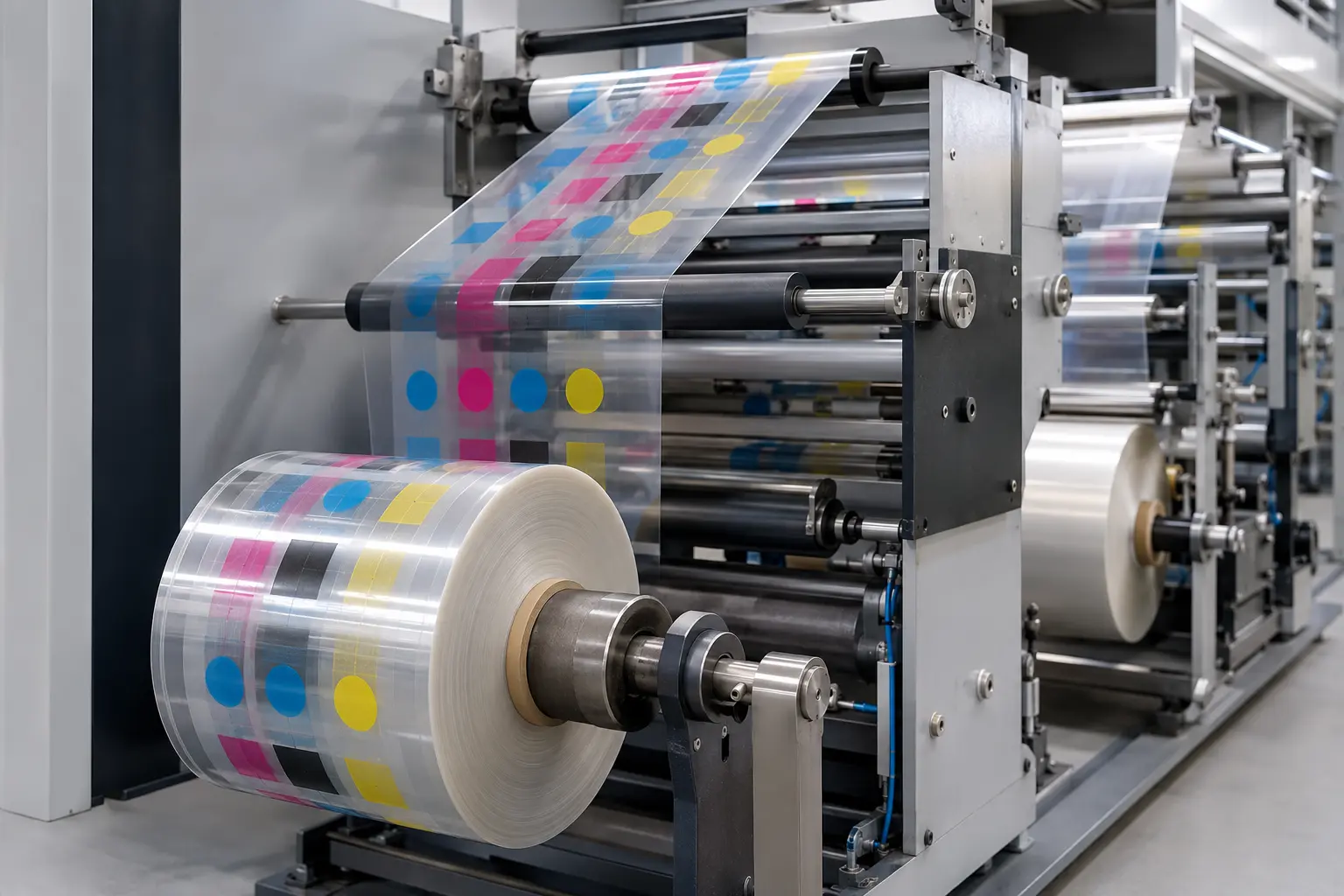
For U.S. food-contact context, review the eCFR polymer provisions before approving a finished-film claim.
The table below is a.
| Decision axis | BOPP film | BOPET film | BOPA film |
|---|---|---|---|
| Base polymer | Polypropylene (PP) | Polyethylene terephthalate (PET) | Polyamide (PA/nylon) |
| Typical feel and structural role | Light, clear, relatively stiff and often used as an outer, label, overwrap, or specialty web | Stiff, strong, dimensionally stable structural and print web | Tough, flexible, puncture-resistant structural web |
| Moisture-related tendency | Often the strongest water-vapor-resistance starting point of the three | Useful but commonly less moisture-resistant than comparable BOPP packaging grades | Moisture absorption can change dimensions, mechanics, and barrier; condition-specific data are essential |
| Oxygen/aroma tendency | Plain film usually needs another layer, coating, or metallization for demanding targets | Often a stronger starting point than plain BOPP, but not a universal high-barrier film | Can provide useful oxygen and aroma barrier, especially under controlled dry conditions; humidity matters |
| Heat and dimensional tendency | Lower heat/dimensional margin than typical BOPET; grade and process still control | Often selected for heat-exposed printing, lamination, metallization, or processing | Specialty grades can serve demanding thermal packages, but moisture and complete-laminate effects must be validated |
| Toughness and puncture | Useful mechanical performance but not usually the first choice for severe puncture duty | Strong and stiff but can be less forgiving than BOPA under sharp-edge or repeated-flex stress | Common first candidate when toughness, puncture, flexing, or vacuum draw are critical |
No column is best in isolation The correct film depends on the failure mode the.
Decision boundary: Compare films only when thickness, treatment, test method, direction, temperature, relative humidity, sample history, units, and laminate state are known. A family name does not control those variables.
Why Biaxial Orientation Does Not Make These Films Equivalent
Biaxial orientation stretches a polymer web in the machine direction (MD) and transverse direction (TD) under controlled thermal conditions. The process rearranges molecular chains and can improve or rebalance stiffness, tensile behavior, clarity, dimensional response, and barrier. The final profile depends on draw ratios, temperatures, heat setting, relaxation, additives, layer design, and the polymer itself.
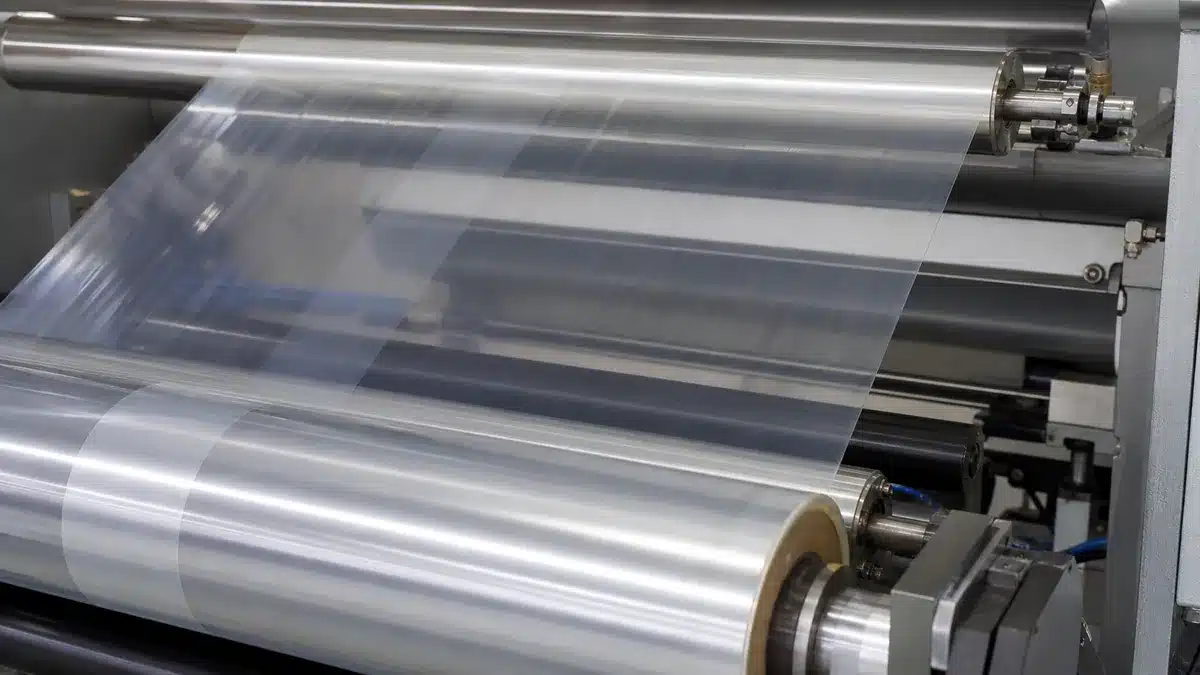
Orientation therefore changes the material, but it does not erase the chemical differences between polypropylene, polyester, and polyamide. Two films with “BOP” in their names can still respond differently to water vapor, oxygen, heat, impact, solvents, adhesives, and humidity.
Base Polymer and Orientation Are Separate Variables
BOPP begins with polypropylene a.
The orientation route then modifies each base polymer. A balanced biaxial film can behave differently from a sequentially oriented, simultaneously oriented, tentered, tubular, coated, or coextruded grade. MD and TD data should always remain labeled; an average value can hide the direction in which a package fails.
Grade, Thickness, Coatings, and Lamination Change the Result
Commercial films are engineered products, not pure polymer sheets. BOPP can include heat-sealable skins, cavitation, white pigments, matte surfaces, antistatic packages, or metallization. BOPET can be chemically treated, heat stabilized, metallizable, coated, white, opaque, shrinkable, or designed for special lidding and industrial roles. BOPA can be balanced for print, vacuum, retort, or other demanding laminate applications.
Thickness affects stiffness yield tear propagation puncture handling and measured transmission rates Coatings and metallization can change gas aroma moisture or light barrier Adhesives inks primers sealants and cure conditions alter the laminate A property reported for a plain base web cannot be transferred automatically to a coated or converted.
BOPP Film: Strengths, Limits, and Typical Roles
BOPP is biaxially oriented polypropylene film. In packaging, it is valued for its low density, optical appearance, moisture resistance, broad converting base, and availability in clear, white, pearlized, matte, metallized, label, tape, and heat-sealable constructions.
Typical reasons to shortlist BOPP include:
- good product visibility and gloss in clear grades;
- useful resistance to water-vapor transmission for dry or moisture-sensitive products;
- high area yield for a given mass because PP is less dense than PET or PA;
- a wide range of surface finishes, sealable skins, coatings, and metallized versions;
- established use in snacks, confectionery, bakery, labels, tapes, overwrap, and PP-rich laminates;
- stiffness and machinability suitable for many high-speed packaging and labeling operations.
The limitations are equally important. Plain BOPP is not automatically an oxygen-, aroma-, or light-barrier film. Surface energy must usually be raised and retained for printing, coating, or lamination. A clear homopolymer grade may not seal by itself, and even a sealable grade needs its seal side, partner, temperature-pressure-dwell window, hot tack, and contamination tolerance confirmed. Thermal shrinkage and dimensional behavior can constrain high-temperature printing, coating, or package processes compared with purpose-designed BOPET.
Choose a BOPP grade by role: outer print web, label, monoweb, coated barrier web, metallized web, or sealable layer. Do not assume a label film, tape film, snack film, and retort-oriented specialty film are substitutes merely because they share the BOPP name.
BOPET Film: Strengths, Limits, and Typical Roles
BOPET is biaxially oriented polyethylene terephthalate film, commonly called polyester film. It is frequently selected as a strong, stiff, dimensionally stable outer or structural web. That profile supports precise printing, metallization, coating, lamination, and processes where heat or web tension could distort a less stable substrate.
Typical reasons to shortlist BOPET include:
- high stiffness and tensile performance for thin structural webs;
- good dimensional stability for printing, registration, coating, metallization, and lamination;
- a useful oxygen- and aroma-barrier starting point compared with many plain polyolefin films;
- good clarity and surface appearance in transparent packaging grades;
- compatibility with metallization and functional coatings for higher barrier or special surfaces;
- use in printed laminates, coffee and pet-food structures, lidding, pouches, labels, and technical films.
BOPET still needs boundaries. A plain transparent grade is not necessarily a complete high-barrier package. WVTR may be less favorable than BOPP for some thicknesses and conditions, and barrier can change with coatings, flexing, metallization quality, and humidity. Standard BOPET normally does not provide the sealant function expected from PE, CPP, or a specialty seal layer. It may require a coating or a separate inner web.
“Heat resistant” also needs a method. Dimensional change, shrinkage, tensile retention, seal-jaw exposure, oven exposure, hot fill, sterilization, and retort are different tests. A heat-stabilized BOPET grade used as an outer web cannot prove that the adhesive, sealant, ink, or finished pouch survives the same process.
BOPA Film: Strengths, Limits, and Typical Roles
BOPA is biaxially oriented polyamide film, also called biaxially oriented nylon or BON. It is commonly shortlisted when the package must tolerate sharp edges, vacuum draw, flexing, impact, cold handling, or distribution abuse that could puncture or crack a less forgiving web.
Typical reasons to shortlist BOPA include:
- strong puncture, impact, and flex-crack resistance for demanding products;
- toughness and elongation that can help a laminate conform around irregular contents;
- useful oxygen and aroma barrier under appropriately defined conditions;
- suitability as a structural layer in vacuum packs, frozen-food packs, meat and cheese packaging, liquid or sharp-edged-product structures;
- availability in grades engineered for printing, lamination, balanced orientation, retort, or other specialist duties.
The central BOPA boundary is moisture. Polyamide absorbs water from the environment, and conditioning can change modulus, strength, dimensions, and gas-barrier performance. A dry laboratory result cannot be applied automatically to a humid filling room, refrigerated package, hot-water process, or long storage period. Data sheets should name preconditioning, test temperature, relative humidity, sample thickness, and whether testing occurred before or after conversion.
BOPA is generally used as a structural or barrier layer rather than the final sealing surface. It is often laminated to PE, CPP, or another sealant appropriate to the product and process. “Nylon” also does not mean “retort grade.” Retort suitability belongs to the exact BOPA, adhesive, ink, sealant, pouch, product, process cycle, cooling, and post-process handling.
BOPA caution: Ask whether values were measured on dry, conditioned, or moisture-equilibrated film. If the answer is missing, the comparison is incomplete.
Side-by-Side Differences That Matter in Packaging
The most useful comparison keeps all three films on the same decision axes. It also separates base-film tendencies from properties that come from a coating, metallization, or laminate.
Oxygen, Moisture, Aroma, and Light Barrier
BOPP is often the first candidate for moisture-sensitive dry products because many packaging grades provide useful water-vapor resistance. Its plain-film oxygen and aroma barrier may be insufficient for sensitive foods, so coatings, metallization, or other laminate layers are commonly evaluated.
BOPET can provide a stronger plain-film oxygen and aroma starting point than BOPP, while its moisture-barrier position depends on grade, gauge, and conditions. BOPA can offer useful oxygen and aroma barrier but is strongly affected by absorbed moisture and test humidity. Neither “PET barrier” nor “nylon barrier” is a shelf-life result.
Metallization can add light protection and improve measured gas or vapor barrier for all three families, but optical density, pinholes, metal adhesion, flexing, coating, layer position, and conversion history matter. Measure the exact web or laminate after the stresses that represent production and distribution.
ASTM D3985-24 states that oxygen transmission rate is an important determinant of packaging protection but not the sole determinant, and that purchaser and seller should agree on sampling, standardization, test conditions, and acceptance criteria. ASTM F1249-25 similarly requires agreed WVTR conditions and cautions that simple thickness and vapor-pressure relationships do not always apply.
Stiffness, Toughness, Tear, and Puncture
BOPET usually leads the shortlist when a stiff, dimensionally stable structural web is desired. BOPA usually leads when puncture, impact, flexing, or sharp edges dominate. BOPP provides useful stiffness-to-weight and general mechanical performance for many packaging, label, and overwrap applications.
Those tendencies do not replace test selection. Tensile strength, modulus, elongation, tear initiation, tear propagation, puncture, impact, flex cracking, and package drop are different failure modes. A stiff film can still be vulnerable to a specific notch; a tough film can still fail at a seal or laminate bond.
ASTM D882-26 notes that tensile results vary with specimen thickness, preparation, test speed, grips, extension measurement, and dimensions. For film comparisons, report MD and TD separately, use comparable specimens and methods, and avoid using tensile strength as a substitute for puncture or package abuse testing.
Heat, Dimensional Stability, and Sealing
BOPET is commonly selected as an outer web when printing, coating, lamination, metallization, or package making exposes the material to heat and tension. BOPP may have a narrower dimensional window under similar conditions, although heat-set and specialty grades can change that balance. BOPA’s thermal suitability depends on resin, orientation, conditioning, and the complete laminate.
None of the three material-family names proves heat sealability. BOPP is widely available with sealable skins or coatings, while standard BOPET and BOPA often rely on a separate PE, CPP, coated, or coextruded sealant. The meaningful comparison includes seal partner, interface temperature, pressure, dwell, jaw design, line speed, contamination, hot tack, cooled seal strength, and failure mode.
Hot fill, pasteurization, boiling-water sterilization, retort, oven use, and microwave exposure are not interchangeable. Validate the actual filled package for the intended time-temperature-pressure profile and cooling sequence.
Clarity, Printing, Coating, and Lamination
Clear grades of all three families can provide good visibility, but clarity, haze, gloss, color, gels, scratches, and surface defects remain grade- and thickness-specific. BOPP is well established for high-gloss packaging and label applications; BOPET is valued for a stable print and coating platform; BOPA can provide a useful polar surface but still requires an approved ink, treatment, primer, or adhesive system.
Surface-treatment readings are screening data, not bond guarantees. Specify which side is treated, the minimum level at conversion, the maximum film age, storage conditions, ink or adhesive identity, coat weight, cure, residual limits where relevant, and bond strength after aging or thermal processing. Slip and antiblock additives can migrate and change both COF and adhesion.
Density, Yield, Cost, and Availability
BOPP’s lower density often gives more film area per unit mass at the same thickness, which can benefit yield. BOPET and BOPA are denser, but a stiffer or tougher layer may meet the package duty at a different gauge. Comparing price per kilogram without comparing thickness, area, scrap, line speed, barrier layers, adhesive steps, and failure cost can point to the wrong structure.
Availability also matters. Standard BOPP and BOPET grades may be broadly stocked, while a specific BOPA, retort, peelable, high-barrier, or specialty-treated grade may require different lead times or minimums. These are supplier and market conditions, not permanent material properties. Ask for the current supply format, width, thickness range, treatment side, certification scope, change control, and contingency plan.
How to Choose BOPP, BOPET, or BOPA by Application
Start with the package failure that must be prevented: moisture pickup, oxidation, aroma loss, light exposure, puncture, flex cracking, seal failure, heat distortion, poor registration, delamination, or an end-of-life incompatibility. Then assign each layer a job.
Dry Snacks, Confectionery, Labels, and Overwrap
BOPP is often the first candidate for dry snacks, confectionery, bakery overwrap, labels, and clear retail presentation because moisture resistance, clarity, low density, stiffness, finishes, and sealable or metallized versions are available. The package may still need an oxygen-, aroma-, or light-barrier layer, depending on the product and shelf-life target.
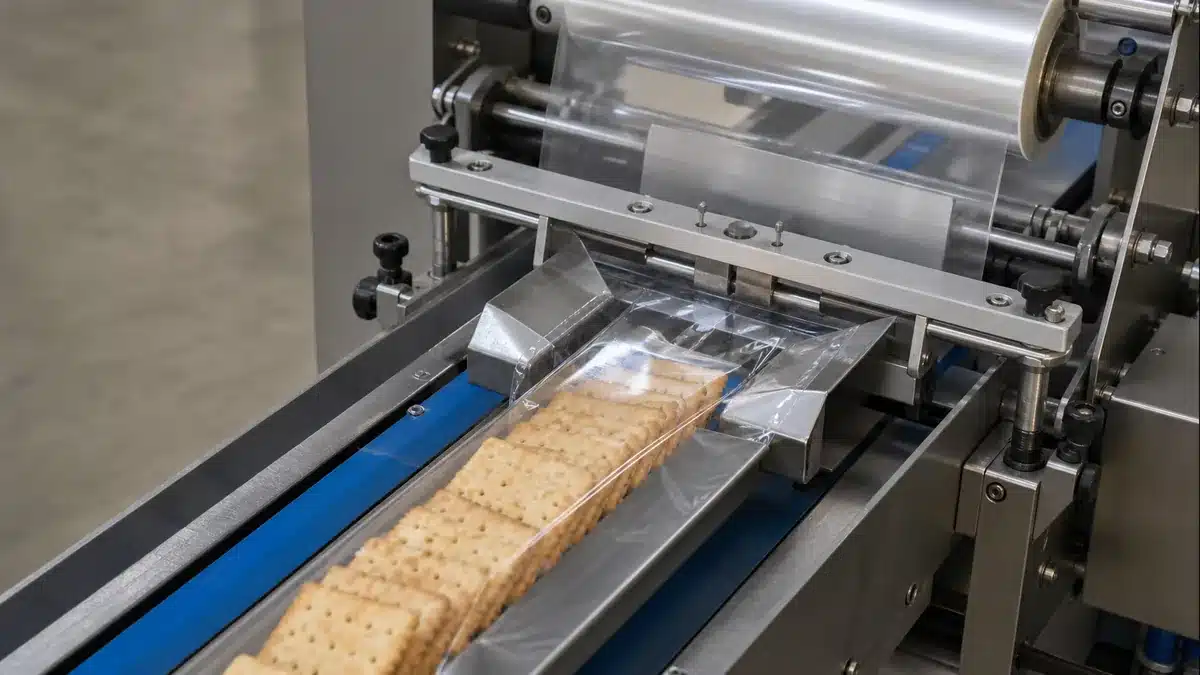
BOPET may be preferred as a printed or metallized outer web when dimensional stability, heat exposure, or a particular barrier construction controls the design. BOPA is less likely to be chosen solely for a simple dry overwrap, but it may enter the laminate if puncture or abuse risks justify it.
Printed Laminates and Heat-Exposed Converting
BOPET is a common starting outer web for reverse-printed laminates because its stiffness and dimensional stability can support registration, adhesive coating, curing, slitting, and pouch making. A BOPET/PE or BOPET/CPP structure is a general example of role separation: the polyester supports printing and structure; the inner web provides sealing.
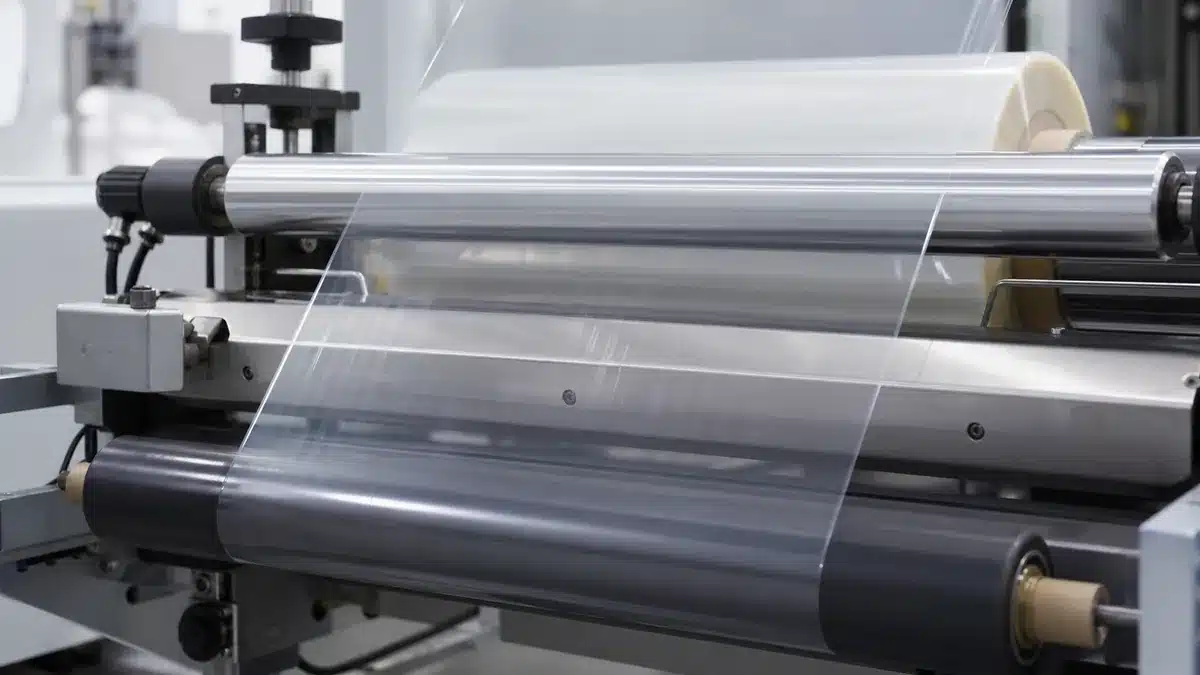
BOPP can serve as a printed outer web in many snack, confectionery, and PP-rich structures, especially where yield, moisture resistance, or a PP-oriented design path is important. BOPA may serve as the tough middle or outer structural layer in packages requiring abuse resistance. The exact ink, adhesive, solvent retention, cure, COF, curl, and sealant remain package-specific.
Vacuum, Frozen, and Sharp-Edged Products
BOPA is often the first structural-film candidate for bone-in meat, cheese, frozen foods, vacuum packs, liquid packs, or products with hard corners because puncture, flexing, impact, and cold handling may control failure. It is generally paired with a sealant and possibly another barrier or structural layer.
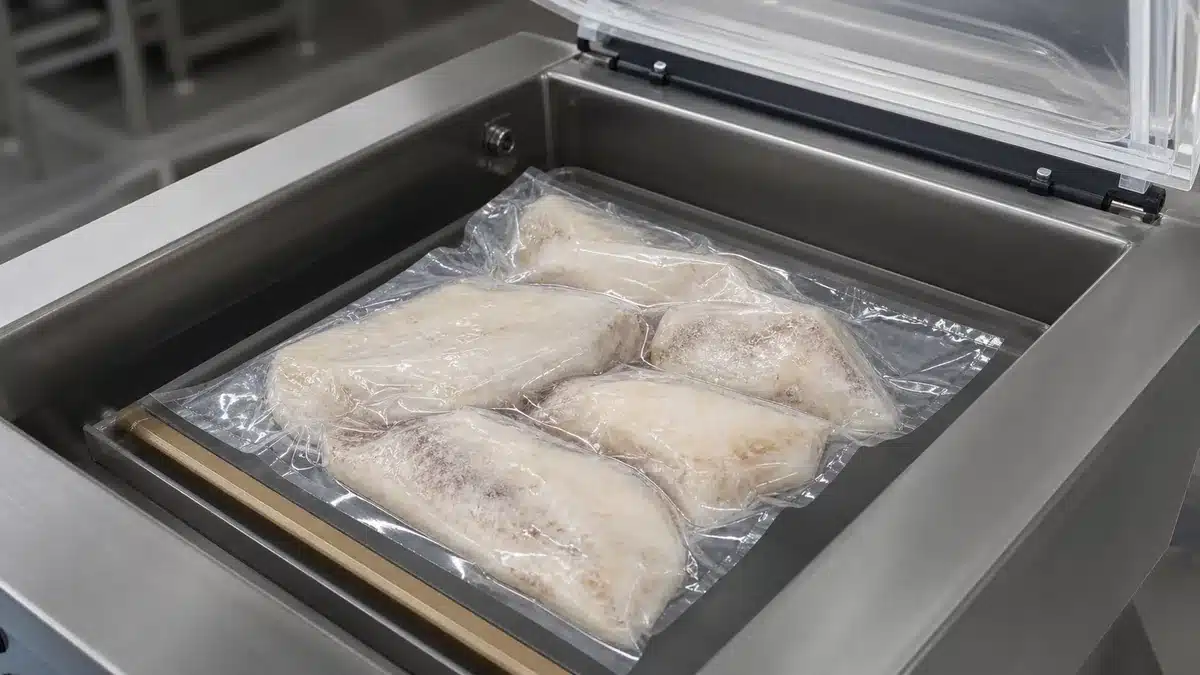
BOPET can contribute stiffness, print, and dimensional stability, while BOPP can contribute moisture resistance or a specialty surface. The final choice depends on whether the package must draw around the product, resist a sharp edge, remain clear after freezing, survive a drop, retain barrier after flexing, or tolerate a thermal process.
Choose the Layer Role, Not Just the Film Name
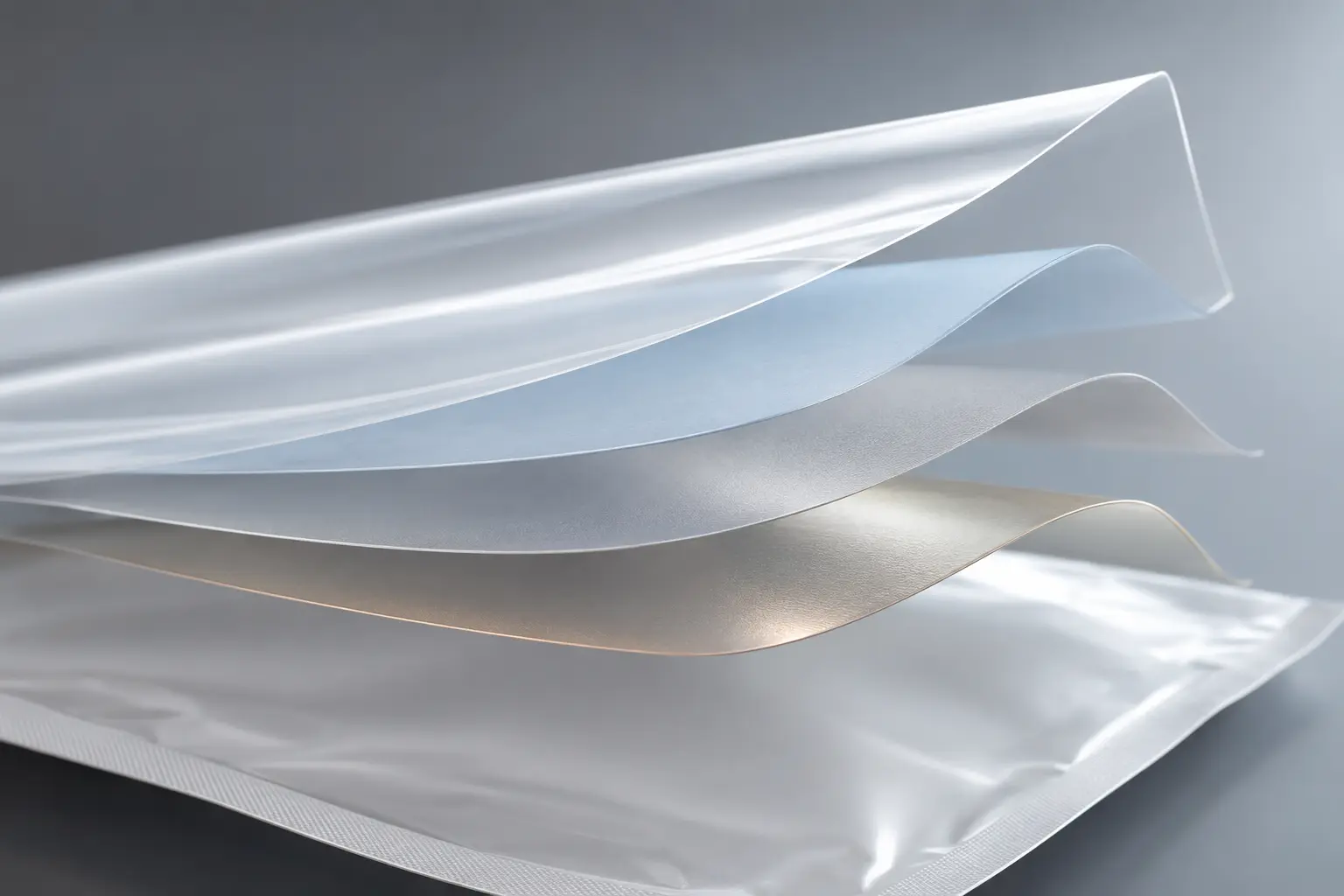
Many successful packages use more than one material because the requirements conflict A stiff outer print web and a tough middle layer may be paired with a low-temperature sealant A metallized layer may carry barrier while another layer protects the metal A PP-rich structure may use specialty.
| Package duty | Likely first candidate | Possible complementary layer | What still controls approval |
|---|---|---|---|
| Moisture-sensitive dry snack | BOPP | Coating, metallization, or sealant web | Product shelf-life study, seals, light/oxygen target, line trial |
| Heat-stable printed laminate | BOPET | PE, CPP, coating, foil, or barrier layer | Registration, bond, cure, heat exposure, barrier and seal performance |
| Vacuum or sharp-edged product | BOPA | PE/CPP sealant and optional print/barrier web | Puncture, flex, cold conditioning, vacuum draw, seals and distribution |
| High-barrier opaque pack | Metallized or coated grade from the suitable family | Protective and sealant layers | OTR/WVTR/light tests after flexing and conversion |
| PP-rich design objective | Specialty BOPP and/or CPP | Compatible PP-based components | Current design-for-recycling guideline and actual collection/reprocessing route |
How to Compare Data Sheets, Samples, and Line Trials
The selection is only as reliable as the comparison method. A data sheet supplies screening information; an agreed specification controls purchasing; a line trial proves convertibility; and a finished-package validation addresses end use.
Make Property Data Comparable
Build a comparison sheet that preserves every condition. At minimum include:
- exact grade, layer structure, coating or metallization, nominal thickness, and tolerance;
- test method and edition, specimen preparation, direction, conditioning, temperature, relative humidity, test side, and units;
- typical value versus guaranteed limit, sampling frequency, and acceptance rule;
- optical, mechanical, surface, friction, blocking, shrinkage, barrier, and thermal fields relevant to the package;
- film age, storage conditions, treatment side and minimum treatment at conversion;
- market-specific food-contact or other regulated-use documents for the exact grade and intended conditions;
- change-control and traceability commitments.
Do not rank films using one supplier’s typical data and another supplier’s specification limit. Do not compare OTR or WVTR at different humidity or temperature. Do not compare MD from one film with TD from another. When a method is missing, ask for it before drawing a conclusion.
Validate Printing, Lamination, Sealing, and Machinability
Run representative rolls through the intended printing, coating, metallization, lamination, curing, slitting, bag-making, and filling sequence. Record tension, temperature, speed, surface side, treatment age, ink, adhesive, coat weight, cure, roll geometry, COF, static, and environmental conditions.
Map the operating window rather than proving one favorable setting. For sealing, vary temperature, pressure, dwell, and contamination as appropriate, then report hot tack, cooled strength, failure mode, leak or burst behavior, and performance after aging, freezing, pasteurization, retort, or distribution. For laminates, evaluate bond and appearance at the required cure and aging intervals.
Check Food Contact and Sustainability at Final-Structure Level
Food-contact review applies to the exact substances, article, food type, contact time, and temperature. The FDA’s Food Types & Conditions of Use for Food Contact Substances separates aqueous, acidic, fatty, alcoholic, bakery, and dry foods and distinguishes sterilized, hot-filled, room-temperature, refrigerated, frozen, irradiated, and high-temperature uses. A declaration for one film and condition cannot be extended automatically to another laminate or process.
Sustainability claims also require a complete-package and market boundary. Polymer identity does not account for coatings, metallization, inks, adhesives, labels, sealants, closures, residue, collection, sortation, or reprocessing. “Mono-material,” “recyclable,” “lower carbon,” and “downgauged” each need a defined assessment method and scope. Compare the functional package, not a single layer in isolation.
Frequently Asked Questions
Which Film Is Best for Food Packaging?
No film family is best for every food. BOPP often starts the shortlist for moisture-sensitive dry products and high-yield clear packaging. BOPET often starts the shortlist for stable printed laminates or heat-exposed converting. BOPA often starts the shortlist for vacuum, frozen, flexible, or puncture-demanding packs. Food sensitivity, shelf life, package format, sealant, process, distribution, and regulatory conditions decide the structure.
Can BOPP, BOPET, or BOPA Be Heat-Sealed on Its Own?
It depends on the grade and surface. BOPP is widely available with heat-sealable skins or coatings; standard BOPET and BOPA commonly use a separate sealant layer, though specialty sealable versions exist. Require a seal matrix for the exact film, partner, temperature, pressure, dwell, contamination, and line speed.
Can BOPP, BOPET, and BOPA Replace One Another?
Not as drop-in substitutions. A change can alter stiffness, tension, registration, shrinkage, barrier, moisture response, puncture, COF, print, adhesive cure, sealing, pouch geometry, shelf life, and recycling assessment. Revalidate affected upstream and downstream evidence whenever the film family, grade, thickness, or surface changes.
Is One of These Films More Recyclable?
The answer depends on the complete package and the destination system. A PP-rich structure may align with a PP recycling stream in one market, while a PET- or PA-containing laminate may face different sortation and reprocessing routes. No film-family name proves collection, compatibility, or an end market. Apply the current local guideline to the final pack.
Use the Film Family as a Shortlist, Not a Specification
BOPP, BOPET, and BOPA each solve different packaging problems. BOPP often contributes moisture resistance, optical appearance, yield, and versatile formats. BOPET often contributes stiffness, dimensional stability, print and coating performance, and heat-exposed converting capability. BOPA often contributes toughness, puncture resistance, flexing performance, and vacuum- or frozen-pack robustness.
Before approval, define:
- the exact product, package format, layer role, and failure risks;
- the grade, thickness, coating, metallization, treatment, and winding details;
- comparable test methods, directions, conditioning, temperature, humidity, units, and limits;
- the printing, lamination, sealing, filling, thermal, distribution, and shelf-life trials;
- food-contact and other compliance evidence for the intended market and use;
- the complete-package basis for any recycling or sustainability claim;
- the approved sample, certificate fields, and change-control requirements.
That process turns a broad BOPP-versus-BOPET-versus-BOPA comparison into a defendable packaging decision without treating typical film-family tendencies as product guarantees.
Related Bestypack Resources
- BOPP Film Manufacturer&Supplier
- BOPP Film Guide: Applications, Benefits, Features
- Types of Flexible Packaging Films: A Complete Guide
- The Ultimate Guide: BOPA Films
- BOPA Film Nylon Film
 English
 Japanese
 French
 Spanish
 Korean
 Italian
 Portuguese
 Dutch
Dutch Arabic
 Russian
 German