
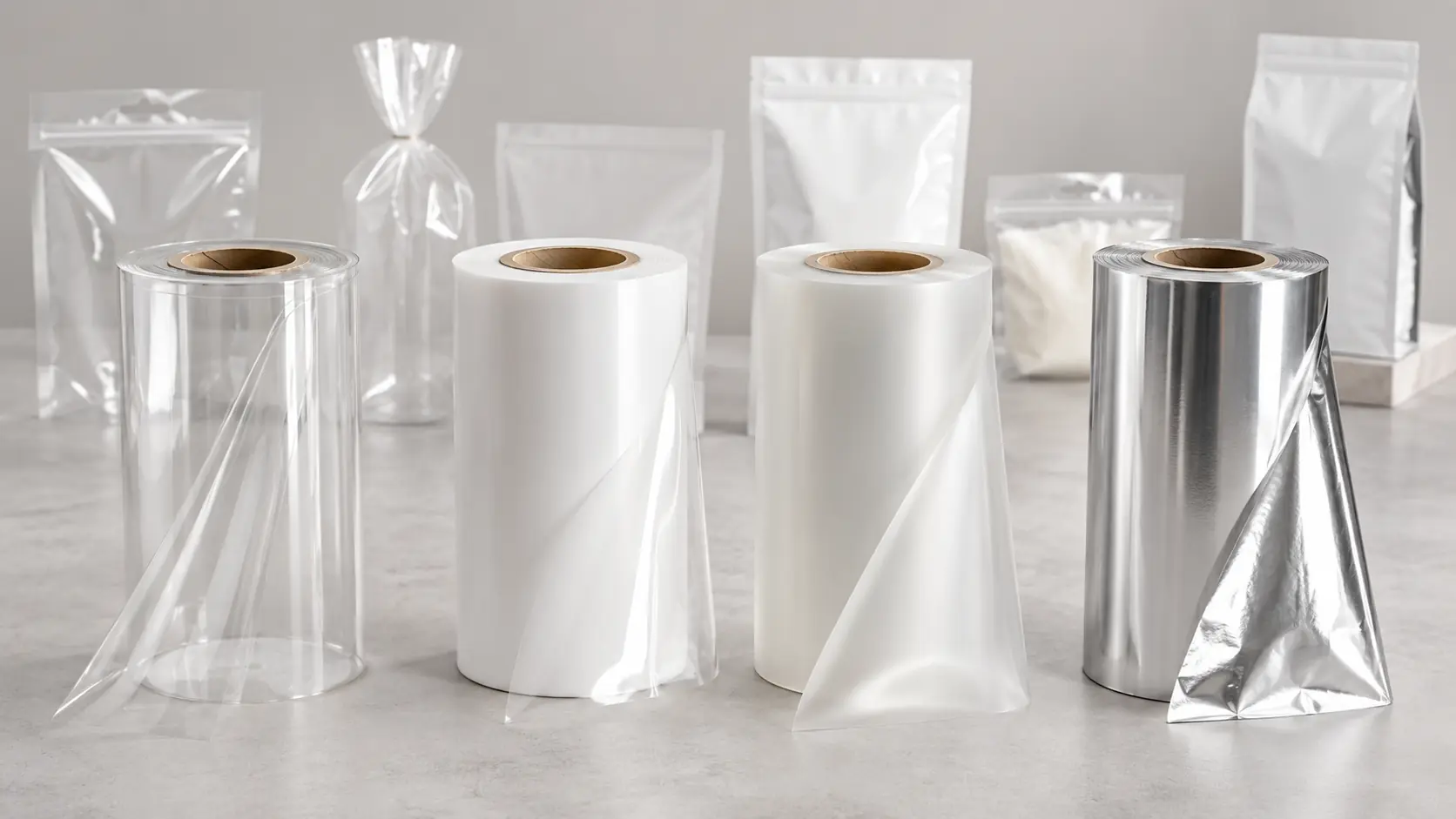
BOPP is not one packaging film with one fixed set of properties. It is a family of biaxially oriented polypropylene grades whose surfaces, layers, coatings, additives and converting routes can be engineered for different jobs. A clear film may also be heat sealable; a white film may also be cavitated; a metallized film may also have a sealable side. For buyers, the useful question is therefore not simply “Which type of BOPP?” but “Which functions must this grade perform, on which side, and under what conditions?”
Start with Function, Not a Single “BOPP Type”
For polymer background, consult the NIH PubChem polypropylene overview before comparing finished-film claims.
For polymer background, consult the NIH PubChem polypropylene overview before comparing finished-film claims.
BOPP is polypropylene film oriented in both the machine direction (MD) and transverse direction (TD). Orientation creates the base platform, but it does not define every finished-film function. A commercial grade may use coextruded skins, surface treatment, mineral-filled or cavitated layers, coatings, metallization, slip or anti-static additives, and other modifications.
This is why common BOPP names overlap. “Matte” describes a surface appearance. “Heat sealable” describes closure behavior. “Metallized” describes a converting route that can add light barrier, appearance and gas-barrier functions. “Label grade” describes an end-use family. A single grade can carry several of these labels at once.
Important: Treat every functional name as the start of a specification, not as proof of performance. Thickness, layer design, treated side, test method, test conditions and the final package structure still determine whether the film is suitable.
The following classification uses the primary job performed by the film: presentation, printing or bonding, closure, barrier, opacity, surface finish, condensation control, or machine handling.
Clear and Printable BOPP for Presentation and Conversion
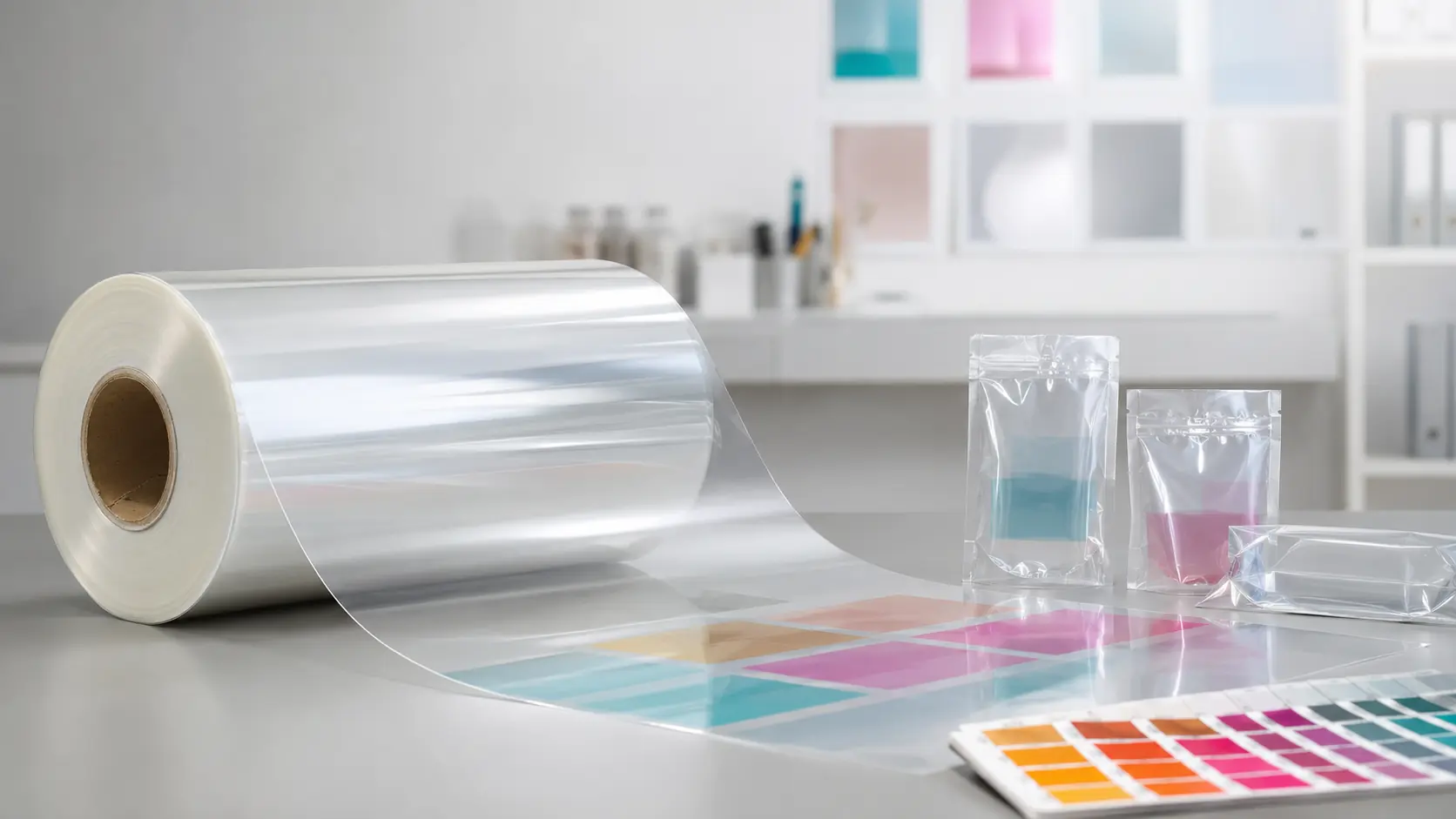
Clear grades are used when product visibility, reverse printing or a transparent outer web is required. “Clear,” however, does not automatically mean that the surface is ready for a particular ink, adhesive or coating.
Clear Gloss Film
Clear gloss BOPP provides the familiar transparent, crisp-looking web used in many wraps, labels and laminates. Its function is primarily optical presentation and stiffness. A buyer should specify the acceptable haze, luminous transmittance, gloss and visual defects rather than approving a film from the word “clear” alone.
ASTM D1003 covers measurement of haze and luminous transmittance for essentially transparent plastics. Gloss is a different property and needs its own agreed method. The grade, thickness, sample conditioning and measurement procedure must be consistent when comparing offers.
Clear film can be non-sealable, one-side sealable or two-side sealable. It can also be coated or surface-treated. Those additional functions need to be written separately in the specification.
Printing and Lamination Grades
Printing and lamination grades have a surface prepared for ink, adhesive, extrusion coating or another conversion step. Corona or flame treatment may raise surface energy, while a primer or functional coating may be used when the converting system needs a more durable or specialized interface.
The treatment side and winding direction matter. A roll can meet its own film specification and still fail on press if the wrong side faces the ink or adhesive. Surface-treatment level also changes with time, storage and handling, so a buyer should agree on the test method, minimum level at use, permitted treatment side and shelf-life conditions.
Print adhesion and laminate bond strength are system results. They depend on the film surface, ink or adhesive chemistry, drying or curing, coat weight, contamination and process settings. A “printable BOPP” description does not guarantee adhesion with every converter’s materials.
Heat-Sealable BOPP for Package Closure
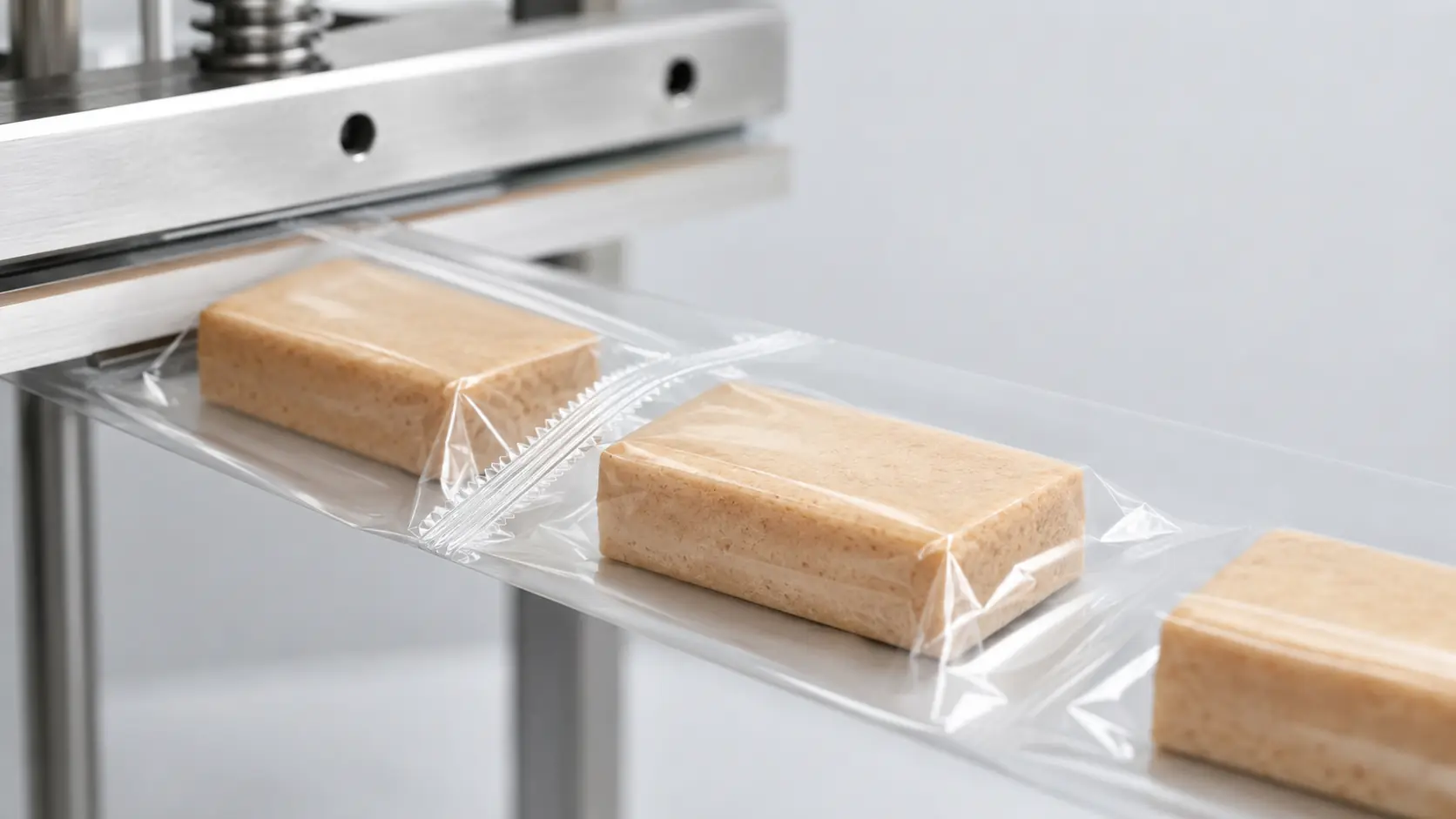
Standard polypropylene homopolymer BOPP should not be assumed to form a reliable heat seal to itself. Heat-sealable grades use at least one functional skin or coating designed to soften and bond under controlled heat, pressure and dwell time. The oriented core supplies stiffness and dimensional behavior; the sealable surface supplies the closure function.
Heat-seal performance is not a single temperature. Buyers should request a seal curve or other evidence covering the intended range, together with hot tack, final seal strength, failure mode and blocking or jaw-release behavior. ASTM F2029 covers laboratory preparation and evaluation of heat seals, while ASTM F88/F88M addresses seal-strength testing. Laboratory results do not replace validation on production equipment.
One-Side and Two-Side Sealable Grades
A one-side sealable film is useful when the package design keeps one surface inside and reserves the other for printing, coating or lamination. The roll specification must identify the sealable side, treated side and winding direction.
A two-side sealable grade can support lap seals, overwraps or formats in which either side may participate in closure. It does not mean that both sides have identical seal windows, COF or treatment. The complete side-by-side construction still needs confirmation.
For either grade, validate the actual opposing seal surface, jaw geometry, pressure, dwell time, line speed, product contamination, cooling and storage conditions. If the film is part of a laminate, test the final laminate and package—not only the unconverted BOPP web.
Important: Seal initiation temperature, machine setpoint and finished-package seal integrity are different concepts. A low laboratory initiation temperature cannot by itself establish a safe production setting.
Barrier-Enhanced BOPP for Moisture, Oxygen, Aroma and Light Control
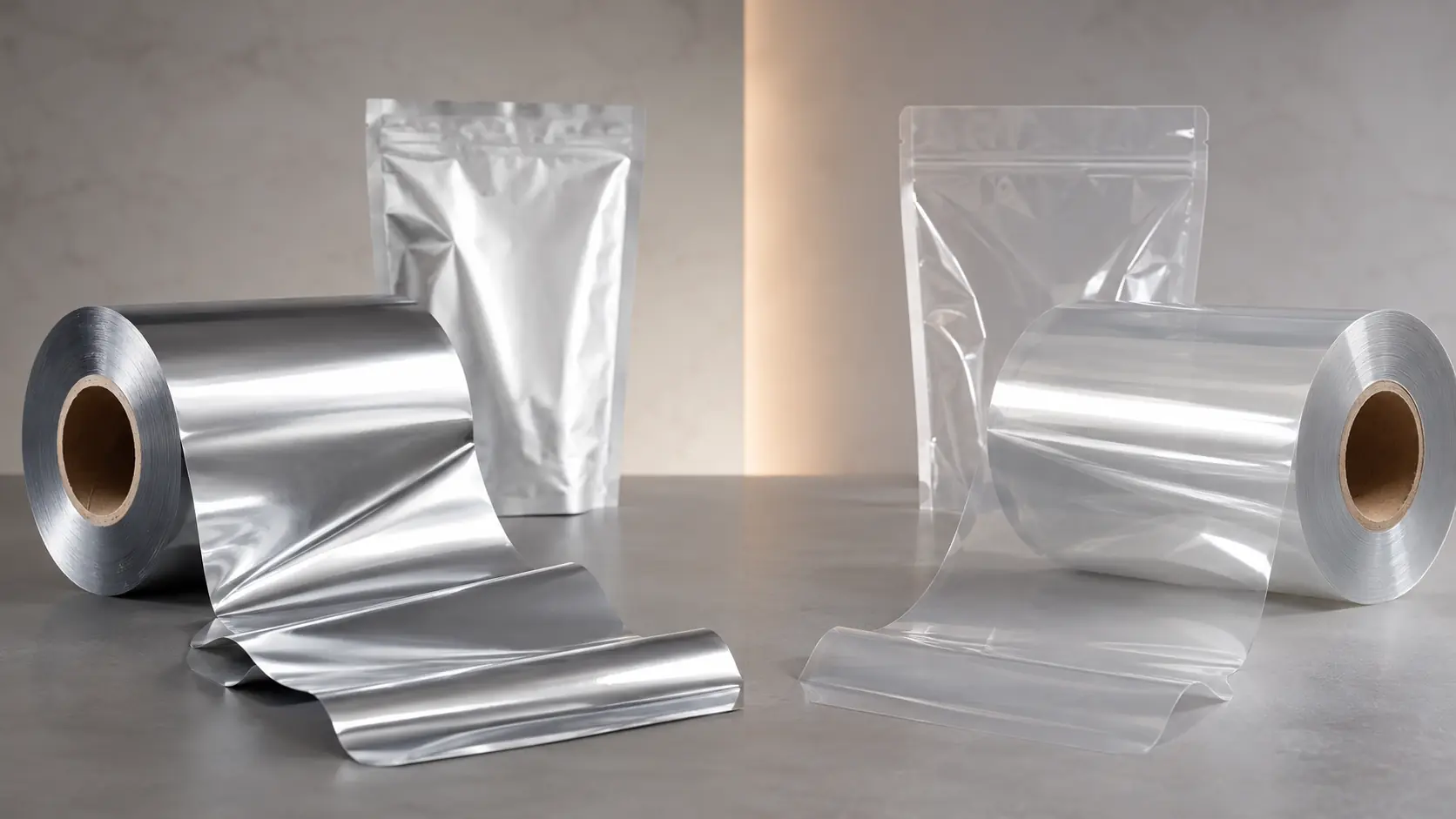
Barrier is not one property. A package may need control of water vapor, oxygen, aroma transfer, light or grease, and the required level depends on the product, shelf-life target, distribution environment and package geometry. BOPP grades can be engineered to improve one or more of these functions, but the route and test conditions must be stated.
OTR and WVTR are especially sensitive to structure and conditions. ASTM D3985 covers steady-state oxygen transmission through films, laminates, coextrusions and coated materials. ASTM F1249 covers water-vapor transmission through flexible barrier materials. Reports should identify temperature, relative humidity, film thickness, test side, units and the exact construction.
Metallized BOPP
Metallized BOPP carries a very thin deposited metal layer, commonly aluminum, on a metallizable surface. The layer gives a metallic appearance and can increase opacity and improve resistance to light, oxygen and water vapor compared with the corresponding un-metallized base film.
Actual barrier depends on metal coverage, optical density, adhesion, pinholes, flexing, printing, lamination and later converting damage. A metallized web that performs well as a flat sample may behave differently after creasing, sealing or bag making. The metal side may also require protection inside a laminate.
Specify the base-film grade, metal side, optical or metal-deposition control, bond requirements and OTR/WVTR under agreed conditions. Do not substitute “metallized” for a numeric barrier target or finished-package shelf-life validation.
Coated Barrier BOPP
Coated BOPP uses a functional coating to alter barrier, sealability, printability or aroma resistance. Acrylic, PVdC and other coating families may be encountered, but chemistry names are not interchangeable performance grades.
The coating can be one-side or two-side, and each side may serve a different purpose. Buyers need the coating identity or declared family, coated side, coat-weight control where relevant, food-contact scope, barrier data, seal data and compatibility with inks and adhesives.
Coating performance can be affected by cracking, humidity, heat exposure and downstream processing. For a laminate or coated printed package, evaluate the complete structure under the intended product and distribution conditions.
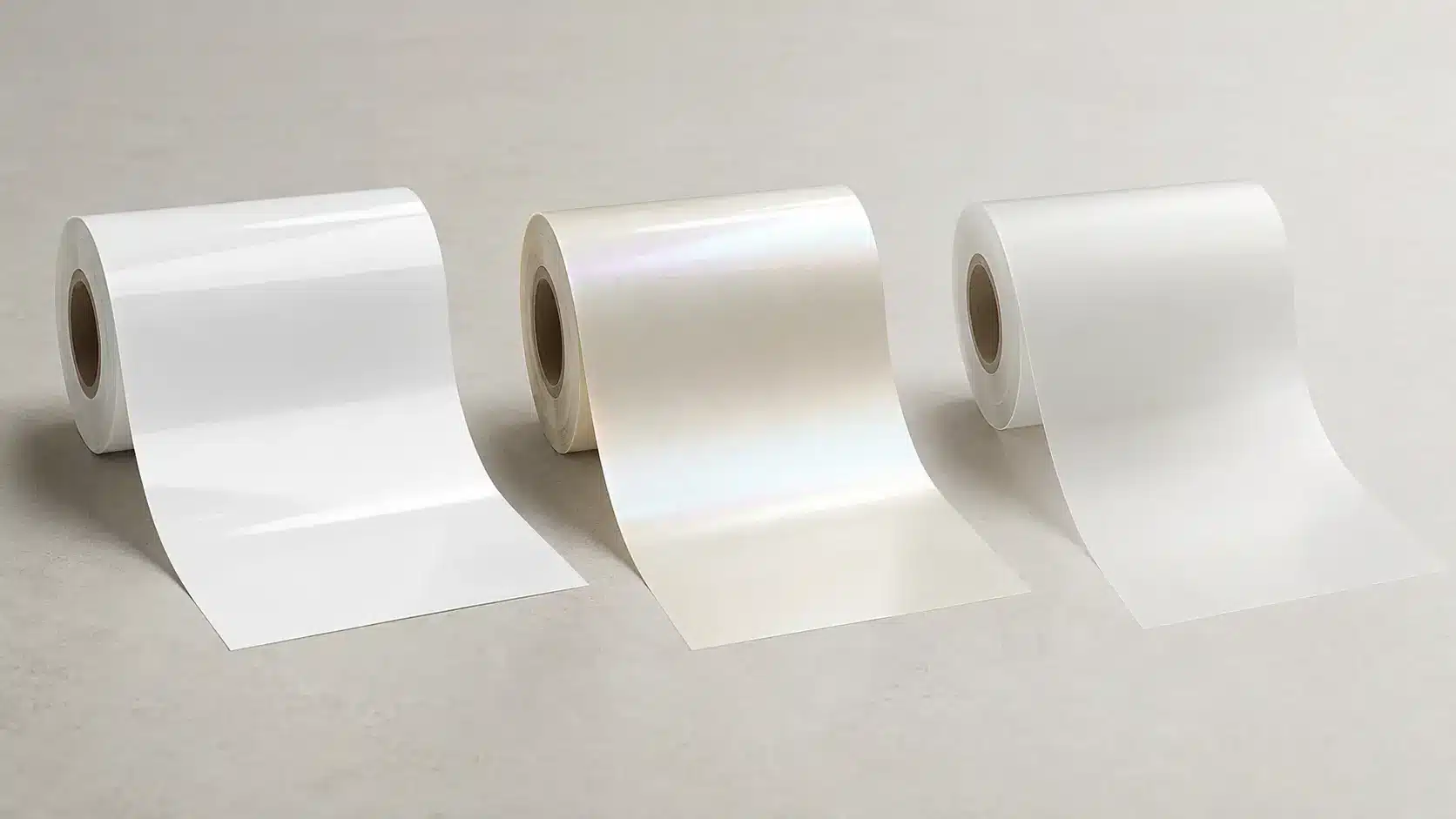
White, Cavitated and Pearlized BOPP for Opacity and Yield
White BOPP is selected when the package needs a bright print background, reduced product visibility or a light-blocking contribution. Pearlized grades add a characteristic pearly appearance. These names mainly describe optical construction; they do not automatically define barrier, sealing or food-contact performance.
Solid White Versus Cavitated Film
Solid white BOPP uses pigment or other formulation choices to create a white, relatively full-density film. Cavitated BOPP contains microscopic voids formed during orientation. The voided structure can increase opacity and reduce apparent density, providing more area per unit mass at a given nominal thickness.
That yield benefit must be evaluated together with stiffness, compressibility, dimensional behavior, printing, sealing and lamination. Nominal thickness alone is a poor comparison when two grades have different densities. Buyers should compare density, basis weight or yield, opacity, thickness method and the required mechanical behavior.
Pearlized film is often cavitated, but “pearlized,” “white opaque” and “cavitated” should not be treated as synonyms. The supplier should identify the construction and the primary function of the grade.
Matte and Tactile BOPP for Surface Appearance
Matte BOPP reduces surface gloss and may increase haze to create a softer, paper-like or premium appearance. A matte effect can come from a coextruded skin, coating or converting process. Soft-touch film adds a tactile function, which is not present in every matte grade.
Useful advantages include reduced reflection, visual contrast against glossy areas and a differentiated hand feel. The trade-offs may include lower contact clarity, sensitivity to scuffing or oils, different ink and adhesive behavior, and different COF.
Specify which side is matte, whether that side must be printable or sealable, the desired gloss and haze methods, rub or scratch expectations, and compatibility with the planned ink and laminate. A matte surface does not prove improved barrier, seal strength or puncture resistance.
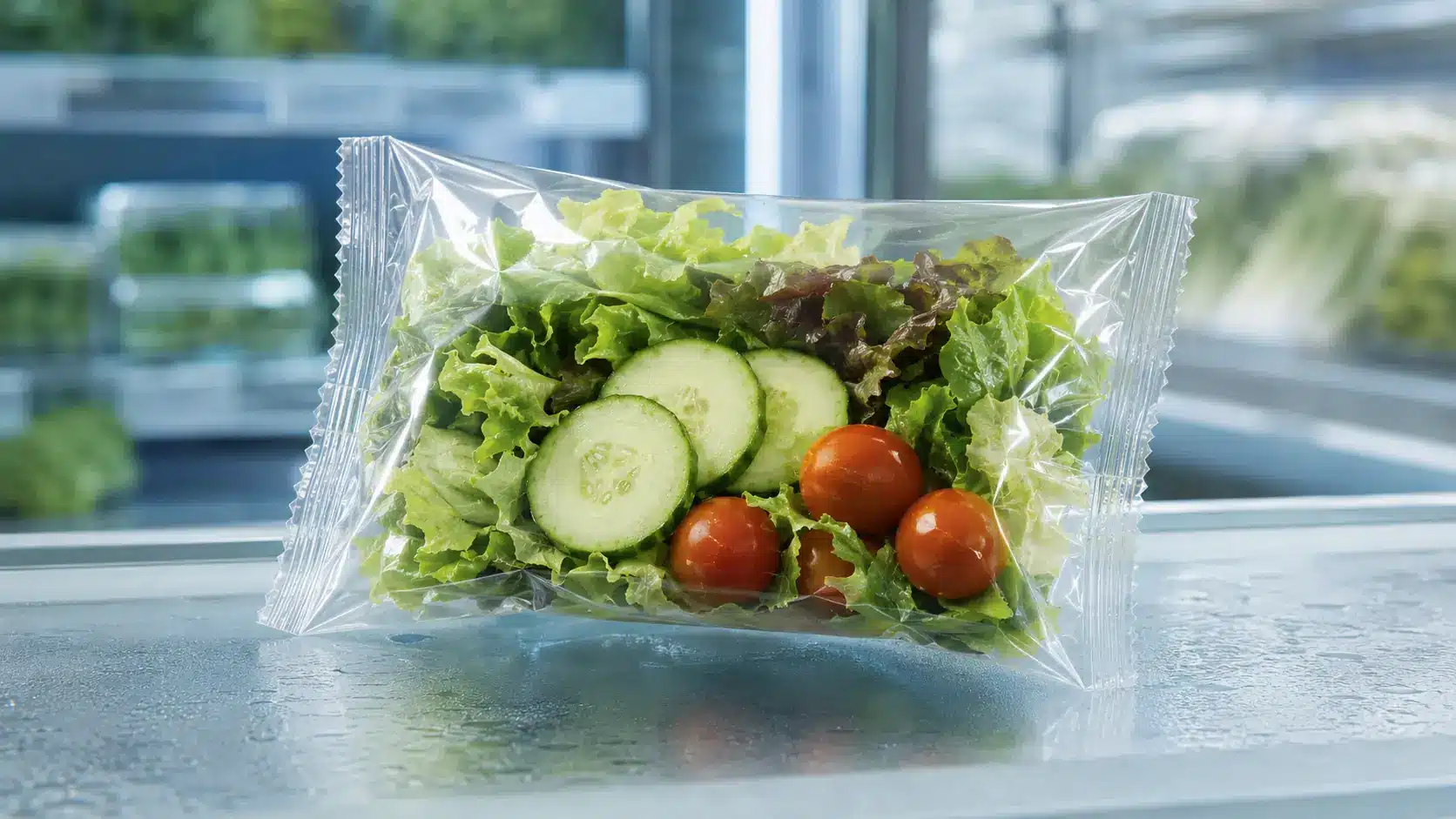
Anti-Fog BOPP for Chilled and Fresh-Food Visibility
Fog forms when condensed water develops as many small light-scattering droplets on the film. An anti-fog surface changes how moisture wets the surface so that condensate spreads more uniformly and product visibility is better maintained.
The function depends on the active side facing the humid package interior. A buyer should distinguish cold-fog and hot-fog conditions, identify the food and package temperature profile, and confirm how long the effect must last. Surface contamination, storage time and migration of additives can affect performance.
Anti-fog BOPP may also need heat sealability, controlled permeability, ventilation or perforation, depending on the product. Anti-fog treatment does not remove moisture, create oxygen control or establish microbial shelf life. Fresh produce and chilled-food packaging therefore require package-level trials under the intended temperature cycle.
Machine-Control and Specialty Surface Grades
Some BOPP functions are primarily for stable converting and packaging-machine operation. They may be invisible to the consumer but decisive for feeding, registration, stacking, sealing and release.
Slip, Anti-Static and Anti-Skid Functions
Slip packages adjust surface friction so the web travels through rollers, forming shoulders and sealing jaws without excessive drag. Anti-skid surfaces use higher friction where stacked packages or heavy bags must resist sliding. Anti-static functions reduce electrostatic buildup that can attract dust, disrupt web handling or interfere with filling.
These properties are side-specific and condition-sensitive. ASTM D1894 covers static and kinetic coefficients of friction when film slides over itself or another surface under specified test conditions. A single COF target cannot be transferred blindly between machines, temperatures or surface pairings.
The buyer should specify which side contacts the machine or another package, the required measurement pairing, conditioning, temperature, line speed and any hot-slip behavior. Anti-static performance also needs an agreed method and humidity range.
Cold-Seal Release and Overwrap Functions
Cold-seal packaging uses a pressure-sensitive sealing system so the product receives less heat. In a typical release-web arrangement, one surface accepts printing or lamination while the opposite surface releases cleanly from the cold-seal adhesive when the roll unwinds. Release performance must be matched to the exact adhesive, coat weight, drying and winding pressure.
Overwrap grades are designed around appearance, controlled shrink, hot slip, jaw release and sealing behavior for tight wrapping around cartons or individual products. “Overwrap” is an application family rather than a single property. The grade must be matched to the wrapping equipment, temperature exposure and required pack geometry.
How to Choose the Right Functional Grade
Start with the packaged product and the complete packaging system, then translate needs into measurable film functions.
- Define the product risk. State sensitivity to moisture, oxygen, aroma, light, grease, heat and condensation, plus the required shelf life and distribution conditions.
- Define the package construction Identify.
- Assign each required function Separate.
- Specify test conditions. Include thickness, direction, temperature, humidity, test side, units and applicable method for every critical value.
- Confirm conversion details. State printing process, ink or adhesive system, treatment side, winding direction, COF pairing, machine type and target line conditions.
- Check regulatory scope. Match the exact resin, additives, coating, ink, adhesive and finished structure to the food type, contact time, temperature and target market.
- Validate the final package. Run converting and packaging trials, then test barrier, seals, appearance and package integrity after realistic distribution and storage.
| Packaging need | Functional starting point | Evidence to request | Common selection risk |
|---|---|---|---|
| Transparent display | Clear gloss, treated if printed or laminated | Haze/transmittance, gloss, treatment side, visual-defect limits | Assuming clear means printable or sealable |
| Direct heat closure | One-side or two-side heat-sealable BOPP | Seal curve, hot tack, F88 test conditions, side identification | Using a lab initiation point as the machine setpoint |
| Oxygen, moisture or light control | Metallized or coated barrier BOPP | OTR, WVTR, thickness, temperature, RH, test side, post-conversion data | Treating “metallized” or “barrier” as a numeric specification |
| Opaque print background | Solid white, cavitated or pearlized BOPP | Opacity, density, basis weight/yield, stiffness, sealability | Comparing nominal thickness without density |
| Premium low-gloss finish | Matte or soft-touch BOPP | Gloss, haze, rub/scratch, COF, ink/adhesive compatibility | Assuming all matte films have tactile coating |
| Chilled-product visibility | Anti-fog BOPP | Active side, hot/cold fog method, duration, package trial | Expecting anti-fog to control package atmosphere |
Frequently Asked Questions
Can One BOPP Film Combine Several Functions?
Yes A grade can be.
Is Standard BOPP Heat Sealable?
Not necessarily. Reliable sealing usually requires a sealable skin or coating engineered for the opposing material and the intended process. Confirm the sealable side, seal window, hot tack, seal strength and production-machine behavior.
Does Metallized BOPP Always Provide High Barrier?
No. Metallization can improve oxygen, water-vapor and light barrier, but the result depends on the base film, metal deposition, pinholes, adhesion and converting damage. Approve the exact grade using OTR and WVTR data at relevant conditions, then verify the converted package.
Is BOPP Automatically Food-Contact Compliant?
No. Polypropylene may be permitted for defined food-contact uses, but compliance applies to a specific composition and use condition. In the United States, 21 CFR 177.1520 contains conditions for olefin polymers. In the European Union, Regulation (EU) No 10/2011 covers plastic food-contact materials, including multilayer, printed and coated structures. A finished package also includes additives, coatings, inks, adhesives and possible migration or set-off routes. Request current documentation for the exact grade, structure, food type, contact time, temperature and market.
Conclusion: Specify the Function and Verify the Grade
Functional BOPP types are best understood as building blocks, not exclusive boxes. Clear, printable, sealable, barrier, metallized, white, cavitated, matte, anti-fog and machine-control functions can overlap in one commercial grade.
For a defensible selection, write each required function separately, identify the active side, define the test method and conditions, and validate the converted package on the intended equipment. The film name narrows the search; the grade specification, compliance documents and package trials establish suitability.
Related Bestypack Resources
- Clear/Transparent BOPP film High Quality
- BOPP Pearlized Film
- BOPP Film Manufacturer&Supplier
- BOPP Film Guide: Applications, Benefits, Features
 English
 Japanese
 French
 Spanish
 Korean
 Italian
 Portuguese
 Dutch
Dutch Arabic
 Russian
 German