
Stretch film and cling film can both adhere to themselves, but they are designed for different packaging jobs. Stretch film is normally applied under tension to unitize cartons, products, or pallet loads. Cling film is normally used as a light, conformable wrap or cover for individual items, trays, bowls, or food-service containers. The safest way to choose is to start with the application, contact conditions, dispensing equipment, and required evidence—not the word “cling” or the film’s appearance.
Stretch Film vs. Cling Film at a Glance
For polymer background, consult the NIH PubChem polyethylene overview before comparing finished-film claims.
For polymer background, consult the NIH PubChem polyethylene overview before comparing finished-film claims.
The primary difference is the job the wrapped film must perform. Stretch film becomes part of a load-containment system. Cling film creates a close, temporary cover around a much smaller item or across a container opening. The categories can overlap in material family and both can exhibit surface cling, so neither a clear appearance nor a generic polymer name is enough to identify the correct product.
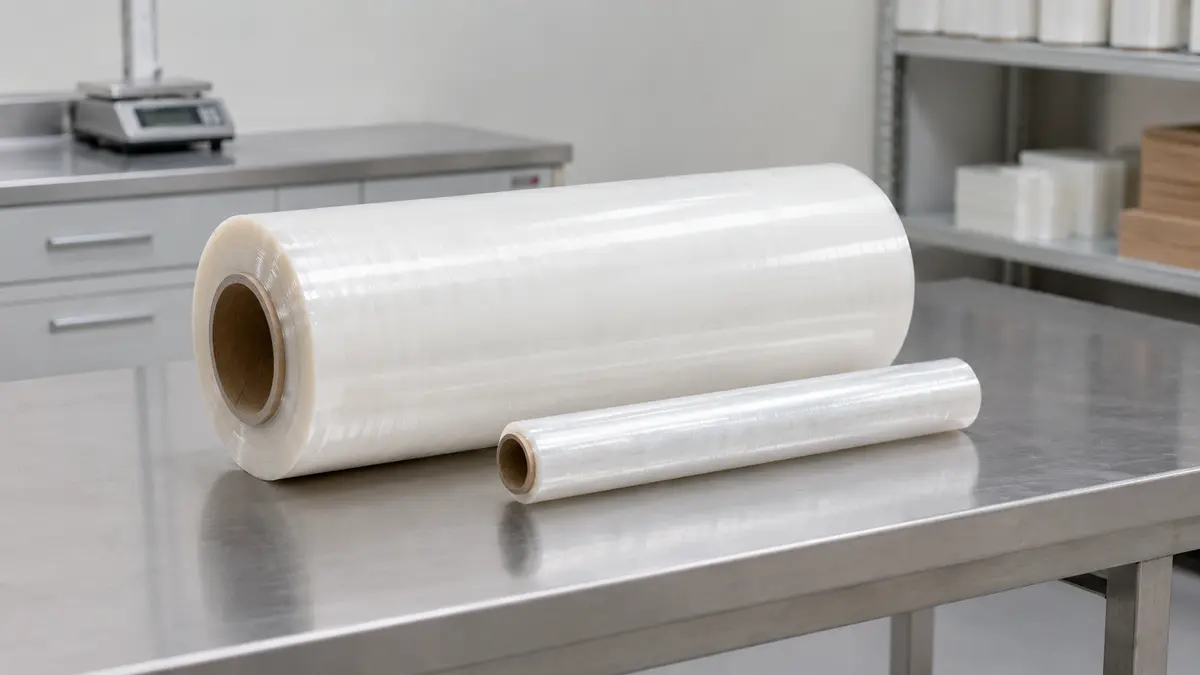
| Comparison point | Stretch film | Cling film |
|---|---|---|
| Primary task | Unitize, reinforce, or stabilize products and pallet loads for handling, storage, or transport | Wrap an individual item or cover a tray, bowl, plate, or food-service container |
| How it holds | Applied stretch creates tension; elastic recovery produces containment force, while layer-to-layer cling helps keep the wrap together | Conformability and light surface cling help the film remain against itself or a compatible surface |
| Typical scale | Bundles, cartons, irregular industrial items, and palletized loads | Individual foods, small products, dishes, trays, and containers |
| Application | Hand roll, dispenser, pre-stretch system, or pallet-wrapping machine | Cutter box, hand dispenser, catering dispenser, or dedicated food-wrapping equipment |
| Main verification focus | Applied stretch, containment, puncture and tear behavior, recovery, cling, load pattern, and equipment settings | Intended contact, material and formulation, cling, conformability, dispensing, use temperature, and any required food-contact documentation |
This is a functional comparison rather than a product specification. Actual construction, thickness, additives, surface treatment, test results, and permitted uses vary by grade and supplier.
What Is Stretch Film?
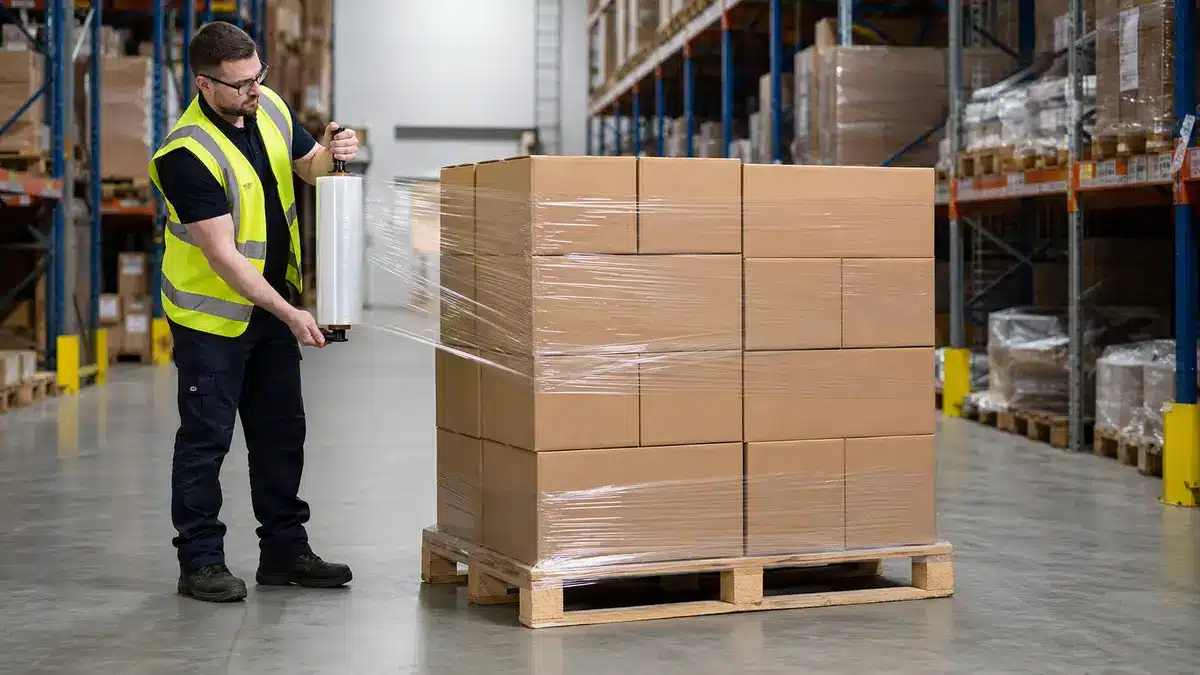
Stretch film, also called stretch wrap or pallet wrap, is a flexible film designed to be elongated as it is applied around a product group or load. The film’s tendency to recover after stretching generates force around the load. Multiple overlapping wraps form a containment system that can help keep cartons or products together during handling, storage, and transport. ASTM D4649 describes the selection and use of stretch films for unitizing, reinforcing, and palletizing in defined indoor distribution environments; outdoor exposure requires separate consideration.
Many commercial stretch films are polyethylene-based, often using linear low-density polyethylene in a cast or blown, single-layer or coextruded construction. That description is common, not universal. Resin grades, layer design, cling or slip additives, color, ultraviolet packages, recycled content, and processing route can change how a film stretches, recovers, unwinds, resists damage, and interacts with equipment.
Stretch film may be applied by hand or by machine. A hand film must be manageable for the operator and dispenser, while a machine film must work with carriage, pre-stretch, tension-control, cut-and-clamp, and wrap-pattern settings. A film that performs well on one load and machine is not automatically suitable for another. Load geometry, product weight, sharp edges, pallet condition, overlap, number of wraps, and distribution hazards all affect the result.
What Is Cling Film?
Cling film is a thin, conformable film intended to wrap an individual item or cover a container. In consumer and food-service contexts it may also be called food wrap, plastic wrap, catering wrap, or cling wrap. It is normally dispensed from a cutter box or roll system and pressed into close contact with itself, the item, or a compatible rim. It is not intended to restrain a pallet load.
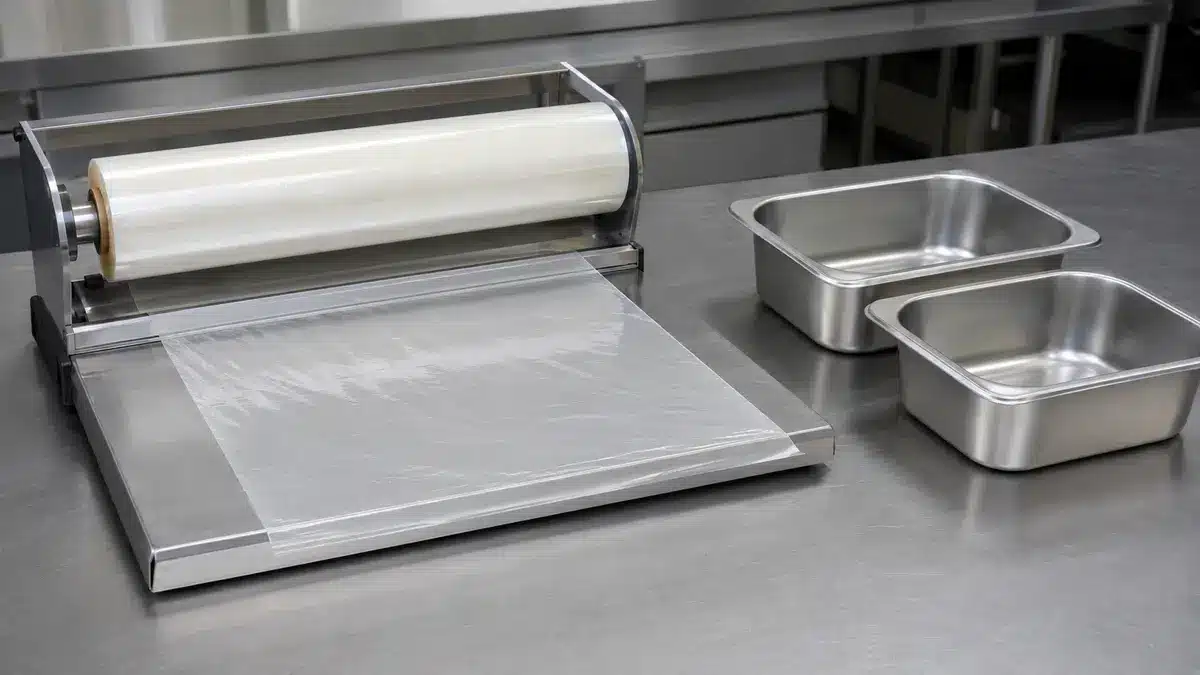
Products sold under the cling-film label are not one standardized construction. Polyethylene and polyvinyl chloride formulations are both found in different markets and applications, and each formulation may use a different layer design or additive system to balance cling, softness, clarity, cutting, unwind, and contact requirements. Material choice alone does not establish barrier performance, heat resistance, food-contact status, or compatibility with fatty, acidic, frozen, or heated foods.
Before treating a roll as food wrap, check:
- the exact product or grade and complete construction;
- the intended food type and whether contact is direct;
- the permitted contact time and temperature;
- any microwave, freezer, reheating, or hot-fill limitations stated by the supplier; and
- the declaration, authorization, or supporting migration evidence required in the target market.
The printed box, technical data sheet, and declaration for the exact film should control the use decision. A generic description such as clear PE film or cling wrap is not enough.
How Stretch Film and Cling Film Differ in Use and Performance
The two categories should be compared under the same dimensions: packaging task, holding mechanism, construction, and application system. Comparing only thickness or how sticky a film feels can lead to the wrong choice.
Primary Packaging Task
Stretch film is part of a unitization system It pulls a group of objects together and works with the load pattern pallet corners wrap path overlap and applied tension Its packaging outcome is.
Cling film performs a local wrapping or covering task. It may conform around a food portion, cover a prepared tray, or close the top of a container for temporary handling or storage. It is selected for contact compatibility, ease of dispensing, coverage, and how it remains in place on the intended item or surface. It should not be expected to provide structural restraint for a heavy bundle or pallet.
How the Film Holds
Stretch film is elongated during application. As it attempts to recover, it applies force around the load. Overlapping layers and suitable layer-to-layer cling help prevent tails or wraps from lifting. These two functions are related but not identical: high surface cling does not by itself prove sufficient containment, and high stretch capability does not guarantee that a wrapped load will remain stable.
Cling film is normally applied with much less tension. It conforms to the shape of the item and relies on controlled surface attraction, close contact, and the product’s formulation to remain against itself or a compatible surface. The result can change with surface cleanliness, condensation, fat or oil, dust, temperature, and the material of the tray or container. “Clings well” therefore needs an agreed substrate and use condition.
Materials and Construction
Both categories may be polyethylene-based, which is one reason material shorthand creates confusion. Stretch-film performance depends on resin selection, molecular architecture, layer distribution, processing history, and additive placement. Cling-film performance likewise depends on the full formulation and construction, not simply whether the main polymer is PE or PVC.
For a technical comparison request.
Application and Equipment
Hand stretch film is normally paired with a handheld dispenser or extended core. Machine stretch film must match the wrapper type, pre-stretch carriage, roll dimensions, tension controls, load height, throughput, and automatic handling features. Film behavior during unwinding, stretching, corner passage, overlap, cut, and tail treatment matters as much as the roll’s nominal specification.
Cling film commonly uses a cutter box, slide cutter, catering dispenser, or food-wrapping station. Width, roll length, core, unwind force, cut behavior, and fit with the dispensing equipment affect productivity and waste. Automated tray or food wrapping adds further requirements for machine compatibility, hygienic design, temperature controls where used, and consistent film presentation. Equipment terms should therefore appear in the RFQ rather than being left for a trial-stage surprise.
Why Stretch Film Can Still Have “Cling”
In stretch-film engineering, cling is a surface property rather than an end-use category. A stretch wrap may have cling on one side, both sides, or neither side, depending on the intended wrap behavior. Internal cling can help overlapping layers remain together. A lower-cling outer surface may be preferred when adjacent pallet loads or products must not grab each other.
ASTM D5458 measures peel cling between two layers of stretch wrap film in stretched and unstretched conditions. A report should identify the method edition, specimen preparation, stretch condition, film side, conditioning, and units. The result can compare layer-to-layer cling under the reported method, but it does not establish pallet stability, elastic recovery, puncture resistance, food-contact status, or cling to a particular tray.
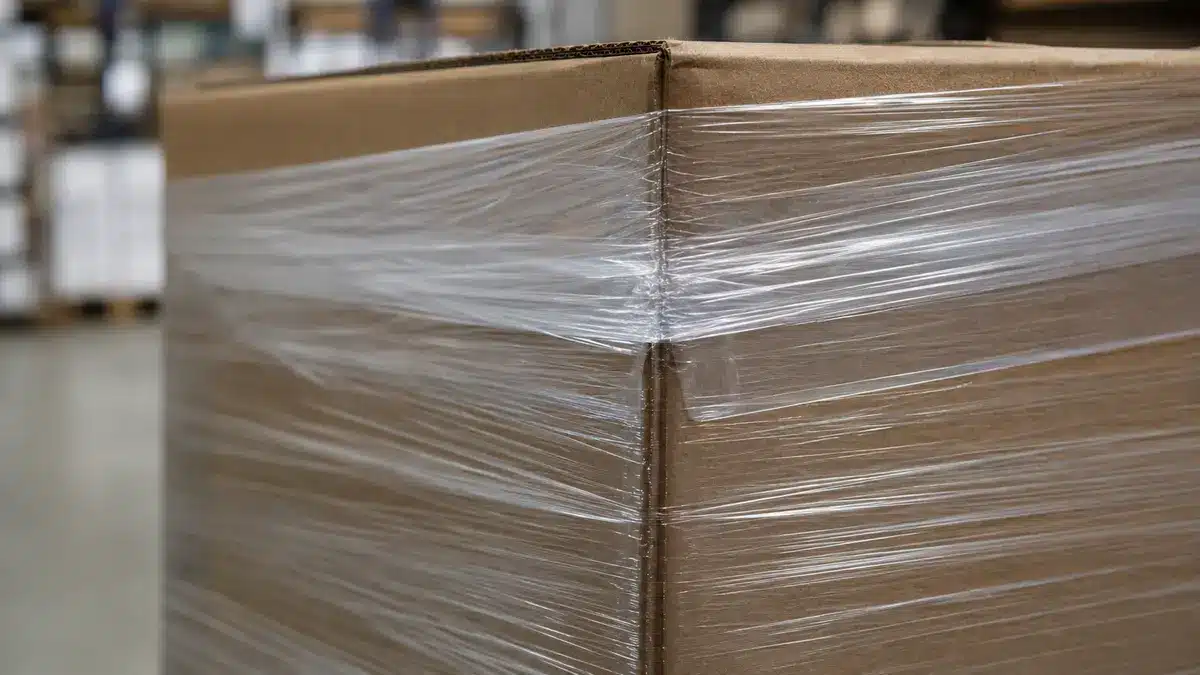
Important: “Cling stretch film” can describe a stretch-wrap grade with a specified cling surface. It does not automatically mean kitchen or food-service cling film. Confirm the packaging task and contact conditions before interpreting the name.
Can Either Film Be Used for Direct Food Contact?
It depends on the exact product and intended use. The category name does not decide food-contact suitability. A film intended to contact food must have a complete composition and supporting regulatory status for the target market, food type, contact time, and temperature. A film used only around an outer carton or pallet has a different contact scenario from a film touching meat, cheese, produce, bakery items, or a prepared dish.
Warning: Do not place industrial stretch film in direct contact with food unless the supplier provides product-specific evidence that covers that exact use. Do not assume a cling film is suitable for heating, microwave use, hot food, or high-fat food unless its instructions and supporting documentation explicitly permit those conditions.
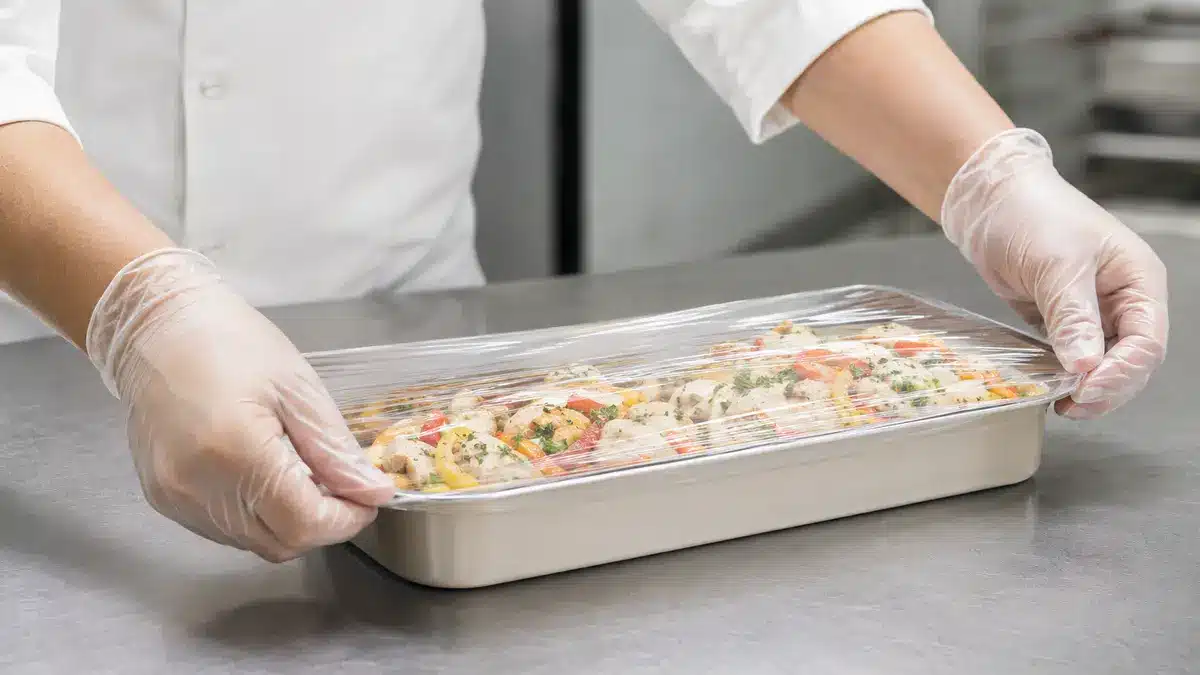
For the United States, FDA food-contact authorizations and effective notifications have specifications, limitations, and intended-use conditions. For the European Union, plastic food-contact materials are subject to Regulation (EU) No 10/2011 together with the applicable general framework and good manufacturing practice requirements. A buyer should therefore verify:
- the supplier’s exact product identity and manufacturing site where documents are site-specific;
- the full material and additive scope covered by the declaration or authorization;
- the food types, time, and temperature represented by the evidence;
- migration or other testing conditions where required; and
- whether printing, adhesive, recycled content, colorant, or other components change the final compliance assessment.
Neither a polymer name nor a management-system certificate proves that a finished roll is suitable for a particular food-contact use.
How to Choose Between Stretch Film and Cling Film
Use a task-first sequence. This avoids starting with a familiar product name and trying to force it into the wrong packaging system.
- Define what must be held or covered. Choose the stretch-film path when the objective is to unitize a bundle, carton group, irregular product, or pallet load. Choose the cling-film path when the objective is to wrap an individual item or cover a small tray, bowl, plate, or container.
- Identify the contact condition. Record direct or indirect contact, the product or food type, exposure time, temperature, moisture, fat or oil, and any heating or freezing step. Direct food contact creates a document and evidence gate before a sample is used.
- Specify the application method. Name the hand dispenser, cutter, food wrapper, turntable wrapper, rotary arm, or other equipment. Include roll width, core, maximum roll diameter, required throughput, and any pre-stretch or tension-control features.
- Set performance priorities in measurable terms. For stretch film, these may include containment under a defined load and wrap pattern, recovery, puncture or tear behavior, cling side, and unwind. For cling film, they may include cling to an agreed surface, conformability, dispensing and cut behavior, clarity, and performance under the intended contact conditions.
- Run a controlled sample trial. Compare candidates on the same equipment, load or item, environment, and acceptance criteria. Record settings, roll identity, sample conditioning, observations, failures, and the method used for any laboratory measurement.
The outcome of this process is a justified category and a trial record, not a universal declaration that one film is stronger, safer, or more economical.
What to Put in an RFQ or Sample Trial
A useful RFQ separates the buyer’s application from the supplier’s proposed solution. Give every supplier the same input conditions, then ask them to identify the exact construction and evidence behind their recommendation.
- Application: item or load description, dimensions, mass, geometry, sharp edges, pallet pattern, container material, and whether the film touches the packed product.
- Environment: storage and transport duration, temperature and humidity range, indoor or outdoor exposure, condensation, dust, and handling hazards.
- Application equipment: machine or dispenser type, model where relevant, core, roll width, maximum diameter, line speed, pre-stretch system, tension controls, cutter, and sealing or wrapping sequence.
- Film proposal: product or grade, polymer family, layer construction where relevant, nominal thickness with tolerance and measurement method, roll dimensions, surface or cling side, color, treatment, and additive information needed for the use.
- Performance evidence: named test methods and editions, specimen conditioning, film direction, thickness, stretch state, substrate, temperature, units, and the difference between typical data and agreed acceptance limits.
- Food-contact evidence: target market, food type, direct or indirect contact, time and temperature, declaration of compliance or other authorization basis, migration conditions where applicable, and restrictions on heating or fatty foods.
- Trial plan: equipment settings, wrap pattern or covering method, sample size, environmental conditions, failure definitions, acceptance criteria, responsible reviewers, and retained records.
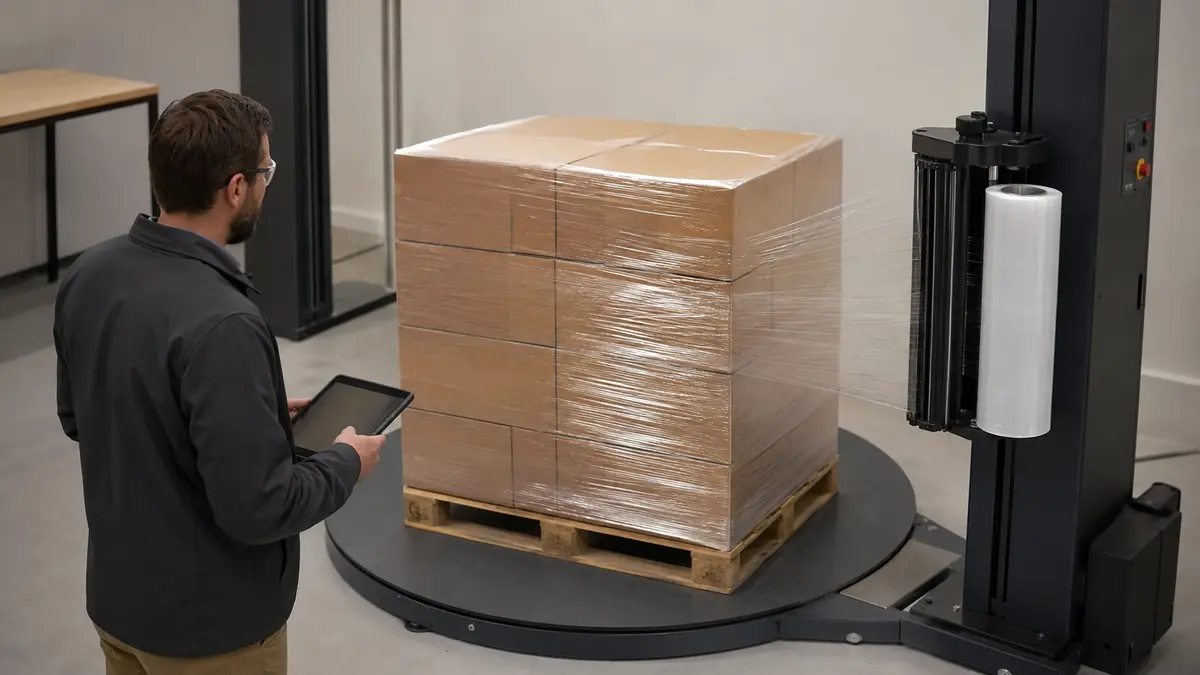
For stretch film, laboratory cling, tensile, puncture, recovery, or other film tests should be connected to an applied-load trial rather than treated as substitutes for it. For cling film, a bench test should use the intended surface and contact environment; a result on clean glass may not represent a wet tray, oily product, or cold container.
Final Takeaway
Stretch film is primarily a load-unitizing film that works through applied stretch, elastic recovery, and controlled layer interaction. Cling film is primarily a light, conformable wrap or cover for individual items and containers. The word “cling” can describe a property in either context, so it should never be the only selection criterion.
Choose the category from the packaging task, then verify the exact construction, equipment fit, test conditions, contact scenario, and market documentation. That approach produces a defensible RFQ and sample trial without turning a generic film name into an unsupported performance or compliance promise.
Related Bestypack Resources
- How Many Pallets Can One Roll of Stretch Film Cover?
- PE Cling Film Food Film
- Shrink Wrap vs. Stretch Wrap: What’s the Difference?
- How to Reduce Stretch Film Thickness to Cut Costs?
 English
 Japanese
 French
 Spanish
 Korean
 Italian
 Portuguese
 Dutch
Dutch Arabic
 Russian
 German