
Stretch film is a highly popular packaging material. It excels at securing goods effectively. Choosing the wrong width or thickness can raise costs and waste materials. It may also result in poor packaging outcomes. This poses significant risks during product transportation. What factors determine the thickness and width of stretch film? This article will help you understand what affects stretch film size, thickness, and width. It will also show you how to pick the right stretch film.
What is the function of stretch film?
Stretch film is a plastic film made from polyethylene. It is fragile and highly stretchable. Its tensile strength and elastic recovery securely hold products in place with a tight bond. Stretch film can stretch up to nearly 310%, providing ample shrinkage force to keep goods stable and fixed.
- With its outstanding properties, stretch film finds applications across numerous fields.
- Effectively protects products from damage.
- Prevents product tampering.
- Reduces workers’ injury risks
- UV stretch film with added agents also offers sun protection.
- Provides basic moisture and dust resistance.
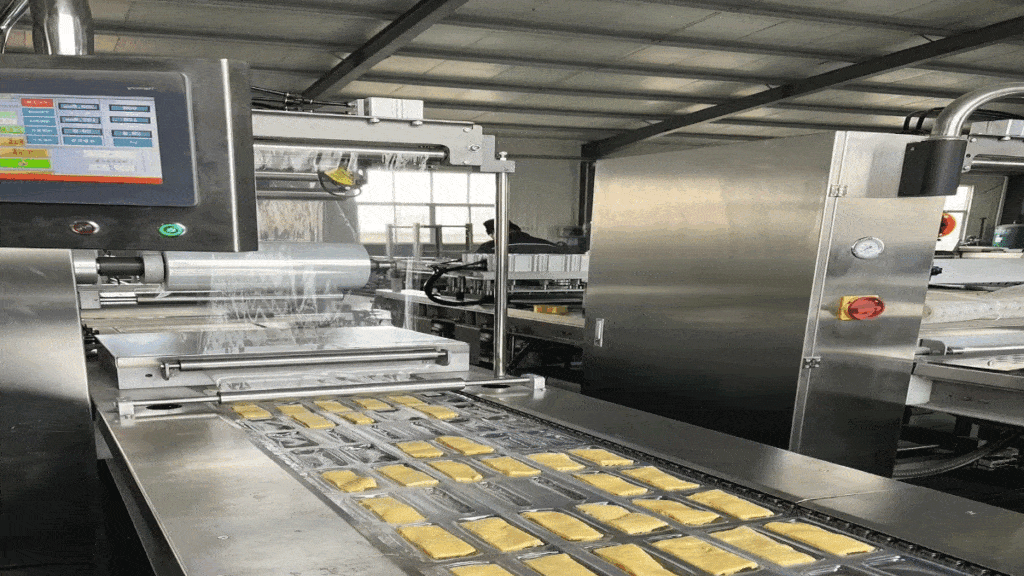
The Importance of Stretch Film Thickness and Dimensions
Both width and thickness impact stretch film performance. Understanding these dimensions helps select the most suitable film. It provides secure and stable protection during packaging, transportation, and storage. Choosing the right stretch film in terms of width and thickness helps prevent tearing and rupture. This saves costs and lowers the risk of loss.
- Using very thick stretch film can put too much pressure on products. This might cause damage.
- Opting for too thin a film may fail to provide adequate protection and could rupture during storage or transport.
Understanding different widths and thicknesses allows us to select a more suitable stretch film. This reduces loss costs, improves packaging efficiency, and simplifies processing workflows.
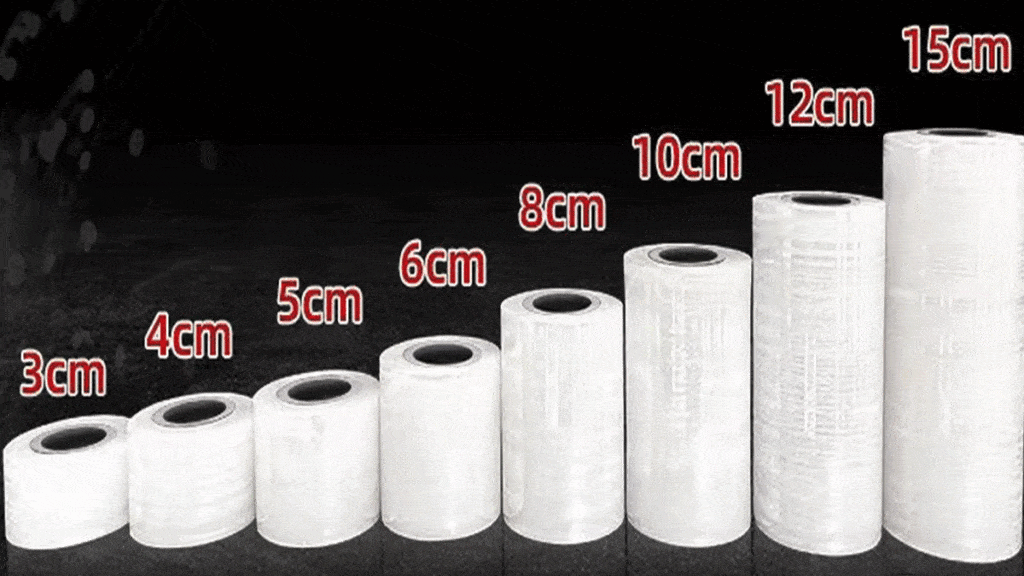
Uses of Different Stretch Film Sizes
Stretch film comes in various widths and thickness specifications, each serving distinct purposes. Selecting the appropriate width and thickness is essential.
Standard stretch film sizes and their applications:
| Gauge | Banding (2″-4.5″) | Hand Grade (11″-22″) | Machine Grade (22″) |
|---|---|---|---|
| 37 | Pre-stretched, cost-saving. Bundle light, regular objects. | Wrap light loads (<800 lbs). | Pre-stretched, cost-saving. Wrap light loads (<800 lbs). |
| 47 | Blended film, no sharp edges. Bundle heavier objects. | Stiff, low stretch. Wrap boxes (<1800 lbs). | Stiff, fits most machines. Wrap light loads (<1800 lbs). |
| 60 | Replaces tape. Bundle small/light items. | Short loads, top/bottom wrap (<1800 lbs). | High efficiency, low waste. Same as hand strength. |
| 63 | Thicker than 47, puncture-resistant. Bundle heavy, non-sharp. | Puncture-resistant. Wrap heavy, non-sharp (<2200 lbs). | Common, puncture-resistant. Standard pallets (<2200 lbs). |
| 70 | Stronger than 60. Bundle cylinders. | Short/tall loads (2200-2400 lbs). | High efficiency, excellent stretch. Same as hand. |
| 80 | Most common, versatile bundling. | Most common, versatile (2200-2400 lbs). | High efficiency, low waste. Same as hand. |
| 90 | Durable, high stretch. Bundle firewood/metal. | Entry for heavy/tall loads (2400-2600 lbs). | High tension, no tear. Same as hand. |
| 100 | Medium weight. Bundle large boxes/lumber. | Strong stretch needed (2800-3000 lbs). | Heavy-duty. Wrap drums/beams. |
| 115 | Small but heavy items bundling. | Tall/heavy loads (3000-3200 lbs). | Excellent stretch, no tear. Same as hand. |
| 150 | High strength. Secure steel/metal, any shape. | Not typically offered. | Heaviest cast film. Heavy pallets. |
The table provided here serves as a reference guide only. The actual dimensions and width selections should be determined through specific analysis of the application scenario and product requirements. For further parameter details, please feel free to contact BestY Pack!
The Difference Between Micrometers and Gauges
Stretch film thickness is sometimes measured in microns. Gauge also denotes stretch film thickness.
These specifications are crucial for professional packaging industry insiders. Film measurement units may vary across different regions.
Understanding the conversion relationships between these specifications enables better selection.
Typically, 1 μm = 4 gauge.
Micrometers: 1,000 μm = 1 mm
Gauge: A unit used to measure size, dimensions, and width.
Stretch Film Thickness Conversion Table
| Gauge | Mil | Micron (µm) | mm | inch |
|---|---|---|---|---|
| 24 | 0.24 | 6.1 | 0.0061 | 0.00024 |
| 29 | 0.29 | 7.4 | 0.0074 | 0.00029 |
| 41 | 0.41 | 10.4 | 0.0104 | 0.00041 |
| 49 | 0.49 | 12.4 | 0.0124 | 0.00049 |
| 61 | 0.61 | 15.5 | 0.0155 | 0.00061 |
| 74 | 0.74 | 18.8 | 0.0188 | 0.00074 |
| 81 | 0.81 | 20.6 | 0.0206 | 0.00081 |
| 89 | 0.89 | 22.6 | 0.0226 | 0.00089 |
| 101 | 1.01 | 25.7 | 0.0257 | 0.00101 |
| 119 | 1.19 | 30.2 | 0.0302 | 0.00119 |
| 151 | 1.51 | 38.4 | 0.0384 | 0.00151 |
Knowing how to convert between these units helps you choose the right stretch film quickly and easily.
How to Choose the Right Film Width and Thickness?
Selecting the appropriate stretch film width and thickness requires consideration from multiple perspectives.
- Product Weight: Heavier products require thicker stretch film. For example, goods weighing 2,400-2,600 lbs are recommended to use 90-gauge stretch film. For 3,000-3,200 lbs, 115-gauge stretch film is advised.
- Product Shape: Irregular items or those with sharp edges need thicker stretch film. This helps to prevent breakage during transport.
- Packaging Speed: Film width and thickness also relate to packaging speed. For higher speeds, opt for thinner, more flexible stretch film.
- Transport Conditions: Consider transport conditions when selecting width and thickness. For rough transport, thicker stretch film holds products better. It keeps them from moving around.
- Storage Conditions: In rainy or humid places, or when it’s freezing, choose thicker stretch film. Its superior barrier properties better resist moisture and harsh environmental impacts.
- Equipment and Tools: Selecting the appropriate width and thickness also requires equipment compatibility. Stretch-wrapping machines for large loads need film that fits their specs for effective packaging.
- Cost-Effectiveness: Cost matters when choosing the right width and thickness of stretch film. Thicker and larger stretch films usually cost more. In contrast, thinner and smaller sizes are cheaper. However, the protective properties of the stretch film should not be overlooked.
- Sustainability: Thinner and smaller-sized stretch film has a lower environmental impact. Additionally, recyclable stretch film can be chosen for ecological considerations.
How to Enhance Stretch Film Performance?
To boost stretch film performance in packaging, consider these points:
- 1. Wrap stretch film properly: Use it correctly on products. Avoid stretching too much or wrapping too loosely. Achieve just the correct tension. Overstretching may cause the film to lose elasticity. Edges and corners of items require extra wrapping, as these areas are more prone to damage.
- 2. Use Thicker Stretch Film: Opting for thicker stretch film delivers superior performance. Greater thickness provides enhanced product protection and wrapping reliability.
- 3. Select Compatible Stretch Film: Pick stretch film that works well with your packaging machine. This not only boosts packaging efficiency but also ensures better film-to-product adhesion.
BestY Pack
BestY Pack specializes in developing and manufacturing high-quality stretch film. Our stretch film offers superior stretchability and performance. It provides excellent protection and securely holds products in place. It effectively stabilizes items during transportation, storage, and handling, preventing movement. Through continuous R&D, we optimize film thickness for optimal packaging performance. We offer stretch film with the most suitable thickness and outstanding performance. If you need guidance on selecting the right thickness and size, feel free to contact us!
FAQ
What are the standard thicknesses for stretch film?
Typical standard thicknesses for stretch film include the following:
- 60 gauge: Supports approximately 1,550 lbs. load. A lightweight film.
- 80 gauge: Supports approximately 2,450 kg load. A medium-duty film. 80 gauge is the most common thickness.
- 100 gauge: Commonly used for wrapping medium-sized items and pallets with irregularly shaped goods. Also used for wrapping large steel beams and equipment.Can handle loads of approximately 3,100 lbs.
- 150 gauge: Used for wrapping loads with irregular shapes and sharp corners. It is often used in large-scale applications. Requires machinery for wrapping.
How is stretch film thickness measured?
Measuring stretch film thickness typically requires specialized tools. Standard tools include the following:
X-ray thickness measurement technology: This method is less common due to the high cost of X-ray equipment. Replacement and maintenance incur significant expenses. However, it provides accurate measurements.
Near-infrared thickness measurement technology: This method utilizes the principle of fringe interference. It provides complete measurement options. It can measure the total thickness of multi-layer stretch film and the thickness of each layer. Its signal source is non-radioactive, but equipment maintenance is more challenging.
Commonly used for measuring: multi-layer co-extruded stretch film, cast film, and biaxially oriented film.
β-ray thickness measurement technology: This was one of the first ways to measure stretch film thickness. It is costly and demands particular environmental conditions for measurement. Replacing the signal source is also expensive.
How thick is 120-gauge stretch wrap?
120-gauge stretch film is a very common specification for medium to heavy-duty applications.
The conversion for 120-gauge stretch film is as follows:
120 gauge = 30 μm = 0.0304 mm = 0.012 inches = 1.2 mils
For unit conversions of other specifications, refer to the table above.

Hello, customers
My name is Jack Yu. I am the Business Manager at BestY Pack Plastic Products. My areas of expertise include film packaging, cold chain transportation packaging, and shrink products. Additionally, our factory manufactures protective gloves, and I can provide you with professional solutions to help you increase your market share and enhance consumer trust.
Email: ᅠjackyu@bestypack.com
Tel: +86 18368319351