
BOPP film is an excellent flexible-packaging component when its grade, surface, barrier, sealing behavior, and roll format match the product and packing line. It is not a universal package by itself. Buyers should decide what function the BOPP layer must perform, compare conditioned test data, and validate the complete structure on the intended equipment. This guide turns the word “perfect” into a practical selection question: perfect for which product, process, market, and performance target?
What Is BOPP Film?
For polymer background, consult the NIH PubChem polypropylene overview before comparing finished-film claims.
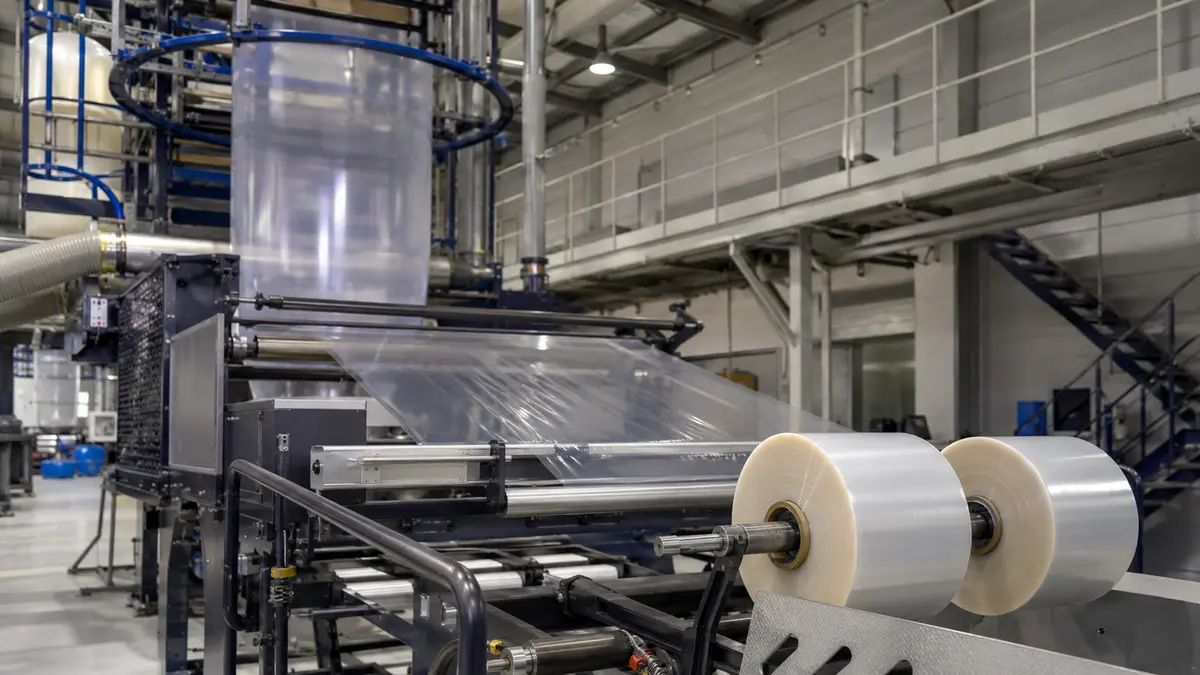
BOPP stands for biaxially oriented polypropylene. In production, a polypropylene web is stretched in both the machine direction (MD) and the transverse direction (TD). The NIST definition uses those two directions to distinguish BOPP from polypropylene that has not undergone the same two-axis orientation process.
That definition describes the substrate, not every product sold under the BOPP label. Commercial films may be mono- or multilayer, clear or opaque, sealable or non-sealable, coated, metallized, treated, cavitated, or designed for labels and tapes. A printed laminate containing BOPP may also include CPP, PE, adhesive, ink, coating, or another barrier layer. Its package performance belongs to the full construction and conversion process—not to the four-letter material name alone.
For procurement, ask suppliers to identify the exact grade, internal film construction, treated and sealable sides, thickness, and intended layer role. That prevents a common category error: comparing a plain print web with a heat-sealable overwrap or a barrier-coated film as though they were interchangeable.
How Biaxial Orientation Changes Polypropylene
Industrial lines can stretch film sequentially—first in one direction and then the other—or use a simultaneous route. Orientation reorganizes polymer chains and crystalline regions. The result can improve stiffness, tensile behavior, optics, dimensional consistency, or barrier relative to an unoriented reference, but the magnitude and MD/TD balance depend on resin, stretch ratio, temperature, heat setting, thickness, and layer design. The Springer overview of BOPP processes therefore supports a mechanism, not a universal data sheet.
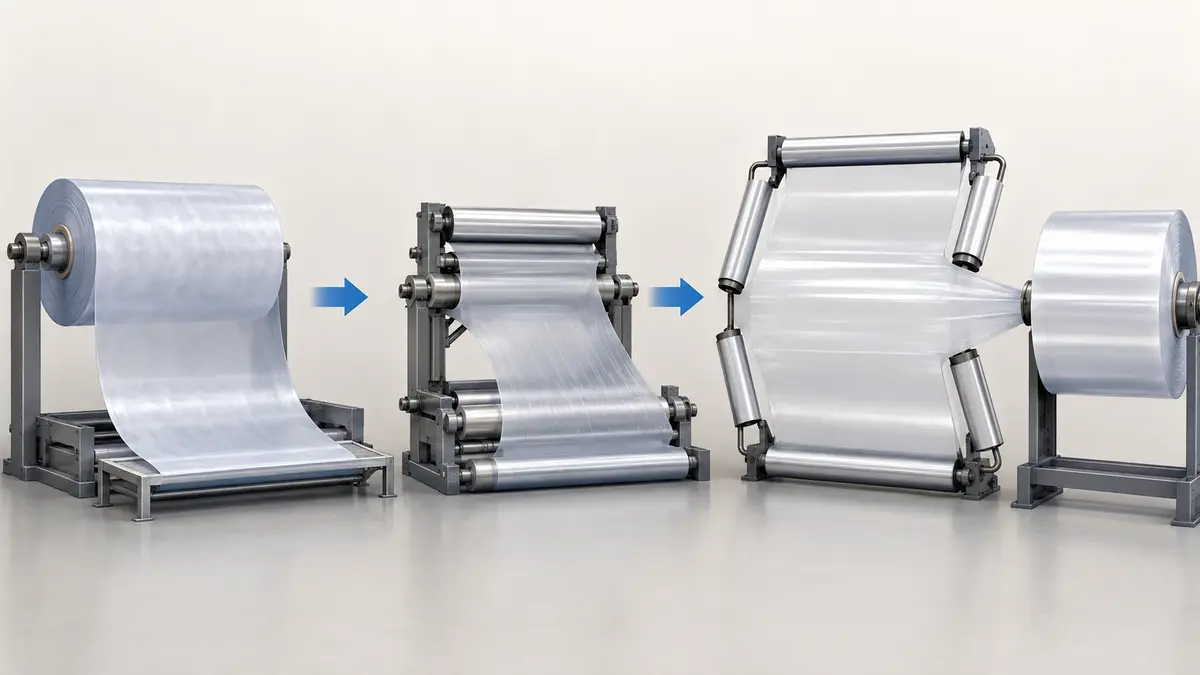
The practical takeaway is simple: orientation creates a useful engineering platform, while grade design determines the deliverable film. A process diagram should show resin extrusion, MD stretching, TD stretching, heat setting, surface treatment, winding, and the separate downstream steps of printing, coating, metallization, lamination, and package formation.
Why BOPP Works in Flexible Packaging
BOPP is valuable because one thin web can contribute several functions: stiffness for web handling, a clear or engineered optical surface, moisture resistance, a print or lamination interface, and—in selected grades—a heat-seal surface. Those functions make it useful as an outer print web, overwrap, label facestock, tape backing, or specialized mono-web.
The limitations matter just as much. Mechanical values vary by MD and TD. Haze and gloss depend on the method, geometry, finish, and gauge. Oxygen and water-vapor transmission rates depend on the precise film or laminate, thickness, temperature, relative humidity, and test method. A catalog value is usually typical test data, not a purchase acceptance limit or a guarantee that the customer’s finished package will perform identically.
Mechanical and Optical Functions
Orientation commonly gives BOPP a crisp feel and useful tensile strength, stiffness, clarity, and gloss. These traits can improve registration, presentation, and web handling, but they do not mean the film is equally tough in every failure mode. Tensile strength, elongation, tear propagation, puncture response, and shrinkage answer different questions. MD and TD results must remain separate.
Optical language also needs discipline. “Clear,” “high gloss,” “matte,” “pearlized,” and “opaque” are not points on one universal scale. Haze may be measured under ASTM D1003, while specular gloss may be reported under ASTM D2457 at a defined angle. A matte or cavitated film is intentionally designed for a different appearance than a clear high-gloss web. Compare like grades using the same method and thickness.
Moisture Barrier, Oxygen Limits, and Structural Context
Plain BOPP often provides useful resistance to water vapor, which is one reason it appears in dry-food and confectionery structures. Standard BOPP is generally not selected as a strong oxygen barrier by itself. Coatings, vacuum metallization, or a dedicated barrier layer can change both OTR and WVTR substantially.
Never compare a bare-film number with a finished-laminate target without aligning conditions. ASTM F1249 addresses water-vapor transmission, while ASTM D3985 is widely used for oxygen transmission through films. Reports should state temperature, relative humidity on each side, thickness, test area or orientation, units, and whether the result applies to a flat web or a completed package. The seal, folds, pinholes, printing, metallization damage, and laminate interfaces can make package performance different from a pristine film specimen.
Common BOPP Film Applications
BOPP applications are easiest to understand by mapping each format to the function the film supplies. A list of markets without layer roles encourages false equivalence. The same polymer family can be formulated very differently for a snack laminate, wraparound label, pressure-sensitive facestock, adhesive tape, or carton overwrap.
Use the following function-to-application map as a screening tool:
- Flexible food packaging: clear print surface, stiffness, moisture resistance, or a specialty seal/barrier function.
- Labels: facestock stiffness, print appearance, die-cutting behavior, moisture resistance, and compatibility with adhesive and container.
- Tape: dimensionally stable backing with controlled treatment and adhesion to the coating system.
- Overwrap: optics, foldability, slip, antistatic behavior, shrink response, and a suitable sealing window.
- Paper or board lamination: decorative appearance, scuff resistance, opacity, or wet/extrusion-lamination compatibility.
Food and Confectionery Packaging
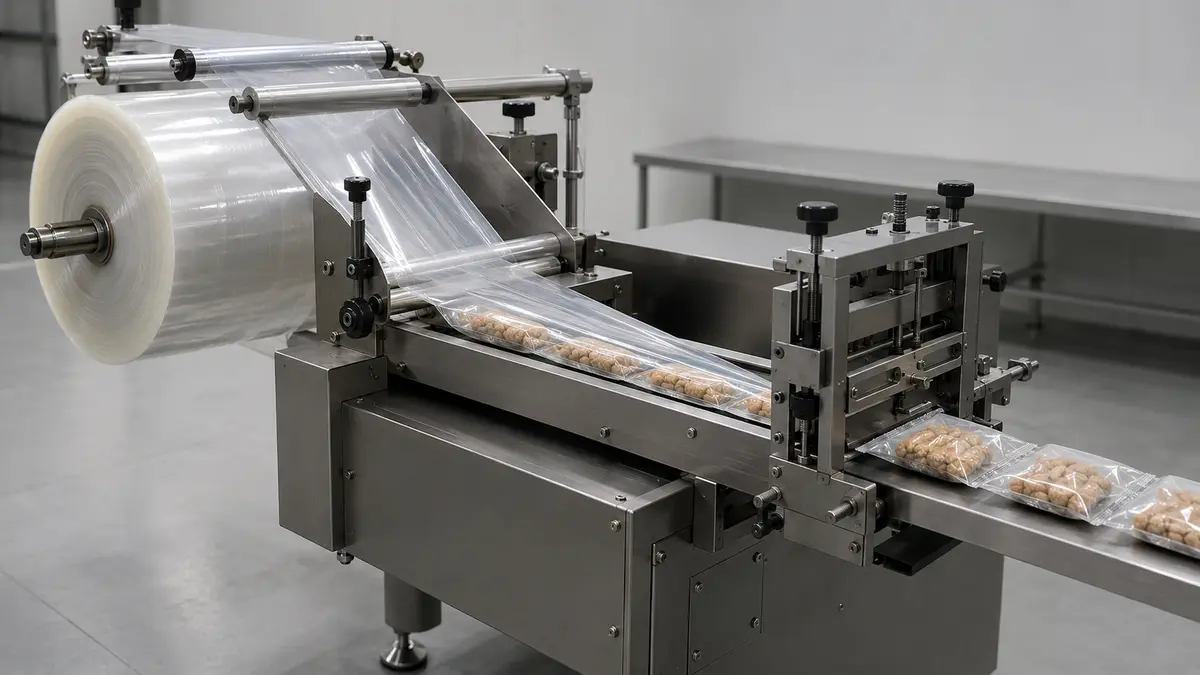
In snack, bakery, confectionery, and dry-food packages, BOPP often acts as the outside print and stiffness layer. A sealable BOPP may work as a mono-web for certain overwrap or flow-wrap uses. Other structures pair BOPP with CPP or PE for sealing, metallized BOPP for improved light and barrier performance, or a coating for a specific aroma, oxygen, mineral-oil, or sealing requirement.
The product decides the structure. Oil, aroma, moisture sensitivity, oxygen sensitivity, light sensitivity, target shelf life, filling temperature, and package geometry must be defined before film selection. Food-contact documentation must match the exact grade, formulation, market, food type, contact temperature, and duration. A supplier’s general food-packaging application list is not a global compliance certificate.
Labels, Tapes, Overwraps, and Industrial Uses
Pressure-sensitive labels use BOPP as a facestock combined with adhesive and release liner. Wraparound labels add seam behavior, stiffness, dimensional stability, and bottle-recycling considerations. In-mold labels require another set of feeding, static, die-cutting, and molding properties.
Tape backing typically needs controlled tensile behavior, treatment, thickness, winding, and compatibility with hot-melt, water-based, solvent-based, or other adhesive systems. Overwrap grades may prioritize sealability, hot slip, antistatic performance, optics, or controlled shrink. Industrial decorative and lamination grades may instead emphasize opacity, matte feel, print reception, or bond strength. Each use calls for its own TDS, trial plan, and finished-product checks.
BOPP Film Types and Surface Options
BOPP variants should be classified by the engineering change that creates their function. The main axes are seal layer, surface coating, metallization, appearance, density, treatment, and end-use geometry. Supplier names are not standardized, so selection should always return to the grade description and test data.
Useful selection cues include:
- Plain or non-sealable: chosen for print, lamination, tape, or other uses where sealing is provided elsewhere.
- Heat-sealable: one or both surfaces use a lower-melting functional skin or coating.
- Coated: acrylic, PVdC, or another coating adds a defined seal, barrier, print, or aroma function.
- Metallized: a thin metal layer changes light barrier, appearance, and gas/moisture transmission.
- White, cavitated, matte, or pearlized: appearance and density are engineered for opacity, yield, feel, or label/packaging functions.
Plain, Heat-Sealable, Coated, and Metallized Films
Plain BOPP is not necessarily heat-sealable to itself. A heat-sealable grade identifies which side seals and should provide a seal-initiation temperature, usable temperature window, seal strength, and hot-tack data under specified pressure and dwell time. Coated films may widen a sealing window or improve barrier, but the coating also affects ink, adhesive, regulatory, and recycling evaluations.
Metallized BOPP is not simply “silver BOPP.” Optical density, metal adhesion, pinhole resistance, handling damage, and barrier under defined test conditions matter. Printing or laminating over the metal layer introduces additional interfaces. For any functional surface, record which face is treated, coated, metallized, printable, laminating, or sealable and confirm the roll winding direction.
White, Matte, Cavitated, and Label Grades
White films may be pigmented, cavitated, or built with multiple functional layers. Cavitation lowers apparent density and can increase opacity and yield, but it changes stiffness, sealing, barrier, and mechanical behavior. Matte grades trade high specular gloss for a controlled surface appearance; label grades may be optimized for die cutting, conformability, static control, adhesive compatibility, or container application.
Do not substitute a descriptive family name for a specification. Two “white BOPP” films can have different density, opacity, thickness, sealability, surface treatment, and intended process. Shortlist the family, then approve the actual grade.
BOPP vs. CPP, BOPET, and PE
These films are complementary engineering options, not contestants in a single overall ranking. The correct comparison uses the same axes and separates the outer web, barrier layer, and sealant role.
| Film family | Typical strengths | Common structural role | Important limitation to verify |
|---|---|---|---|
| BOPP | Stiffness, optics, moisture resistance, print and label performance | Outer print web, overwrap, facestock, tape backing, specialty mono-web | Standard grades may not seal well and usually need help for strong oxygen barrier |
| CPP | Softer feel, impact response, broad heat-seal utility, hot-tack options | Inner sealant web, retort or general-purpose PP seal layer | Lower stiffness and different heat/optical behavior than oriented BOPP |
| BOPET | Stiffness at low gauge, dimensional stability, heat resistance, useful gas barrier | Outer print or technical layer in laminates | Often needs a separate sealant and may complicate mono-polymer design goals |
| PE | Toughness, flexibility, sealability, broad film and pouch use | Sealant or primary web in PE structures | Optics, stiffness, temperature response, and recycling route depend strongly on PE grade and construction |
A BOPP/CPP laminate is common because the layers divide work: BOPP can support printing and stiffness while CPP supplies the sealing surface. BOPP/PE follows a similar functional logic. BOPP/BOPP structures can support a PP-oriented design strategy, but coatings, inks, adhesives, metallization, and closures still affect recyclability and performance. Compare grade-level data and run trials; do not convert this table into a blanket replacement rule.
Printing, Lamination, and Sealing Considerations
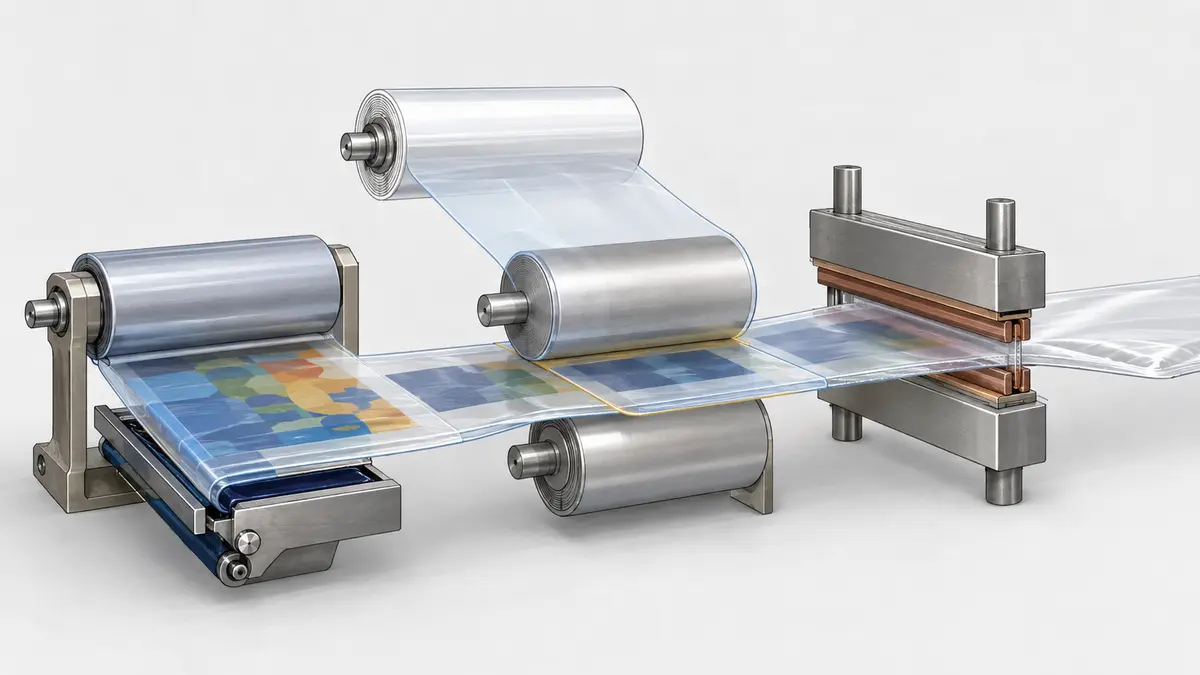
Most converting failures occur at interfaces: ink to film, adhesive to film, one laminate layer to another, or sealant to sealant. A chemically correct polymer can still run poorly if surface energy, COF, winding, cure, sealing conditions, or equipment geometry are mismatched.
The troubleshooting chain should follow the process. Confirm the supplied face and treatment age; verify ink or adhesive compatibility and application weight; control drying or cure; measure bond or seal after the correct conditioning period; then test roll handling and package formation at representative speed. Changing several variables at once hides the true cause.
Surface Treatment and Ink or Adhesive Compatibility
Polypropylene has low native surface energy, so corona treatment is commonly used to improve wetting and adhesion. The specified treatment value should identify the side and method. Treatment can decay during storage and can be affected by additives, contamination, handling, and environmental conditions.
Dyne testing is a useful incoming or process check, but it does not prove final adhesion. Ink chemistry, solvent or water balance, surface cleanliness, drying, adhesive selection, coat weight, nip conditions, and cure all remain important. Use the converter’s ink and adhesive suppliers in the trial plan, particularly for metallized, coated, matte, high-slip, or food-contact structures.
Seal Layer and Packaging-Line Compatibility
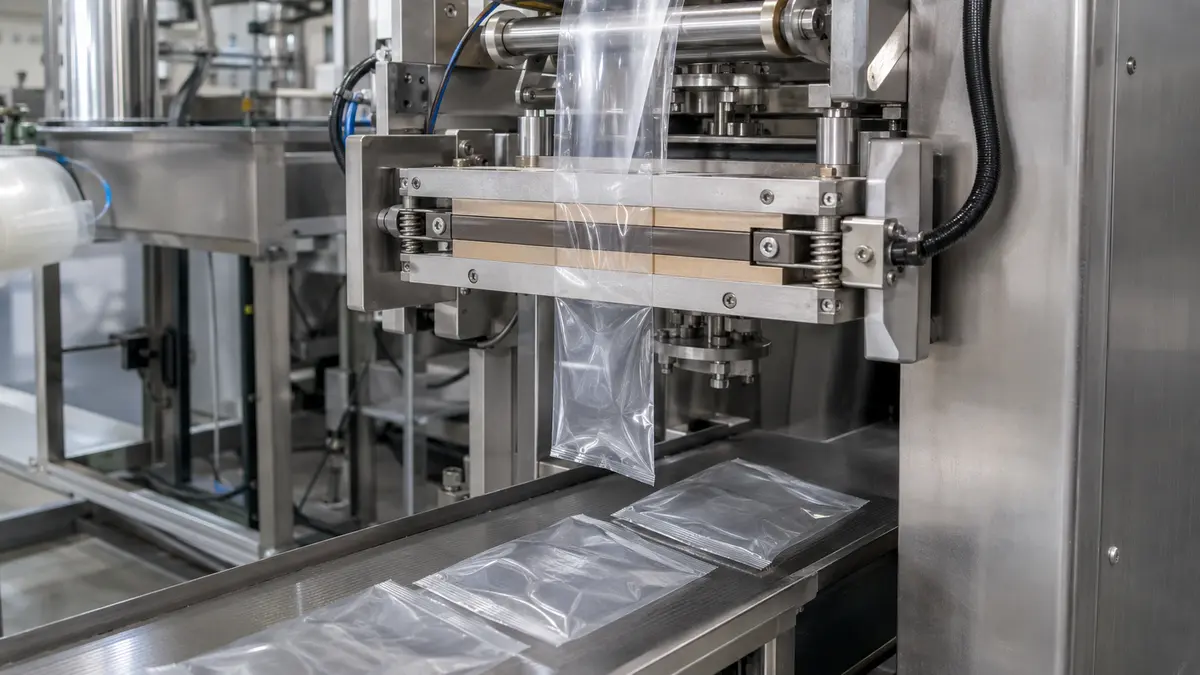
Sealability is a system property. Record the contacting seal surfaces, jaw temperature, pressure, dwell time, cooling, contamination, and line speed. Hot tack measures the seal’s resistance while it is still hot; cooled seal strength measures a different state. Both can matter on VFFS because product load may reach the transverse seal shortly after the jaws open.
COF is equally operational. Static and kinetic COF can affect unwind, forming-collar travel, tracking, stacking, and feeding. “Lower is better” is unsafe: too much friction can cause drag or wrinkles, while too little can create unstable tracking or stacking. Trial the actual roll on the intended machine across startup, target speed, stops, splices, and end-of-roll conditions.
Specifications and Test Conditions That Matter
A useful RFQ and purchase specification make supplier data comparable. Separate nominal or typical values from acceptance limits, and distinguish a test method from the agreed specification. The table below is a practical minimum rather than a universal test plan.
| Field | What to specify | Interpretation controls |
|---|---|---|
| Grade and construction | Supplier grade, layer design, sealable/treated/coated faces | Intended application and structural role |
| Thickness and yield | Nominal gauge, tolerance, basis weight or area per mass | Measurement method, density assumptions, lot sampling |
| Roll geometry | Width/tolerance, core ID, OD, length or weight, winding direction, splice limits | Machine maximums, pallet pattern, roll quality |
| Surface and COF | Treatment side/level; static and kinetic COF | ASTM D2578/D1894 or agreed method, contacting faces, conditioning |
| Optics | Haze, gloss angle, opacity or optical density as applicable | ASTM D1003/D2457 or agreed method, thickness, face |
| Mechanical | Tensile and elongation MD/TD, shrinkage, relevant tear or puncture | Method, specimen direction, temperature, time, conditioning |
Thickness, Yield, Roll Geometry, and Coefficient of Friction
Thickness affects stiffness, yield, barrier, sealing response, and cost per square meter. A purchase order should state units and tolerance, not only a nominal micron value. Yield calculations need the correct density; cavitated films require special attention because apparent density differs from a solid clear web.
Roll information is production data, not shipping trivia. Confirm width, width tolerance, core internal diameter, maximum outside diameter, roll length or net weight, winding direction, treated side in/out, splice number and marking, edge quality, telescoping limits, and packaging. COF should identify both surfaces in contact and whether the reported result is static or kinetic.
Optical, Mechanical, Barrier, and Seal Data
Specify only properties tied to the package risk. Clear display packaging may need haze and gloss; a tape or label web may prioritize modulus, shrinkage, treatment, and winding; a shelf-life-sensitive food may require OTR/WVTR and package integrity; a fast VFFS line may require seal curves, hot tack, COF, and antistatic behavior.
Ask whether values are typical, minimum, maximum, or a controlled range. For acceptance, define sampling, conditioning, method edition, units, and disposition rules. A certificate of analysis is useful only if it reports the agreed parameters for the supplied lot.
How to Select and Validate a BOPP Structure
Selection should be a gated engineering process, not a catalog choice. Each gate produces information needed by the next and prevents a promising film from being approved before the package system is proven.
- Define the product: sensitivity to moisture, oxygen, aroma, oil, light, temperature, and physical damage; target shelf life and failure criteria.
- Define the package: format, dimensions, seals, opening behavior, print area, barrier target, and whether BOPP is an outer web, sealant, mono-web, facestock, or backing.
- Define conversion: print process, ink, treatment, adhesive or extrusion lamination, cure, metallization or coating, slitting, and roll direction.
- Define the packing line: HFFS, VFFS, overwrap, labeling, or coating equipment; speed, web path, maximum roll, forming geometry, seal jaws, pressure, dwell, and operating window.
- Freeze a candidate specification: grade, gauge, roll format, property methods and conditions, acceptance limits, regulatory documents, and traceability.
- Test in stages: laboratory screening, converter trial, trial rolls on the production line, package integrity and distribution checks, then product shelf-life or stability work as required.
- Release with controls: approved sample, signed specification, change-notification rules, lot documentation, incoming checks, and criteria for revalidation.
Build the Specification from Product, Process, and Distribution Needs
Start with failure modes. A moisture-sensitive snack, an aroma-sensitive product, a bottle label, and adhesive tape do not need the same BOPP. Translate each risk into a measurable requirement, then assign it to the responsible layer or process. Include transport temperature, humidity, compression, vibration, drop, and storage conditions where relevant.
For food contact evaluate every substance in the finished contact article under the intended conditions of use FDA guidance emphasizes composition migration food type temperature and duration rather than a generic polymer approval Similar market-specific review is needed elsewhere Commercial release should wait until product conversion line distribution compliance and shelf-life gates.
Recyclability and Sustainability Claim Boundaries
BOPP belongs to the polypropylene family, but that fact alone does not make a finished package recyclable in every market. The APR Design Guide separates design, collection access, program acceptance, and end-market value. RecyClass and CEFLEX likewise evaluate the complete structure, including inks, adhesives, coatings, barriers, metallization, labels, closures, residual product, and sorting behavior.
A responsible assessment should:
- Identify the target country and collection pathway.
- Evaluate the entire package, not just the dominant film layer.
- Check sortability and compatibility with the intended PP-flexible recycling stream.
- Test unfamiliar coatings, adhesives, pigments, barriers, or other innovations under the applicable protocol.
- Distinguish “designed for recycling” from actual local acceptance and consumer access.
- Qualify marketing language and retain current evidence.
In the United States, the FTC Green Guides say unqualified recyclable claims depend on appropriate recycling facilities being available to at least 60% of consumers or communities where the item is sold. Other markets use different rules and infrastructure. Lightweighting, product protection, recycled content, recyclability, and life-cycle impact are separate sustainability dimensions; improvement in one should not be presented as proof of all the others.
Frequently Asked Questions
Is BOPP Film Heat-Sealable?
Some BOPP films are heat-sealable and some are not. A sealable grade uses a functional skin or coating on one or both sides, while plain print or lamination grades may not seal reliably to themselves. Confirm the sealable face, seal-initiation temperature, usable window, hot tack, cooled seal strength, pressure, dwell time, and machine conditions. Supplier TDS values are starting points for trials, not universal settings.
Is BOPP Film a Good Oxygen Barrier?
Standard BOPP is usually considered more useful for moisture resistance than for strong oxygen barrier. Metallization, PVdC or other coatings, and added barrier layers can reduce OTR significantly. Compare the exact film or laminate under a named method, with temperature, RH, thickness, test face, and units. Package seals and converting damage must also be validated.
Can BOPP Film Be Used for Food Packaging?
Yes, suitable BOPP grades are widely used in food packaging. Compliance is not automatic for every grade or market. Verify the complete formulation and construction for the target jurisdiction, food type, contact temperature, duration, and conditions of use. Obtain current, grade-specific declarations and migration or supporting documentation where required.
What Is the Difference Between BOPP and CPP?
BOPP is stretched in both MD and TD and is generally stiffer and crisper. CPP is made by a cast-film process without biaxial orientation and is generally softer, more flexible, and often well suited to sealant duties. Many laminates use both: BOPP outside for print and stiffness, CPP inside for sealing. Grade-level properties still control the decision.
Is BOPP Film Recyclable?
It can be compatible with a PP recycling design, but the complete package and the local system decide the claim. Check polymer balance, inks, adhesives, coatings, barrier layers, metallization, labels, closures, sorting behavior, collection access, program acceptance, and end markets under the current guidance for the country where the package is sold.
What Should a BOPP Film RFQ Include?
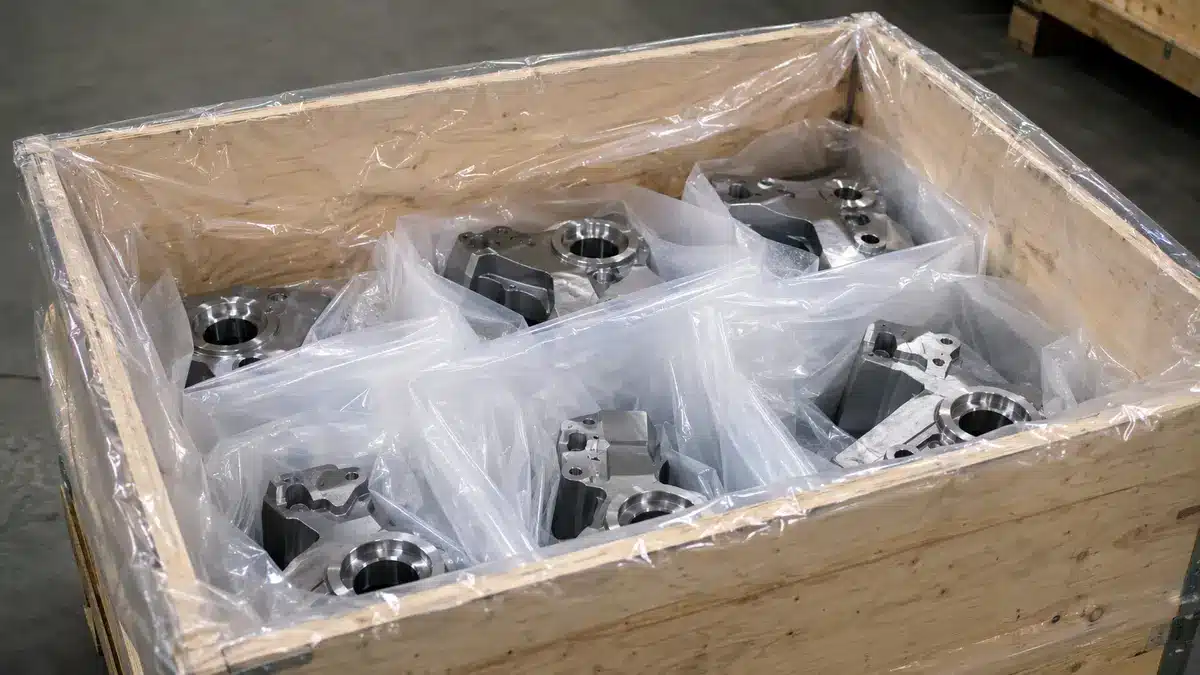
Include the product and application, BOPP layer role, current or target structure, grade type, thickness and tolerance, width, roll length or weight, core ID, maximum OD, winding direction, treatment and seal sides, COF, barrier and seal targets with test conditions, print/lamination process, machine type and speed, quantity, destination, packing, regulatory documents, traceability, samples, trial-roll needs, and change-notification expectations.
 English
 Japanese
 French
 Spanish
 Korean
 Italian
 Portuguese
 Dutch
Dutch Arabic
 Russian
 German