
PET film is used in flexible packaging, labels, electrical insulation, release liners, graphics, optical components, and other engineered products. Its appeal comes from a useful combination of strength, dimensional stability, clarity, surface quality, and resistance to many converting conditions. Those advantages are not identical across every grade. Orientation, thickness, coatings, metallization, surface treatment, additives, and laminate partners determine what the finished material can actually do. Buyers should therefore select and validate a specific construction, not approve a film from the name “PET” alone.
What PET Film Means in Packaging and Industry
For U.S. food-contact context, review the eCFR polymer provisions before approving a finished-film claim.
PET is polyethylene terephthalate, a polyester thermoplastic. In film markets, the term may describe an unoriented, uniaxially oriented, biaxially oriented, coated, metallized, heat-sealable, matte, white, or otherwise modified web. Biaxially oriented PET, commonly shortened to BOPET or BoPET, is the form most often discussed when buyers want a strong, dimensionally stable substrate for flexible packaging or industrial conversion.
This distinction matters because orientation changes film behavior, while coatings and surface treatments add functions that the base polymer may not provide. A requirement written only as “PET film” leaves too many variables open for a reliable quotation or process trial.
PET Film and BOPET Are Related, Not Always Interchangeable
BOPET is made by stretching.
Not every PET film is biaxially oriented. Thermoformable, shrinkable, cast, or specialized PET-based films can follow different processing routes and serve different tasks. A buyer should therefore confirm the orientation state and intended converting process instead of treating PET and BOPET as universal synonyms.
Base Film, Treated Film, and Laminate Are Different Specifications
A plain BOPET base film can act as a structural or printable substrate, but many commercial applications use a functional grade. Examples include corona-treated or chemically primed surfaces for ink or adhesive anchorage, metallized films for improved light or gas barrier, silicone-coated films for release, and heat-sealable or coated grades for specific closure systems.
A laminate is another level of construction In a typical flexible package PET may provide the outer print surface and mechanical support while a PE CPP or another sealant layer forms the package seal Adhesives inks coatings.
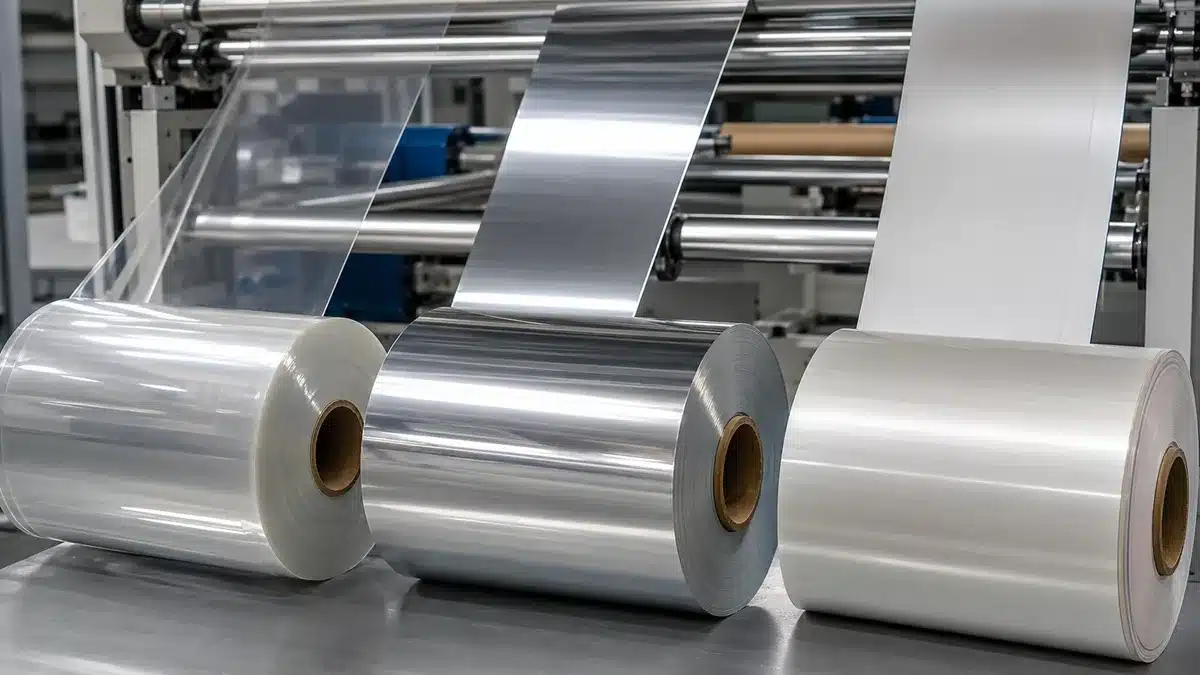
Key Advantages of PET Film
PET film is valued because several useful characteristics can be combined in a relatively thin web. The practical advantages commonly sought are:
- Mechanical strength and stiffness: Oriented grades can support web handling, resist stretching during conversion, and add toughness to a laminate. Approval still requires the relevant tensile, elongation, tear, or puncture method and the film direction.
- Dimensional stability: A stable web helps maintain print registration, coating uniformity, die-cut accuracy, and component geometry. Thermal shrinkage and long-term dimensional change remain grade- and condition-dependent.
- Optical clarity and gloss: Clear grades can provide product visibility or a high-quality printed appearance. Haze, luminous transmittance, gloss, surface defects, and optical distortion should be measured against the actual application.
- Surface versatility: PET can be treated, primed, coated, printed, metallized, or laminated. The selected surface and treatment age influence ink, metal, coating, and adhesive anchorage.
- Thermal processing latitude: Many BOPET grades retain useful stiffness and dimensions under converting temperatures that would distort some lower-temperature films. “Heat resistant” is not a complete specification; temperature, exposure time, stress, moisture, and grade all matter.
- Electrical insulation potential: Appropriate grades are used as dielectric or insulating substrates in electrical assemblies. The design must rely on grade-specific electrical, thickness, temperature, and safety data.
- Chemical and grease resistance: PET can tolerate contact with many oils, greases, and chemicals encountered in packaging or industrial processing. Compatibility must still be checked with the exact chemical, concentration, temperature, and contact time.
These advantages are best treated as screening reasons. They help explain why PET enters a shortlist, but they do not replace a product data sheet, a converting trial, or testing of the finished structure.
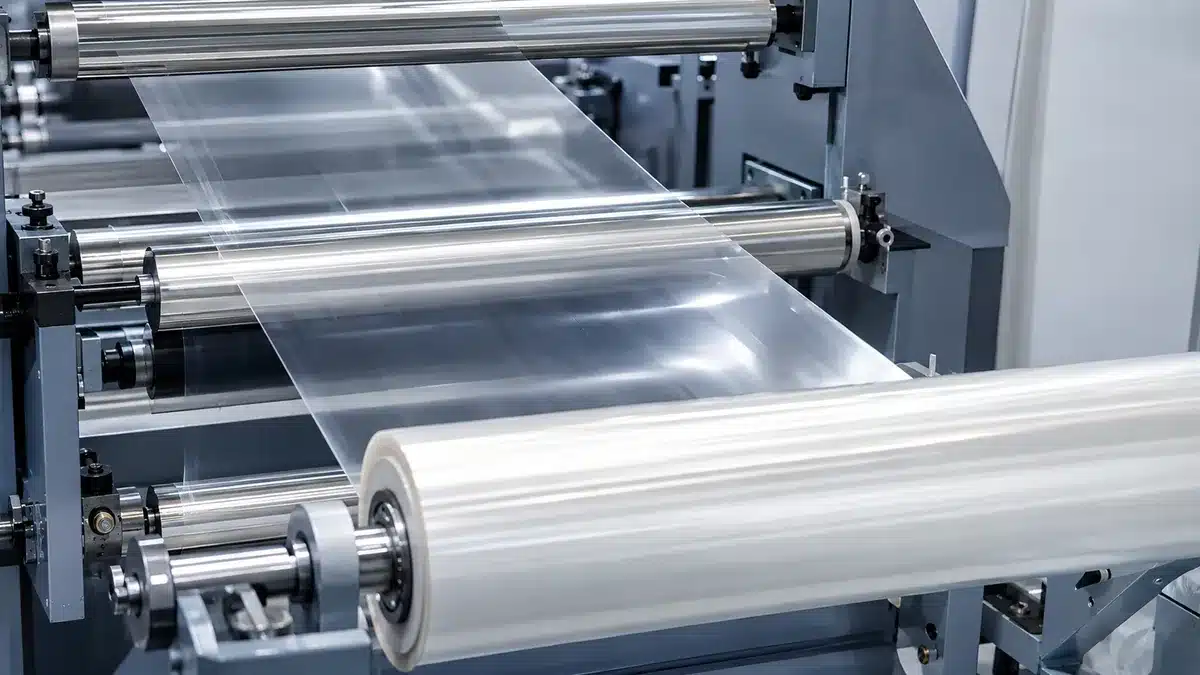
Packaging Uses of PET Film
PET film is commonly used where a package needs a stable outer web, a high-quality print surface, mechanical reinforcement, or a carrier for coatings or metallization. The PET layer is only one part of the performance system: product protection, machinability, sealing, and compliance depend on the complete package.
Printed Outer Webs and Laminates
In pouches, sachets, flow wraps, and other flexible formats, BOPET frequently serves as the printed outer web of a laminate. Its stiffness and dimensional stability can support accurate printing and web handling, while a separately selected inner layer supplies heat sealing and product-contact functions. Reverse printing can place the ink between layers, where the laminate protects the graphics from abrasion.
The converting team should match the PET surface treatment to the ink and adhesive systems. It should also confirm lamination bond strength after the specified curing period and after any relevant heat, humidity, filling, or sterilization exposure. A film that prints well does not automatically produce an acceptable laminate bond.
Metallized and Coated Barrier Structures
PET is widely used as a carrier for vacuum-deposited metal and transparent barrier coatings. These layers can materially change protection against light, oxygen, aroma, or moisture, depending on the coating, deposition quality, thickness, handling damage, and downstream conversion.
Barrier should be specified as a measured property of the actual film or laminate. Oxygen transmission rate and water-vapor transmission rate require units and test conditions, including temperature, relative humidity, specimen thickness, test side, and applicable method. A generic phrase such as “high barrier” is not enough to predict shelf life. Flex cracking, seals, package geometry, and product behavior also influence the result.
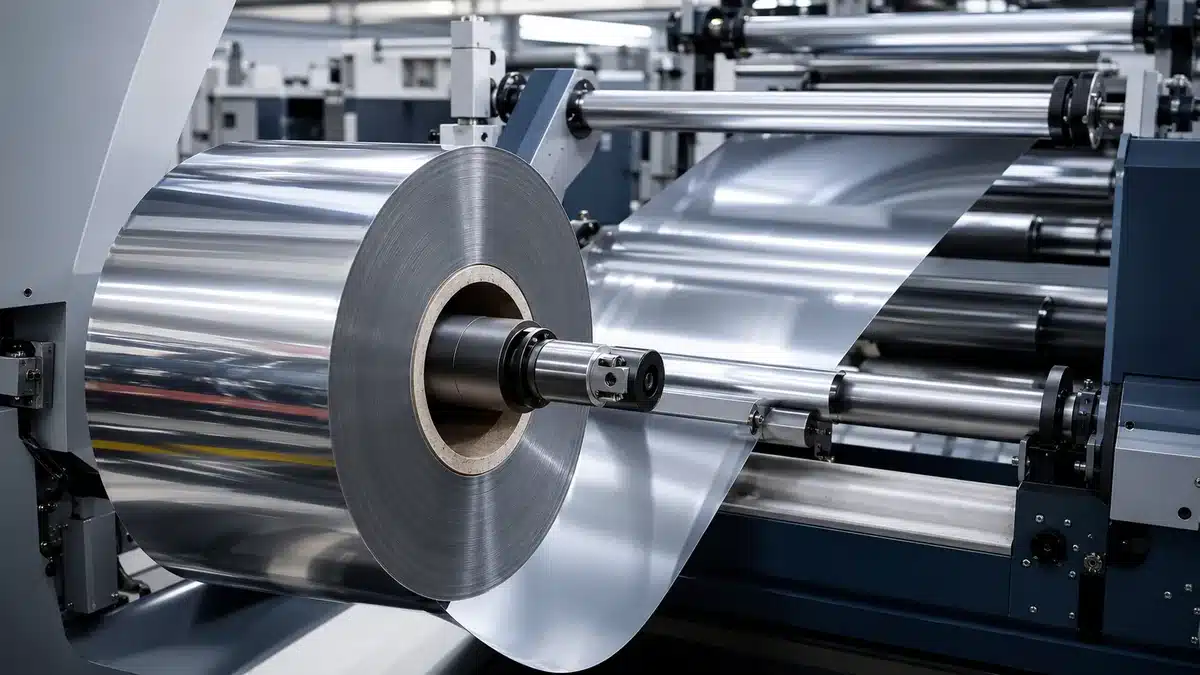
Lidding, Labels, and Specialty Packaging
PET film can appear in lidding constructions, pressure-sensitive label facestocks or release liners, tamper-evident components, window films, and specialty wraps. Each use calls for a different functional surface. A lidding application may require a sealable coating and a defined peel response, while a label construction may prioritize printability, stiffness, die cutting, and adhesive compatibility.
| Packaging role | Why PET may be considered | What must be verified |
|---|---|---|
| Printed outer web | Print registration, surface appearance, stiffness, laminate support | Treatment, ink adhesion, bond strength, COF, curl, and machine trial |
| Metallized or coated carrier | Stable substrate for a functional barrier layer | OTR/WVTR conditions, optical density or coating integrity, flex durability, and laminate results |
| Lidding component | Dimensional stability and controlled surface options | Sealant or coating identity, seal window, peel mode, product contact, and package integrity |
| Label or release construction | Clarity, stiffness, surface smoothness, and coating options | Adhesive or silicone release level, print system, die cutting, aging, and end-use temperature |
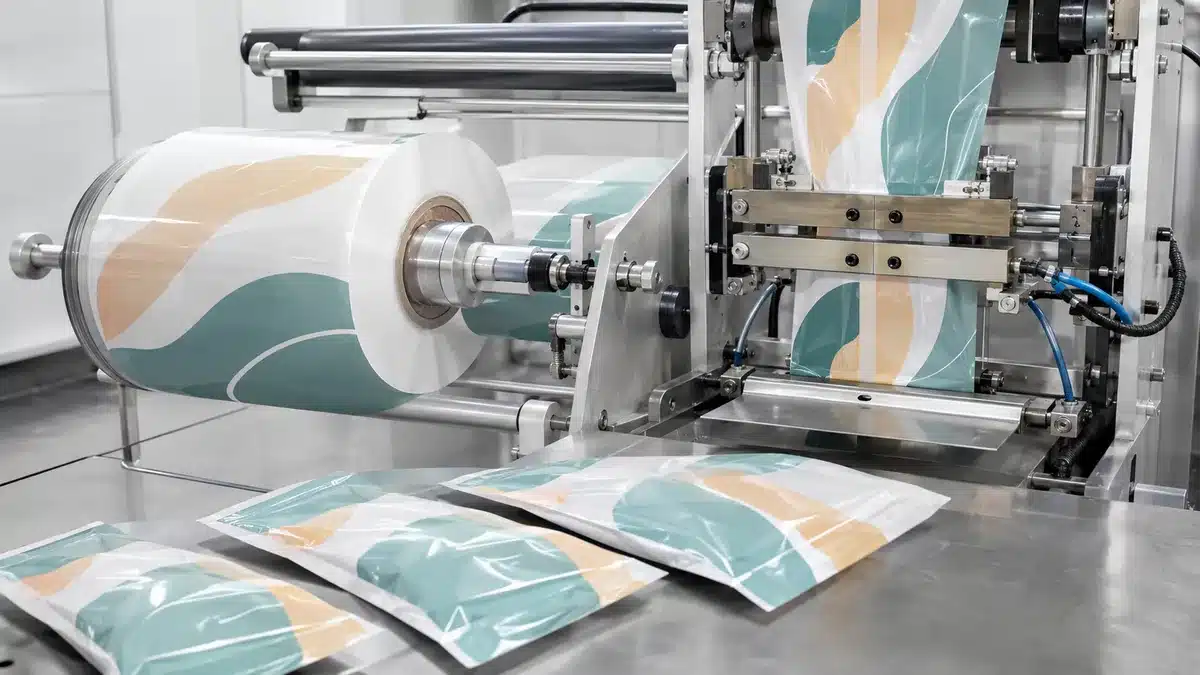
Industrial and Technical Uses of PET Film
Outside flexible packaging, PET film functions as an engineered substrate. The common thread is not one universal property; it is the ability to select thickness, orientation, surface, coating, cleanliness, and thermal or electrical behavior for a defined manufacturing process.
Electrical and Electronic Insulation
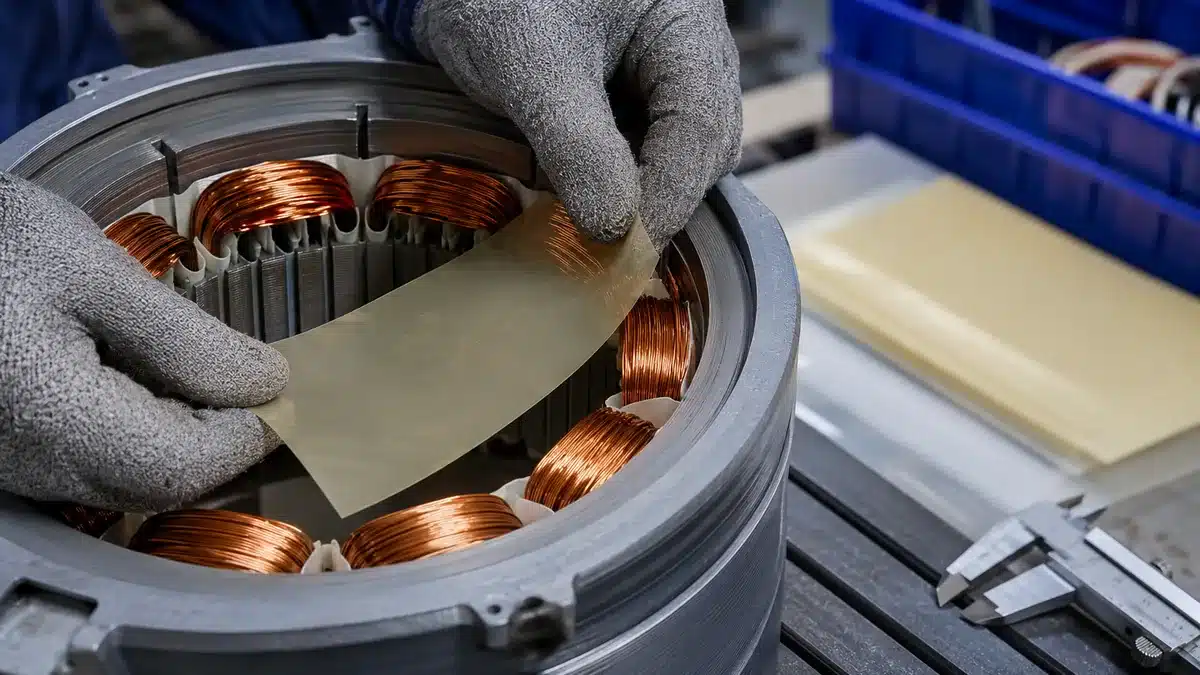
PET film is used in motor, transformer, cable, membrane-switch, flexible-circuit, and other electrical constructions. It may serve as layer insulation, a backing, a spacer, or a substrate for printed circuitry. Mechanical handling and dimensional stability are useful, but electrical approval depends on more than the polymer name.
The designer should specify dielectric strength or breakdown method, insulation resistance where relevant, thickness and tolerance, thermal class or long-term temperature requirement, humidity or hydrolysis exposure, flame or safety recognition when required, and the behavior of the complete insulation system. A general-purpose packaging grade should not be substituted for an electrical grade without evidence.
Release Liners, Graphics, and Protective Layers
Smooth PET film provides a stable carrier for silicone release coatings, adhesive tapes, decals, graphic overlays, membrane switches, and casting or process liners. Clear, matte, white, antistatic, and adhesion-promoted variants allow the converter to tune appearance and handling.
Selection centers on the interface. A release liner needs controlled release against the exact adhesive, consistent coating coverage, and aging data. A graphic overlay may need print adhesion, abrasion resistance, optical quality, embossing response, and dimensional control. A temporary protective layer may also need clean removal without residue or surface damage.
Optical, Solar, and Other Engineered Substrates
High-clarity PET grades are used as substrates in optical films, touch-panel layers, window-film constructions, displays, and other precision laminates. Specialized PET films also appear in photovoltaic backsheets, reflective products, industrial tapes, medical or diagnostic components, and composite manufacturing.
These are engineered applications not generic substitutions Optical work may require low haze controlled birefringence surface smoothness low contamination and coating compatibility Outdoor or solar use may require hydrolysis UV humidity and thermal-aging performance from the.
Limitations and Trade-Offs to Consider
PET film is versatile, but several shortcuts can produce an incorrect specification:
- Assuming the base web will seal: Standard BOPET is often used with a separate sealant layer. A heat-sealable PET grade or coating must be identified and evaluated under defined temperature, pressure, dwell time, cooling, and peel conditions.
- Treating barrier as a material constant: Clear base PET, metallized PET, oxide-coated PET, and PET laminates can have very different transmission results. Scratches, flexing, printing, lamination, and package seals can change effective barrier.
- Ignoring surface condition: Corona treatment can decay, primers are chemistry-specific, and the untreated side may behave differently. Surface energy alone does not prove durable ink or adhesive bonding.
- Using one thermal statement for every grade: Short process exposure, long-term service, humid heat, sterilization, and outdoor aging are different conditions. Hydrolysis and embrittlement risks must be evaluated where heat and moisture combine.
- Overlooking stiffness or dead-fold behavior: PET’s stiffness can help handling but may be unsuitable where a soft feel, easy fold, or conformability is required.
- Calling the finished package recyclable from the PET layer: Collection, sorting, compatible recycling streams, inks, adhesives, coatings, barrier layers, sealants, labels, and closures all affect a recyclability assessment. Technical compatibility also differs by market and format.
Important: Food-contact status, electrical recognition, medical suitability, and recyclability must be evaluated for the exact grade or finished construction, target market, intended use, temperature, and contact time. The polymer name alone does not establish any of these outcomes.
How to Select PET Film for an Application
Start with the function the PET layer must perform, then define the grade feature and the evidence needed to validate it. This matrix is a screening tool rather than a final specification.
| Application need | PET film feature to screen | Validation focus |
|---|---|---|
| Stable printed packaging web | BOPET orientation, controlled thickness, treated or primed surface | Print trial, registration, ink adhesion, lamination bond, COF, curl, and sealing-machine behavior |
| Improved light or gas protection | Metallized or transparent-barrier coated PET | Conditioned OTR/WVTR, coating integrity, flex resistance, optical requirements, and finished-package shelf-life study |
| Direct sealing or peelable lidding | Heat-sealable PET grade or defined seal coating | Seal initiation and operating window pressure dwell cooling peel force and mode contamination tolerance and package… |
| Electrical insulation | Electrical or insulation-qualified PET grade | Thickness, dielectric method, long-term temperature, humidity, safety recognition, and assembly testing |
| Release liner or adhesive carrier | Silicone-coated or release-treated PET | Release force, adhesive chemistry, aging, residual adhesion, coating uniformity, and conversion speed |
| Optical or display substrate | High-clarity, low-haze, smooth, clean grade | Haze/transmittance method, surface defects, birefringence if relevant, coating adhesion, contamination, and dimensional stability |
Thickness should be selected as part of the performance balance, not in isolation. It affects stiffness, yield, handling, optical behavior, electrical insulation, barrier, and cost. The purchase specification should state nominal thickness, tolerance, measurement method, width, roll length, core, roll diameter, winding, splice rules, and the surface orientation of treated or coated sides.
What to Verify Before Ordering
An effective PET film qualification follows a controlled sequence:
- Define the end use and construction. State the product being packed or component being built, layer sequence, product-contact side, exposure conditions, service life, target market, and converting steps.
- Identify the exact film. Record polymer family, orientation, grade or SKU, total thickness, coating or metallization, treatment side, additive or color variant where relevant, and intended application.
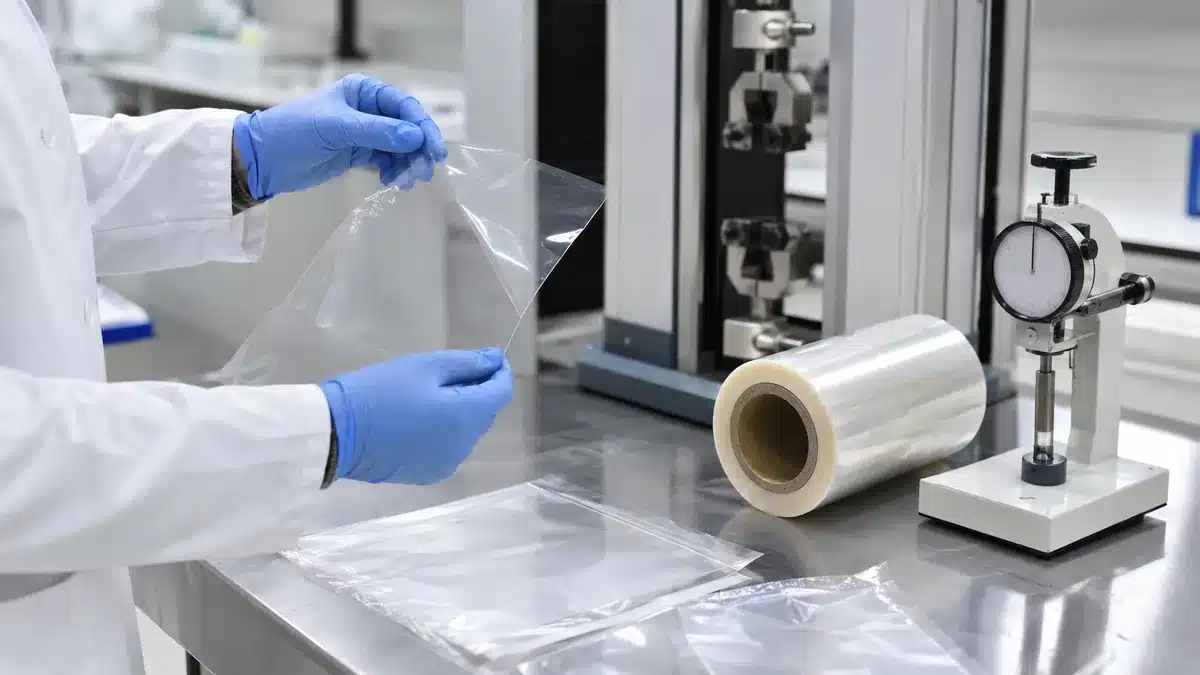
- Set test methods and conditions. For example, tensile properties may be evaluated under ASTM D882, haze and luminous transmittance under ASTM D1003, and static or kinetic coefficient of friction under ASTM D1894. Specify method edition, conditioning, direction, specimen thickness, units, and acceptance criteria.
- Validate interfaces and conversion. Test the actual ink, adhesive, coating, sealant, metal layer, release chemistry, and machine conditions. For seals, define temperature, pressure, dwell time, cooling, specimen width, peel geometry, and failure mode; ASTM F88/F88M can measure seal strength but does not by itself validate the production process.
- Review barrier and package performance. Where shelf life matters, evaluate the finished construction under stated OTR/WVTR conditions, then consider flexing, sealing, filling, distribution, and product interaction.
- Check regulatory documentation. In the United States, an applicable basis may include 21 CFR 177.1630, subject to its prescribed conditions and the full formulation. In the European Union, the finished plastic material or article requires review under the applicable food-contact framework, including Regulation (EU) No 10/2011 and relevant migration and declaration requirements. Neither reference makes an unknown printed laminate automatically compliant.
- Run a representative trial and retain records. Approve the film on the intended equipment and package or component design. Preserve the sample identity, batch, settings, results, deviations, and signed specification so that later orders can be compared on the same basis.
Note: Do not compare values from different methods, directions, thicknesses, conditioning environments, or units as though they were equivalent. Request the underlying test conditions whenever a number affects the buying decision.
Conclusion
PET film is used across packaging and technical markets because it can combine strength, dimensional stability, optical quality, a controllable surface, and compatibility with many coatings and conversion processes. BOPET is especially useful as a printed outer web, laminate substrate, electrical insulation, release carrier, and engineered optical or industrial film.
The best grade is determined by the intended function and the complete construction. Orientation, thickness, treatment, coating, metallization, adhesive, sealant, exposure, test method, and regulatory scope all matter. A reliable specification therefore links each claimed advantage to a named grade, defined conditions, representative trials, and the evidence required for the target market.
Related Bestypack Resources
- BOPET
- Polyester Film vs. PET Film: What Are the Differences?
- Soft Touch Polyester Film Matte PET Film
- PET Film Guide: Properties, Advantages, Applications
 English
 Japanese
 French
 Spanish
 Korean
 Italian
 Portuguese
 Dutch
Dutch Arabic
 Russian
 German