
No—conventional polyolefin (POF) shrink film is generally not biodegradable or compostable. It is designed to shrink around a product when heated, not to be converted by microorganisms after disposal. A specially formulated film may carry a narrower environmental claim, but the letters “POF” do not prove it. For a defensible packaging decision, buyers need to verify the finished film’s composition, the claimed disposal environment, the test or certification, local collection access, and performance on the actual packing line.
Short Answer: Conventional POF Shrink Film Is Not Biodegradable
For environmental claims, compare the design with the U.S. EPA’s recycling guidance and the actual local collection system.
For environmental claims, compare the design with the U.S. EPA’s recycling guidance and the actual local collection system.
Ordinary POF shrink film should be treated as a conventional plastic film unless product-specific documentation says otherwise. It does not become biodegradable simply because it is thin, clear, lightweight, or described as a polyolefin. These characteristics may be relevant to packaging performance or material use, but they do not establish microbial breakdown.
The qualification matters because “POF shrink film” covers commercial films with different formulations and constructions. A supplier may also offer a separately formulated film with an additive or a different polymer system. That does not change the default answer for conventional POF, and it does not make one product’s claim transferable to another grade, thickness, or converted package.
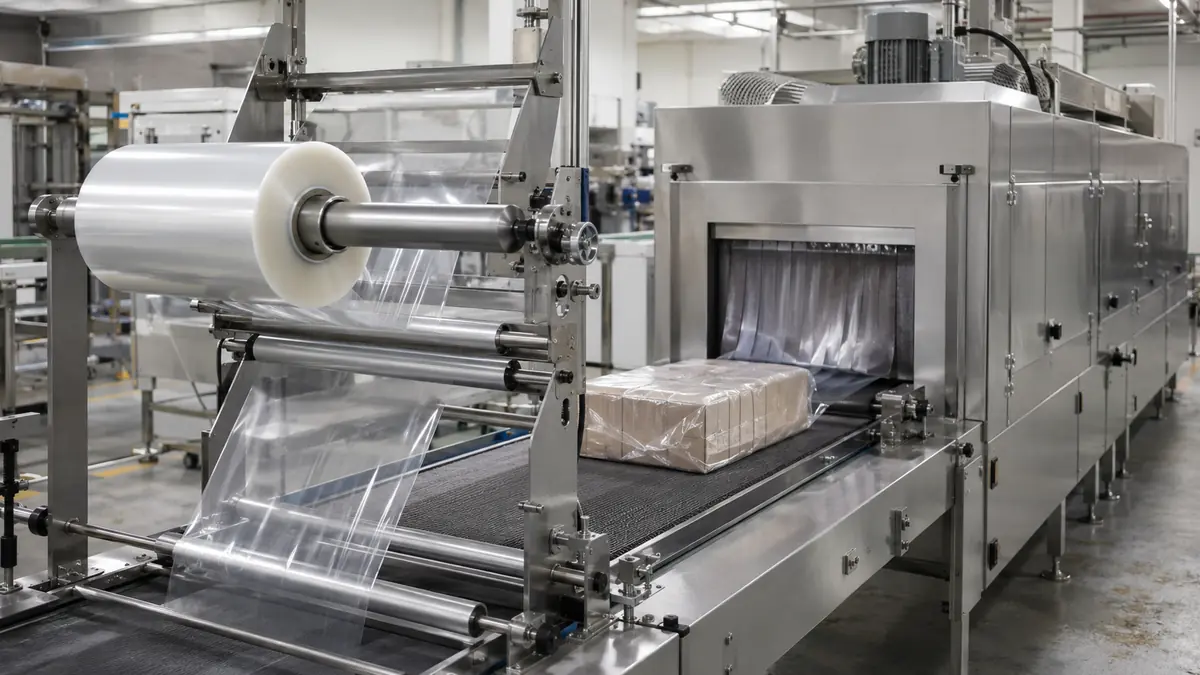
The safest buying position is therefore simple: assume conventional POF is not biodegradable, then evaluate any exception against evidence for the exact finished film and claimed end-of-life environment.
What POF Shrink Film Is Made Of
POF is a category name for shrink films based on polyolefin materials. Commercial constructions can vary by resin selection, layer arrangement, additives, orientation, and whether a film has been cross-linked. Those choices influence sealing, shrink response, toughness, optics, and recycling compatibility. They also mean that a generic category name cannot prove the composition or end-of-life behavior of a particular roll.
POF Is a Material Family, Not a Compostability Label
“Polyolefin” identifies a family of polymers; it is not an environmental certification. A conventional POF film may use one or more polyolefin layers and processing aids selected for shrink-packaging performance. A buyer therefore needs a construction statement or technical data for the exact grade rather than an assumption based on the abbreviation.
The same distinction applies to converted packaging. Printing, labels, adhesives, tapes, coatings, and the product residue left on a wrap can affect the compatibility of the whole package with an end-of-life route. A claim made for a base resin or unprinted film does not automatically cover the final package.
Why Conventional Polyolefin Structures Persist
Conventional POF structures are engineered to remain stable through storage, sealing, shrinking, distribution, and use. They are not designed for microorganisms to convert the complete material under customary disposal conditions. Weathering may make a film brittle, fade its surface, or break it into smaller pieces, but a change in appearance or size does not by itself demonstrate complete biodegradation.
There is no responsible universal statement such as “POF disappears in a fixed number of years.” The outcome depends on the exact material and environment, while landfills, soil, water, and industrial composting systems have very different temperature, oxygen, moisture, and microbial conditions. A claim needs to name those conditions.
What “Biodegradable” Actually Requires
Environmental terms answer different questions. Using them as synonyms can lead a buyer to approve the wrong material, disposal instruction, or marketing language.
| Term | What it describes | What it does not prove |
|---|---|---|
| Biodegradable | Microbial conversion under specified conditions | A universal rate, open-environment breakdown, or local disposal access |
| Compostable | Biodegradation and disintegration within the scope of a defined composting specification | Home compostability or acceptance by every industrial facility |
| Bio-based | Partial or full origin from biological resources | Biodegradability, compostability, or recycling compatibility |
| Recyclable | Compatibility with a viable collection, sorting, reprocessing, and market system | Biodegradability or universal local acceptance |
| Degradable | A broad claim that material changes or breaks down | Complete microbial conversion or absence of persistent fragments |
The European Commission notes that biodegradable plastics break down only under certain conditions and that compostable plastics are a subset typically associated with industrial composting. This makes the disposal environment part of the claim, not a footnote.
Biodegradable and Compostable Are Not Synonyms
“Biodegradable” is incomplete unless it identifies the environment, timeframe, method, and extent of conversion. “Compostable” is narrower: it should be tied to a specification covering performance in a defined composting system. For example, ASTM D6400 addresses plastics designed for aerobic municipal or industrial composting facilities. Its scope does not establish home-compost or open-environment behavior.
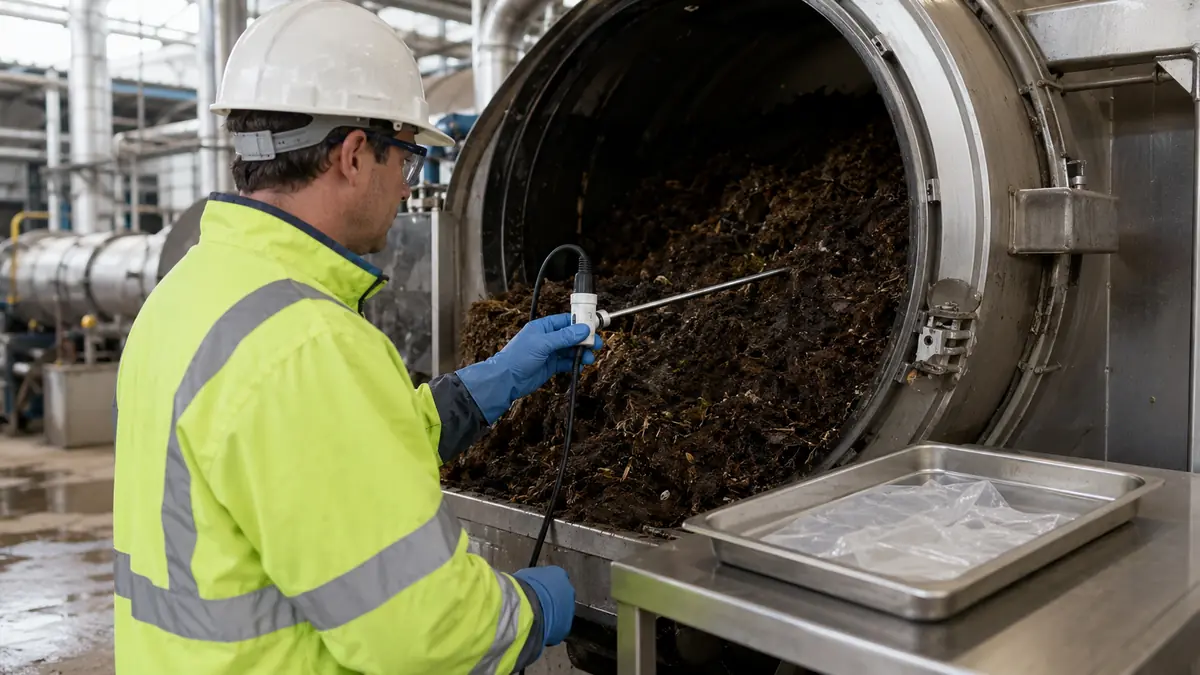
A certificate or test summary should therefore identify the finished product, thickness, color or printing status where relevant, test method, facility environment, and applicable version or scheme. A supplier’s statement that a raw material is “biodegradable” is not enough to prove that the final shrink film, label, ink, and adhesive combination is compostable.
Bio-Based Does Not Automatically Mean Biodegradable
Feedstock origin and end-of-life behavior are separate attributes. A plastic can contain biological feedstock and still behave like a conventional non-biodegradable polymer. Conversely, a biodegradable polymer may be produced partly from fossil resources. Buyers should record bio-based content and biodegradability as two different claims with separate evidence.
This distinction prevents a common procurement error: approving a renewable-content claim as if it were a disposal instruction. The package still needs an appropriate collection or treatment route, and the on-pack wording must match what the evidence actually demonstrates.
Why Additive and Oxo-Degradable Claims Need Careful Review
Some films are promoted with additives intended to accelerate oxidation, embrittlement, fragmentation, or later biological activity. Such products must be evaluated separately from both conventional POF and certified compostable films. The buyer needs to know what process the test measured and whether the complete finished film reached the claimed endpoint.
Fragmentation Is Not Proof of Complete Biodegradation
A film can lose strength and break into pieces without establishing that microorganisms converted the material to carbon dioxide, water, biomass, and other expected end products under the claimed conditions. Weight loss, visual disappearance, or reduced tensile strength may describe part of an aging process, but none is automatically equivalent to complete biodegradation.
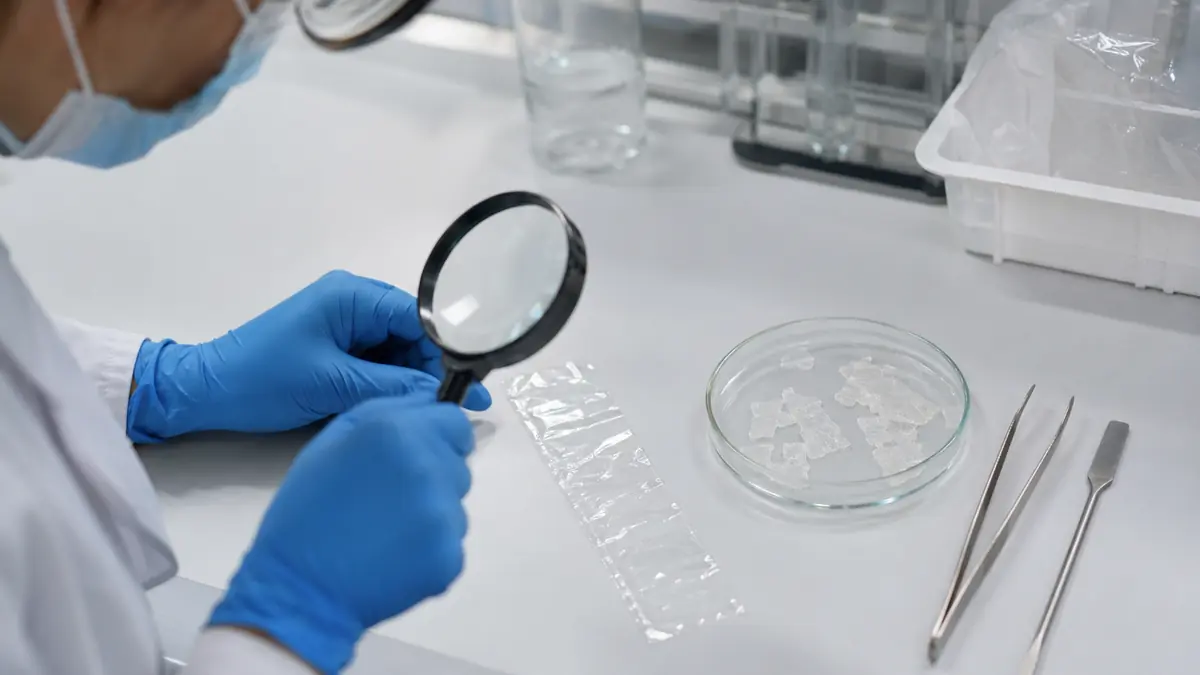
Important: Ask whether the evidence measures fragmentation, chemical change, biological conversion, or all required endpoints. The specimen must match the commercial film; an additive concentrate, resin pellet, or thicker laboratory sample cannot automatically substantiate the converted package.
Claim Rules Depend on the Target Market
Environmental marketing requirements differ by jurisdiction. In the United States, the FTC Green Guides summary says an unqualified degradable claim requires evidence that the entire product or package will completely break down and return to nature within a reasonably short period after customary disposal. The guidance also cautions against unqualified biodegradable claims for items destined for landfill, incineration, or recycling.
The European Union takes a different but related approach to oxo-degradable plastics. Directive (EU) 2019/904 defines oxo-degradable plastic in connection with additives that lead through oxidation to fragmentation or chemical decomposition, and it requires Member States to prohibit products made from oxo-degradable plastic from being placed on the market.
These are market-specific examples, not global legal advice. A supplier selling the same film in several countries should review the claim, label, evidence, and disposal instruction for every target market.
Can POF Shrink Film Be Recycled Instead?
Potentially—but “not biodegradable” does not automatically mean “recyclable everywhere.” A recycling claim must be evaluated for the exact film and final package, then connected to a collection and reprocessing system that actually accepts it.
- Design compatibility: the complete package meets the intended recycling system’s design criteria.
- Collection access: users can reach a collection program for that package format.
- System acceptance: the collecting and sorting system accepts the item.
- End-market viability: the recovered material has a functioning market or supported outlet.
Technical Recyclability Is Only One Condition
The Association of Plastic Recyclers explains recyclability through multiple conditions: design, access to collection, acceptance by that system, and an end market for the recovered resin. A technically compatible film can still lack practical recyclability if it is not collected, sorted, or accepted.
Whole-package design also matters. Resin mix, cross-linking, printing, inks, adhesives, labels, metalized features, paper components, and product contamination may change an assessment. The correct question is not “Is POF recyclable?” in the abstract. It is “Is this finished package compatible with the intended recycling system in the selling market?”
Collection and Acceptance Must Be Verified Locally
Flexible films are often handled differently from rigid containers. In the United States, How2Recycle states that not all plastic film is compatible with its Store Drop-off stream and tells users to look for the applicable label. That route is not a general permission to place any POF film in a retail bin, and it is not a global collection model.
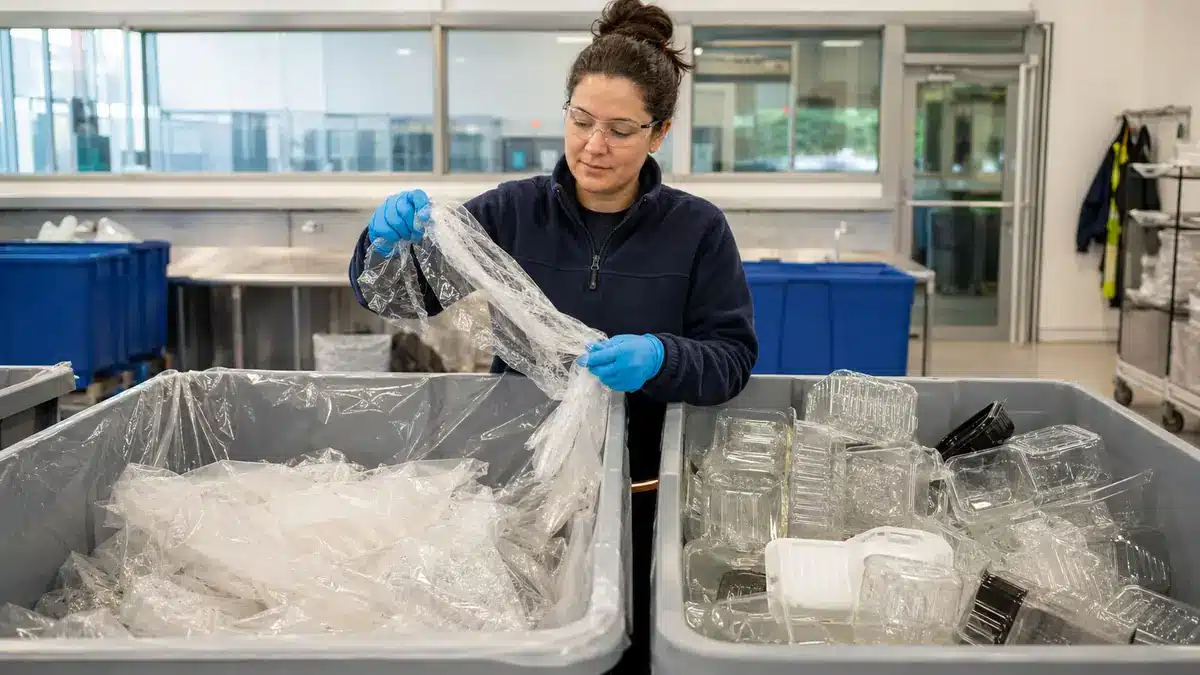
For commercial waste, a business may have access to a clean, segregated film stream that consumers do not. For household packaging, the local program’s instructions should control. When no verified route exists, an unqualified recycling claim can create wish-cycling rather than recovery.
How to Verify a Biodegradable or Compostable Shrink Film Claim
Use a sequence that connects the claim to the material, disposal environment, market, and finished package.
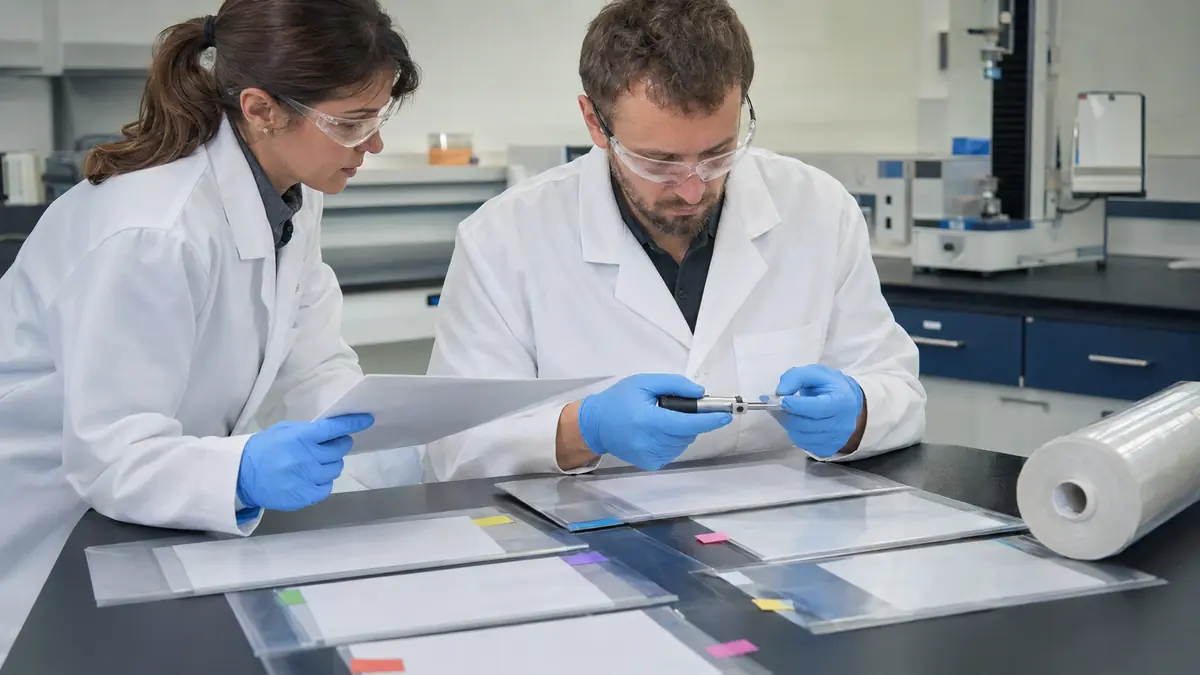
- Identify the exact film. Record supplier, grade, polymer or layer construction, thickness, orientation, cross-linking status, additives, print, labels, adhesives, and intended product.
- Define the claimed endpoint. Specify biodegradable, industrially compostable, home compostable, recyclable, or another precisely worded attribute. Do not accept “eco-friendly” as a testable endpoint.
- Name the disposal environment. State industrial composting, home composting, soil, freshwater, marine, landfill, or a recycling stream. Evidence from one environment cannot be transferred to another.
- Review the method and specimen. Obtain the full report or certification scope, laboratory, date, standard or protocol, test conditions, sample description, and result. Confirm that the tested specimen matches the saleable finished film.
- Check the complete package. Determine whether inks, coatings, labels, adhesives, closures, and residues are included in the claim or require separate assessment.
- Validate market wording. Compare the proposed claim and disposal instruction with rules in each target country. A qualified claim in one market may be unsuitable in another.
- Confirm infrastructure and performance. Verify that users can access the intended facility or collection system, then trial sealing, shrinking, optics, pack integrity, and line speed on the actual equipment.
If any link is missing, narrow the wording rather than filling the gap with a generic material statement.
Which Alternatives Should Buyers Evaluate?
The best alternative depends on the outcome the packaging system is designed to achieve. Biodegradability is not automatically the highest-priority route, and a material that meets an end-of-life specification may still fail the product-protection or equipment requirements of the project.
Certified Compostable Shrink Films
A certified compostable film may be relevant where the package is likely to be contaminated with organic material, separate collection exists, and an accepting industrial composting facility is available. Buyers should confirm the exact certificate or conformity evidence, the approved thickness and conversion, the complete package components, and the disposal instruction.
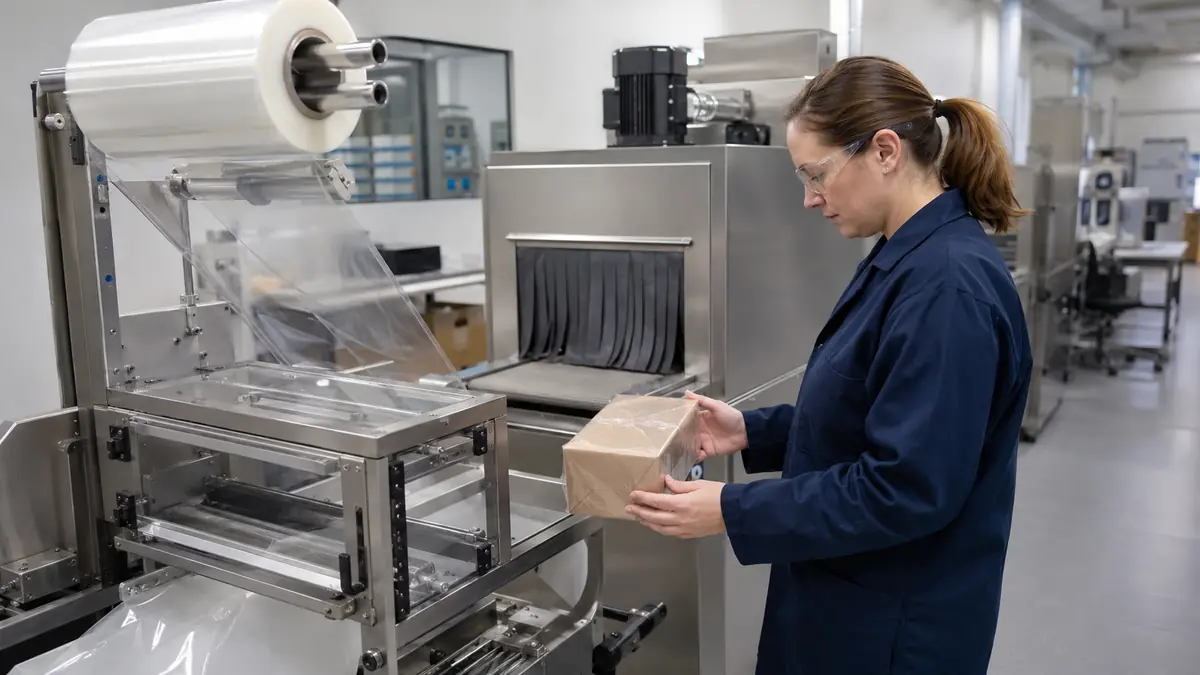
Performance must be verified independently. Seal initiation, shrink curve, shrink force, tunnel temperature, dwell time, optics, puncture resistance, storage stability, and pack integrity can differ from the current POF. A trial should use the actual product, sealer, tunnel, conveyor speed, and distribution conditions.
Material Reduction and Recycling-Compatible Designs
Where composting is not a realistic route, buyers can compare two other strategies:
- Reduce film use without compromising package integrity, using trials to prevent breakage or rework from erasing the material saving.
- Design the complete package for a verified recycling stream, including printing, labels, adhesives, and collection access.
These strategies should be evaluated against a defined baseline. “Less material,” “recycling-compatible,” and “compostable” describe different design choices; none proves a lower overall environmental impact without an appropriate comparison.
A Practical RFQ Checklist for POF Sustainability Claims
Ask the supplier to return a controlled evidence package rather than a yes-or-no marketing answer:
- Exact product name, grade, film type, thickness range, and construction.
- Polymer, additive, cross-linking, printing, coating, label, and adhesive declarations relevant to the claim.
- Precise proposed wording: biodegradable, compostable, recyclable, bio-based, recycled content, or another claim.
- Target market, intended use, and expected disposal environment.
- Full test report or certificate scope, including method, version, laboratory, date, specimen, thickness, conditions, results, and limitations.
- Confirmation that the report covers the saleable finished film and, where claimed, the complete converted package.
- Applicable collection or treatment route and evidence of local access and acceptance.
- Recycling-design assessment for the whole package when recyclability is claimed.
- Packaging-line trial plan covering sealing, shrink response, optics, damage, pack integrity, and throughput.
- Change-control commitment requiring review if resin, additive, thickness, print, label, adhesive, or supplier changes.
This checklist does not pre-approve a claim. It gives procurement, quality, and sustainability teams the information needed to reach an auditable decision.
Common Buyer Questions
Does Heat Shrinking Make POF Biodegradable?
No. Heat shrinking changes the film’s dimensions around the product; it does not create evidence that microorganisms can convert the finished material after disposal. Shrink behavior and biodegradability are separate properties.
Can Clear POF Film Go into a Compost Bin?
Not on appearance alone. Clear conventional POF is not compostable merely because it is thin or transparent. Only use a composting route when the exact film and complete package carry suitable evidence for that environment and the receiving program accepts them.
Can POF Film Go into Curbside Recycling?
It depends on the package and local program. Many curbside systems do not accept loose flexible film, and an alternative collection route may accept only assessed materials. Follow the local authority or an applicable package-specific label; do not place the film in a bin based only on the word “polyolefin.”
Can a Compostable Shrink Film Run on Existing Equipment?
Possibly, but it should not be assumed. The film’s seal and shrink behavior, storage needs, gauge, stiffness, and friction can affect equipment settings and package quality. Run a documented trial on the actual sealer and tunnel before approving a substitution.
Conclusion: Choose the End-of-Life Route Before the Film
Conventional POF shrink film is generally not biodegradable or compostable. A credible exception requires evidence for the exact finished film, a defined environment, a suitable test or certification, market-appropriate wording, and an accessible end-of-life route.
The practical sequence is to define the route first, verify the construction and claim evidence, assess the complete package, confirm local infrastructure, and then test performance on the production line. That method supports a defensible choice without confusing bio-based content, biodegradability, compostability, and recyclability.
Related Bestypack Resources
- What Size POF Shrink Film Do I Need?
- Cross-linked Polyolefin Shrink Film
- What Are The Differences? : Shrink Film vs BOPP Film
 English
 Japanese
 French
 Spanish
 Korean
 Italian
 Portuguese
 Dutch
Dutch Arabic
 Russian
 German