
Agricultural films are best grouped by the job they perform: protecting crops above ground, managing soil conditions, or preserving forage and feed. The main families include greenhouse and tunnel covers, mulch, solarization and fumigation films, bale wrap, and silage-clamp or silo-bag films. Material names such as PE, color, layer count, and additives are secondary specification choices. For buyers, choosing the right family first prevents misleading comparisons and makes it easier to define optical, mechanical, barrier, equipment, and end-of-use requirements.
Agricultural Film Types Are Best Classified by Their Job
For polymer background, consult the NIH PubChem polyethylene overview before comparing finished-film claims.
For polymer background, consult the NIH PubChem polyethylene overview before comparing finished-film claims.
Agricultural film is an umbrella term not.
A practical classification therefore starts.
The Main Types of Agricultural Film at a Glance
The table below compares film families by application. It is a functional map, not a specification sheet.
| Film family | Where it is used | Primary job | Critical points to validate |
|---|---|---|---|
| Greenhouse cover film | Fixed greenhouse structures | Form a weather barrier while managing light and heat | Structure, climate, light target, condensation control, exposure period, installation |
| High-tunnel and low-tunnel film | Walk-in tunnels or short hoops over crop rows | Provide seasonal crop protection and create a local microclimate | Tunnel geometry, ventilation, anchoring, wind exposure, installation and removal cycle |
| Mulch film | On the soil surface, often over planting beds | Modify soil temperature and moisture conditions and suppress weeds, depending on design | Crop, climate, color, bed contact, irrigation, planting pattern, retrieval route |
| Solarization or occultation film | Over prepared soil before planting or between crops | Heat soil with a clear cover or exclude light with an opaque cover | Method, climate, treatment period, edge seal, film integrity, reuse or removal |
| Fumigation barrier film | Over soil during a labeled fumigant treatment | Limit fumigant emissions as part of a regulated application system | Fumigant label, approved tarp category, permeability evidence, installation and removal rules |
| Bale-wrap film | Stretched around individual or in-line forage bales | Build overlapping, clinging layers that help exclude air | Wrapper settings, roll dimensions, stretch behavior, cling, puncture resistance, total applied coverage |
Films for reservoir lining irrigation-related assemblies nursery use or post-harvest packaging may also be sold within the wider agricultural-plastics market They are adjacent specialist categories however and usually require a different set of.
Crop-Protection Cover Films
Crop-protection covers create a boundary between plants and the outside environment. The scale and permanence of the structure determine the film format and the most important checks.
Greenhouse Cover Films
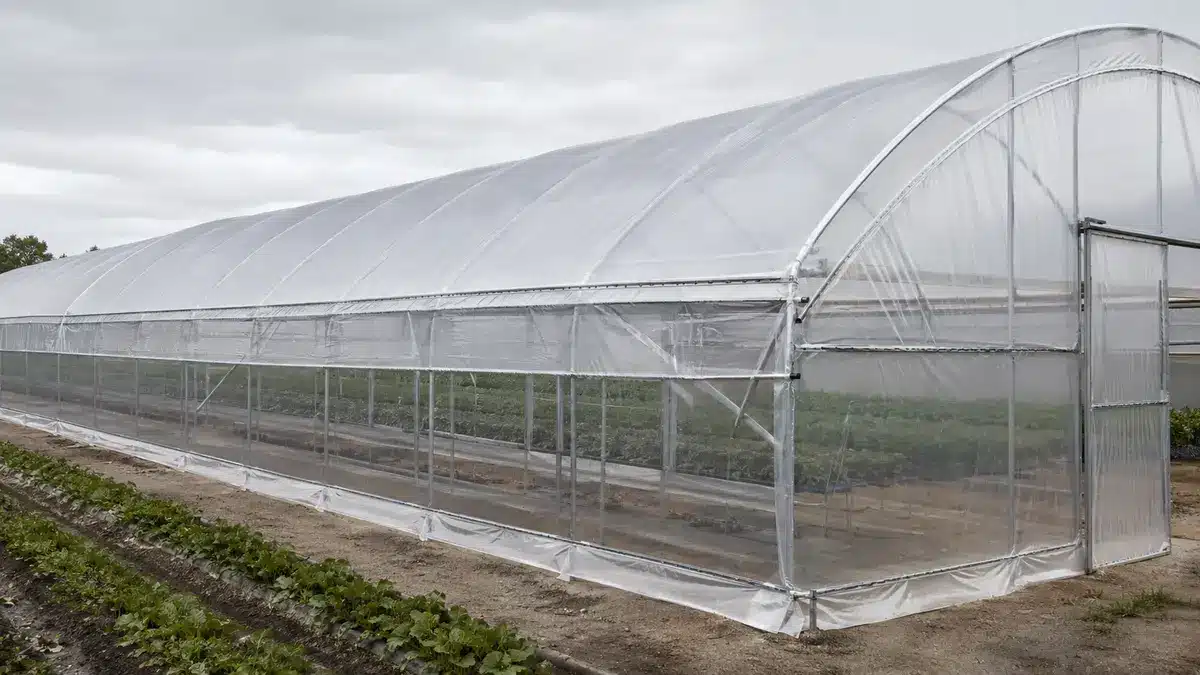
Greenhouse cover film is secured to a frame for an extended operating period. Its job is not simply to be transparent. A project may need a defined balance of total light transmission, light diffusion, heat retention, condensation behavior, mechanical resistance, and weathering stability. Those properties depend on the complete film construction, exposure conditions, and test method.
The buyer should provide the greenhouse geometry, single- or double-layer arrangement, crop and light target, ventilation and heating approach, local temperature range, wind and snow exposure, planned service period, installation method, and chemicals likely to contact the film. Additives described as anti-drip, thermal, or UV-stabilized should be supported by product-specific data and relevant test conditions.
High-Tunnel and Low-Tunnel Films
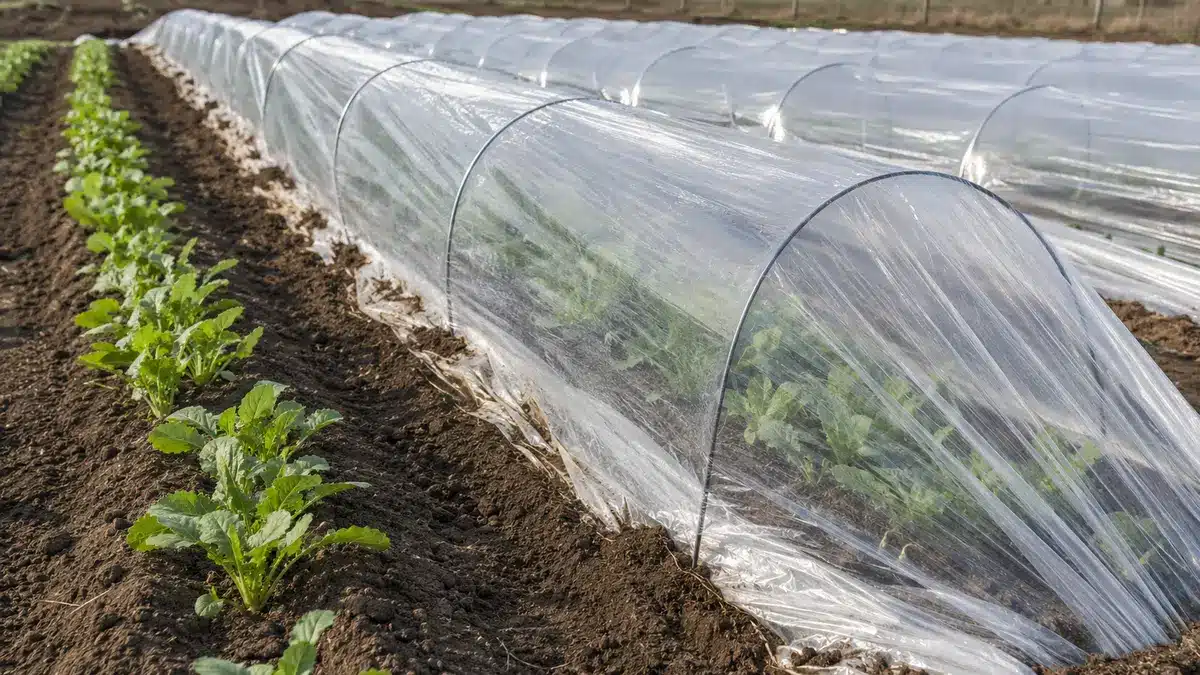
High tunnels are walk-in, usually passively heated structures, while low tunnels sit close to crop rows. Their covers may be installed seasonally rather than kept in service like a permanent greenhouse covering. This changes the importance of roll width, hoop geometry, edge anchoring, opening and ventilation practices, abrasion points, wind loading, and removal or reuse.
Do not select a tunnel film only because it looks like a greenhouse film. Confirm whether the film must tolerate repeated handling, close crop contact, temporary fastening, or frequent opening. Also distinguish flexible plastic film from non-film row-cover fabrics; they manage air, water, and temperature differently.
Soil-Management Films
Soil-management films can look similar on a roll yet perform very different tasks. The agronomic method must be defined before color, thickness, or polymer is compared.
Mulch Films
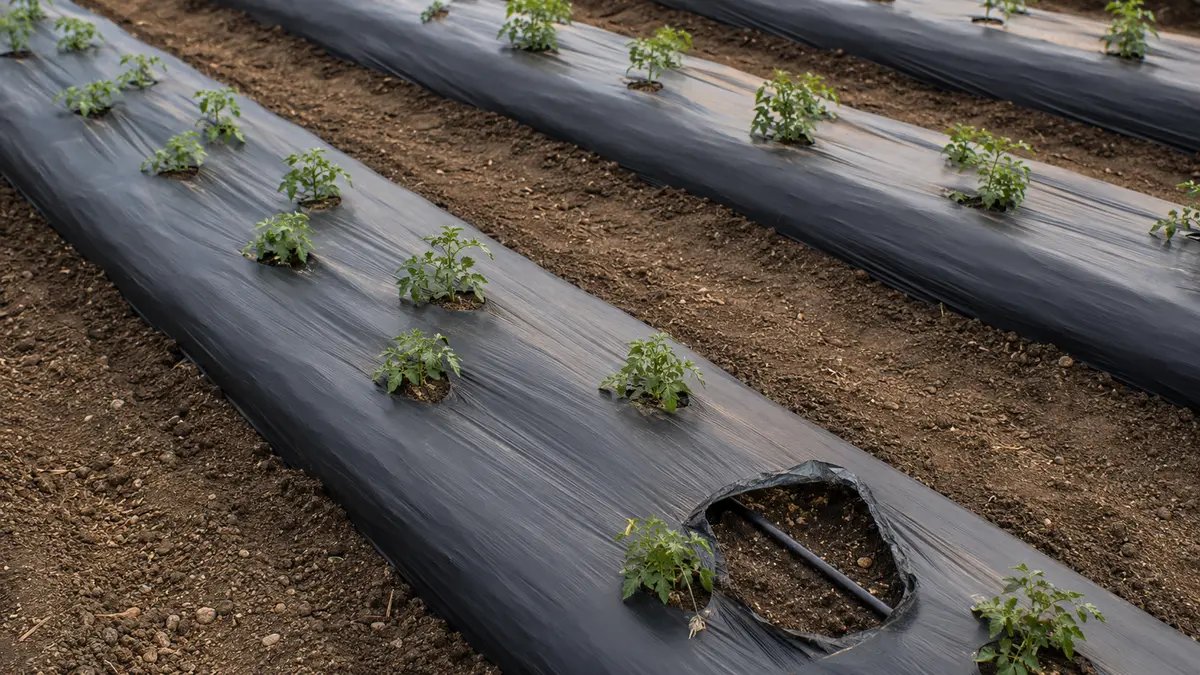
Mulch film is laid on the soil surface during crop production. Depending on its optical design and installation, it can change soil temperature and moisture loss, suppress weeds, reduce soil splash, or modify reflected light around the crop. Black, clear, white-on-black, and reflective versions are not interchangeable: their effects depend on radiation, climate, soil contact, crop sensitivity, and season.
The specification should include bed width and profile, planting holes, crop cycle, laying speed, film-to-soil contact, irrigation method, wind exposure, expected retrieval, and contamination after use. A color name is not a performance specification, and a thin film should not be assumed fit for the field without tensile, tear, puncture, handling, and laying-machine evidence under relevant conditions.
Solarization and Occultation Films
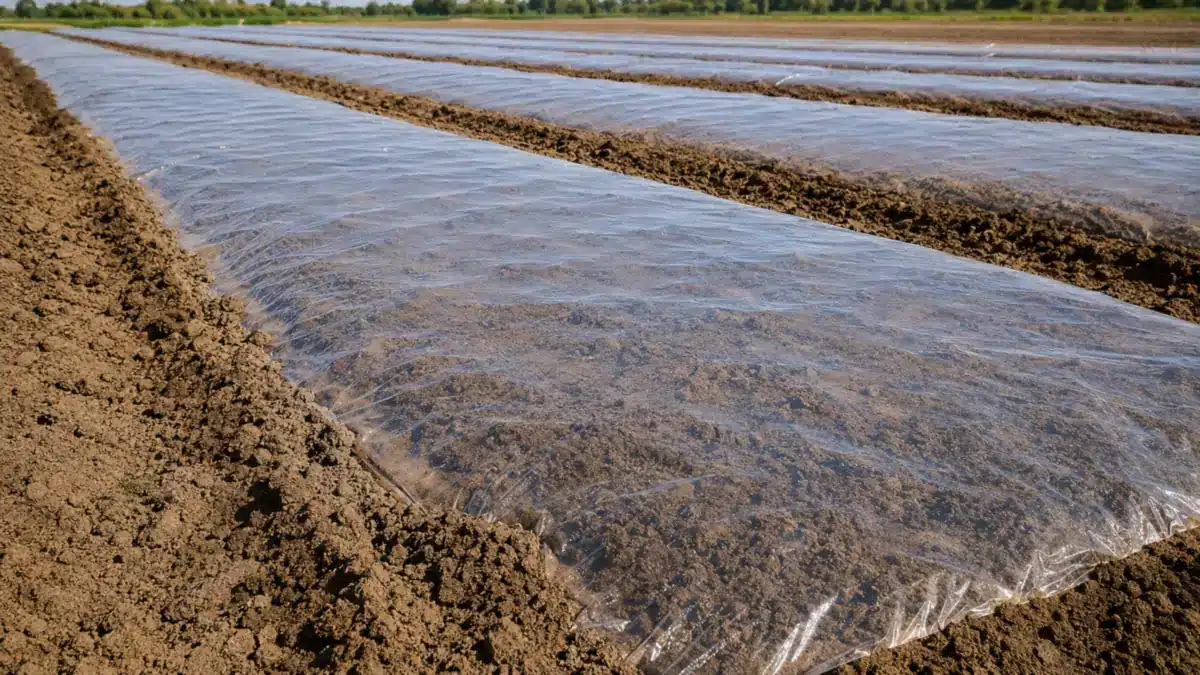
Solarization uses a clear cover to trap heat in prepared, moist soil. Occultation uses an opaque cover to block light and follows a different heat and time profile. Either method may be used before planting or between crops, so these films have a different operating job from mulch that remains around actively growing plants.
Selection depends on the method, local solar conditions, season, treatment duration, edge sealing, wind, tear risk, and whether the cover is intended for one treatment or repeated use. A result observed in one climate or soil should not be turned into a universal treatment claim.
Fumigation Barrier Films
Fumigation films are part of a regulated pesticide application, not a generic version of mulch. Their purpose is to retain a specified soil fumigant to the degree required by the product label and local rules. Terms such as virtually impermeable film or totally impermeable film describe barrier categories, but the name alone is not proof that a particular product qualifies for a particular application.
Important: In the United States, fumigation tarp selection must follow the fumigant product label and current EPA requirements. Only tarps supported by the required permeability evidence and listed or accepted for the relevant active ingredient and use may qualify. Other markets have their own rules. Never substitute a generic agricultural film.
Forage and Feed-Preservation Films
Forage films are selected around storage geometry and the equipment that applies or contains them. Bale wrap, clamp covers, and silo bags all help control air ingress, but they create the seal in different ways.
Bale-Wrap Films
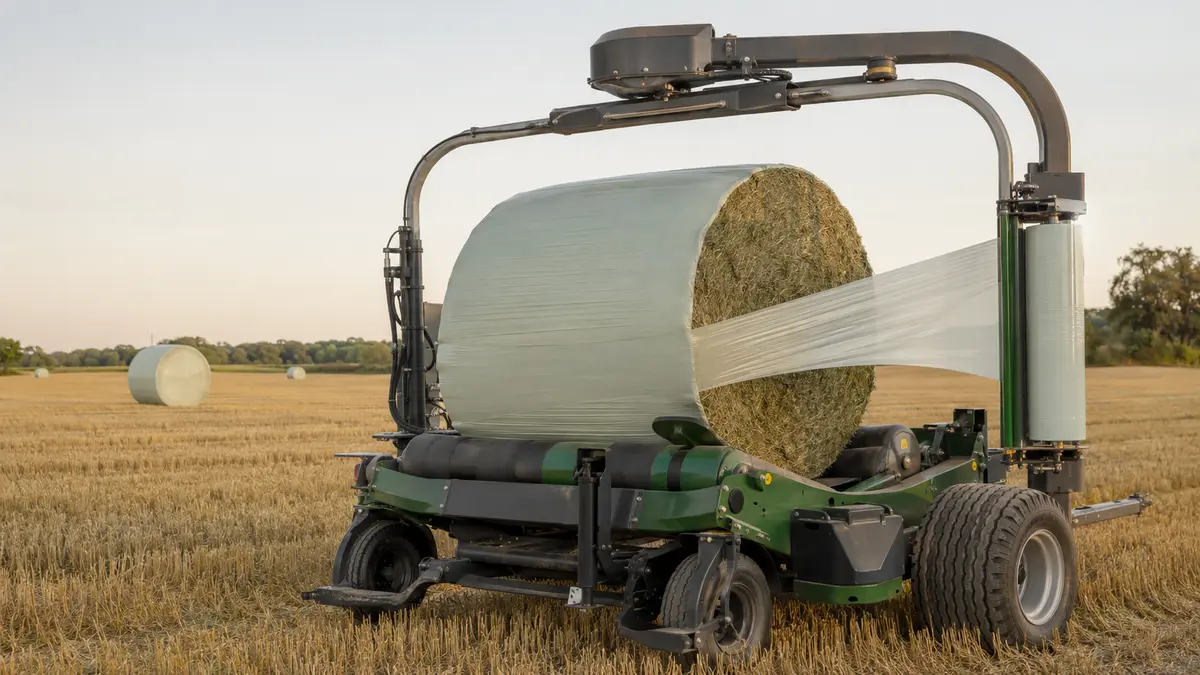
Bale-wrap film is a stretch film applied in overlapping layers around a compacted bale. It needs a controlled combination of stretch behavior, cling, tear and puncture resistance, roll consistency, weathering resistance, and compatibility with the wrapper. The finished barrier depends on the applied system, including overlap, total coverage, bale shape, timing, handling, repairs, and storage surface.
RFQs should identify the wrapper model, roll width and core, target pre-stretch or machine setting, bale dimensions, forage condition, storage period, climate, handling method, and acceptance tests. A film’s laboratory result should not be presented as a guarantee of feed quality without validating the complete baling and storage process.
Silage-Clamp Covers and Silo-Bag Films
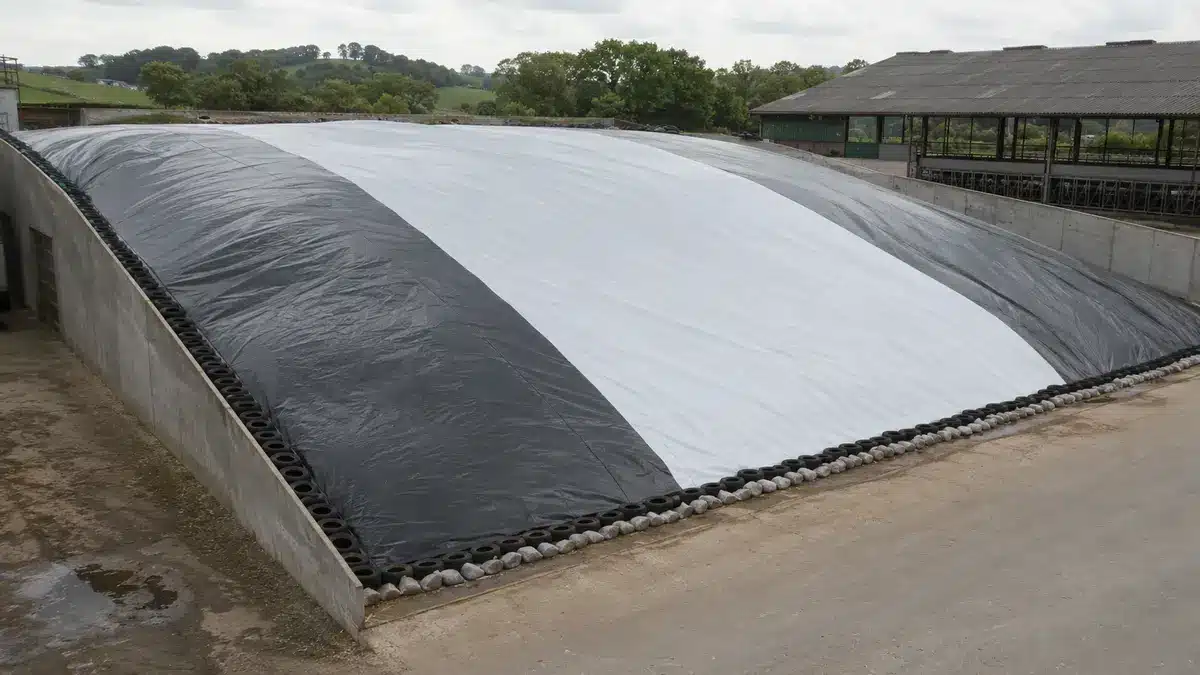
Silage-clamp or bunker covers are broad sheets placed over a forage mass and sealed at edges and joins A system may use a main protective cover an inner.
Silo-bag film forms a long storage package through dedicated bagging equipment. It must match the bagger, diameter, filling pressure, sealing method, storage site, and expected mechanical and weather exposure. These films should not be specified as enlarged bale wrap: the conversion format, stress distribution, and sealing system are different.
Materials, Colors, and Constructions Are Specification Layers
Once the application family is clear, the buyer can compare the design layers that create the required behavior:
- Polymer family: PE-based constructions are common, but the exact resin grades, blends, and any functional polymers matter. A polymer name alone does not establish the finished film’s properties.
- Color and optical design: Clear, black, white-on-black, reflective, and other colors change light transmission, absorption, or reflection. The required effect must be tied to the crop, soil, climate, or storage job.
- Layer construction: Monolayer and coextruded multilayer films distribute functions differently. Layer count is not a quality score; layer materials, thickness distribution, interfaces, and process control matter.
- Additives and surfaces: UV stabilizers, light-diffusing or thermal additives, anti-drip systems, pigments, tackifiers, slip, and surface treatments serve different tasks and may interact with exposure or downstream processing.
- End-of-use design: Reusable, retrievable PE, recyclable-design, recycled-content, soil-biodegradable, and compostable are different claims. Each needs an identified collection or disposal route, target market, test standard, and supporting documentation.
Important: “Biodegradable” without an identified environment is incomplete. Industrial compostability does not prove biodegradation in agricultural soil, and visible fragmentation is not proof of complete biodegradation. Verify the product, standard, field conditions, and any local or organic-program restrictions.
How to Choose an Agricultural Film Type
Use the following sequence before comparing quotations:
- Define the job. State whether the film covers a structure or crop, lies on soil, retains a fumigant, wraps a bale, or seals a forage mass.
- Describe the operating environment. Record crop or feed, climate, UV exposure, temperature, wind, precipitation, soil or forage contact, chemicals, and expected contamination.
- Identify the equipment and geometry. Provide frame, hoop, mulch layer, wrapper, bagger, bunker, core, roll, width, diameter, fastening, seam, and handling details that affect fit.
- Set the service period and failure risks. Define installation date, removal date, reuse plan, puncture sources, abrasion points, wind loads, and consequences of a tear, seal loss, or optical change.
- Translate the job into measurable properties. Request only relevant optical, mechanical, barrier, seal, stretch, cling, dimensional, or weathering data, with the method, specimen direction, conditioning, unit, and acceptance basis.
- Check regulatory and end-of-use constraints. Confirm pesticide labels, market rules, disposal environment, collection options, biodegradability standard, or recycled-content documentation as applicable.
- Validate before full use. Review the product-specific data package and run an equipment, installation, or field trial when the application carries meaningful fit or performance risk.
This sequence prevents a common error: starting with a familiar material or color and then trying to force it into an unsuitable agricultural job.
What to Put in an Agricultural Film RFQ
A useful RFQ gives the supplier enough context to propose a construction and enough evidence requirements to make the proposal auditable. Include:
- the application family and the exact farming job;
- crop, forage, soil, chemical, or stored-product contact;
- structure, bed, bale, bunker, or bag dimensions;
- machine model, operating range, core, roll, winding, and splicing requirements;
- target width, length, thickness, and tolerances, including how thickness will be measured;
- outdoor exposure, temperature, wind, rainfall, UV, handling, abrasion, and puncture conditions;
- required optical, mechanical, stretch, cling, seal, or barrier properties;
- test methods, conditions, units, specimen direction, sampling plan, and acceptance limits;
- color, print, surface, additive, or layer-construction requirements;
- target market and any pesticide, food-contact, organic-program, or environmental claim documents actually required;
- installation, removal, reuse, collection, recycling, or biodegradation route; and
- sample, equipment-trial, field-trial, change-control, traceability, and approval requirements.
Ask the supplier to identify which values are guaranteed specifications, typical data, test results from a defined sample, or items that still require validation. These categories should not be merged.
Frequently Asked Questions
Is biodegradable film a separate agricultural film type?
Usually, no. “Biodegradable” describes an end-of-use material pathway, while “mulch film” describes a farming job. Soil-biodegradable mulch is therefore a variant within the mulch family. Confirm that the claim applies to agricultural soil, references an appropriate current standard or certification, and matches local conditions and program rules. Compostable, oxo-degradable, photodegradable, and soil-biodegradable are not interchangeable terms.
Are all agricultural films made from polyethylene?
No. PE-based structures are common across covers, mulch, and forage films, but agricultural films can use different resin grades, blends, functional layers, or biodegradable polymer systems. The application and the complete construction matter more than a generic resin name. Request a product-specific construction description and data relevant to the intended job.
Can one agricultural film serve more than one function?
Sometimes, but only when the supplier and user validate every function. A sheet may appear suitable for both mulch and solarization, or an opaque cover may be reused for occultation, yet the optical behavior, mechanical demands, installation, regulatory status, and end-of-use route can differ. For fumigation, bale wrapping, and equipment-specific applications, visual similarity is never enough to justify substitution.
Match the Film Family Before Comparing Specifications
The principal agricultural film families are crop-protection covers, soil-management films, and forage-preservation films, with specialized subtypes defined by how and where they work. Start by naming the job, geometry, equipment, environment, duration, and end-of-use route. Then compare material, color, layer structure, additives, and test data within that family. A reliable approval package distinguishes guaranteed specifications from typical values and ties every critical claim to a defined product, method, condition, and field or equipment validation plan.
Related Bestypack Resources
- Silage Stretch Film: What You Need to Know
- Stretch Film vs. Cling Film: What’s the Difference?
- How Many Pallets Can One Roll of Stretch Film Cover?
- Select the Appropriate Stretch Film Width and Thickness
- Black Stretch Wrap Film
- How to Reduce Stretch Film Thickness to Cut Costs?
- Shrink Wrap vs. Stretch Wrap: What’s the Difference?
Related Bestypack Resources
- Silage Stretch Film: What You Need to Know
- Stretch Film vs. Cling Film: What’s the Difference?
- How Many Pallets Can One Roll of Stretch Film Cover?
- Select the Appropriate Stretch Film Width and Thickness
- Black Stretch Wrap Film
- Shrink Wrap vs. Stretch Wrap: What’s the Difference?
- How to Reduce Stretch Film Thickness to Cut Costs?
 English
 Japanese
 French
 Spanish
 Korean
 Italian
 Portuguese
 Dutch
Dutch Arabic
 Russian
 German