
Stretch film is an extremely common packaging material. The thickness of stretch film is equally important to its performance. Stretch film is available in various thicknesses. Each thickness offers different levels of protection and strength. This article explains why stretch film thickness matters. It will help you choose the right thickness for your needs.
What is Stretch Film?
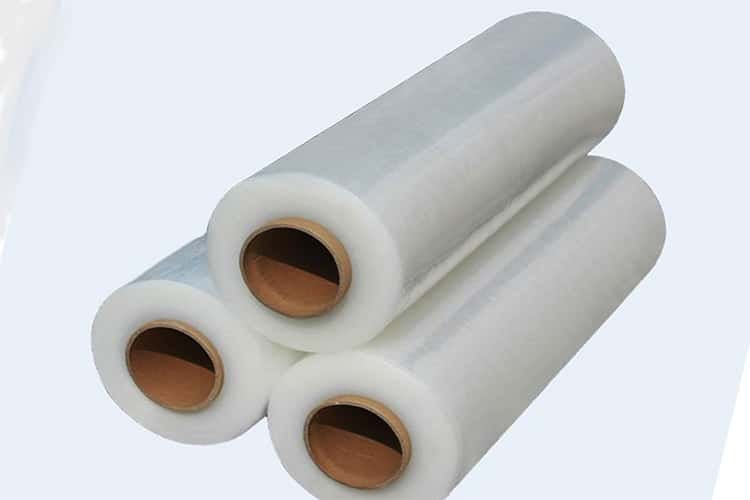
Stretch film, also known as stretch wrapping or pallet wrapping, is a highly stretchable plastic film. It utilizes its own elasticity to tightly bundle items without the need for heating.
Manufacturing Process: Stretch film is usually made from LLDPE, a unique kind of polyethylene. There are two common production processes: blown stretch film and cast film. Stretch film boasts exceptional tear resistance and stretchability, providing excellent protection for goods.
Applications: Stretch film is commonly used to secure palletized loads and bundle small items. It also serves as tamper-evident packaging, preventing tampering or unauthorized access after sealing. Its superior barrier properties help extend shelf life.
The Importance of Stretch Wrap Thickness
The thickness of stretch wrap significantly impacts its performance. Choosing the right thickness keeps loads safe. It helps prevent tipping or breaking during transport and handling.
Thick stretch wrap can compress the load. This may crush products and cause damage.
Thinner stretch wrap may fail to provide adequate protection and risk tearing during use.
Understanding the characteristics of different film thicknesses helps balance cost and reliability. Selecting the right stretch film improves packaging efficiency, streamlines processes, and optimizes costs.
Why Does Thin Stretch Film Resist Tearing?
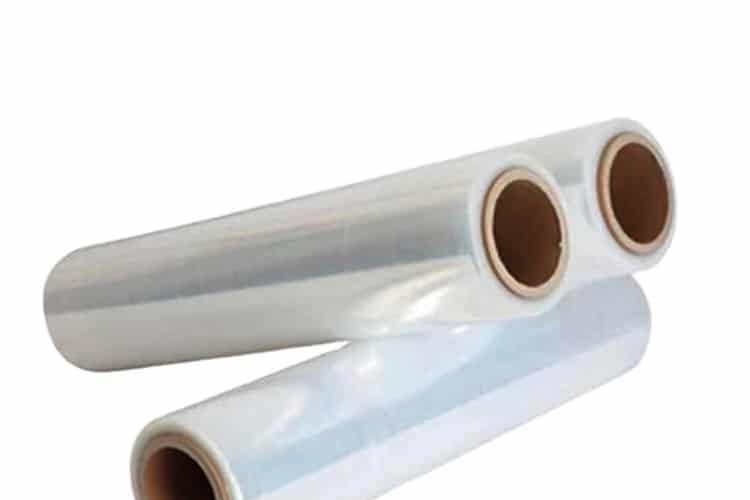
The tear resistance of thin stretch film primarily stems from its material composition and structure.
1. Stretch film is typically manufactured from MPE or LLDPE. These materials feature robust molecular structures and excellent toughness. Therefore, even thin films remain intact.
2. Modern production techniques ensure exceptionally uniform film thickness. This prevents easy breakage during stretching, allowing more items to be wrapped with minimal material.
3. Most stretch films now feature a multi-layer co-extruded structure. This design boosts key properties: strong tensile strength, even thickness, and flexibility. It helps prevent easy rupture.
Understanding Different Types and Thicknesses of Stretch Film
We need to know about stretch film thicknesses and specifications. Also, we should understand the different types of film. Common varieties include the following four:
Types of Stretch Film:
- Blown Stretch Film: Produced via the blown film process, where air is blown into molten resin. Blown stretch film is tougher than cast stretch film. It works well for wrapping medium-sized products.
- Cast Stretch Film: Manufactured through the cast film process, where molten resin is extruded onto a chill roll. Cast stretch film boasts excellent gloss. It has good thickness and adhesion. It’s easy to use and works well for packing lightweight or medium-sized products.
- Pre-stretched film: Pre-stretched film refers to stretch film that manufacturers stretch in advance before delivery. This allows for greater stretch during actual use and offers high cost-effectiveness.
- True gauge stretch film: True gauge stretch film denotes stretch film with precise thickness, accurate to micrometers.
Stretch Film Thickness:
Stretch film thickness is also referred to as stretch film gauge. The standard unit for stretch film gauge is typically 37-gauge stretch film. One mil equals 0.0254 millimeters, and one mil equals 0.001 inches. A higher gauge indicates thicker stretch film. It can also handle heavier weights.
| Gauge Specification | Load Bearing Capacity | Application Scenarios |
|---|---|---|
| 37-Gauge Wrap | <750 lbs | Lightweight loads, no sharp edges |
| 47/60/63 gauge stretch film | 1800-2250 lbs | Small or lightweight items, economical packaging |
| 70/80 gauge stretch film | 2250-2450 lbs | Medium-low weight products, transport and storage protection |
| 90/100 gauge stretch film | 2500-3100 lbs | Medium products, sharp edges or rough handling, dust and moisture proof |
| 120+ gauge stretch film | ≥3250 lbs | Heavy machinery, industrial equipment, construction materials |
Factors to Consider When Selecting Stretch Film Thickness
The thickness of stretch film determines its strength, overall performance, and transparency. Different thicknesses also carry varying costs. Thicker stretch film requires greater force to stretch. Selecting the appropriate thickness is crucial.
Stretch Film Thickness Specifications: Stretch film thickness is measured in 37-gauge units. Standard thicknesses include 37, 47, 60, 70, 80, 120, and 150 gauge. Refer to the preceding section for detailed specifications.
Load Shape, Size, and Weight: When choosing film thicknesses, think about the load’s shape and size. Cylindrical loads or items with sharp edges require thicker film to prevent tearing or puncturing. Heavier loads also demand thicker film for adequate protection.
Stretch film width: Beyond thickness, width is equally crucial. Select width based on load size: narrower film is best for small items, saving material. Wider film suits larger loads, providing better coverage and security. Optimal width reduces wrapping passes and boosts packaging efficiency.
Stretch Film Transportation Method: Transportation mode also warrants consideration. Four standard methods exist: air freight, road transport, rail transport, and sea freight. Air freight can shake more than other transport methods. This shaking increases the risk of load compression or displacement. Thus, air shipments require thicker stretch film for enhanced support and protection. Road, sea, and rail transport offer relatively more stable conditions.
How to Reduce Costs by Adjusting Stretch Film Thickness?
Many companies focus solely on the price per roll of stretch film. However, the actual cost savings lie in the cost per load. Different loads always require different film thicknesses. Therefore, we need to consider: stretch percentage, the amount of material necessary for proper wrapping, and securing the load.
- Calculate roll weight: Roll weight = (Width × Length × 12 × Mil thickness) ÷ 30,000. This yields the weight in pounds per roll.
- Calculate cost per pound: Divide the roll’s total cost by its weight to determine the cost per pound.
- Calculate per-load cost: Pounds of stretch film used per pallet × Cost per pound of film = Cost per pallet.
This method helps us clearly see the price per roll. It also lets us track the actual cost of each packaging operation. This allows for scientifically reducing overall packaging expenses.
BestY Pack
BestY Pack specializes in developing and manufacturing stretch film in various thicknesses. We offer everything from lightweight to heavy-duty stretch film, ranging from 37 to 150 gauge. BestY Pack stretch film boasts high tear resistance and tensile strength, with uniform thickness. It is an excellent choice for packaging solutions. We can provide you with more cost-effective solutions, optimizing both performance and cost. If you need guidance on selecting the appropriate gauge of stretch film, feel free to contact us!
FAQ:
What unit is used to measure the thickness of plastic film?
Plastic film thickness is typically expressed in gauges, mils, and microns.
· 1 mil = 0.001 inches
· 1 mil = 0.0254 mm
· 1 micron = 0.001 mm
· 1 micron = 0.00003937 inches
1 gauge = 0.01 mil
- Conversion to millimeters: 1 gauge = 0.000254 mm (0.01 mil × 0.0254 mm/mil)
- Conversion to inches: 1 gauge = 0.00001 inch (0.01 mil × 0.001 inch/mil)
What is the standard thickness of stretch film?
The standard thickness of stretch film typically ranges from 10 to 30 microns. Thicker stretch film offers greater tear resistance, puncture resistance, and stretchability. Different thicknesses are suitable for packaging various products.
- 11-18 microns: Ideal for packaging small or lightweight items.
- 16-24 microns: Suitable for medium-duty wrapping. Commonly used for standard pallet wrapping.
- 24-32 microns: Suitable for heavy-duty wrapping, including items with sharp edges.
Which is thicker, 60 gauge or 70-gauge?
- 70-gauge stretch film is thicker. Generally, higher gauge numbers indicate thicker film and better protective performance.
- 60 gauge: More economical. Suitable for packaging small items or lightweight goods, such as small parcels or lighter cardboard boxes. However, its protective capabilities are limited.
- 70 gauge: A standard and widely used option. It provides strong protection against moisture and dust. Plus, it offers great flexibility and strength.

Hello, customers
My name is Jack Yu. I am the Business Manager at BestY Pack Plastic Products. My areas of expertise include film packaging, cold chain transportation packaging, and shrink products. Additionally, our factory manufactures protective gloves, and I can provide you with professional solutions to help you increase your market share and enhance consumer trust.
Email: ᅠjackyu@bestypack.com
Tel: +86 18368319351