
The fastest way to select stretch film is not to start with gauge. Start with how the film will be applied, what can go wrong on the load, and what the wrapped pallet must survive. That gives you a defensible shortlist in about two minutes. Final approval still requires a trial on the actual unit load, because film, wrapper settings, pallet pattern, product packaging, handling, and transport conditions work as one system.
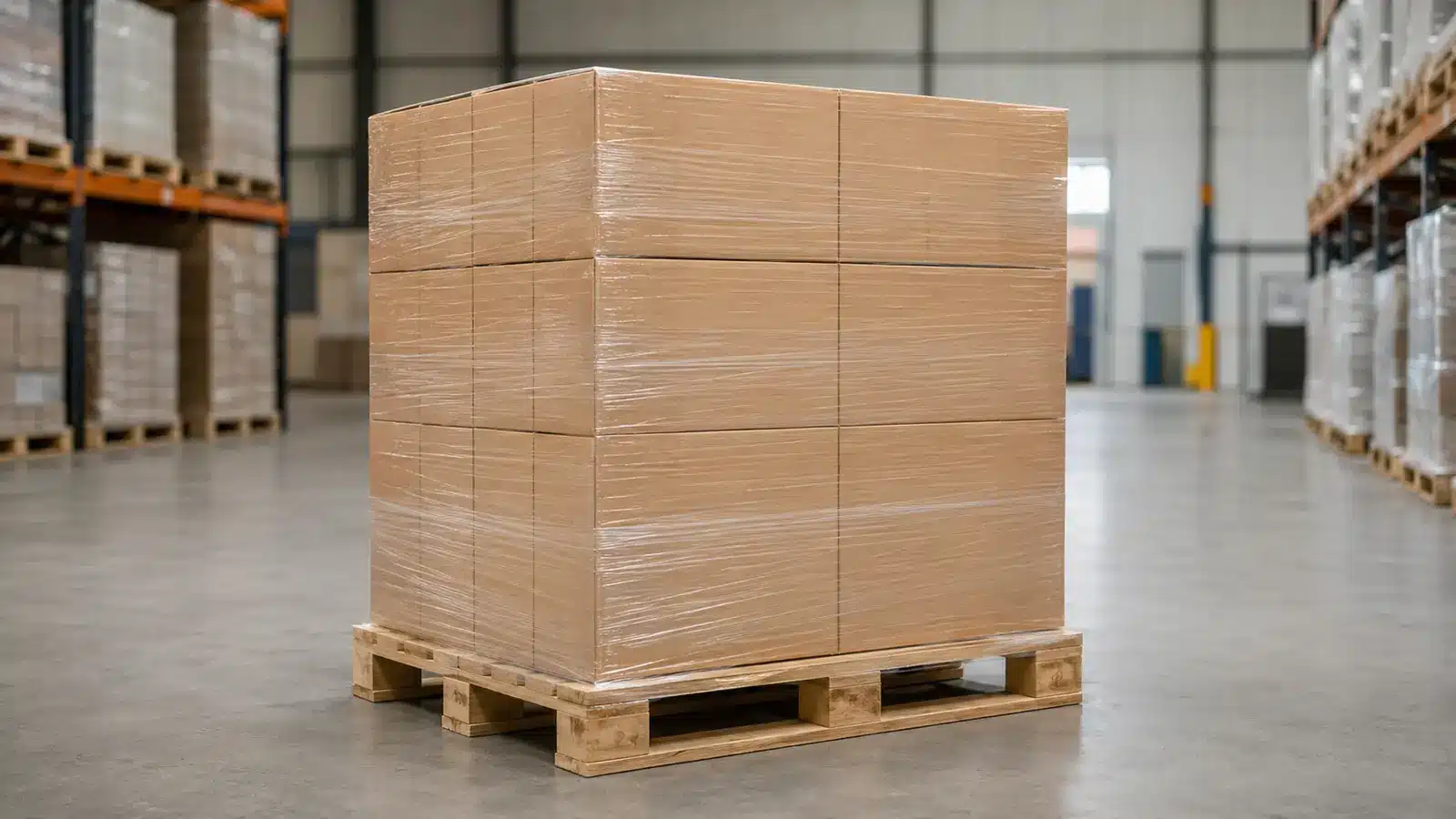
The 2-Minute Stretch Film Selector
For polymer background, consult the NIH PubChem polyethylene overview before comparing finished-film claims.
For polymer background, consult the NIH PubChem polyethylene overview before comparing finished-film claims.
Use these three steps to turn a vague request for “stretch wrap” into a testable specification.
1. Choose the Application Method
Decide whether the load will be wrapped by hand, with pre-stretched hand film, or on a specific semi-automatic or automatic wrapper. Record the wrapper type and film-carriage limits if a machine is involved. This choice determines roll dimensions, achievable stretch, operator effort, repeatability, and the supplier data you need.
2. Classify the Load Risk
Look beyond total weight. Record the pallet footprint and height, stack pattern, rigidity, exposed corners, voids, overhang, surface friction, compression sensitivity, and any tendency for cases or bags to settle. Also note cold, heat, humidity, long storage, repeated handling, and the most severe transport leg. These inputs identify whether the main risk is puncture, tearing, crushing, shifting, or loss of containment.
3. Define the Trial Target
State what success means before choosing a film: no load shift beyond an agreed limit, no unacceptable product or case deformation, no film break, no exposed sharp point, and stable performance after the intended handling or distribution test. Record film use and cost per accepted load, not just price per roll.
Important: The two-minute selector produces a shortlist, not proof of fitness. ASTM’s current D4649 guide covers stretch-film selection and application for indoor storage and transport, and specifically does not cover outdoor exposure. Add separate evidence when weather exposure is part of the use case.
Hand, Pre-Stretched, or Machine Film?
Choose the format that matches the real operation. Do not rely on a universal pallets-per-day cutoff; load variability, labor, ergonomics, wrapper capability, and consistency matter.

| Format | Best starting point when | Confirm before ordering |
|---|---|---|
| Hand film | Loads are wrapped manually and operators need flexible movement around changing load shapes. | Roll width, roll mass, core dimensions, dispenser fit, operator handling, and repeatability. |
| Pre-stretched hand film | Lower pull effort and more consistent manual application are priorities. | Residual holding behavior, puncture tolerance, roll construction, and performance on the actual load. |
| Machine film | A defined wrapper controls application and repeatability is required. | Wrapper type, carriage design, permitted roll dimensions and mass, prestretch range, force-to-load control, speed, and unwind direction. |
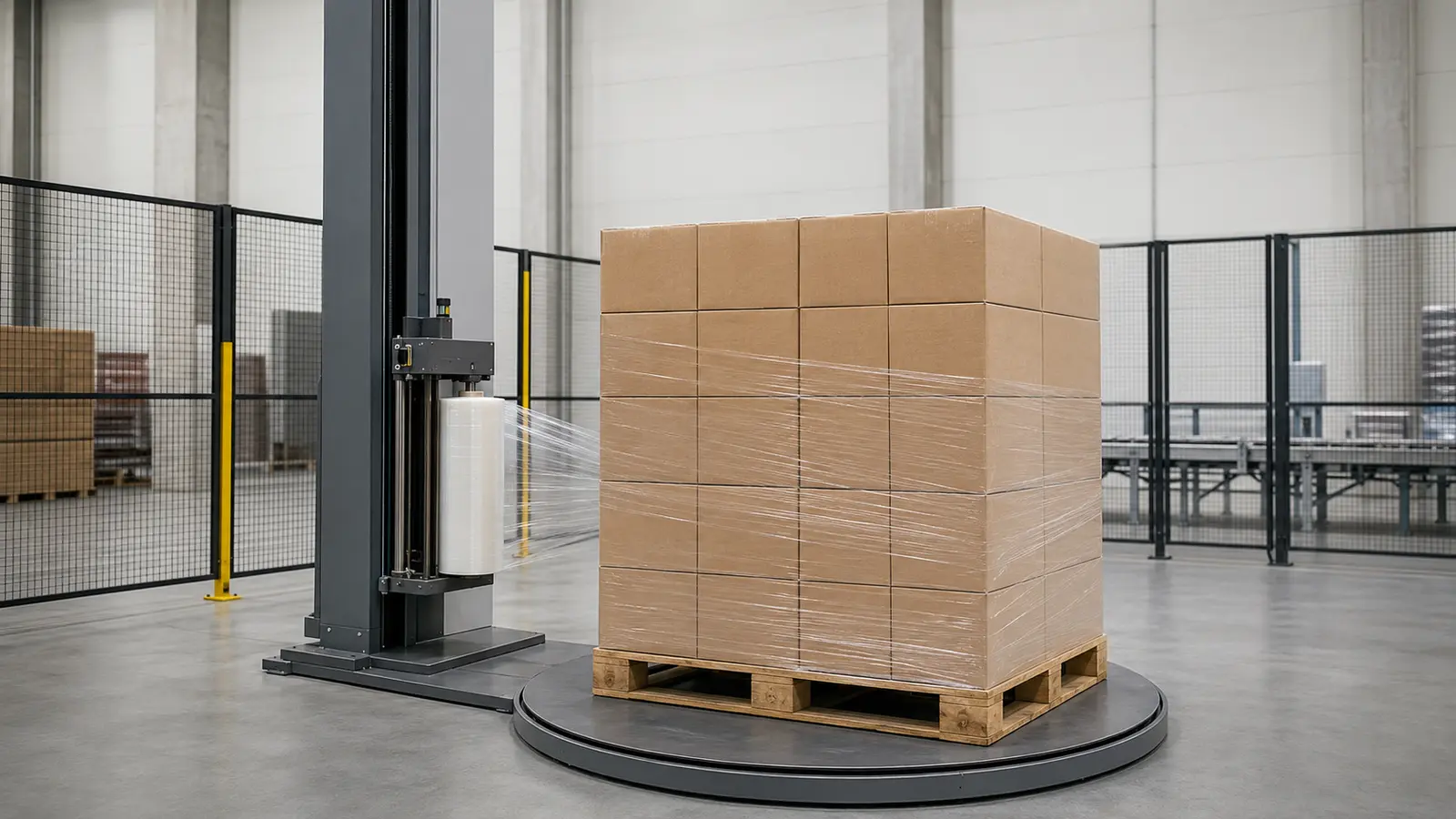
A machine-grade film is not automatically suitable for every wrapper, and a nominally high-stretch film creates no benefit if the carriage cannot apply it as intended. Use the machine manual and the exact film technical data sheet together.
Match the Film to the Load Risk
The right candidate addresses the failure mode of the whole unit load. Weight is only one input.
Stable, Uniform Loads
Aligned cartons with good interlayer contact and limited overhang are usually the simplest starting point Prioritize a repeatable wrap pattern sufficient.
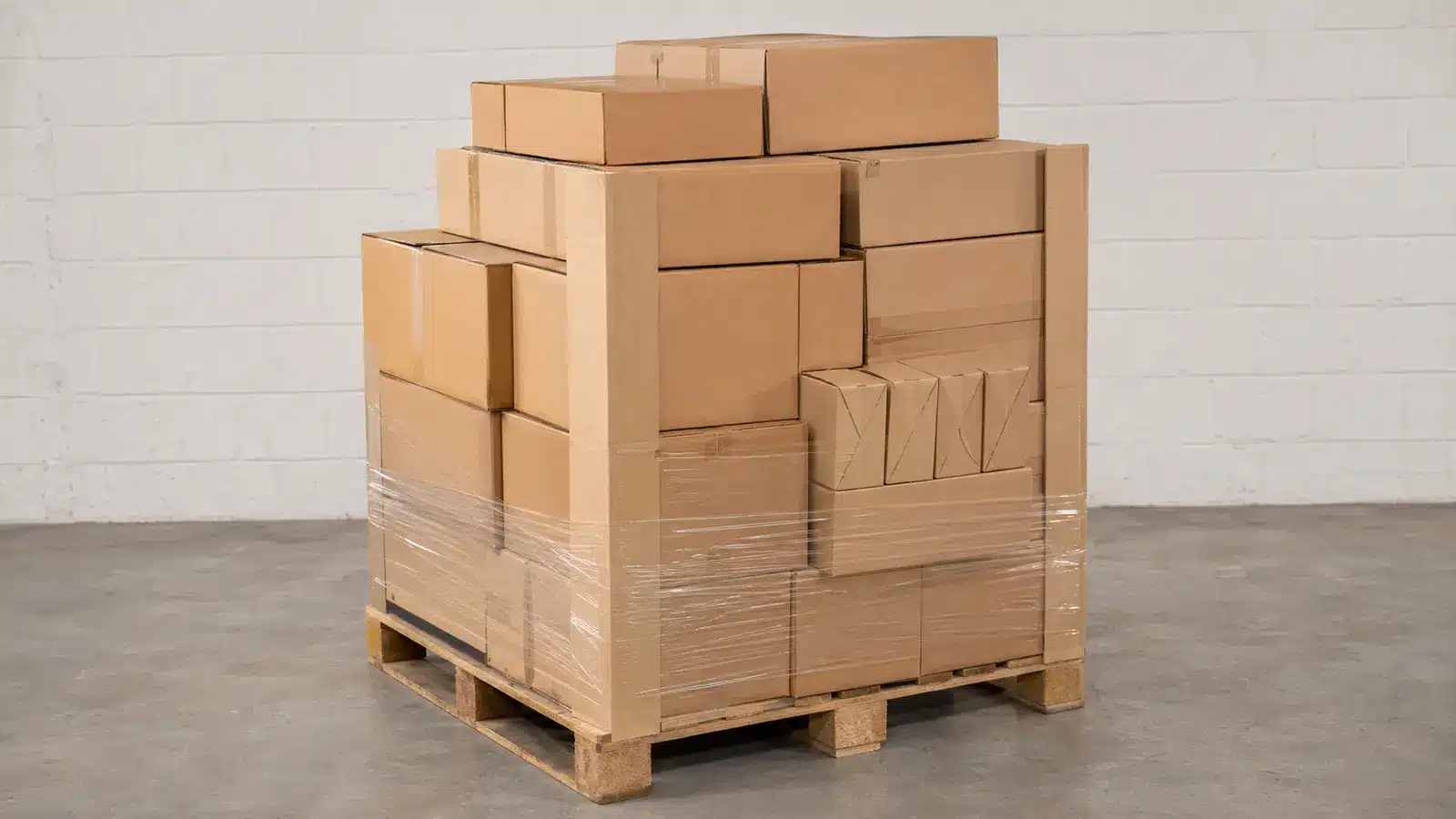
Irregular or Puncture-Prone Loads
Exposed corners, metal edges, timber, protrusions, and deep voids can concentrate stress and initiate a tear. Ask for evidence relevant to puncture and tear behavior at the proposed thickness and application conditions. Edge protection, load reconfiguration, or a different wrap pattern may be more effective than increasing thickness alone.
Crush-Sensitive or Shifting Loads
Soft cartons, open trays, bagged goods, and products that settle can be damaged by excessive local force yet still move when containment is poorly distributed. The trial must check both stability and product deformation. Film choice, wrap pattern, force-to-load, corner protection, sheets, and pallet pattern may all need adjustment.
Compare Gauge, Prestretch, and Containment as a System
Gauge describes nominal thickness; it does not describe the secured pallet. Prestretch describes how the film is elongated before or during application under defined equipment conditions. Applied containment describes the holding effect around the finished load. None should be evaluated in isolation.
| Field | What it tells you | What it cannot prove alone |
|---|---|---|
| Nominal thickness | The supplied film thickness in a stated unit and tolerance. | Puncture survival, load stability, or cost per accepted pallet. |
| Prestretch or stretch capability | How the film is intended to elongate under specified application conditions. | The stretch actually achieved on your wrapper or by an operator. |
| Applied containment | The holding effect produced by film, tension, wrap pattern, and number and location of wraps. | Distribution performance unless the load is tested under relevant hazards. |
| Film use per load | Material consumed by the programmed or manual wrap cycle. | Suitability if the load fails the acceptance criteria. |

Compare candidates at the same load, wrapper, wrap pattern, measurement method, and acceptance criteria. ASTM lists current methods for applied stretch film and unit-load performance, including mechanical handling, vibration, horizontal impact, cling, elastic recovery, and applied-film performance guidance.
Note: Supplier values from different test methods, directions, film thicknesses, or conditions are not directly interchangeable. Request the method, specimen details, units, and conditions behind every critical value.
Specify the Roll and Machine Fit
A usable quotation or trial request should include:
- application method and wrapper make/model, if applicable;
- film width, nominal thickness unit, and acceptable tolerance;
- roll length or net film mass, core inside diameter, core length, and maximum roll diameter and mass;
- unwind direction, cling-side requirement, and any required color or opacity;
- carriage type, prestretch capability, force-to-load control, wrap speed, and current wrap pattern;
- pallet footprint, minimum and maximum load height, representative mass range, and load geometry;
- exposed edges, overhang, venting, condensation, temperature, storage, handling, and transport conditions;
- current film and settings, known damage modes, film use per load, and acceptance criteria.
Do not assume two rolls.
Validate One Wrapped Load Before You Standardize
Start with a representative worst-case unit load, then repeat the validated setup enough times to show that normal variation is controlled.
- Freeze the pallet pattern, primary packaging, load dimensions, and conditioning that represent the intended shipment.
- Record the exact film identification, roll dimensions, wrapper or dispenser, prestretch and force settings, wrap pattern, film use, and operator or machine cycle.
- Inspect immediately for film breaks, punctures, loose tails, crushed corners, load lean, overhang, and uneven containment.
- Apply a handling or distribution test that matches the decision Depending on the objective.
- Compare results with the written acceptance criteria, adjust one controlled variable at a time, and repeat before approving the specification.

ISTA 3E treats the unitized load as a packaged-product system and can evaluate load stability under distribution hazards EUMOS 40509 provides a defined dynamic method for load-unit rigidity Select a method and severity appropriate to.
Important: A film-property test is not a finished-pallet test. Approval should identify exactly which load, wrap program, conditions, method, and acceptance criteria were verified.
Avoid These Fast-Selection Mistakes
- Buying by gauge alone → film thickness is mistaken for secured-load performance → compare the applied system and trial result.
- Using pallet weight as the only load class → edges, geometry, settling, and crush sensitivity are missed → document the physical load profile.
- Ignoring the wrapper → a film is quoted outside the carriage or control range → verify roll fit, prestretch, force, speed, and unwind.
- Comparing price per roll → roll length, usable yield, and rejected-load risk disappear → compare cost per accepted wrapped load.
- Testing an easy pallet → the candidate passes a load that does not represent routine risk → include the expected worst-case pattern and conditions.
- Changing several settings at once → the reason for improvement or failure becomes unclear → control one variable and keep a trial record.
- Extending an indoor result outdoors → UV, rain, temperature, and exposure time are unverified → create a separate weather-exposure requirement.
Stretch Film Selection FAQ
Is Thicker Stretch Film Always Better?
No. Additional thickness may help a specific candidate resist puncture or tearing, but it can also increase material use and does not correct a weak pallet pattern or poor application. Compare exact grades under the same applied conditions and approve the thinnest candidate only when it meets the full acceptance criteria.
Should I Choose Cast or Blown Stretch Film?
It depends. Commercial cast grades are often considered when clarity, quiet unwind, and consistent machine use are priorities; blown grades are often considered when toughness and tear propagation resistance are concerns. Those are screening tendencies, not guarantees. Compare the exact formulation, technical data, wrapper compatibility, and load-trial result.
Can I Choose Film by Pallet Weight Alone?
No. Two pallets with the same mass can behave differently because of height, footprint, stack pattern, surface friction, packaging rigidity, voids, exposed edges, and route hazards. Use mass as one field in a full load profile.
Your Final Purchase Specification
Send the supplier a controlled brief containing:
- the application method, equipment, and roll limits;
- the actual load profile and representative worst-case pallet;
- the failure modes to prevent and written acceptance criteria;
- the requested film dimensions, thickness units and tolerance, core, roll build, and unwind;
- the exact technical data and test methods needed for comparison;
- the planned wrapper settings, wrap pattern, and film-use measurement;
- the handling or distribution test and records required for approval;
- a statement that suitability is conditional on the approved load, program, conditions, and evidence.
That is enough to shortlist a stretch film in two minutes—and enough discipline to avoid treating the shortlist as a final engineering approval.
Related Bestypack Resources
- How Many Pallets Can One Roll of Stretch Film Cover?
- Stretch Film Thickness: What You Need to Know
- Select the Appropriate Stretch Film Width and Thickness
- Machine Stretch Film Blown & Cast
- Shrink Wrap vs. Stretch Wrap: What’s the Difference?
 English
 Japanese
 French
 Spanish
 Korean
 Italian
 Portuguese
 Dutch
Dutch Arabic
 Russian
 German