
Choose POF shrink film from the product’s maximum packed width, length, and height—not from the product name alone. First identify whether your line uses centerfold film, single-wound film, tubing, or pre-made bags. Then calculate the geometric film requirement, add the operating clearance specified for the actual film and machine, and test the next available compatible size. The calculation creates a trial specification; seal position, air evacuation, tunnel behavior, and scrap during a real run determine the production size.
The Short Answer: Size the Film Around the Package Envelope
For polymer background, consult the NIH PubChem polyethylene overview before comparing finished-film claims.
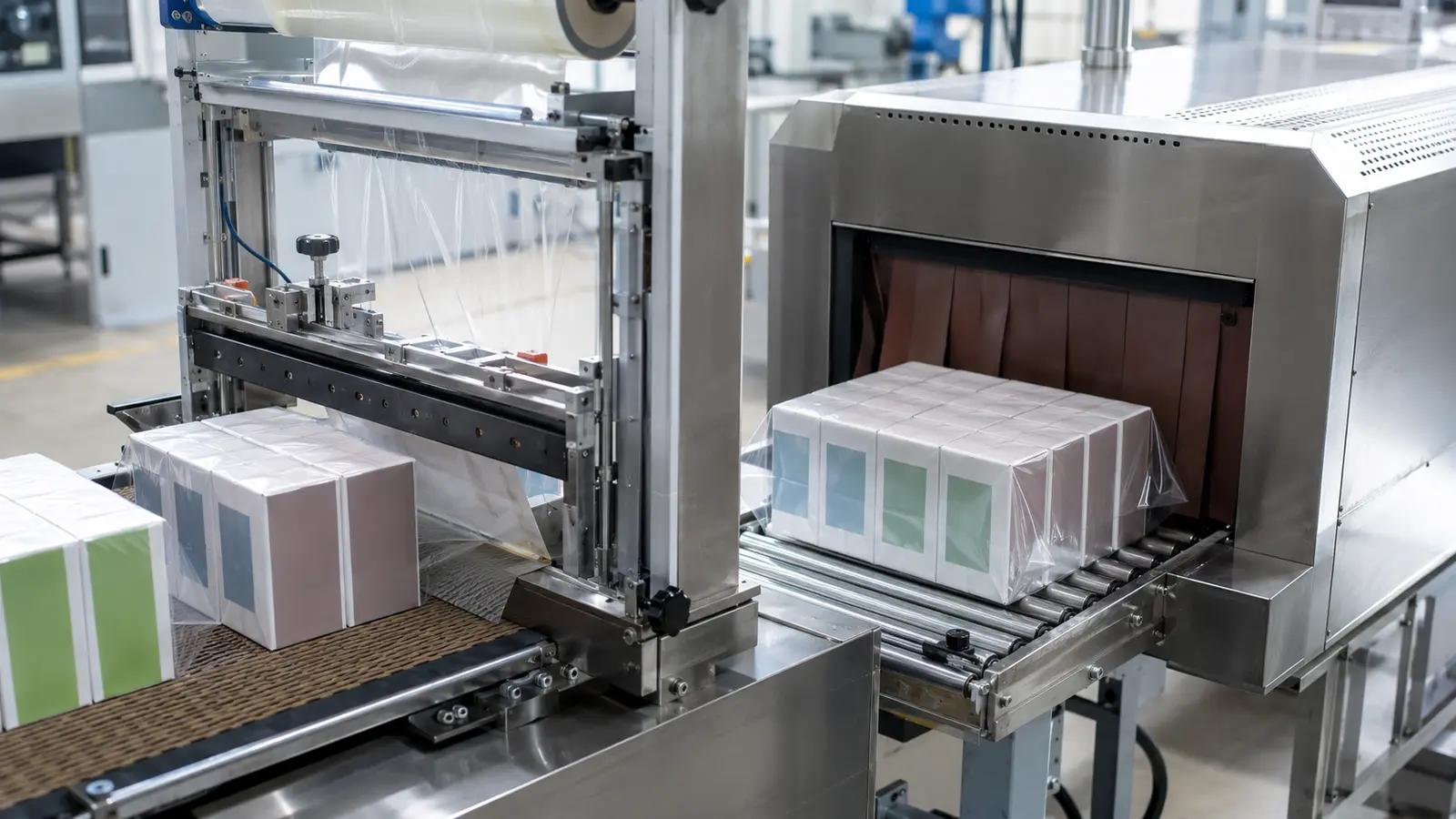
The correct size is the smallest film that can enclose the product, move through the sealer without dragging or stretching, form reliable seals away from the product, and shrink without excessive loose film or scrap. Four inputs control that decision:
- the film format used by the machine;
- the product’s maximum dimensions in its running orientation;
- the clearance required by the film grade, sealer, and handling method; and
- the stock or custom widths the machine and supplier can provide.
For a rectangular product in centerfold film, the basic cross-direction geometry is product width plus product height. That is only the geometric minimum. A documented width allowance must still be added before rounding up to an available roll size.
Important: Do not subtract an advertised shrink percentage from the product dimensions. The film must first pass around the unshrunk product and be sealed. Shrink performance is evaluated after enclosure; it is not permission to start with film that cannot load or seal correctly.
Identify the Film Format and Packaging Machine First
“Film width” does not mean the same physical amount of material for every format. Confirm the roll or bag format on the purchase order and match it to the machine manual before calculating a size.
Centerfold POF film
Centerfold film is folded lengthwise and supplied as two layers joined at the fold. A nominal 400 mm centerfold roll is about 400 mm wide while folded and about 800 mm across when opened flat. L-sealers commonly use this format because the product enters between the layers and the machine closes the remaining sides.
Single-wound POF film
Single-wound film is one flat web. Its nominal width describes the full single layer, so it cannot be substituted one-for-one for a centerfold width. The wrapper may use two webs, a forming shoulder, an overlap, or a longitudinal seal. The equipment drawing—not a centerfold formula—should define the required web width, overlap, and trim.
POF tubing and pre-made shrink bags
Tubing is supplied as a flattened sleeve, while a pre-made bag already has one or more closed edges. Their quoted width is normally layflat width. Bag length is a separate purchasing dimension and must include room for the product, its height or end geometry, and the final seal.
| Format | What the nominal width describes | Typical calculation starting point | What must be confirmed |
|---|---|---|---|
| Centerfold roll | Width of the folded two-layer web | Half the cross-sectional perimeter plus operating allowance | Fold orientation, seal opening, roll limits |
| Single-wound roll | Full width of one flat web | Machine-specific web path around the product | Number of webs, overlap, trim, forming geometry |
| Tubing | Layflat width of the flattened sleeve | Half the measured product circumference plus operating allowance | Loading clearance and end-seal method |
| Pre-made bag | Flat bag width and bag length | Half-circumference width plus required finished length | Bag opening, seal position, corner geometry |
Published supplier guides likewise separate calculations by format and equipment. That distinction matters more than choosing a convenient formula first and trying to force it onto the line.
Measure the Product in Its Running Orientation
Choose how the product will enter the wrapper before assigning width, length, and height. For centerfold film, use these definitions:
- W — product width: the cross direction, generally parallel to the cut-off or cross seal;
- L — product length: the machine direction, generally parallel to the centerfold; and
- H — product height: the vertical distance from the support surface to the highest point.
Measure the actual packed configuration, not just a drawing. Include lids, handles, labels, bowed cartons, stacked components, and other protrusions. For a family of SKUs, record the maximum envelope of each SKU rather than combining the largest width from one item with the largest height from another unless that combination can actually occur.
Rectangular products
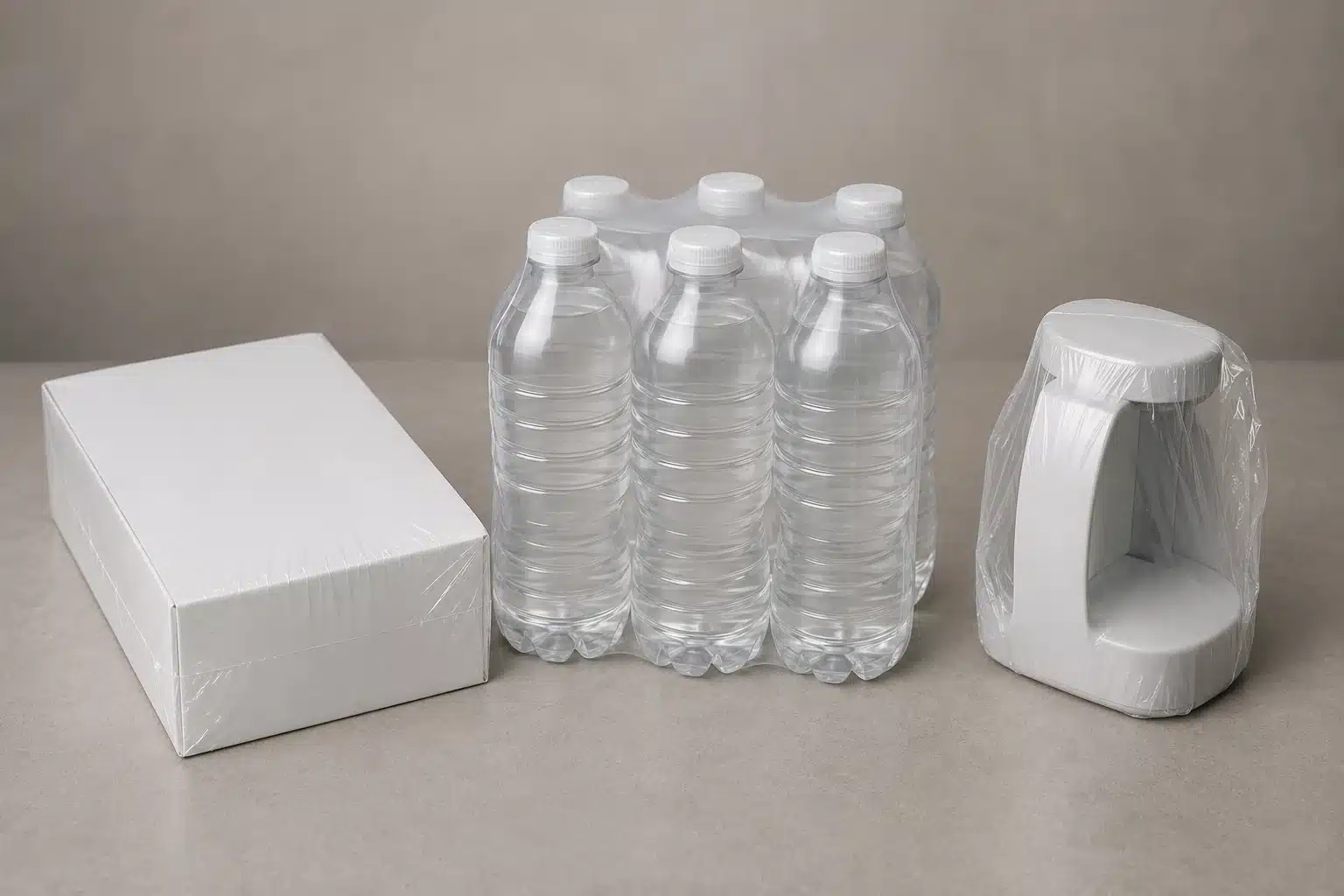
Measure W, L, and H at the widest, longest, and highest points in the selected orientation. If the carton varies, measure representative samples and use a controlled maximum that reflects incoming tolerance. Keep units consistent throughout the calculation.
Product orientation is a material-use decision as well as a machine-fit decision. Rotating a rectangular package can trade a wider roll for a shorter cut-off, or the reverse. Compare both orientations only if each one fits the seal bar, conveyor, tunnel opening, and product-handling requirements.
Round and irregular products
For a round product, measure the maximum outside diameter, including caps or projections. For an irregular product, a flexible tape around the widest cross-section is safer than assuming a perfect circle or rectangle. Keep the tape in the same plane as the film cross-section and do not pull it tight into recesses that the film cannot follow before shrinking.
Also check stability. A basket handle, tapered container, grouped pack, or flexible item may change shape or position during loading. The trial should use the largest and least stable acceptable product, not only the easiest sample.
How to Calculate Centerfold POF Film Width
Use geometry to establish a baseline, then add a separately identified operating allowance. Define:
- W = maximum product width in the cross direction;
- H = maximum product height;
- C = measured circumference around the widest cross-section;
- D = maximum diameter for a truly round product; and
- Aw = total width allowance required by the film, machine, and loading method.
Rectangular-package formula
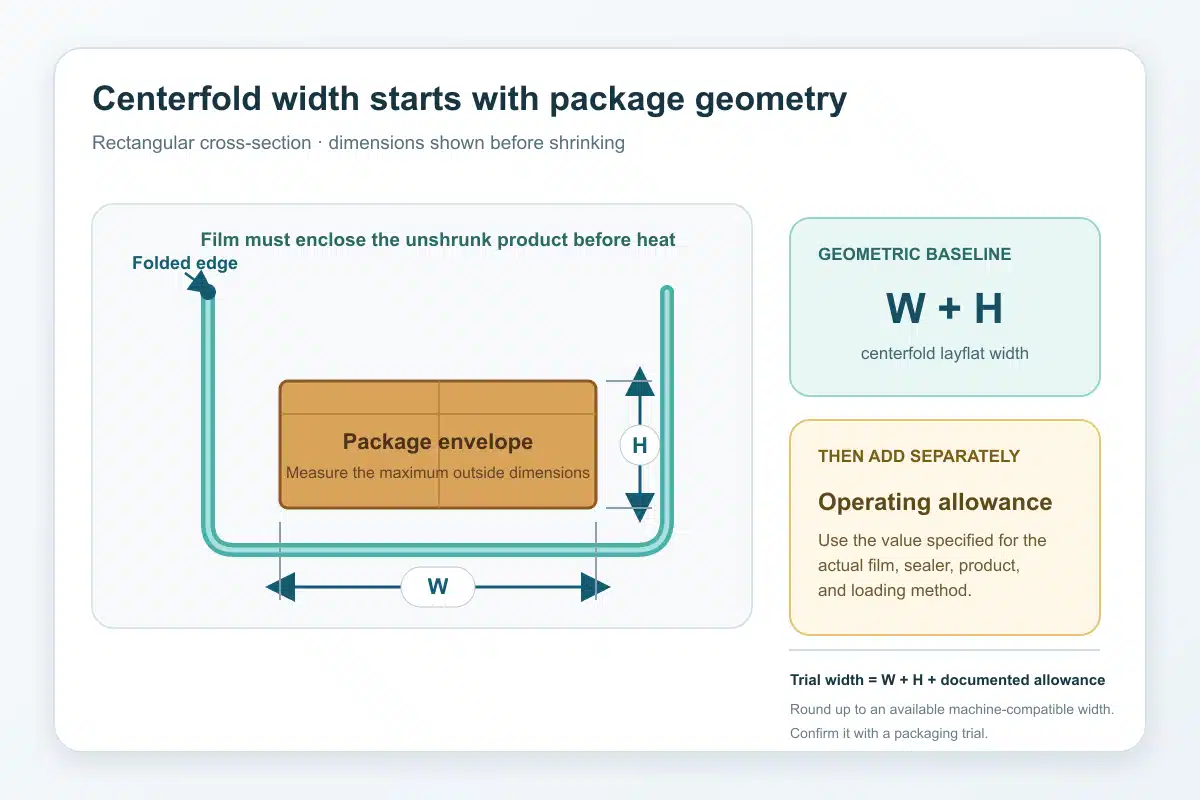
The perimeter of a rectangular W-by-H cross-section is 2W + 2H. Centerfold layflat is half that perimeter, so the geometric baseline is:
Geometric centerfold width = W + H
The trial roll width is therefore:
Trial centerfold width = W + H + Aw
Aw is not a universal POF constant. Use the allowance stated by the film supplier or equipment manufacturer for the relevant film grade, sealer type, product height, and operating method. Then round up to an available width that remains within the machine’s limits.
Round-product formula
For a measured circumference:
Geometric layflat width = C ÷ 2
For a truly circular cross-section, C = πD, so:
Geometric layflat width = πD ÷ 2
Add the documented operating allowance after calculating the baseline. Use a measured circumference when caps, handles, bundles, or shape variation make diameter an incomplete description.
Worked example
Assume a rectangular package measures 240 mm wide and 60 mm high in the chosen running orientation.
- Calculate the baseline:
240 mm + 60 mm = 300 mm. - Obtain the applicable allowance from the exact film-and-machine trial method.
- If that method calls for 40 mm total allowance in this example, the trial width is
300 mm + 40 mm = 340 mm. - Select the next available compatible width at or above 340 mm and run a packaging trial.
The 40 mm value is illustrative, not a general recommendation. Public guides use different approaches: Uline shows a fixed addition for its centerfold products, Quick Pak publishes a different fixed allowance, IPS Packaging & Automation varies its addition by machine type and product height, and another supplier uses a percentage multiplier. The disagreement is evidence that the operating allowance must stay attached to its source and application.
Important: Record the calculation, allowance source, units, orientation, film format, machine model, and trial-roll identification together. A number without those conditions is not a transferable specification.
How to Calculate Cut-Off, Tubing, or Bag Length
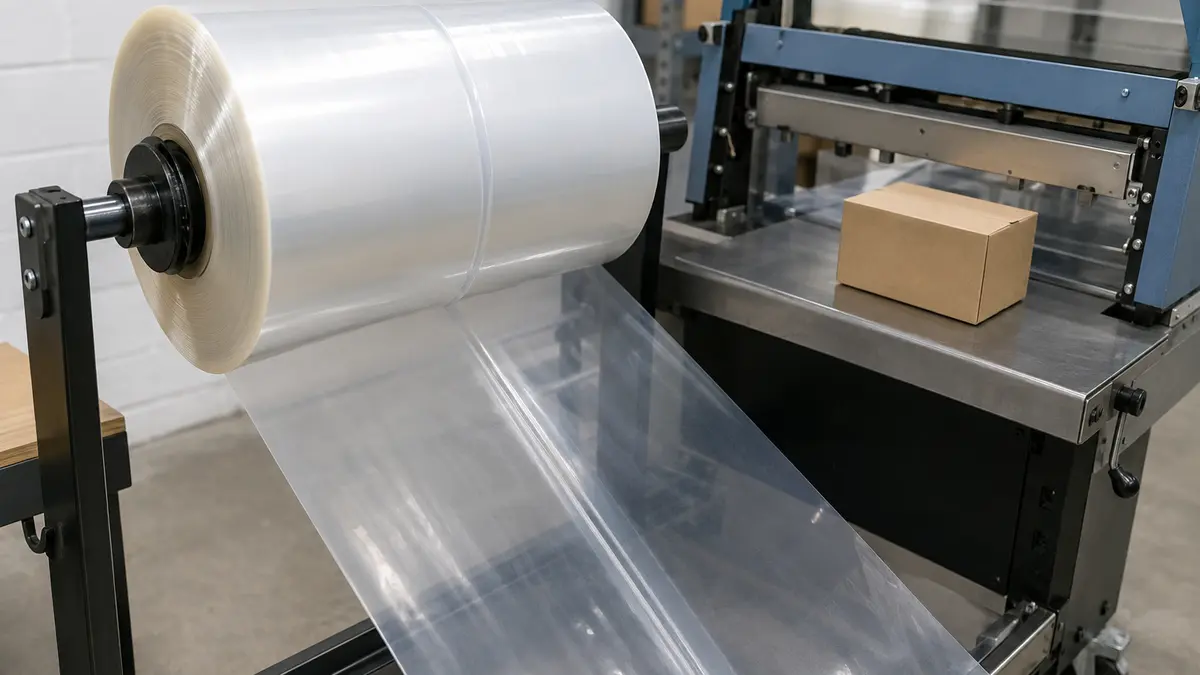
Use the finished pack geometry as the final check.
Width only covers the product’s cross-section. Centerfold roll film also needs enough machine-direction material to pass over the product length and down its ends before the cross seal is made.
For a rectangular trial, a useful geometric starting point is:
Trial cut-off length = L + H + Al
where Al is the total machine-direction allowance for product clearance, seal placement, and cut-off behavior. Use the sealer or film supplier’s method to set this allowance. Automatic L-sealers may require a different margin from manual or semi-automatic equipment.
For tubing or pre-made bags:
- calculate layflat width from half the maximum measured circumference plus the applicable loading allowance;
- calculate bag or tube length from the product length, end geometry, and the material needed for the closing seal;
- include any header, trim, or closure requirement only when it is part of the actual pack design; and
- round up to a size the sealer can close without placing the seal on the product.
A bag described as “300 × 450 mm” is incomplete unless the supplier’s dimension order, opening edge, seal configuration, and tolerances are known.
Why the Allowance Is Not a Universal Number
Published sizing guides agree on measuring the product envelope, but they do not agree on one clearance formula. Some add a fixed number of inches, some use a percentage, and some change the addition by equipment type and product height. Each method embeds assumptions about that supplier’s film, stock widths, machinery, and operating experience.
Shrink percentage is not the same as sizing allowance
Shrink percentage describes dimensional recovery under stated heating and test conditions. Sizing allowance provides room to load, move, and seal the film before the package reaches the shrink tunnel. These are different stages and different quantities.
Even a film capable of substantial free shrink cannot correct a web that is too narrow to enclose the unshrunk product. Conversely, extra width is not automatically helpful: excessive material can increase trim, delay air evacuation, and leave larger corners that the process must manage.
Film grade, product shape, and equipment change the margin
Operating clearance can change with:
- film stiffness, slip, thickness, and shrink-force profile;
- sharp corners, soft surfaces, handles, or unstable grouped products;
- manual loading versus automatic product presentation;
- seal-bar geometry, film separator, inverting head, or forming path;
- perforation and the way air leaves the package;
- tunnel airflow, conveyor support, dwell time, and package spacing; and
- production tolerances in the product and the film.
Important: Treat any web formula as a trial-sizing rule with a named source. Do not convert it into a BestY Pack product guarantee unless the exact grade, width tolerance, equipment, and validation record support that wording.
Check the Result Against the Sealer and Shrink Tunnel
A mathematically adequate film can still be unusable on the line. Before ordering, compare the proposed size with the exact equipment manual and current setup:
- maximum and minimum film width accepted by the film carriage;
- centerfold or single-wound configuration and the required fold side;
- seal-bar opening, cross-seal length, and usable package height;
- maximum roll diameter, core size, roll weight, and unwind direction;
- film-separator, perforator, dancer, power-unwind, and tracking limits;
- conveyor width and the product orientation it can maintain;
- shrink-tunnel opening, clearance above the product, and conveyor support; and
- sealing-element and film-grade compatibility.
The tunnel does not set.
Run a Packaging Trial Before Ordering Production Rolls
Use the calculated size as a controlled trial, not as the final answer.
- Select representative samples. Include the maximum dimensions, normal variation, sharpest corner, least stable bundle, and any approved product configuration that may be difficult to wrap.
- Record the trial inputs. Note W, L, H or circumference, orientation, film format, roll width, cut-off, film grade and thickness, roll ID, machine model, and relevant settings.
- Check loading and sealing before heat. The film should open and travel without being stretched around the product. Seals should close without touching, crushing, or trapping the product.
- Observe the shrink process. Check air evacuation, seal integrity, corner formation, wrinkles, burn-through, distortion, and movement through the tunnel.
- Measure material use and stability. Record tail and side trim, rejects, stoppages, tracking behavior, and whether operators can repeat the result at the required speed.
- Adjust one variable at a time. If the pack fails, distinguish film size from perforation, seal settings, tunnel conditions, product orientation, and film-grade effects before changing the roll specification.
Important A trial on one ideal sample does not validate the full product tolerance or every line condition Define the accepted.
Troubleshoot Film That Is Too Narrow or Too Wide
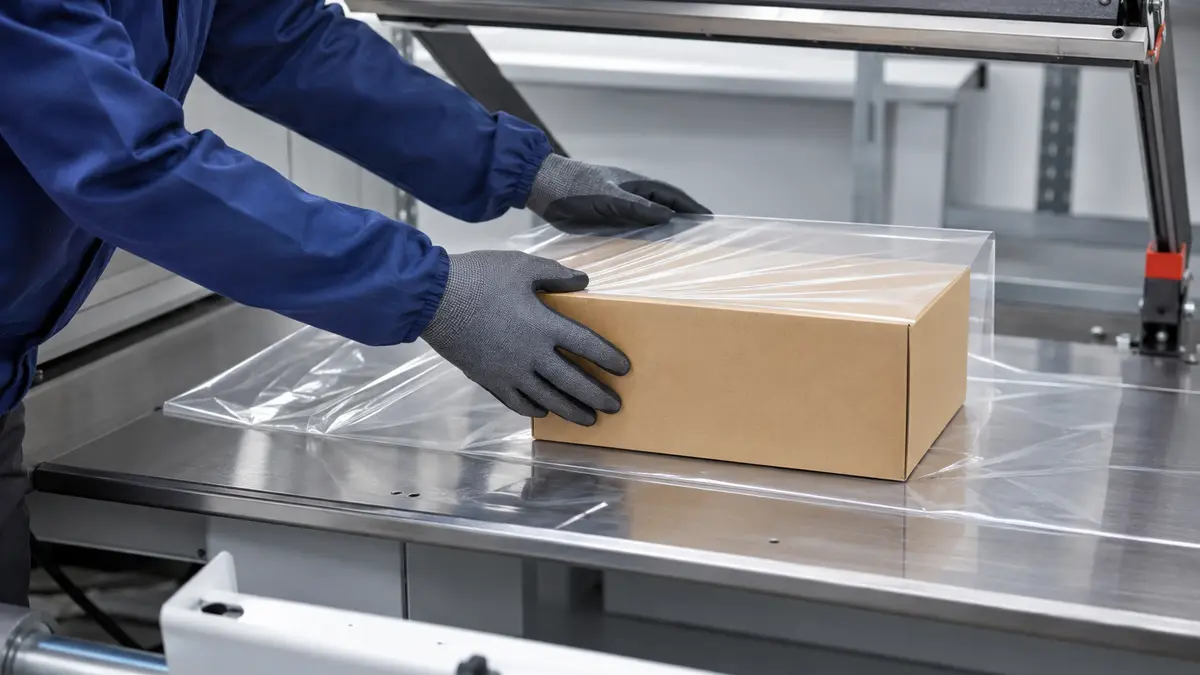
Sizing symptoms are useful clues, but they are not a complete diagnosis. Heat, sealing, perforation, tracking, film grade, and handling can create similar defects.
| Observation | Possible sizing cause | What to verify before changing size | Controlled direction |
|---|---|---|---|
| Product is difficult to insert or film is already taut before heat | Width or bag opening may be too small | Maximum envelope, orientation, protrusions, film path, stock-width tolerance | Increase trial width or change orientation after machine check |
| Fold rides up one side or cross seal lands too close to the product | Inadequate width allowance or off-center loading | Fold position, guides, product centering, actual height | Correct tracking first; then test the next width if needed |
| Cross seal cannot close cleanly beyond the product | Cut-off or bag length may be too short | Actual L and H, product position, seal-bar opening | Increase cut-off or bag length using the machine method |
| Large side corners, excessive trim, or unnecessary loose film | Width may be larger than needed | Perforation, airflow, orientation, and stable sealing clearance | Trial the next smaller compatible width without compromising loading |
| Long end tails and slow cycling | Cut-off may be excessive | Sensor position, product spacing, seal timing, L and H | Reduce cut-off in controlled steps |
| Wrinkles remain although loading clearance looks correct | Size may not be the primary cause | Tunnel airflow, temperature profile, conveyor speed, perforation, film grade | Hold size constant while isolating process variables |
When two changes are made together, the trial cannot show which one fixed or caused the result. Preserve one verified baseline and document every revision.
POF Shrink Film Size Checklist for Your Supplier
Provide enough information for the supplier to recommend a trial rather than guess from a product description:
- product photographs or a dimensioned drawing, with confidential details removed when necessary;
- maximum W, L, and H in the proposed running orientation;
- maximum circumference for round or irregular products;
- normal dimensional tolerance and the SKU range to be covered;
- required film format: centerfold, single wound, tubing, or bag;
- machine manufacturer, model, film path, seal opening, tunnel opening, core, and roll-diameter limits;
- current film grade, thickness, roll width, cut-off, and known problems, if replacing an existing film;
- product weight, sharp edges, heat sensitivity, and stability during conveying;
- required production speed and the way air is evacuated; and
- trial acceptance observations, approved sample, and change-control method.
Important: Film thickness, structure, sealability, shrink behavior, and regulatory suitability are separate specification fields. They require grade-specific technical documents and trials; a correct width does not prove any of them.
Frequently Asked Questions
Should I choose the next larger stock width?
Usually, choose the next larger available width after adding the documented operating allowance—not merely after calculating the bare geometric minimum. Confirm that the larger width fits the machine and does not create unacceptable scrap. If the step between stock widths is large, compare both sizes in a controlled trial or request a custom slit width.
Does film thickness change the width I need?
The product geometry does not change with film thickness, but the practical clearance may. Different thicknesses or film grades can have different stiffness, slip, sealing behavior, shrink force, and tracking response. Revalidate width when the film specification changes; do not assume a roll of the same nominal width will run identically.
Can one POF film size cover several product sizes?
It depends. One width may cover a defined SKU family when every product fits the machine, loads reliably, seals in the correct position, and produces acceptable shrink appearance and material use. Validate the smallest and largest products, plus difficult shapes, rather than approving the range from dimensions alone. A second width may be more economical when one “universal” roll creates excessive scrap or unstable results.
The final POF film size is therefore not just a calculated number. It is a documented combination of product envelope, orientation, film format, operating allowance, equipment limits, and trial evidence.
Related Bestypack Resources
- Cross-linked Polyolefin Shrink Film
- Shrink Film Types: Center Fold, Single Wrap and Shrink Tube
- Polyolefin POF Shrink Films Supplier
- POF vs PVC Shrink Films: The Ultimate Comparison
- What Is Polyolefin Shrink Film
- POF
 English
 Japanese
 French
 Spanish
 Korean
 Italian
 Portuguese
 Dutch
Dutch Arabic
 Russian
 German