
POF収縮 フィルムは、特定の青果物に対して実用的な小売包装となり得るが、あらゆる商品に対応する単一のフィルム解決策ではない。適切な包装は、青果物の呼吸特性と水分挙動、選択された包装形態、フィルムの検証済みシール性能と収縮応答、包装ライン、および流通温度プロファイルに依存する。したがって、購入者は「通気性」や「食品グレード」といったラベルに依存するのではなく、機能を特定し、その結果を製品固有のライン、流通、棚、および食品接触に関するレビューを通じて確認すべきである。 規制の観点からは、意図された食品接触用途を承認する前に、米国FDAの食品包装ガイダンスを参照されたい。.
POF収縮フィルムが青果物包装において果たす役割
規制の観点からは、米国FDAの これらは包装機能であり、保証された結果ではない。有用な組み合わせは、選択されたグレードとパッケージ全体に依存する: 「ポリオレフィン」という言葉は、酸素透過率、水蒸気透過率、穿孔流量、防曇性能、耐パンク性、シール強度、収縮力、または安全なトンネル設定を確立するものではない。また、直接食品接触への適合性、保存期間の延長、微生物学的安全性、または地域のリサイクルプログラムでの受け入れを証明するものでもない。.
「POF」は商業上のファミリー記述であり、完全な材料仕様ではない。これは一般に、ポリオレフィン樹脂ファミリーをベースとした熱収縮フィルムを指すが、正確なポリマー、層構成、添加剤、配向、処理、厚さ、および製造方法は、サプライヤーおよびグレードに固有である。これらの詳細が、フィルムのシール方法、収縮方法、ガスおよび水蒸気の透過性、ならびに包装ライン上での挙動を決定する。 米国FDAが意図する食品接触用途を承認する前の食品包装に関するガイダンス。.
POFは商業上のファミリー名称であり、完全なものではない。 密封されたプラスチック包囲は、空気の移動を制限する。青果物が呼吸するにつれて、パッケージ内の酸素は減少し、二酸化炭素は増加する可能性がある。ガスはまた、フィルムおよび任意の穿孔を通って移動する。最終的な雰囲気は、青果物の質量と呼吸速度、温度、ヘッドスペース、フィルム面積、フィルム透過性、穿孔パターン、シール完全性、および時間を含むシステム結果である。 これは一般的にポリオレフィン樹脂ファミリーをベースとした熱収縮フィルムを指すが、正確なポリマー層構成、添加剤、配向、処理、ゲージ、および製造経路はサプライヤーおよびグレード固有である。これらの詳細が決定する。.
POFが貢献できること
警告:目に見える曇りだけを解決し、遊離水、製品温度、ガスバランス、または腐敗を無視してはならない。試験中は、光学的外観と実際の結露の両方を記録すること。 収縮バンドルは、すべての表面に密着した包装を強制することなく、複数の果物や野菜を小売取り扱い用にグループ化できる。設計には、適切な換気、安定したユニット数、茎や端での引き裂き耐性、および内容物を圧迫したり跡を付けたりしない収縮力が依然として必要である。二次バンドルは、密封された一次パックと同じ方法で青果物の雰囲気を制御すると想定すべきではない。 シュリンクフィルム サプライヤーは、単一の「推奨温度」ではなく、正確なフィルムに対するシールウィンドウおよび収縮応答を提供すべきである。シール評価には、シール層、ジョー構成、温度、圧力、滞留時間、冷却、剥離方向、および破壊モードが必要である。収縮評価には、機械条件、フィルム方向、収縮バランス、収縮力、および外観基準が必要である。.
許容可能な動作ウィンドウは、シールが無傷のまま、フィルムが均一に収縮し、通気孔が機能し続け、トレイと青果物が損傷せず、ライン速度が安定している重複範囲である。単一の魅力的なパッケージはプロセス許容性を示さないため、そのウィンドウの低、公称、および高側を試験すること。, サプライヤーデータとライン試験によるプロセスウィンドウ。機器およびフィルムサプライヤーによって裏付けられた安全な機械設定から開始すること。欠陥の原因が明確にわかるように、一度に一つの主要変数を変更すること。
- 受入基準は、パッケージ、製品、プロセス、および文書を網羅すべきである: 欧州連合では、規則(EC) No 1935/2004が枠組みを提供し、規則(EU) No 10/2011がプラスチック材料および製品に関する特定の規則を定め、規則(EC) No 2023/2006が適正製造規範に対応する。提案されたフィルムについて、必要な場合には、組成を裏付ける最新の適合宣言書を要求すること。.
- 完全なパッケージ構造、リサイクル設計に関する声明の根拠、コンポーネント分離の指示、および関連する地域の回収または評価システムからの確認を求めること。ソース削減、技術的リサイクル可能性、 appropriate gas and moisture exchange.
- The film must seal to itself under the actual jaw conditions.
- Shrink force and shrink balance must not bruise the product or distort the tray.
- The completed package must survive handling, cooling, storage, and display.
POFが単独で証明できないこと
The word “polyolefin” does not establish oxygen transmission, water-vapor transmission, perforation flow, anti-fog response, puncture resistance, シール強度, 、収縮力、または安全なトンネル設定。また、直接食品接触への適合性、賞味期限の延長、微生物学的安全性、または地域のリサイクルプログラムでの受け入れを証明するものではない。.
Important: Treat “POF,” “food grade,” “breathable,” and “anti-fog” as starting descriptions. Approval should rely on the exact film construction, its supporting documents, and a trial using the intended produce, pack, line, and distribution conditions.
青果物の呼吸がフィルム選定を変える理由
Fresh fruits and vegetables remain biologically active after harvest. They consume oxygen, release carbon dioxide, lose water, and generate heat. Cutting, maturity, cultivar, handling, and temperature can change those rates. A package that works for one commodity or season may therefore create the wrong atmosphere or moisture balance for another.
ガス交換を商品および温度に適合させる
A sealed plastic enclosure restricts air movement. As the produce respires, oxygen can fall and carbon dioxide can rise inside the package. Gas also moves through the film and any perforations. The eventual atmosphere is a system result involving the produce mass and respiration rate, temperature, headspace, film area, film permeability, perforation pattern, seal integrity, and time.
This is why “breathable film” is too vague for engineering approval. The buyer should identify the commodity, variety, cut or whole condition, maturity, pack weight, expected temperature profile, and target distribution time. The supplier should then state whether gas exchange comes primarily from the film structure, defined perforations, package openings, or a combination.
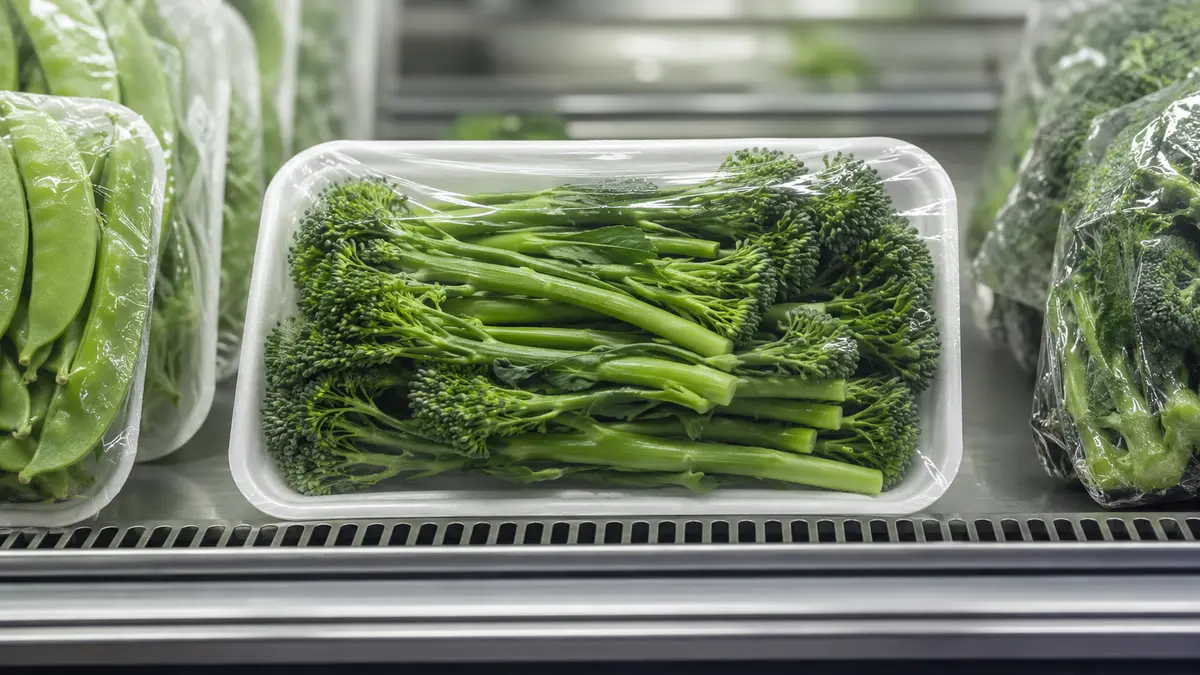
生鮮カット青果物には特に注意が必要です。米国農務省農業研究局の研究によると、フィルムの酸素透過度と初期ヘッドスペースは、生鮮カット製品の呼吸と相互作用することが示されています。シュリンクオーバーラップは、そのガスバランス、製品品質、および食品安全管理が正確な製品とプロセスに対して検証されていない限り、設計された変性雰囲気包装として扱われるべきではありません。.
水分管理と結露を別個の判断として扱う
水蒸気損失を制限することで脱水と重量損失を低減できますが、湿度の高いヘッドスペースは、製品または包装温度が変化した際に水滴が生じるリスクも生み出します。結露は、青果物、トレイ、またはフィルム内面に発生する可能性があります。予冷、乾燥した製品表面、コールドチェーンの安定性、空気流、ヘッドスペース、フィルムの水蒸気透過度、換気、および吸収性部品はすべて結果に影響を与える可能性があります。.
防曇技術は、結露水がフィルム表面を濡らす方法を変えることで視認性に対処します。個々の水滴をより透明な層に広げることができますが、包装から水分を除去したり、酸素と二酸化炭素を制御したり、不適切な温度プロファイルを修正したりするものではありません。.
Warning: Do not solve visible fog alone while ignoring free water, product temperature, gas balance, or decay. Record both optical appearance and actual condensation during the trial.
包装形態に合わせてフィルムを構成する
フィルム仕様を確定する前に、物理的な包装を選択してください。個別包装、トレイオーバーラップ、小売用マルチパックは、異なるヘッドスペース、支持、シール、換気、収縮力、および取り扱い条件を生み出します。.
青果物全体の個別包装
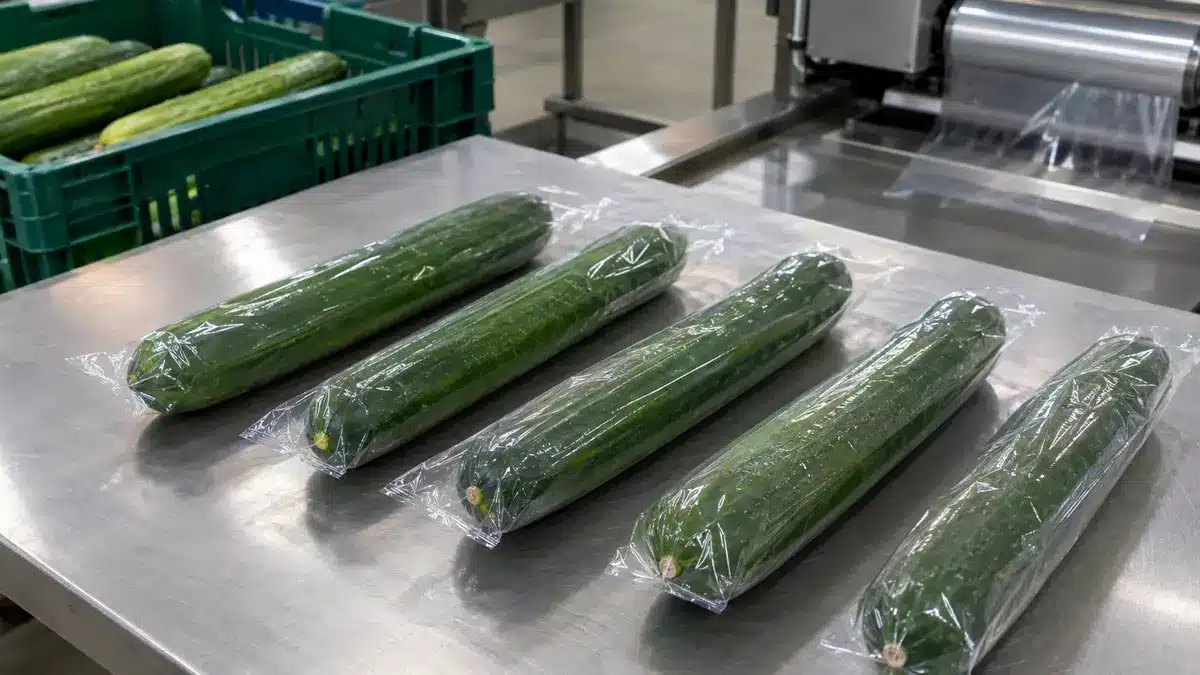
個別包装は、密着包装が水分損失や直接的な取り扱いの低減に役立つ場合に、全体で比較的頑丈な商品に適しています。長い形状や規則的な形状は、深い茎、鋭い突起、または非常に変動しやすい形状を持つ青果物よりも、滑らかに提示しやすい場合があります。試験では、表面の跡、熱への曝露、シール位置、穴あき配置、ラベルの接着、消費者による開封、および包装が自然な空洞周辺に水を閉じ込めるかどうかを検討すべきです。.
傷みやすい商品や混合商品のトレイオーバーラップ
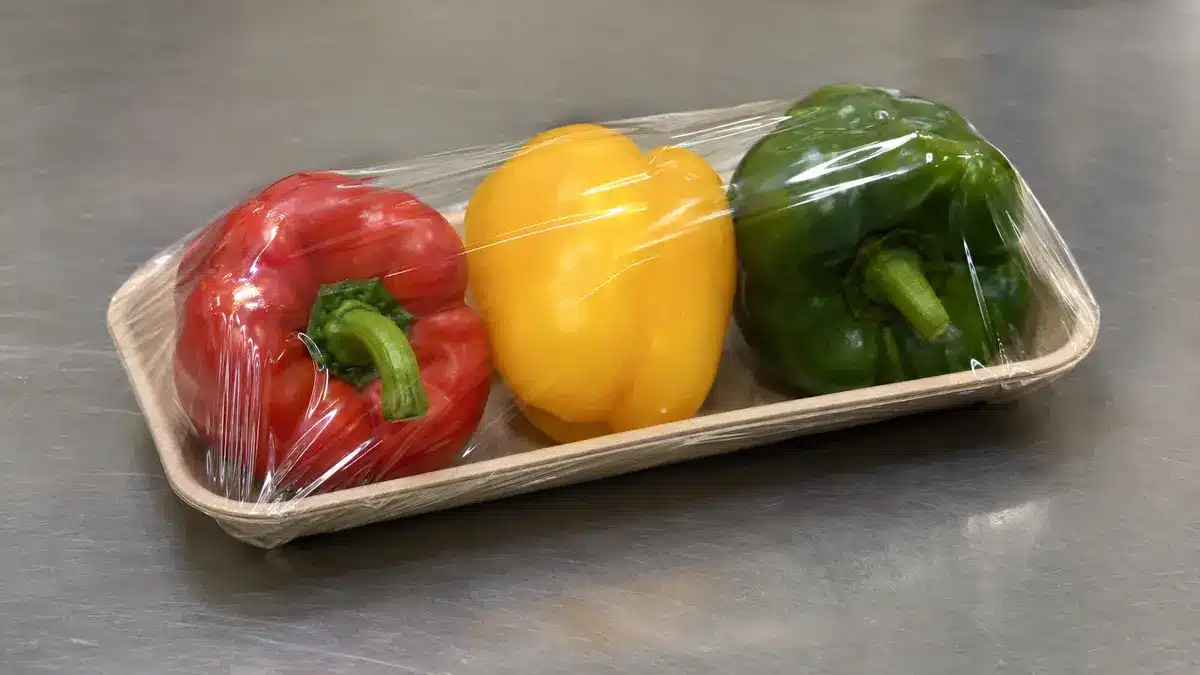
トレイは、小さな、不規則な、混合された、または傷みやすい青果物を支持し、フィルムが保持性と視認性を提供します。設計では、トレイの剛性、リム形状、通気孔、ヘッドスペース、接触点、パッドまたはインサートの適合性、および収縮中のトレイ変形のリスクを考慮する必要があります。フィルムまたはシールが食品に接触する場合、その接触形態は食品接触レビューに含まれるべきです。.
小売用マルチパックおよびバンドル
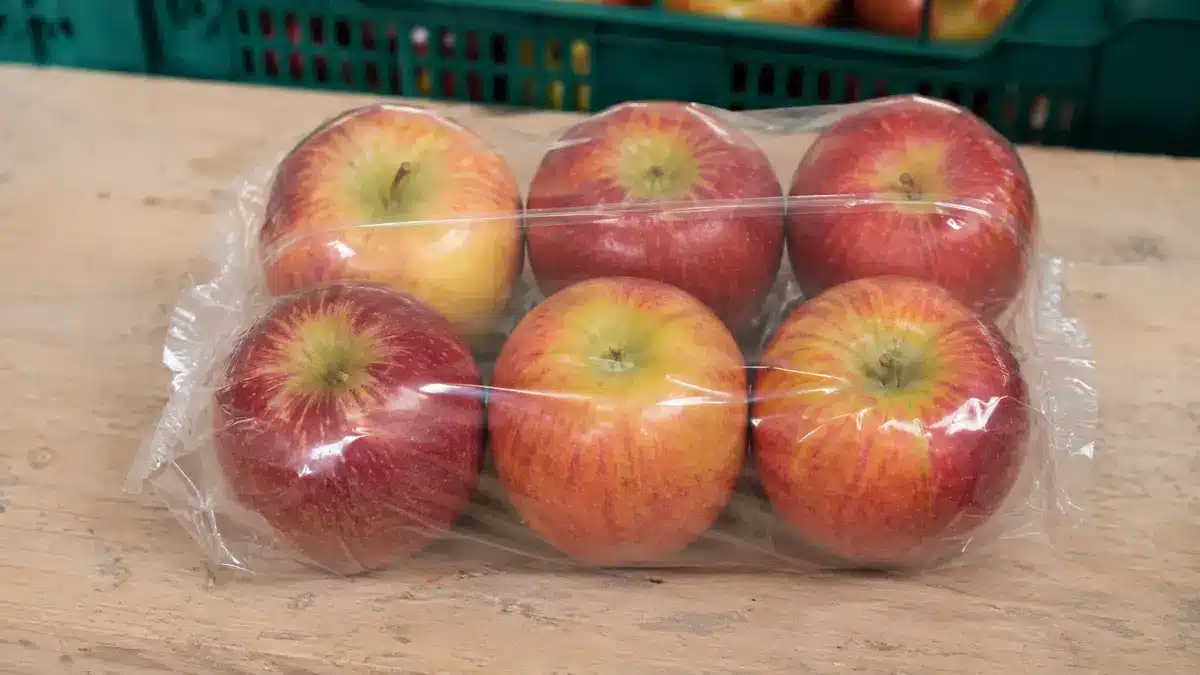
A shrink bundle can group several fruits or vegetables for retail handling without forcing a close wrap around every surface. The design still needs adequate ventilation, stable unit count, resistance to tearing at stems or edges, and a shrink force that does not squeeze or mark the contents. A secondary bundle should not be assumed to control the produce atmosphere in the same way as a sealed primary pack.
| 包装形態 | 検討すべき主な理由 | 主なリスク | 確認すべき事項 |
|---|---|---|---|
| 個別包装 | 密着した提示と直接的な露出の低減 | 商品への熱または収縮圧力 | 表面状態、ガス交換、シール位置、開封 |
| トレイオーバーラップ | 小さな、混合された、または壊れやすい商品の支持 | トレイの変形、水分の閉じ込め、または通気孔の位置ずれ | トレイ適合性、ヘッドスペース、通気孔、シール、結露 |
| 小売用マルチパック | ユニット化と棚での取り扱い | 圧縮、引き裂き、または冷却の制限 | バンドルの安定性、換気、パンクポイント、冷却速度 |
穴あき、防曇、シール、および収縮挙動を特定する
穴あき、防曇、シール、収縮は異なる問題を解決します。これらを一般的な「青果物用フィルム」というラベルの下で組み合わせると、RFQの比較が困難になり、試験の診断が困難になります。.
非穴あきフィルムまたは穴あきフィルムを意図的に選択する
非穴あきフィルムは必ずしもガス不透過性ではありません。ガスと水蒸気は、正確なフィルムと試験条件に依存する速度で、依然としてポリマー構造を通って移動できます。穴あきフィルムは、空気と水分の交換を支配できる定義された開口部を追加します。マイクロおよびマクロ穴あきは有用な商業用語ですが、名称だけでは穴の寸法、開口面積、パターン、位置合わせ、または流量を特定しません。.
穴あきオプションの場合、穴あけ方法、公称穴形状、ウェブ全体のパターン、公差、完成包装上の向き、および検査方法を要求してください。平らなフィルムサンプルだけでなく、形成された包装を評価してください。シール、収縮、折り目、ラベル、トレイリムが効果的な開口部を塞いだり移動させたりする可能性があります。.
非穴あきオプションの場合、指定された温度、湿度、試験側、および単位条件下での正確な構造と厚みに対するガスおよび水蒸気透過データを要求してください。樹脂値や別の厚みのデータを提案フィルムに転用しないでください。.
防曇を視認性のために使用し、換気の主張として使用しない
透明な視認が必要な場合、防曇効果が発現すべき速度、保管および陳列温度、予想される湿度サイクル、どのフィルム表面が機能を担うか、および性能が持続すべき期間を特定してください。フィルムと食品に面する環境の両方を検査してください。.
防曇結果は、管理された条件下での合意された光学的方法または視覚的尺度に照らして判断されるべきです。包装が十分な酸素を持ち、十分な二酸化炭素を放出し、遊離水を除去し、または保存期間を延長するという証拠として報告されるべきではありません。.
包装のためのシールおよび収縮ウィンドウを定義する
The supplier should provide a seal window and shrink response for the exact film rather than one “recommended temperature.” Seal evaluation needs the sealing layer, jaw configuration, temperature, pressure, dwell time, cooling, peel direction, and failure mode. Shrink evaluation needs the machine conditions, film direction, shrink balance, shrink force, and appearance criteria.
The acceptable operating window is the overlap where seals remain intact, the film shrinks uniformly, vents stay functional, the tray and produce are not damaged, and line speed is stable. Test the low, nominal, and high sides of that window because a single attractive package does not show process tolerance.
重要:厚みは変数の一つに過ぎません。より厚いフィルムが自動的により耐パンク性が高く、シールしやすく、または青果物にとって安全であるとは限りません。構造、延伸処理、添加剤、穴あき、およびプロセス条件も重要です。.
フィルムを包装ラインおよび熱曝露条件に適合させる
フィルム選定と機械選定は連動している。あるラインで良好にシール・収縮するグレードでも、ジョー設計、トンネル気流、コンベヤ支持、ライン速度、冷却条件が変われば、挙動が異なる場合がある。.
シーラー、トンネル、コンベヤ、冷却工程をマッピングする
トライアル前に工程を順序立てて文書化する:
- 巻出し方向、ウェブ幅、折り、張力制御、製品投入方法を記録する。.
- シーラーの種類、ジョーのコーティングと状態、シール形状、圧力、滞留時間、温度制御を記録する。.
- トンネルゾーン、風速と風向、コンベヤ種類、曝露時間、製品間隔を記録する。.
- 冷却工程、およびパックが積載、ケーシング、または冷蔵保管に移されるまでの時間を記録する。.
- 穴あけ、ラベル、トレイ通気孔、製品突起がジョー、ガイド、または高温面に接触する可能性のある箇所を特定する。.
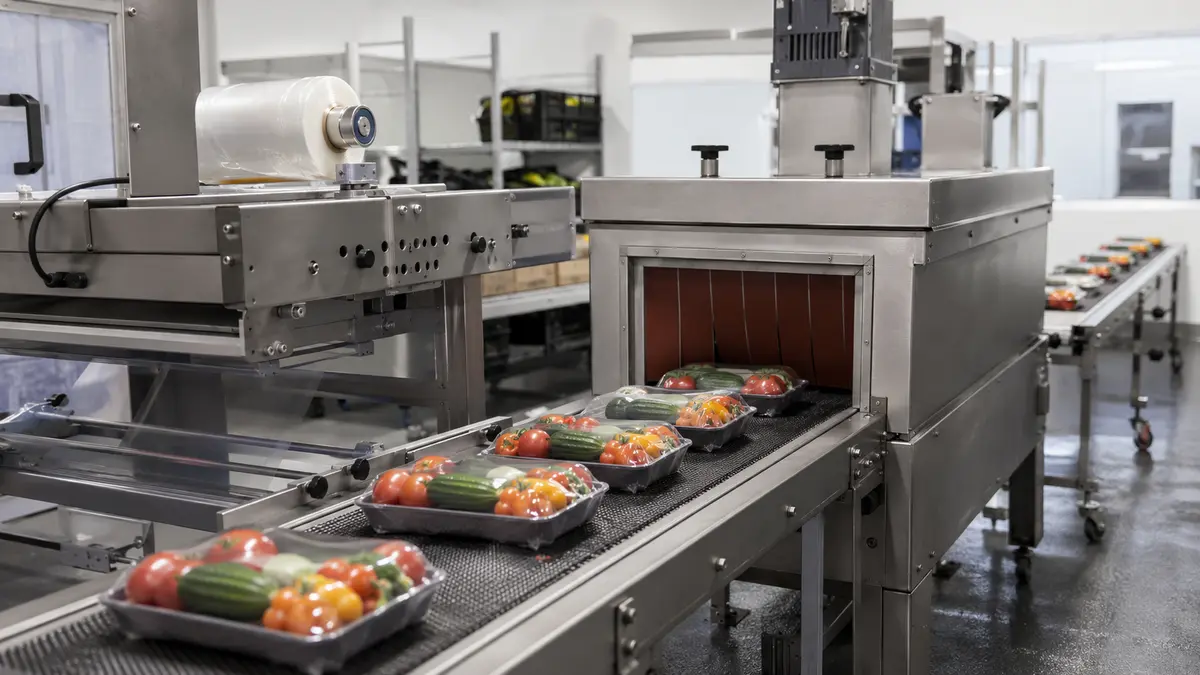
このマップにより、欠陥の追跡が容易になる。弱いシールは、フィルム単体の問題ではなく、汚染、滞留時間不足、過剰張力、または冷却に起因する場合がある。しわや「犬耳」は、袋サイズ、脱気、トンネルバランス、または製品形状を反映している可能性がある。.
熱に敏感な青果物とトレイを保護する
熱源はフィルムに作用するが、青果物とトレイも時間-温度履歴を経験する。一見短時間の曝露でも、感受性の高い商品では表面脱水、軟化、変色、その他の品質変化が生じる可能性がある。軽量トレイは反りや変形を起こし、ヘッドスペースや通気孔の位置が変化することがある。.
機械供給元の制限値とフィルム供給元の技術データを出発点とし、計測機器を用いた、または制御されたトライアルを犠牲品で実施する。トンネル設定温度が製品温度と等しいと仮定せず、該当する製品および包装箇所の温度を測定または指示する。.
警告:外観上しっかりと包装されていても、青果物が工程に耐えたことを証明するものではない。意図された保管および陳列期間の直後にも再度検査すること。.
サプライヤーが回答可能なRFQを構築する
有用なRFQは、意思決定の問題を記述し、比較可能なエビデンスを求めるものである。買い手が製品名とロール幅のみを送付した場合、サプライヤーは最も重要な変数を推測せざるを得ない。.
| RFQ項目 | 買い手が提供すべき情報 | サプライヤーが返答すべき情報 | エビデンスまたは受入基準 |
|---|---|---|---|
| 青果物 | 商品、品種、丸ごと/カット、成熟度、包装質量、表面状態 | 宣言された適用前提条件 | サンプル識別およびトライアルロット記録 |
| 包装構成 | 個包装、トレイ包装、マルチパック;寸法;ヘッドスペース;接触形態 | 提案されるフィルムフォーマットとウェブ寸法 | 寸法入り包装図面または承認済みサンプル |
| フィルム構成 | 要求ゲージ範囲、折り、幅、印刷またはラベル、処理 | 開示可能なポリマー/層構成、公称ゲージ、許容差 | 製品別TDSおよび仕様書 |
| ガスおよび水分交換 | 呼吸データ、温度プロファイル、目標流通期間 | フィルム透過データおよび/または穴あけ仕様 | 試験方法、条件、単位、ゲージ、面、許容差 |
| 防曇 | 視認要件、湿度および温度サイクル、期間 | 防曇タイプ、処理面、取扱い制限 | トライアル条件下で合意された光学または目視試験 |
| シールおよび収縮 | シーラー、トンネル、コンベヤ、ライン速度、トレイおよび青果物の制約 | シールウィンドウ、収縮応答、収縮力のガイダンス | Supplier data plus line-trial process window |
完成した表は、不足しているエビデンスを早期に明らかにする。値が未確定の場合は、典型的な値を保証仕様に変換するのではなく、トライアル変数としてラベル付けすること。.
商業リリース前に包装を検証する
商業承認は、成功した手作業サンプルではなく、管理されたトライアルに基づくべきである。トレーサブルなフィルムおよび青果物ロット、文書化されたプロセスウィンドウ、有用な場合は比較用包装、事前に合意されたサンプリング計画を使用すること。.
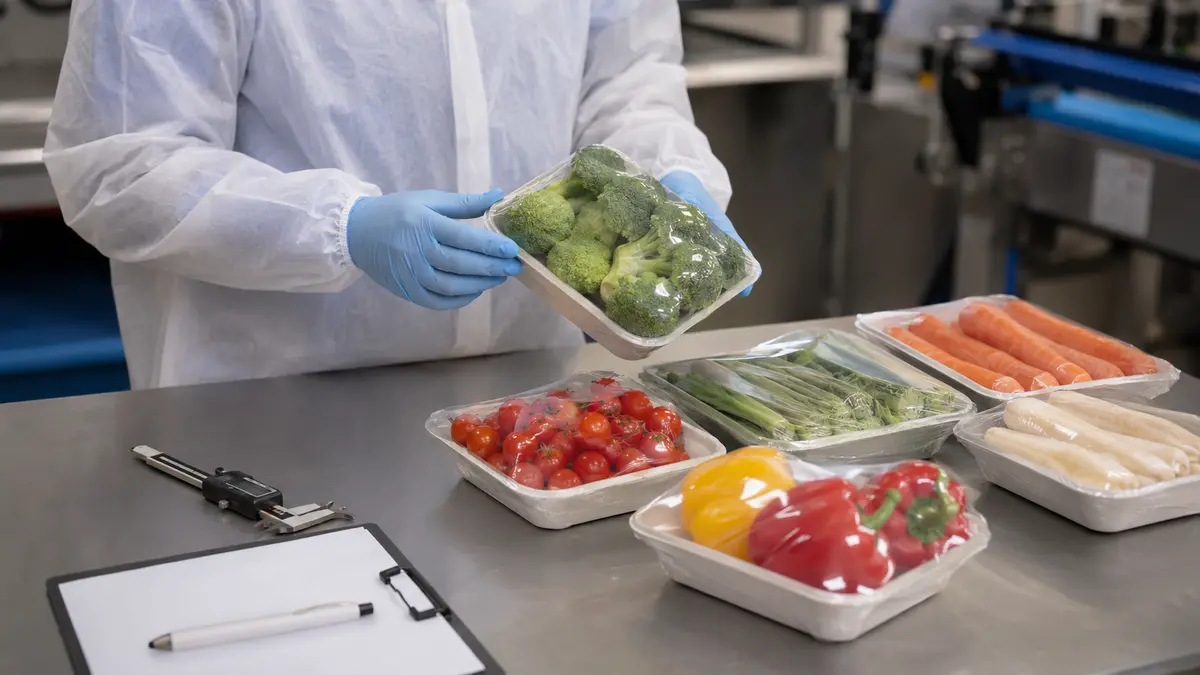
Run a Controlled Line Trial
Begin with safe machine settings supported by the equipment and film suppliers. Change one major variable at a time so the cause of a defect remains visible.
- Confirm film identity, gauge, width, winding, treated side, and perforation orientation.
- Establish seal formation at low, nominal, and high process conditions within the safe equipment range.
- Adjust air evacuation and shrink for an acceptable package without excessive product or tray exposure.
- Run long enough to observe warm-up, steady state, roll change, and normal operator intervention.
- Record rejects, seal defects, tears, wrinkles, vent blockage, tray distortion, downtime, and actual output conditions.
Retain samples from defined positions in the run. A short run of only the best-looking packs can hide process drift and material variation.
Simulate Distribution and Shelf Conditions
Move trial packs through the intended temperature, humidity, handling, case-packing, transport, storage, and retail-display sequence. Include realistic transitions, because rewarming and temperature fluctuations can create condensation even when a steady cold-room check looks acceptable.
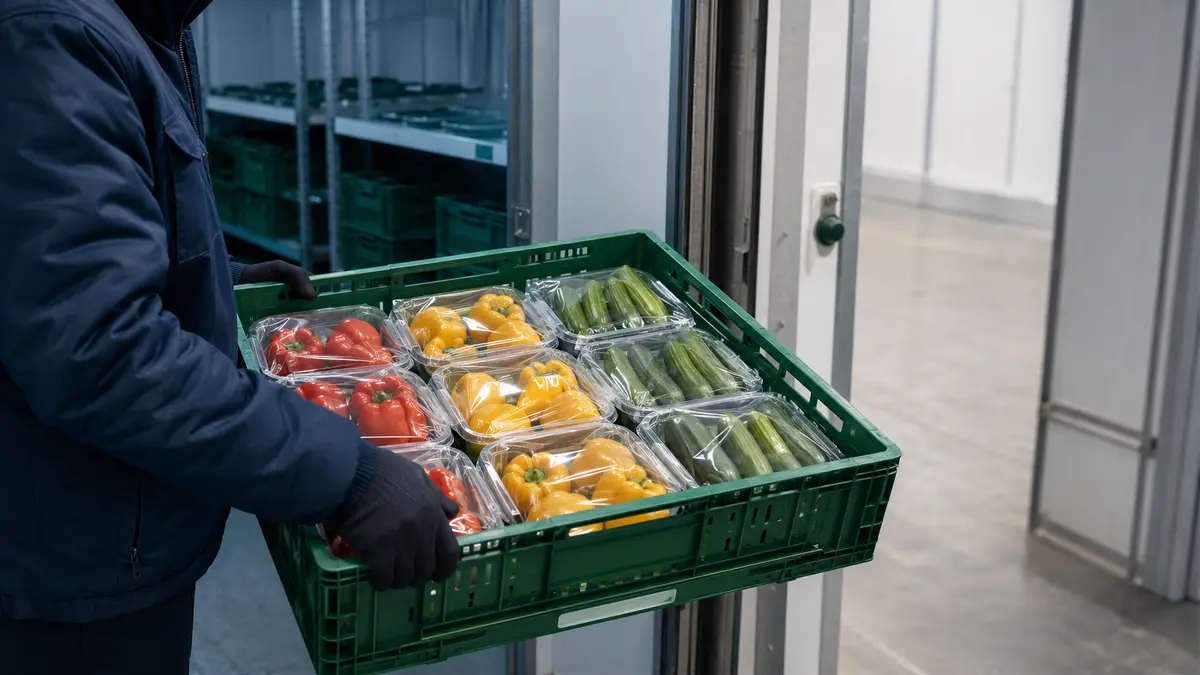
Inspect seals, punctures, abrasion, pack tightness, blocked vents, fog, free water, product surface, weight change, color, texture, odor, and visible decay at scheduled points. Where the pack is intended to control atmosphere, measure headspace gases with a defined method. Where food safety or shelf-life is claimed, use an appropriate validated protocol and qualified laboratory rather than visual inspection alone.
Set Acceptance Criteria Before the Test
Acceptance criteria should cover the package, product, process, and documents:
- Seal integrity and failure mode under defined conditions
- Shrink appearance without unacceptable product pressure or tray distortion
- Perforation presence, position, and freedom from blockage
- Condensation and anti-fog performance on an agreed scale
- Product quality at defined time and temperature points
- Package survival after the chosen handling and transport sequence
- Stable operation within an agreed process window and reject limit
- Complete food-contact and specification documentation
Define sample size, allowable defects, measurement method, decision owner, and how a failed criterion will be investigated. This prevents appearance from overriding a safety, quality, or compliance failure.
Verify Food-Contact and Environmental Claims
Performance approval and regulatory approval are separate gates. A film can run well and still lack the documents required for the target use, or it can have appropriate food-contact support and still fail on the line.
U.S. and EU Evidence Is Use-Specific
In the United States, 21 CFR 177.1520 covers specified olefin polymers subject to stated identities, specifications, and limitations. FDA food-contact notifications and other authorizations also have defined substances, intended uses, conditions, and restrictions. The commercial label “POF” is not itself an approval.
For a U.S. project, request documentation for the exact finished film and its components, identify the food type and direct or indirect contact, and confirm the intended time and temperature conditions. Check whether the basis is a regulation, an effective notification, another applicable authorization, or a supported no-migration position.
In the European Union Regulation EC No 1935 2004 provides the framework Regulation EU No 10 2011 sets specific rules for plastic materials and articles and Regulation EC No 2023 2006 addresses good manufacturing practice For the proposed film request a current declaration of compliance where required supporting composition.
Do Not Turn Polyolefin into a Recyclability Claim
Resin family alone does not prove that a finished produce pack will be collected, sorted, reprocessed, or accepted locally. The film may include multiple polyolefin types, additives, inks, labels, adhesives, perforations, pads, trays, or food residue. Each can affect the recycling pathway and the wording permitted in the target market.
Ask for the complete package construction, evidence behind any design-for-recycling statement, instructions for separating components, and confirmation from the relevant local collection or assessment system. Keep source reduction, technical recyclability, リサイクル含有量, および実際のリサイクル率を別個の主張として.
Important: Avoid unqualified terms such as “eco-friendly,” “100% recyclable,” or “zero waste.” Environmental language needs a defined package, geography, recovery system, and substantiation.
よくある質問
Is All POF Shrink Film Suitable for Direct Food Contact?
No. Suitability depends on the exact film construction and the applicable authorization for the intended food, contact mode, time, temperature, and market. Request current product-specific documentation rather than relying on the resin-family name.
Does Anti-Fog Film Make a Package Breathable?
No. Anti-fog changes the way condensed moisture appears on the film surface. Gas exchange depends on the film structure, area, perforations, openings, seals, temperature, and package geometry.
Can One Perforation Pattern Work for Every Fruit and Vegetable?
No. Required gas and moisture exchange varies with commodity, variety, cut condition, maturity, pack mass, temperature, headspace, and distribution time. Treat the perforation pattern as a trial variable supported by respiration and package data.
What Information Should a Buyer Send with a Sample Request?
Send the produce identity and condition, pack format and dimensions, contact mode, film and roll constraints, machine details, temperature profile, ventilation and anti-fog needs, target market, expected distribution time, known failure risks, and written acceptance criteria. Photos or drawings can clarify geometry, but they do not replace measurements or approved specifications.
A Safe POF Solution Starts With the Product and the Trial
POF shrink film is best treated as a configurable packaging platform rather than a finished answer. Start with the commodity, temperature profile, pack format, and contact mode. Convert those inputs into explicit requirements for gas and moisture exchange, perforation, anti-fog, sealing, shrinking, mechanical protection, and line fit. Then review product-specific food-contact evidence and validate the full package through the intended process and distribution route. Without those steps, clarity and a tight wrap remain appearance features—not proof of freshness, safety, compliance, or commercial readiness.
関連するBestypackリソース
- 食品包装に最適なシュリンクラップとは
- ポリオレフィンPOF収縮フィルムサプライヤー
- PVA収縮フィルム 水溶性収縮フィルム
- POF vs PVC収縮フィルム:究極の比較
- どのサイズのPOFシュリンクフィルムが必要ですか?
- POF収縮フィルムは生分解性ですか?
 English
 Japanese
 French
 Spanish
 Korean
 Italian
 Portuguese
 Dutch
Dutch Arabic
 Russian
 German