
PET and PETG belong to the same polyester family, but they are not interchangeable film specifications. PET can be supplied in amorphous, crystallized, or biaxially oriented forms, while PETG is a glycol-modified copolyester designed to resist crystallization and remain easier to form. In practice, PET often favors stiffness, dimensional stability, and established packaging streams; PETG often favors toughness and complex forming. The correct choice still depends on grade, orientation, layer structure, thickness, process, end use, and required documentation.
What PET and PETG Mean
For U.S. food-contact context, review the eCFR polymer provisions before approving a finished-film claim.
For U.S. food-contact context, review the eCFR polymer provisions before approving a finished-film claim.
The extra G is not a cosmetic label It signals a change in polymer chemistry that changes how the material crystallizes and behaves during heating That distinction helps explain the usual processing differences but it does not create a universal.
PET: A Family of Polyester Film Forms
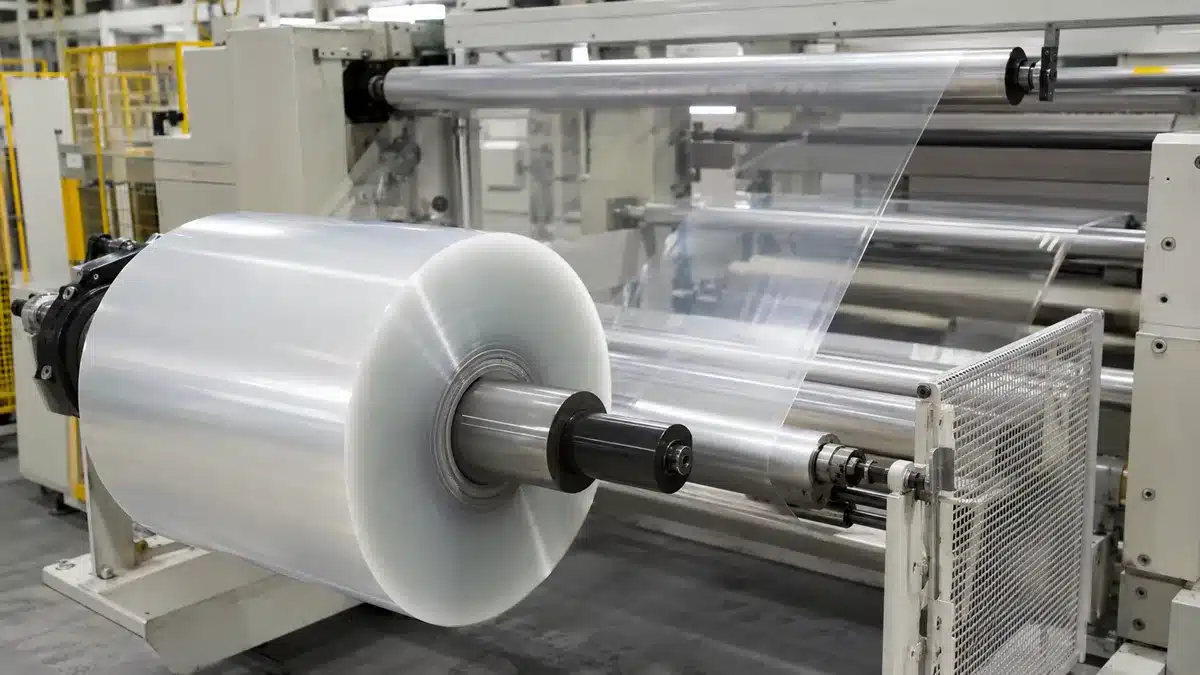
PET means polyethylene terephthalate, a thermoplastic polyester. In packaging, however, the word “PET film” can refer to materially different forms. APET is an amorphous, generally clear form used for thermoformable sheet and film. CPET is deliberately crystallized for applications that need greater dimensional stability at elevated temperature. BOPET is stretched in both machine and transverse directions, producing an oriented film commonly used as a stiff, dimensionally stable printing, laminating, electrical, or process web.
These forms should not be treated as one.
PETG: A Glycol-Modified Copolyester
PETG is a glycol-modified polyester. Many commercial PETG copolyesters use a comonomer such as cyclohexanedimethanol to disrupt the regular chain arrangement that would otherwise support crystallization. The resulting material is typically amorphous, clear, tough, and easier to thermoform without crystallization-related haze. Exact chemistry remains grade-specific, so “glycol-modified” should not be read as one fixed recipe.
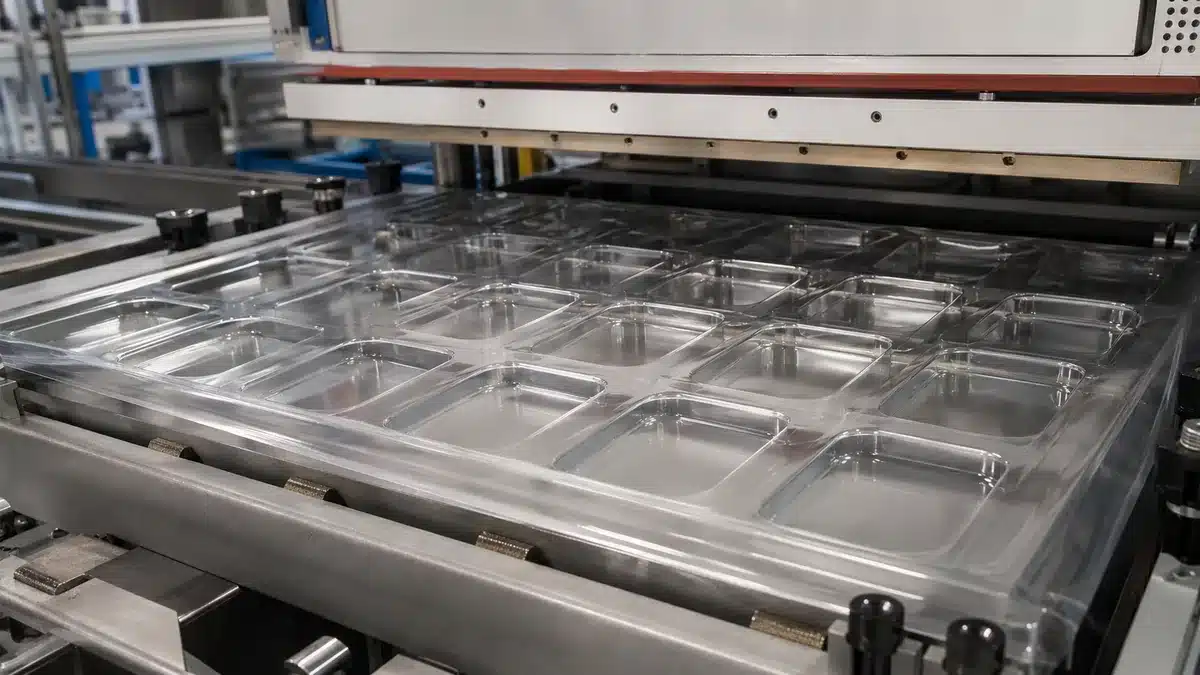
PETG also appears in more than one film context. Relatively thick thermoformable sheet or film may be chosen for trays, covers, displays, or medical packaging components. Special PETG shrink grades may be used for shrink sleeves. These products have different thicknesses, orientation histories, shrink curves, printing requirements, and end-of-life implications.
PET vs PETG Film: Side-by-Side Comparison
The following table describes common directional tendencies. It is a screening tool, not a substitute for a technical data sheet, sample, or controlled test.
| Comparison axis | PET film family | PETG film family | Buyer implication |
|---|---|---|---|
| Polymer structure | Can be amorphous, crystallized, or oriented | Typically an amorphous glycol-modified copolyester | State the exact PET form or PETG grade |
| Stiffness and dimensional stability | Often favored in oriented or crystallized forms | Usually less rigid but tougher in comparable clear thermoforming forms | Define whether rigidity or impact tolerance is more important |
| Impact and forming toughness | Depends strongly on form and orientation; APET can be more sensitive during deep forming | Often selected for toughness and deep or complex draws | Compare formed-part performance, not only flat-film data |
| Thermoforming behavior | APET needs a controlled window; BOPET is not a direct substitute for thermoforming sheet | Often offers a broader, more forgiving forming window | Run a mold and line trial with the candidate grade |
| Optical behavior | Clear grades are available; crystallization or processing can introduce haze | Commonly retains clarity during forming | Specify haze and light-transmission methods and conditions |
| Heat response | Oriented or crystallized PET can provide strong dimensional stability, depending on grade and heat setting | Amorphous PETG generally softens at a lower temperature than heat-stabilized PET forms | Define service temperature and dimensional-change limits |
Important: Never compare tensile strength, haze, shrinkage, OTR, WVTR, or seal strength without matching the specimen construction, thickness, direction, test method, temperature, humidity, and other relevant conditions. A typical value is not a guaranteed specification.
Why Film Construction Changes the Answer
“PET versus PETG” is only the first screening question. The more useful engineering question is: which grade and film construction will perform in the intended process and package? A base polymer name does not disclose orientation, layer sequence, additives, coatings, treatment, recycled content, or sealant chemistry.
Orientation, Crystallinity, and Grade
Orientation can transform PET from a thermoformable amorphous sheet into a thin, strong, stable web. BOPET gains directional structure through stretching, so machine-direction and transverse-direction data matter. Heat setting can further reduce shrinkage for applications that demand dimensional control. By contrast, PETG thermoforming grades are designed to remain amorphous and formable; PETG shrink grades are deliberately engineered to contract under controlled heating.
That difference also explains why a phrase such as “PET has better heat resistance” is incomplete. A heat-set BOPET or CPET grade may retain dimensions under conditions that would soften an amorphous PETG grade, but APET, CPET, BOPET, and PETG cannot be ranked responsibly without naming the actual grades, thicknesses, and test conditions.
Coatings, Seal Layers, and Laminates
Surface and layer design may matter as much as the base polymer. A primer can improve adhesion to a particular ink or adhesive. A heat-seal coating can turn a structural PET web into a lidding component. Metallization or a transparent barrier coating can change oxygen and aroma performance. A laminate can add puncture resistance, sealing behavior, stiffness, or moisture protection.
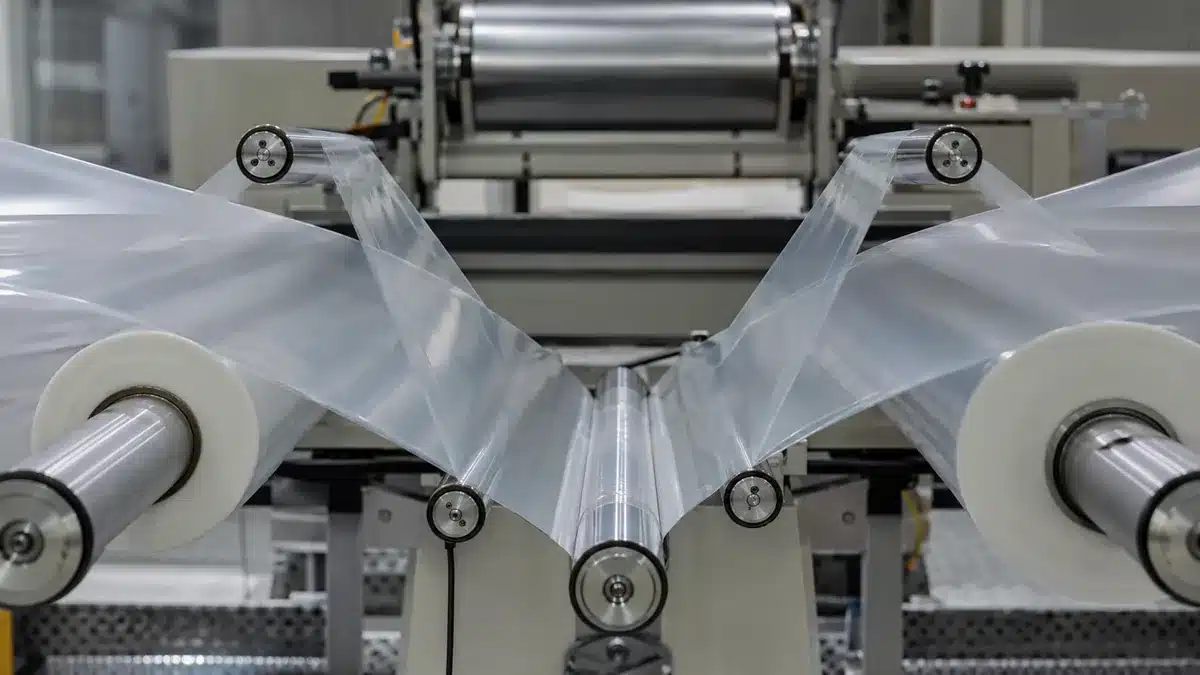
These additions also change approval work. The buyer should record the layer sequence, individual and total thickness, print position, adhesive or coating, cure conditions, treated side, and intended food-contact side. The finished package—not the neat resin—determines sealing, barrier, migration, and recycling compatibility.
Note: A supplier’s resin or base-film data may support material screening, but it cannot prove the performance of a printed, coated, laminated, thermoformed, or sealed package.
How Processing Requirements Differ
PETG’s resistance to crystallization usually makes it more forgiving during forming, while PET processing depends heavily on whether the input is APET, CPET, BOPET, or another construction. The correct processing comparison therefore starts with the actual film form and the customer’s equipment.
Thermoforming
For a clear thermoformed part, PETG is often shortlisted when deep draws, tight detail, toughness, or clarity after forming are priorities. APET can be a cost-effective thermoforming option, but temperature control, drying, heating uniformity, draw ratio, mold temperature, cooling, and trim behavior must be managed for the grade and geometry. BOPET is normally selected as an oriented film web, not assumed to behave like APET sheet.
Forming temperatures published by one supplier should not be transferred to another grade. Validate heater settings, sheet temperature, cycle time, plug-assist conditions, mold geometry, wall-thickness distribution, haze, stress whitening, trim quality, and dimensional stability on the production line. If sterilization is relevant, qualify the complete formed package after the named sterilization process and dose or cycle.
Printing, Sealing, and Converting
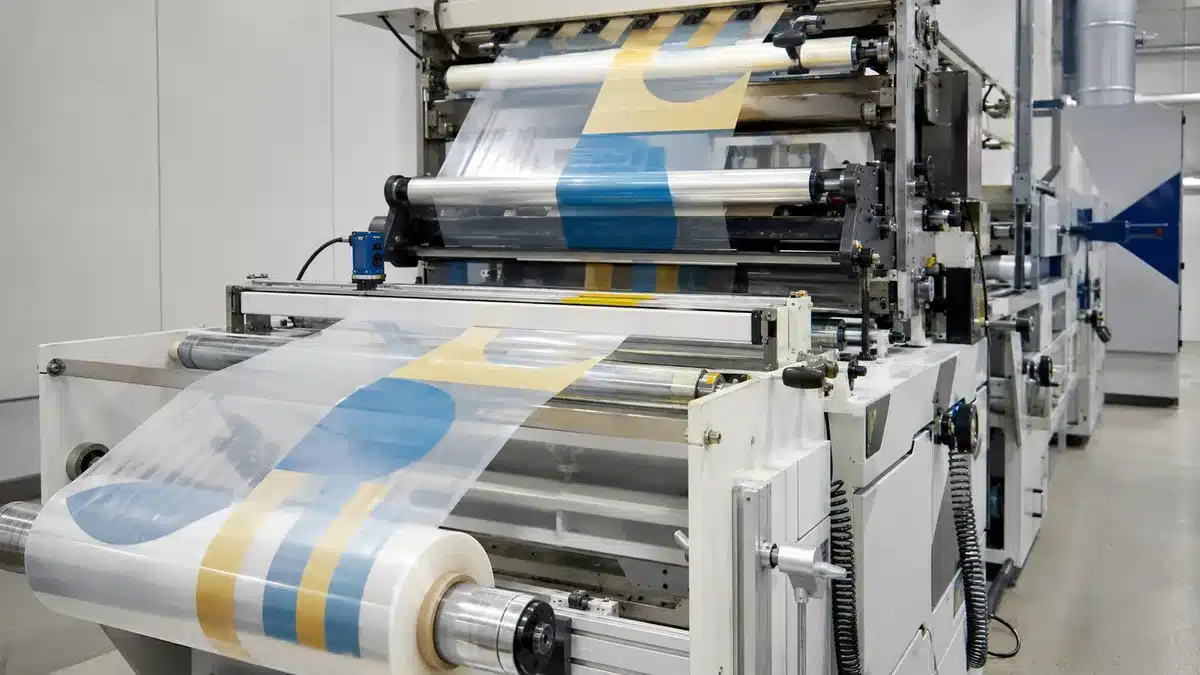
Both PET and PETG films may be printed, coated, laminated, cut, or sealed, but their readiness for those operations is not guaranteed by the polymer name. Confirm which side is treated, the treatment method and age, surface-energy test method, ink or adhesive family, coating weight, cure schedule, and any primer. For shrink sleeves, validate print distortion, seam chemistry, shrink curve, bottle geometry, and tunnel conditions.
For sealing identify both seal surfaces and measure a seal window rather than relying on.
Important: Machine compatibility is established by a controlled trial. A low forming temperature, “printable” surface, or “heat-sealable” description is not enough to predict production speed, scrap, appearance, or package integrity.
Where PET and PETG Films Commonly Fit
Typical applications can guide a shortlist, provided they are not mistaken for grade approval.
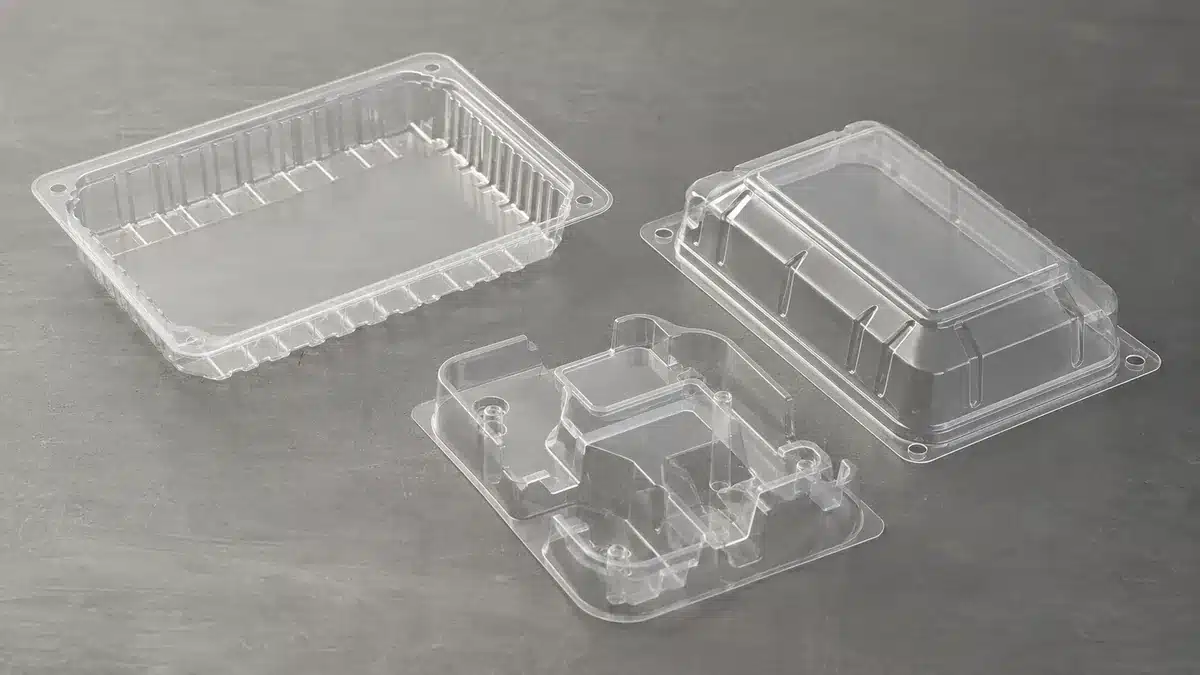
| Scenario | Why PET may be shortlisted | Why PETG may be shortlisted | What to verify |
|---|---|---|---|
| Printed or laminated flexible packaging web | BOPET stiffness, handling, dimensional stability, and available treated or coated grades | Less commonly the default structural web | Thickness, treatment, ink/adhesive adhesion, COF, shrinkage, barrier |
| Clear thermoformed food or consumer tray | APET availability, clarity, rigidity, and established package designs | Toughness, complex geometry, or forming clarity | Draw ratio, wall distribution, trim, impact, seal, food-contact documents |
| Medical or protective thermoformed component | PET grades may suit defined designs and processes | PETG is often considered for toughness and detailed forming | Sterilization method, aging, package integrity, extractables/migration as applicable |
| Lidding or sealable polyester film | Coated or coextruded PET grades can provide a structural lid | Selected PETG grades may offer sealing options | Seal partner, seal window, peel mode, fogging, package integrity |
| Shrink sleeve or shaped label | Specialized PET shrink grades exist | PETG shrink film is widely used for high-shrink shapes | MD/TD shrink curve, shrink force, print distortion, seam, tunnel, recycling design |
| Display, graphic, or protective surface | Clear PET grades can provide stiffness and surface options | PETG can offer toughness and fabrication ease | Scratch/chemical resistance, UV exposure, forming or bending, print adhesion |
The same market can use either family for different reasons. A rigid tray buyer may prioritize cost and stiffness, while a medical tray designer may give greater weight to forming detail, impact tolerance, or a qualified sterilization cycle. The application name alone never resolves the choice.
Food-Contact and Recycling Considerations
Food-contact status and recyclability are separate questions. Neither can be answered reliably by saying that a material is “PET” or “PETG.” Both require a defined formulation, construction, intended use, and market.
Food-Contact Documentation
In the United States, the regulatory basis must cover each substance that may reasonably migrate from the article under the intended conditions of use. The FDA explains that the overall regulatory status of a food-contact material depends on the status of its individual substances, while 21 CFR 177.1630 identifies certain polyethylene phthalate polymers and prescribed conditions. Those references do not automatically cover every PETG formulation, additive, coating, adhesive, colorant, or use condition.
For a purchase request a current declaration or compliance statement tied to the exact grade and construction It should identify the target market food type contact side contact time and temperature and any use limitations For the European Union the supplier should address.
Recycling Compatibility
PET has established recycling streams in many markets, but collection and acceptance vary by package type and location. PETG should not be assumed to follow the same pathway simply because its name starts with PET. The Association of Plastic Recyclers evaluates the full design of PET packaging and notes that components, including some PETG constructions, can affect sortation, yield, or recycled PET quality.
For a defensible claim, identify the package format, color, labels or sleeves, inks, adhesives, coatings, closures, density behavior, and target recycling stream. Then use current design-for-recycling guidance and, when required, testing. “Technically recyclable” is not the same as being collected, sorted, and reprocessed at scale in the customer’s market.
Warning: Do not place an unconditional “food safe,” “FDA approved,” “EU compliant,” or “100% recyclable” claim on a PET or PETG film without product-specific documentation and a defined scope.
How to Specify PET or PETG Film in an RFQ
A useful RFQ gives suppliers enough information to quote comparable constructions and identify evidence gaps. Include:
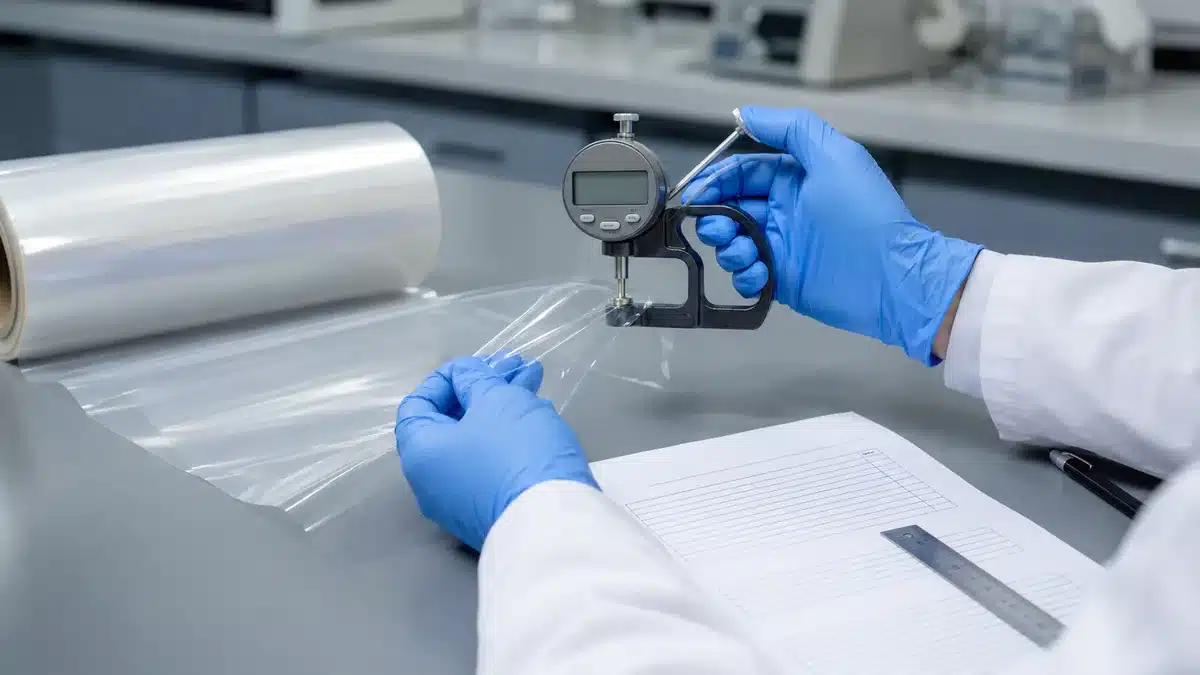
- Material family and form: APET, CPET, BOPET, PETG thermoforming grade, PETG shrink grade, or a defined multilayer construction.
- Grade or product code, layer sequence, total thickness, individual layer thickness where relevant, color, and recycled-content requirement.
- Width, roll length, winding direction, core size, maximum roll diameter, splice limit, edge quality, and dimensional tolerances.
- Orientation, shrink or dimensional-stability requirement, including MD/TD direction, temperature, time, and test method.
- Forming, printing, lamination, coating, slitting, sealing, or shrink-tunnel process, plus available machine and trial conditions.
- Surface treatment or primer side, surface-energy method, ink, adhesive, coating, cure, and bond-strength requirements.
- Mechanical and optical tests, including specimen thickness, MD/TD direction, conditioning, method edition, units, and acceptance limits.
- OTR or WVTR requirements with temperature, relative humidity, gas, test side, thickness, units, and method.
- Seal requirements with seal partner, temperature, pressure, dwell time, conditioning, peel method, and desired failure mode.
- End use, product sensitivity, filling or storage temperature, distribution hazards, shelf-life target, and package-integrity tests.
- Target market and required food-contact, migration, recycled-content, recycling, or other compliance documentation.
- Sample quantity, pilot-trial plan, approval criteria, change-control expectations, and the documents that must accompany production lots.
If suppliers cannot return data under matched conditions, treat the responses as screening information rather than a valid performance comparison.
Which Film Should You Choose?
Choose PET when a defined PET form provides the needed stiffness, dimensional stability, process behavior, availability, and package pathway. BOPET is often the stronger candidate for a thin structural printing or laminating web; APET may fit clear thermoforming when its process window and final-part performance are acceptable.
Choose PETG when toughness, forming detail, a forgiving thermoforming response, or a specific shrink-sleeve requirement outweighs its potential cost and recycling-stream constraints. Do not select it merely because it is described as “better PET.”
The final decision should follow a controlled sequence:
- Lock the exact grade and construction.
- Compare supplier data only under matched methods and conditions.
- Run forming, printing, sealing, shrink, and package tests that reflect production.
- Verify food-contact or other compliance documents for the intended market and use.
- Evaluate the complete package against current local recycling guidance.
- Approve a retained sample and mutually agreed specification before production.
PET and PETG are both useful polyester film families. The best choice is the one whose documented construction, process window, finished-package performance, and market requirements align with the real application.
Related Bestypack Resources
- BOPET
- Polyester Film vs. PET Film: What Are the Differences?
- Soft Touch Polyester Film Matte PET Film
- PET Film Guide: Properties, Advantages, Applications
- The Uses and Advantages of PET Film
 English
 Japanese
 French
 Spanish
 Korean
 Italian
 Portuguese
 Dutch
Dutch Arabic
 Russian
 German