
CPP-плёнка может быть эффективным гибкая упаковочная лента, герметизирующий слой, металлизированная подложка или специальный внутренний слой — но только когда его марка и назначенная роль соответствуют продукту, ламинату, линии розлива, условиям дистрибуции и целевому рынку. Практическая задача, таким образом, заключается не в том, чтобы спрашивать, является ли CPP “лучшим”. Она состоит в том, чтобы определить функции упаковки, выбрать подходящее семейство марок, запросить сопоставимые доказательства от поставщиков и провести валидацию плёнки посредством лабораторных испытаний, испытаний на переработку, на оборудовании и на готовой упаковке до утверждения.
Что такое CPP-плёнки — и что меняет кастинг (литьё)?
Для получения информации о полимерной основе обратитесь к NIH PubChem. Обзор полипропилена перед сравнением заявлений о готовой пленке.
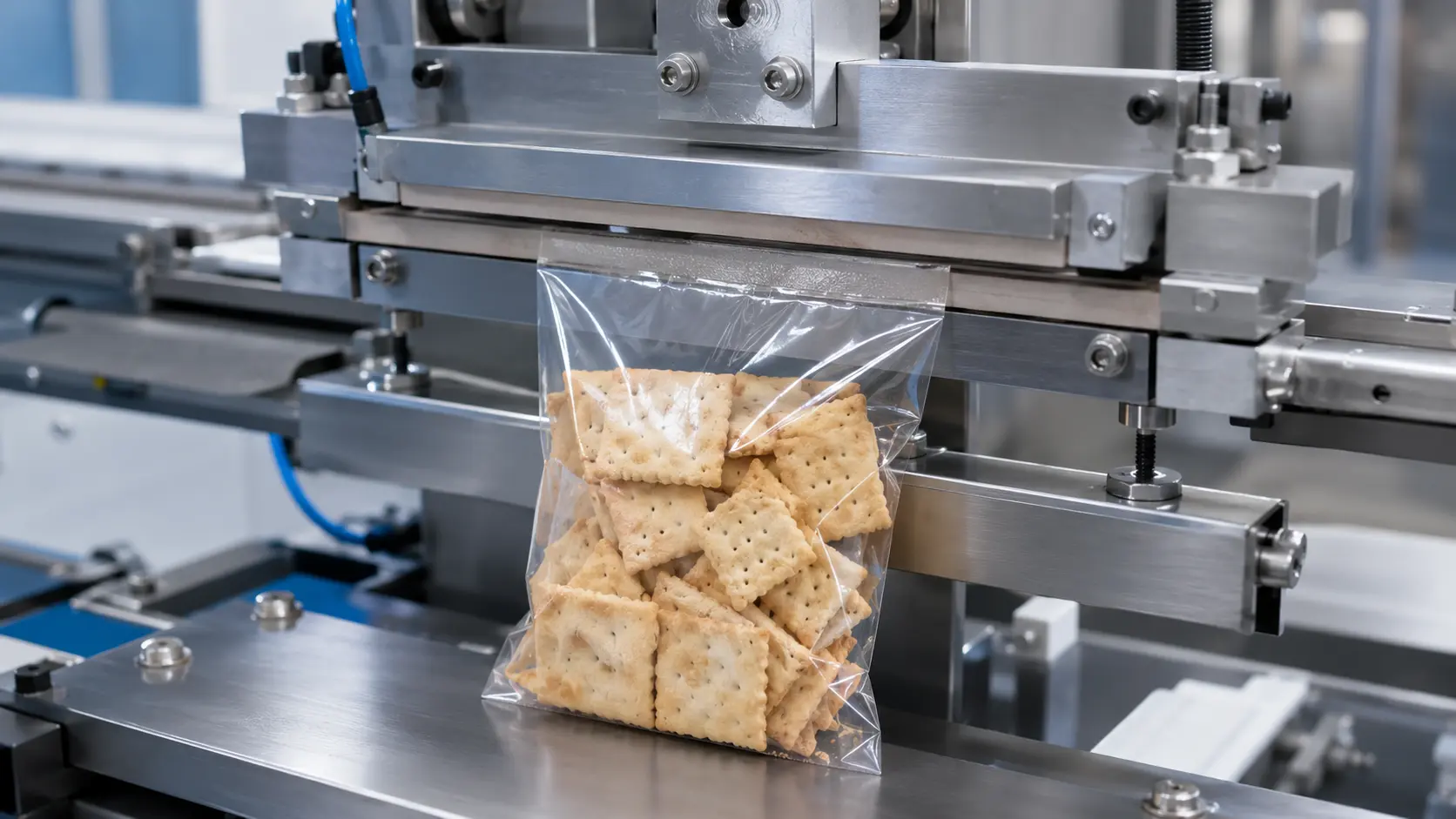
CPP означает литую полипропиленовую плёнку. В типичном процессе литья плёнки расплавленная полипропиленовая композиция выходит из плоской головки, наносится на охлаждаемый вал и затвердевает в непрерывное полотно. Готовая плёнка может содержать более одного соэкструдированного слоя и может включать модификаторы герметизации, скользящие или антиблокирующие добавки, пигменты или другие функциональные компоненты. Таким образом, “CPP” описывает семейство материалов и технологический маршрут, а не фиксированную рецептуру или технические характеристики.
В отличие от BOPP, который намеренно растягивается в продольном и поперечном направлениях, CPP не подвергается двухосной ориентации. Это различие помогает объяснить, почему многие марки CPP выбираются там, где важны гибкость, ударопрочность, конформность или функция герметизирующего слоя, в то время как ориентированные плёнки часто выбираются там, где важны жёсткость, размерную стабильность, или роль внешнего печатного полотна. Это тенденции, а не гарантии. Марка полимера, конструкция слоёв, толщина, охлаждение, пакет добавок, поверхностная обработка, кондиционирование и метод испытаний могут существенно изменить результат.
Корректное сравнение следовательно, проводится между конкретными марками в сопоставимых условиях. Упаковочная команда не должна копировать значение прочности на разрыв, мутности, коэффициента трения, герметизации или барьерных свойств из общего описания CPP в спецификацию. Следует запросить соответствующий технический паспорт, отметить метод и условия испытания образца и проверить свойства, определяющие целевой пакет. Литьё задаёт полезную отправную точку; готовая марка и упаковочная система определяют коммерческие характеристики.
Где CPP применяется в гибкой упаковке
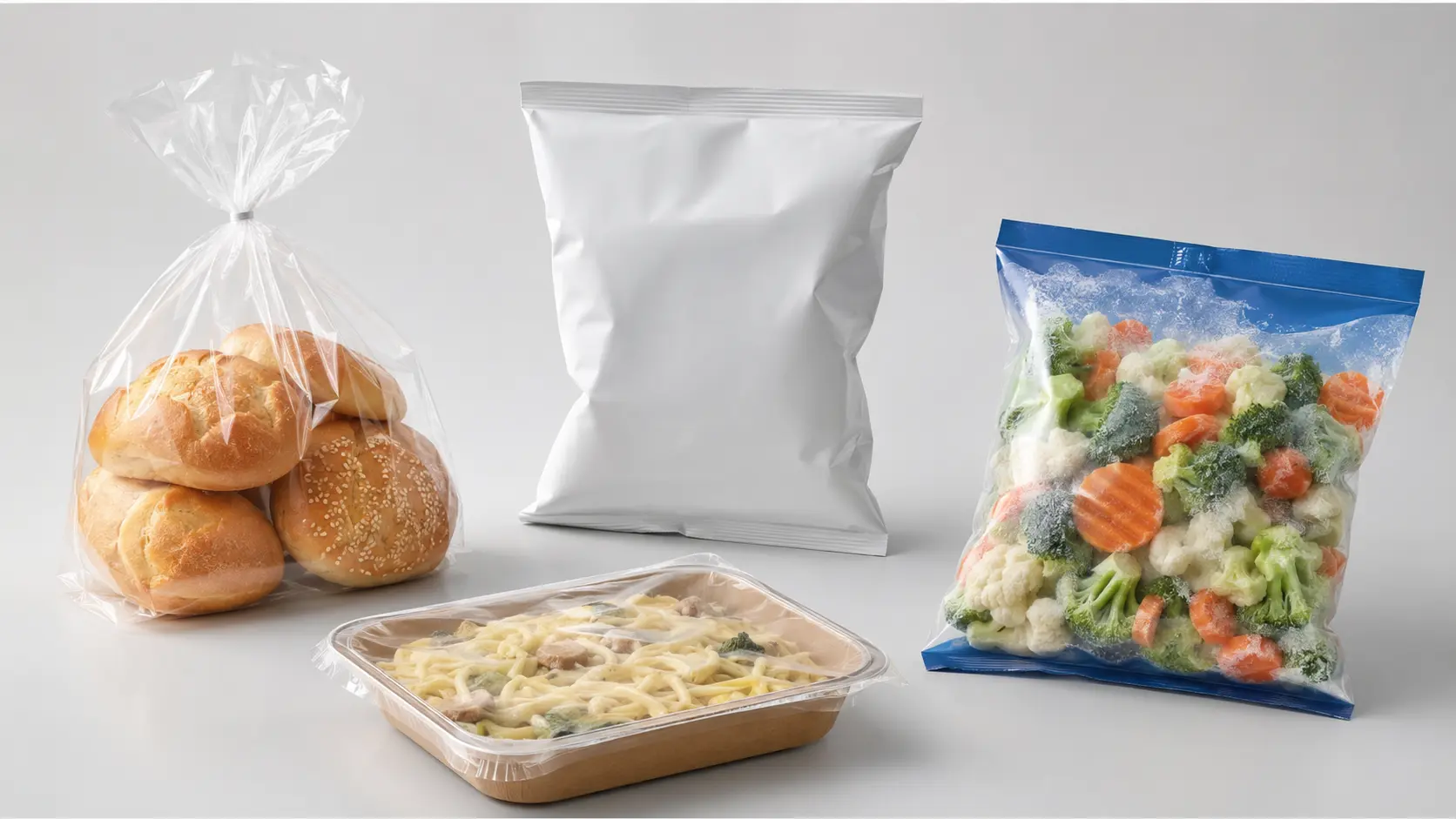
CPP может выполнять несколько различных функций, и каждая функция создаёт отдельную спецификацию. Прозрачное полотно CPP может формировать простой пакет или обёртку, когда продукт требует умеренной защиты и плёнка сама может удовлетворить потребности переработки и герметизации. В ламинате CPP часто служит герметизирующим слоем со стороны продукта, в то время как другое полотно обеспечивает защиту печати, жёсткость, термостойкости, или дополнительный барьер. Металлизируемая марка CPP может нести нанесённый металлический слой. Специальное внутреннее полотно может быть разработано для таких функций, как контролируемая герметизация, антизапотевание или термическая обработка.
Назначенная роль должна быть зафиксирована до того, как покупатель запросит марку или толщину:
- Автономное полотно должно самостоятельно обеспечивать требуемые функции обращения, внешнего вида, герметизации, поверхности и защиты.
- Герметизирующий слой должен корректно взаимодействовать с противоположной поверхностью герметизации, герметизирующими губками, условиями загрязнения, нагрузкой при наполнении, временем охлаждения и геометрией упаковки.
- Металлизированное полотно должно обеспечивать адгезию металла и сохранять требуемый барьер после переработки, изгибов и формирования пакета.
- Специальный внутренний слой должен быть подтверждён доказательствами, специфичными для марки, в отношении заявленной функции и полных условий конечного применения.
Автономное полотно, герметизирующий слой или функциональный внутренний слой?
Эти роли не являются взаимозаменяемыми. Прозрачный автономный пакет может отдавать приоритет прозрачности, устойчивости к блокировке, характеру разрыва и простой герметизации. Ламинированное полотно для закусок может использовать CPP в основном для формирования герметичного шва и горячей склейки, в то время как внешнее полотно несёт обратную печать и жёсткость. Пакет для термической обработки может требовать марку CPP, пригодную для реторты, совместимый клей, подходящие внешние слои, подтверждённое отверждение и полные термические испытания упаковки. Название материала не может подтвердить эту систему.
Начните с назначения ответственности за герметизацию, печать, барьер, механическую защиту, тепловое воздействие и нормативную документацию. CPP оптимален только тогда, когда его обязанности явно определены, а остальные функции намеренно назначены другим элементам.
Преобразуйте тенденции свойств CPP в требования к упаковке
Перечни свойств становятся полезными только после того, как они преобразованы в измеримые требования к упаковке и процессу. “Гибкость”, например, может означать, что полотно облегает продукт неправильной формы, выдерживает удары или придаёт более мягкое ощущение упаковки. Это не определяет автоматически устойчивости к проколу,, распространение разрыва, стойкость к изгибным трещинам или поведение при падении. Аналогично, “прозрачность” не задаёт приемлемое значение мутности, целевой показатель глянца, предел визуальных дефектов или условия старения.
Механические и оптические тенденции
Многие марки CPP являются сравнительно гибкими и могут демонстрировать полезную ударную вязкость для применений в герметизирующих слоях и пакетах. Соответствующие доказательства по-прежнему зависят от направления образца, толщины, кондиционирования и метода. Результаты испытаний на растяжение должны указывать машинное и поперечное направления; испытания на разрыв и удар должны указывать выбранный метод; мутность и блеск должны указывать стандарт прибора и подготовку образца. Результаты, полученные разными методами или при разной толщине, не следует помещать в простую таблицу «победитель-проигравший».
Оптические требования также относятся к полной конструкции. Обратная печать, клей, металлизация, покрытия и тепловое воздействие могут изменить внешний вид конвертированного полотна. Прозрачный рулон, который выглядит приемлемо до ламинации, может не соответствовать стандарту готового пакета после отверждения, резки, герметизации и дистрибуции.
Герметизация, поверхностная обработка, коэффициент трения и реальность барьерных свойств
Эффективность герметизации зависит от рецептуры герметизирующего слоя и его сопрягаемой поверхности, а не только от букв CPP. Полезное рабочее окно представляет собой кривую, полученную в диапазоне температуры, давления, времени выдержки, охлаждения, геометрии губок, скорости линии и реалистичных загрязнений — а не единичный результат максимального усилия. ASTM F88/F88M-23 может использоваться для измерения прочность сварного шва когда контролируются конфигурация образца, метод поддержки, характер разрушения и основа отчётности; поведение горячей склейки требует метода, подходящего для горячего шва и нагрузки на линии.
Поверхностная обработка и коэффициент трения также имеют операционное значение. Обработка должна соответствовать предполагаемым чернилам, клею, покрытию или металлизации и должна проверяться в соответствующий период после обработки. COF должен согласовываться по стороне, направлению, условиям кондиционирования, методу и диапазону приемки, поскольку избыточное или недостаточное скольжение может влиять на намотку, регистрацию, подачу и поведение стопы.
Заявления о барьерных свойствах требуют максимальной сдержанности. Немодифицированная прозрачная CPP часто рассматривается для применений, чувствительных к влаге, но скорость пропускания кислорода и водяного пара никогда не доказывается этим общим утверждением. Отчёты по OTR и WVTR должны указывать точную плёнку или ламинат, толщину, испытуемую сторону, температуру, относительную влажность, газ, единицы измерения и метод. Металлизация или другой барьерный слой могут изменить характеристики, но изгибы, проколы, швы и геометрия упаковки могут изменить их снова.
Согласуйте семейство марок CPP с задачей
Названия семейств марок являются полезными маркерами для первичного отбора. Они не являются критерии приемки,. Покупатели должны использовать их для запроса корректного технического пакета, а затем сравнивать конкретные марки в рамках брифа применения и плана испытаний.
Универсальные и функциональные прозрачные марки
Универсальные прозрачные марки могут подходить для несложных пакетов, обёрток или герметизирующих слоёв ламината, когда их оптика, механические свойства, обработка поверхности, скольжение, устойчивость к блокировке и реакция на герметизацию соответствуют проекту. Функциональные прозрачные марки могут быть нацелены на более низкую температуру начала герметизации, более высокую горячую склейку, антизапотевание, контролируемое вскрытие, антистатические свойства или другие потребности.
Каждый модификатор может создавать компромиссы. Системы скольжения и антиблока могут влиять на оптику, обработку, печать, ламинирование или герметизацию. Более низкая тенденция к началу герметизации сама по себе не доказывает адекватную горячую склейку или конечную целостность сварного шва. Антизапотевание зависит от рецептуры, влажности, температуры, времени и пищевой среды. Поведение лёгкого вскрытия зависит от полного интерфейса герметичного шва и метода вскрытия. Поставщик должен указать марку, конструкцию, назначенную функцию, ограничения по хранению, метод испытаний и то, какая последующая валидация остаётся необходимой.
Металлизируемые и автоклавируемые марки
Металлизируемая марка CPP разработана для принятия нанесённого слоя металла, но упаковочная команда должна по-прежнему специфицировать адгезию металла, оптическую плотность или другой контроль нанесения, метод и условия барьерных испытаний, стойкость к изгибу, герметизируемость и совместимость с ламинатом. Должны оцениваться конвертированный рулон и готовая упаковка — а не только неконвертированный образец плёнки.
CPP, пригодный для реторты, является ещё одним специализированным семейством. Пригодность не может быть выведена из температуры плавления полипропилена или из слова “реторта”. Точная марка, толщина, конструкция шва, клей, чернила, внешние полотна, отверждение, конструкция пакета, температура процесса, давление, время, охлаждение, химия продукта и нормативная документация — всё имеет значение. Термическая обработка может выявить расслоение, деформацию, ползучесть шва, запах, экстрагируемые вещества или изменения барьера, которые не были видны при испытании плёнки при комнатной температуре. Таким образом, утверждение относится к полной структуре и технологический диапазон по результатам линейных испытаний..
Проектируйте ламинат с учётом назначенной роли CPP
Ламинат работает путём распределения функций между слоями и межфазными границами. Следующая карта ролей является подсказкой для проектирования, а не перечнем предварительно одобренных структур.
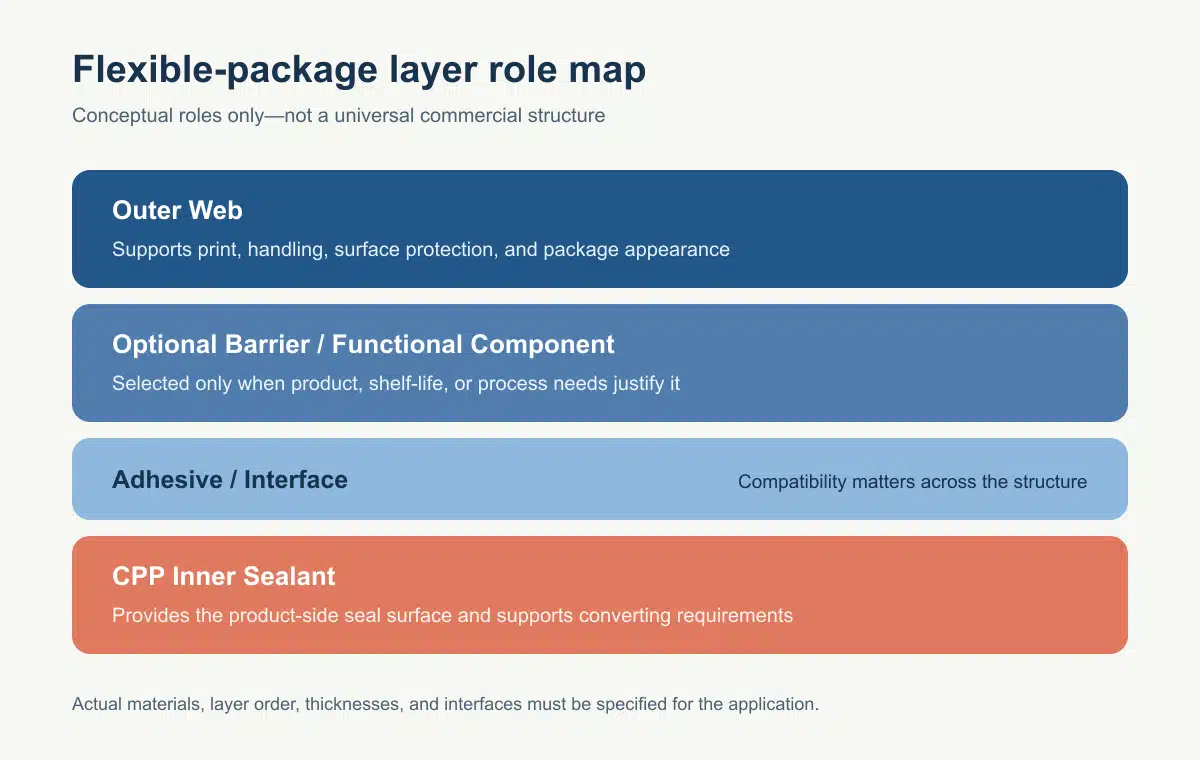
Ответственность внешнего полотна, барьерного компонента, клея и герметизирующего слоя
| Элемент | Типичная ответственность | Маркировка семейства полимеров | Важно Ограничение |
|---|---|---|---|
| Внешнее полотно | Поддержка печати, жёсткость, защита от истирания, термостойкость, размерный контроль | Данные по марке, обработка, пробная печать, термические и механические результаты | Может не обеспечивать требуемую герметизацию или барьер |
| Барьерный компонент | Контроль пропускания кислорода, водяного пара, аромата или света | Отчёты OTR/WVTR или другие соответствующие отчёты с условиями; данные по изогнутому ламинату при необходимости | Значение для плёнки или нанесённого слоя может не отражать герметизированный пакет |
| Чернила, грунтовка, покрытие и клей | Графика, совместимость интерфейсов, формирование связей, химическая и термическая стойкость | Заявления о совместимости поставщика, вес покрытия, условия отверждения, доказательства адгезии и миграции | Неправильное отверждение или химия могут поставить под угрозу всю конструкцию |
| Внутреннее CPP-полотно | Контактная поверхность со стороны продукта, реакция на герметизацию, ударная вязкость, выбранная функциональная роль | Точный TDS марки, кривая герметизации, горячая склейка, коэффициент трения, обработка, механические и нормативные файлы | Нельзя предполагать, что CPP обеспечивает все защитные функции |
Структура BOPP/CPP, PET/CPP, PA/CPP, металлизированная структура или структура с фольгой может быть разумной в определённом применении, но аббревиатуры опускают критическую информацию. Марки и толщины слоёв, положение печати, химия и вес покрытия клея, подготовка поверхности, время отверждения, резка, конструкция пакета и конечное использование должны быть специфицированы. Даже полностью полипропиленовая концепция требует оценки чернил, клеев, покрытий, фитингов, сбора, сортировки и применимых рекомендаций по дизайну для переработки, прежде чем делать заявление о перерабатываемости.
Вопрос проектирования заключается не в том, “какой распространённый ламинат нам скопировать?”, а в том, “какой элемент владеет каждым требованием, и какие межфазные границы могут выйти из строя?” Этот вопрос даёт тестируемую структуру вместо обещания, основанного на названии материала.
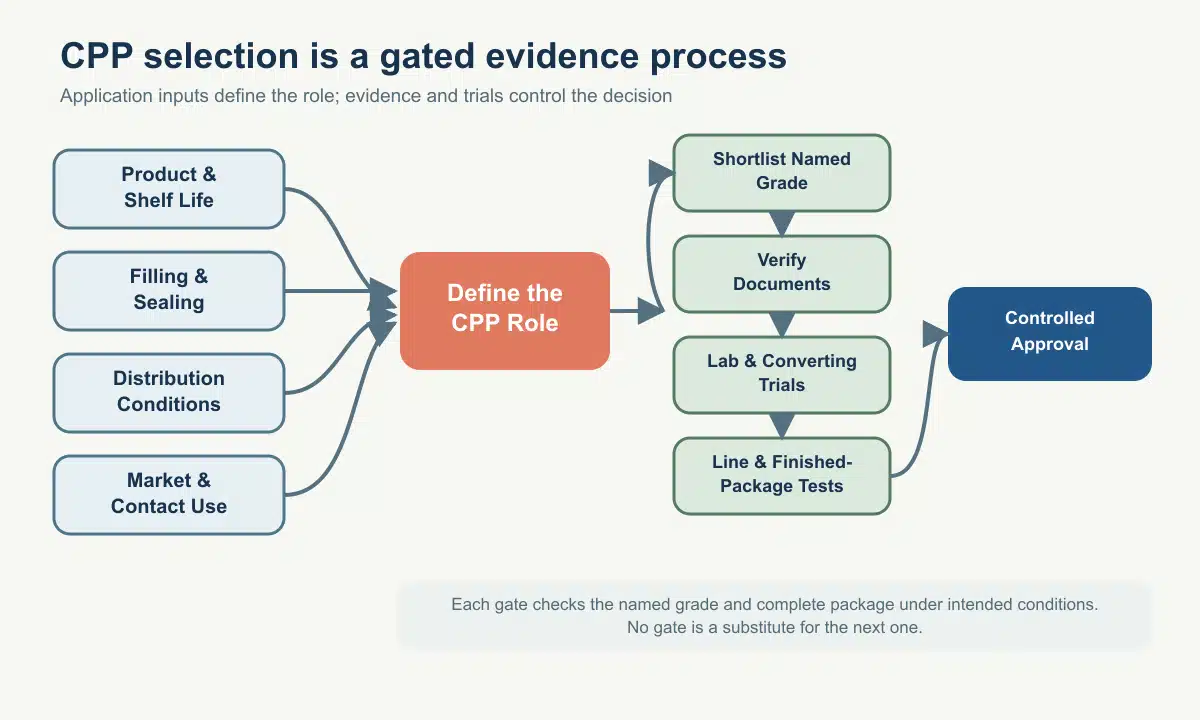
Составьте бриф применения перед выбором плёнки
Полезный бриф применения преобразует упакованный продукт и процесс в требования, которые поставщик плёнки, конвертер и упаковщик могут интерпретировать единообразно. Начните с продукта: состав, содержание масла или аромата, чувствительность к влаге и кислороду, острые края, температура заполнения, загрязнение частицами, масса порции и ожидаемый срок хранения. Затем определите формат упаковки, геометрию шва, печать и внешний вид, нагрузки при дистрибуции, климат хранения.
Product, Shelf Life, Line, Distribution, and Market Inputs
| Input area | Вопросы, на которые необходимо ответить | Resulting CPP decision | Verification needed |
|---|---|---|---|
| Product and shelf life | Что вызывает деградацию? Какой срок защиты и климат хранения требуются? | Автономный CPP, CPP-герметик с отдельным барьером или другой материальный маршрут | Специфические для продукта барьерные работы и работы по сроку хранения |
| Заполнение и герметизация | VFFS, HFFS, готовый пакет, лак или ручная упаковка? Какой тип губок, скорость, нагрузка на уплотнение и загрязнение возникают? | Состав герметика, толщина, коэффициент трения, горячая склейка и краткий перечень окна герметизации | Лабораторные кривые герметизации с последующими производственными испытаниями |
| Механическое воздействие | Имеются ли острые кромки, падения, изгибы, сжатие или обращение в замороженном состоянии? | Требования к прочности, проколу, раздиру и поддержке ламината | Испытания пленки и упаковки с учетом направления и условий |
| Внешний вид и конвертация | Прозрачный или непрозрачный? Поверхностная или обратная печать? Металлизированный, с покрытием, ламинированный или без ламината? | Оптические цели, сторона обработки, адгезия металла и требования к склеиванию | Печать, ламинирование, отверждение, резка и визуальные испытания |
| Рынок и контактное применение | Какая страна, тип пищевого продукта, время контакта, температура и условия многократного использования применяются? | Пакет документации и возможные ограничения по рецептуре | Специфические для продукта декларации и доказательства миграции |
Для проектов пищевого контакта в США 21 CFR 177.1520 описывает условия для перечисленных олефиновых полимеров, но нормативная запись для.
Заполнение этого брифа до запроса образцов предотвращает распространенную ошибку сравнения технически различных предложений под одним и тем же названием.
Подтвердите пленку, герметик, ламинат и готовую упаковку
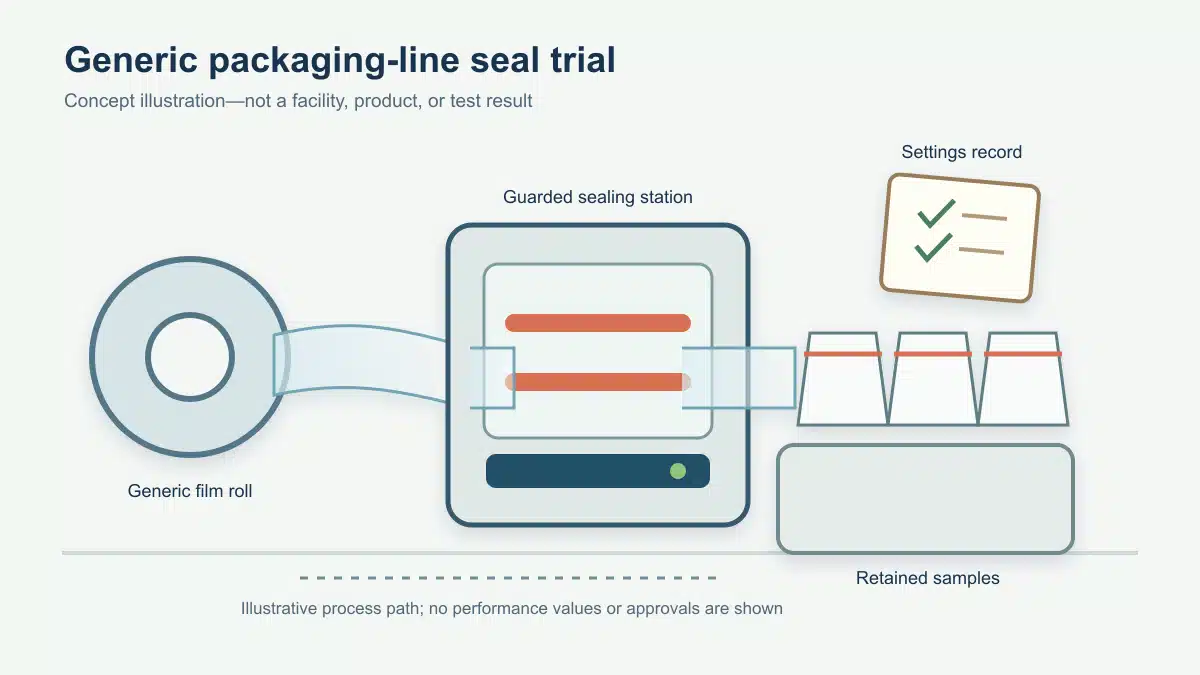
Валидация должна переходить от малозатратного анализа доказательств к все более реалистичным испытаниям. Критерии приемки, идентификация образцов, методы, условия, ответственные стороны и правила контроля изменений должны быть согласованы до начала испытаний.
- Подтвердите точную марку, конструкцию слоев, толщину, сторону обработки, функции добавок, геометрию рулона, производственную партию, условия хранения и редакцию документа.
- Проверьте применимую техническую документацию, документацию по контакту с пищевыми продуктами, миграции и устойчивому развитию с учетом целевого рынка и применения. Зафиксируйте, что не охватывает каждый документ.
- Испытайте свойства пленки и ламината в определенных условиях кондиционирования. Возможные методы могут включать ASTM D882 для свойств при растяжении, ASTM D1894 для статического и кинетического коэффициента трения, ASTM D3985 для кислородопроницаемости, ASTM F1249 для паропроницаемости, а также соответствующие методы испытаний на раздир, удар, склеивание или обработку. Подтвердите текущую редакцию и пригодность перед использованием.
- Установите кривые герметизации и поведение горячей склейки с использованием фактической пары герметизации, реалистичной температуры, давления, времени выдержки, охлаждения, геометрии губок, загрязнения и условий нагрузки машины.
- Проведите испытания печати, металлизации, ламинирования, отверждения, резки, изготовления пакетов и упаковки, отражающие коммерческие условия. Сохраните архивные образцы и данные процессов.
- Испытайте готовую упаковку на риски, выявленные в брифе применения, такие как утечка, целостность герметизации, разрыв, падение, сжатие, изгиб, термическая обработка, распределение или срок хранения.
Измеряйте кривые герметизации и горячую склейку в реалистичных условиях
ASTM F88/F88M измеряет усилие, необходимое для разделения тестовой полосы, содержащей герметик, и определяет тип разрушения. Техника, ширина образца, конфигурация отслаивания, скорость испытания, кондиционирование и место разрушения могут влиять на интерпретацию. Пиковое усилие без серии температур герметизации может скрыть узкое или нестабильное рабочее окно.
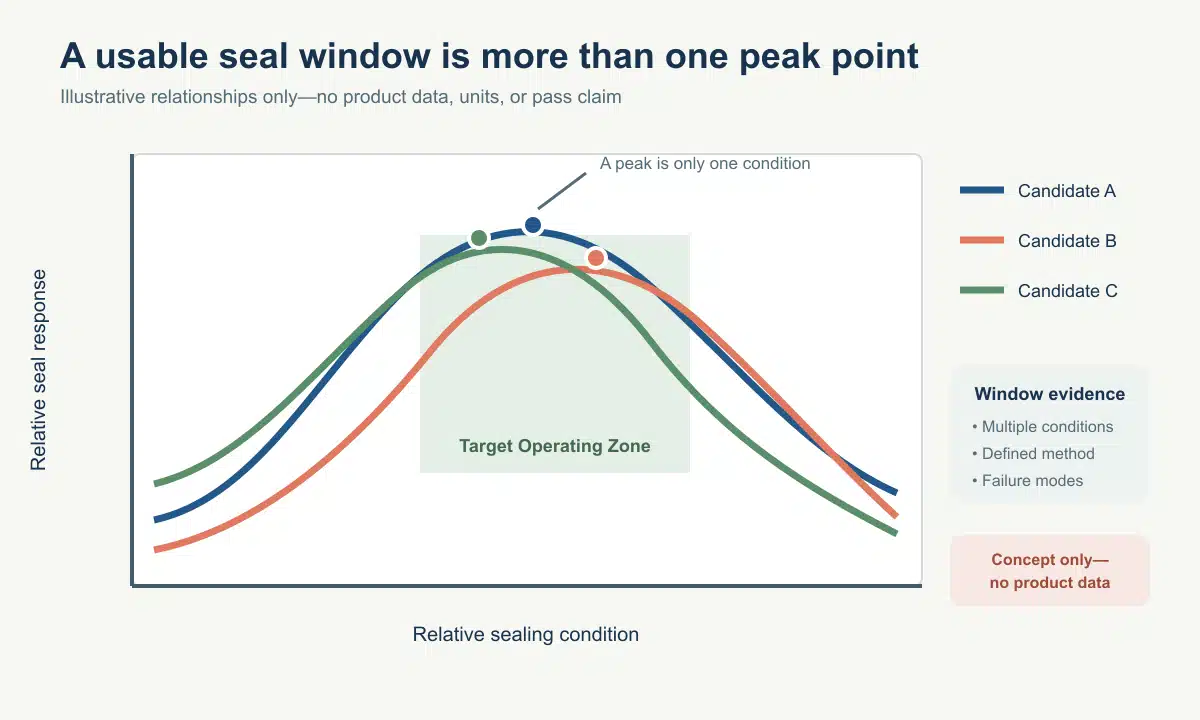
Горячая склейка характеризует несущую способность шва, пока он остаётся горячим. Это особенно важно, когда вертикальное наполнение или быстрая выгрузка нагружает шов до полного охлаждения. Температуры испытаний должны охватывать реалистичные рабочие условия, а результаты должны соотноситься с массой продукта, загрязнением, временем охлаждения и скорость линии. Ни лабораторный шов, ни результат горячей склейки не заменяют наблюдение за швами на промышленной машине.
Подтвердите технологичность, долговечность, барьер и целостность упаковки
| Область проверки | Записывайте с каждым результатом | Что результат не может доказать сам по себе |
|---|---|---|
| Коэффициент трения и намотка | Метод, испытанные стороны, направление, кондиционирование, возраст, положение в рулоне | Стабильная подача на любой машине или после длительного хранения |
| Механические и оптические свойства | Метод, толщина, MD/TD, кондиционирование, единицы измерения, образец и партия | Характеристики другой марки, толщины, ламината или пакета |
| Кислородопроницаемость и паропроницаемость | Полная структура, толщина, испытанная сторона, температура, относительная влажность, газ и единицы измерения | Фактический срок хранения или барьер герметичной упаковки без корреляции |
| Герметик и склеивание | Пара герметизации, настройки губок, техника отслаивания, тип разрушения, отверждение и возраст образца | Распределение без утечек или характеристики термической обработки |
| Готовая упаковка | Формат упаковки, заполнение, процесс, окружающая среда, размер выборки и правило приемки | Каждая производственная партия, если не поддерживаются контроль процессов и мониторинг |
Избегайте распространенных ошибок при выборе CPP
Отказы при выборе часто начинаются, когда полезная тенденция материала рассматривается как гарантия готовой упаковки. Слабый шов может быть вызван неправильным герметизирующим слоем, недостаточной температурой или временем выдержки, колебаниями давления губок, загрязнением, обработкой со стороны герметизации, миграцией добавок, плохим охлаждением или деформированной упаковкой.
Диагностическая таблица «симптом — переменная»
| Симптом | Возможные переменные — не диагноз | Доказательства для сбора | Ответственный этап для проверки |
|---|---|---|---|
| Низкая или нестабильная прочность герметика | Несоответствие марки, температура, давление, время выдержки, загрязнение, только толщина пленки., профиль губок, охлаждение | Кривая герметизации, карта губок, тип разрушения, идентификация партии и стороны | Выбор пленки, изготовление пакетов, упаковочная линия |
| Герметик открывается сразу после заполнения | Недостаточная горячая склейка, высокая нагрузка наполнения, короткое охлаждение, загрязнение, скорость линии | Кривая горячей склейки, время выброса, масса продукта и видео | Выбор плёнки и упаковочная линия |
| Проскальзывание или затягивание полотна | Коэффициент трения вне диапазона, неправильная ориентация стороны, возраст, температура, пыль, состояние роликов | Коэффициент трения по сторонам, траектория полотна, натяжение и история рулона | Плёнка, резка и упаковочная линия |
| Соединение ламината является слабым | Деградация обработки, смесь клея или вес покрытия, отверждение, влажность, совместимость с чернилами | Данные по поверхности, партия клея, вес покрытия, журнал отверждения, характер разрушения связи | Печать и ламинация |
| Барьерные свойства снижаются после конвертации | Повреждение металлизации, гибкие трещины, проколы, утечка в швах, несоответствие условий испытаний | Испытания барьера до/после, микроскопия, протокол гибких нагрузок, результаты проверки упаковки на утечку | Металлизация, ламинация и изготовление пакетов |
| Деформация или расслоение реторт-пакета | Несовместимый класс или клей, недостаточное отверждение, ползучесть шва, жёсткость технологического процесса | Полная структура, запись отверждения, профиль ретортирования, результаты шва и адгезии | Проектирование структуры, конвертация и термический процесс |
Одновременное изменение нескольких переменных затрудняет выявление причины. Сохраняйте идентичность образца и условия испытаний, изменяйте один контролируемый фактор там, где это практически возможно, и сохраняйте как прошедшие, так и не прошедшие образцы. Если симптом представляет риск для безопасности или регуляторных требований, изолируйте затронутый материал и привлеките ответственные группы качества и технические группы до дальнейшего производства.
Укажите и приобретите CPP-плёнку с сопоставимыми доказательствами
Сопоставимый запрос предложения описывает применение и запрашивает у каждого потенциального поставщика одинаковые поля. Как минимум, включите:
- точную роль плёнки, формат упаковки, тип продукта, целевой рынок, условия контакта, цель по сроку хранения, метод наполнения, скорость линии, геометрию шва, распределение и хранение;
- название марки, описание полимера и слоёв, номинальная общая толщина и толщина слоёв, допуски, ширина, длина рулона, гильза, максимальный диаметр рулона, направление намотки, политика сращивания и упаковка;
- тип и сторону обработки, требование по дин или другим поверхностным характеристикам при производстве и использовании, коэффициент трения по сторонам, назначение скольжения и антиблокировки, оптические цели и пределы дефектов;
- кривую запайки и данные по горячей склейке с указанием пары запайки, метода и настроек; механические, барьерные, адгезионные, термические или функциональные данные с методами, единицами, направлениями и условиями;
- декларации о контакте с пищевыми продуктами, миграционные или подтверждающие документы для указанного рынка и применения; контролируемые доказательства устойчивости, где это применимо;
- идентичность партии образца, поля сертификата анализа, редакции документов, рекомендации по сроку хранения и хранению, правила уведомления и обязательства по контролю изменений.
Используйте сравнительную таблицу, которая разделяет типичные значения, заявленные поставщиком, от гарантированных пределов спецификации и критериев приемки проекта.
| Тип поля | Ответ поставщика | Обработка покупателем |
|---|---|---|
| Типичные данные | Описывают ожидаемое или репрезентативное поведение | Используйте для предварительного отбора, а не для автоматической приёмки |
| Гарантированная спецификация | Определяет контролируемый предел поставки и метод | Подтвердите, что она охватывает критическое требование и основу испытаний |
| Регуляторный документ | Применяется к конкретному продукту, рынку и области использования | Проверьте состав, дату, ограничения и предполагаемые условия |
| Результат испытания | Описывает идентифицированные образцы в зафиксированных условиях | Соотнесите с промышленным оборудованием и испытаниями готовой упаковки |
Утверждение должно идентифицировать принятую марку, структуру, документы партии, окно процесса, испытания упаковки, правила отклонений и триггеры переквалификации. Более низкая цена за килограмм не обязательно означает более низкую стоимость упакованного продукта, если.
Часто задаваемые вопросы о CPP-плёнках для гибкой упаковки
Является ли CPP-плёнка всегда термосвариваемой?
Нет. Многие марки CPP являются.
Является ли CPP-плёнка материалом с высокими барьерными свойствами?
Не только по названию материала.
Когда следует использовать CPP вместо BOPP или PE?
Это зависит от назначенной роли слоя. CPP часто включается в короткий список для гибкого герметизирующего или специализированного внутреннего слоя; BOPP часто включается в короткий список для ориентированной, жёсткой печатной или опорной плёнки; классы PE могут быть предпочтительны для других требований к сварке, прочности, технологичности или дизайну для переработки. Сравнивайте конкретные классы по одному и тому же техническому заданию, а не выбирайте по аббревиатуре полимера.
Можно ли использовать CPP-плёнку для реторт-упаковки?
Да, но только подходящий класс CPP, способный выдерживать ретортирование, в составе валидированной полной структуры и термического процесса, следует рассматривать. Подтвердите плёнку, клей, чернила, внешний слой, отверждение, шов, геометрию пакета, химию продукта, профиль ретортирования, документы по контакту с пищевыми продуктами и характеристики пакета после ретортирования. CPP общего назначения не является автоматически пригодным для ретортирования.
Какие данные должен предоставить поставщик CPP-плёнки?
Поставщик должен указать класс, конструкцию материала и слоёв, допуски по толщине и рулону, обработку, коэффициент трения, оптические свойства, механические характеристики, данные по сварке и горячей склейке, применимые барьерные данные, методы и условия, рекомендации по хранению, регуляторные документы, статус типичных и гарантированных значений, контроль изменений и прослеживаемость партии образца. Спросите, что не охватывает каждый документ.
Как группа упаковки должна утверждать изменение CPP-плёнки?
Используйте контролируемую оценку эквивалентности, а не утверждение, что обе плёнки являются CPP. Сравните состав или конструкцию, критические спецификации, методы, сертификаты и регуляторную область; проведите риск-ориентированные лабораторные испытания, испытания конвертации, линии, готовой упаковки и срока хранения; задокументируйте отклонения; и определите триггеры повторной квалификации. Одобрение должно применяться только к идентифицированному классу, структуре, технологическому окну, упаковке, рынку и набору доказательств.
Связанные ресурсы Bestypack
- Гибкая упаковка для пищевых продуктов: руководство по тому, что вам
- Разница между полиолефином, ПВХ и полиэтиленом
- Полное руководство по пленке BOPE: преимущества, применение, виды
- Какие существуют различные типы распространенной изоляционной упаковки?
- Руководство по термосвариваемой пленке: Применение, Типы, Функции
- Решения для упаковки продуктов питания в холодовой цепи
- Полное руководство: Все виды пенопластовой упаковки
 English
 Japanese
 French
 Spanish
 Korean
 Italian
 Portuguese
 Dutch
Dutch Arabic
 Russian
 German