
PVA水–soluble film is usually made by converting a carefully selected بولي فينيل كحول resin into a uniform film through solution casting. The resin is dissolved and formulated in water, cleaned of particles and bubbles, cast onto a moving surface, dried, conditioned, slit, and wound. Thermoplastic melt extrusion is another route, but it requires a PVOH grade and formulation designed for a narrow processing window. In either case, finished-film approval depends on controlled test conditions—not on the material name alone.
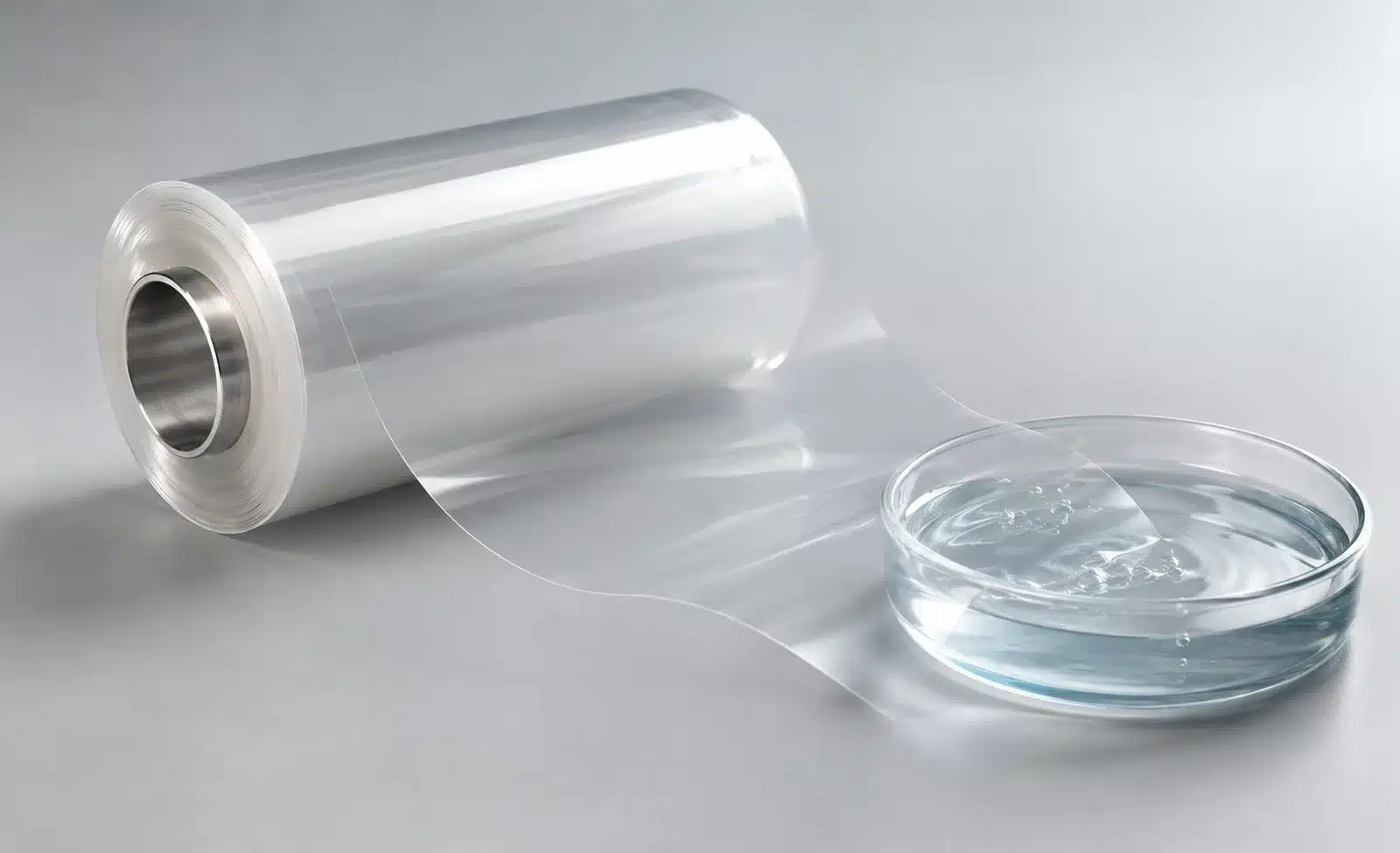
PVA或PVOH:水溶性薄膜背后的树脂
للسياق التنظيمي، يُرجى الرجوع إلى إدارة الغذاء والدواء الأمريكية (FDA). 食品包装指南 在批准预期的食品接触用途之前。.
关于监管背景,请参考 the U.S. FDA’s food-packaging guidance before approving an intended food-contact use.
“PVA” is widely used in packaging to mean polyvinyl alcohol, although “PVOH” is the less ambiguous technical abbreviation because PVA can also mean polyvinyl acetate. The resin is water-soluble and film-forming, but those labels do not define a finished film. Resin chemistry, formulation, converting conditions, moisture history, and the intended packed product all influence the result.
从醋酸乙烯酯到PVOH树脂
Polyvinyl alcohol is not normally made by directly polymerizing vinyl alcohol. Industrial production first polymerizes vinyl acetate monomer to polyvinyl acetate (PVAc). A subsequent hydrolysis or saponification step converts acetate groups into hydroxyl groups, producing PVOH. This upstream chemistry creates the resin used by a film converter; it is separate from the later film-forming operation.
Kuraray的技术解释 describes polymerization and hydrolysis as the two core steps in PVOH manufacture. SEKISUI’s solution-preparation guide likewise notes that PVOH grades vary in molecular weight and hydrolysis level. Neither source, by itself, establishes the formulation or performance of a particular commercial film.
影响薄膜加工的等级变量
Two resin descriptors are especially 是否有确认的商店投递点、商业收集、回程运输或其他收集途径?. Degree of polymerization relates to chain length and strongly influences aqueous-solution viscosity and film strength. Degree of hydrolysis describes how extensively acetate groups have been converted and affects water response, solution preparation, and film behavior. Chemical modification can further adjust processing or dissolution characteristics.
The converter then combines the selected resin with a controlled formulation Depending on the intended film that formulation may include plasticizers and limited processing aids Their identities and amounts are product-specific an additive that improves flexibility or handling can also change moisture sensitivity sealing or dissolution For that reason a generic online recipe should never substitute for the resin.
主要生产工艺:溶液流延法
Solution casting forms the film from an aqueous PVOH solution. It is widely reported as the principal route for PVOH film because it avoids forcing an unmodified polymer through a conventional melt-processing window. The production sequence is:
- Formulate and dissolve the resin.
- Filter, deaerate, and meter the solution.
- Cast a controlled wet layer onto a moving belt or drum.
- 在受控干燥曲线下去除水分。.
- 释放、调理、分切、检查并卷绕薄膜。.
每个制造商根据其自身树脂、配方、设备和目标薄膜设定浓度、温度、停留时间、过滤、幅材速度和干燥曲线。顺序是通用的;操作配方则不是。.
1. 配制并溶解树脂
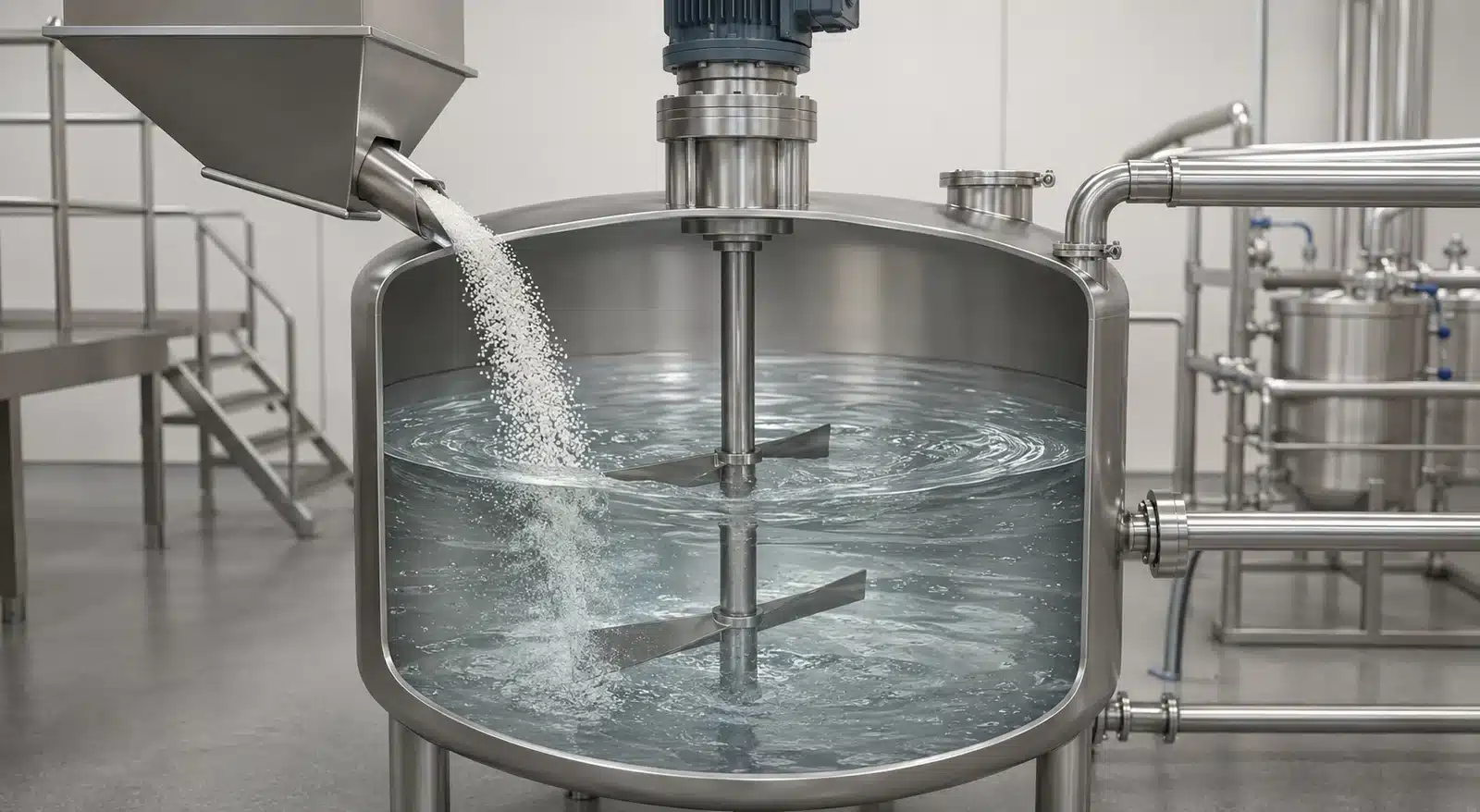
Production begins by charging water and PVOH resin into a mixing system under a defined order of.
在受控条件下加入增塑剂或其他授权的配方组分。操作员监控固体含量、温度、粘度、混合时间和外观等变量。稳定的溶液至关重要,因为流延头可以将上游变化复制为干膜中的条纹、厚度变化、薄弱点或光学缺陷。.
2. 过滤、脱气并计量溶液
制备好的溶液通过为工艺选择的过滤系统。这去除了可能标记薄膜或破坏流延间隙的外来颗粒和未溶解物质。过滤必须作为过程控制进行管理:变化的压差或意外残留物可能表明原材料、溶解或污染问题。.
夹带的空气也被去除,通常通过受控停留和真空脱气。到达流延表面的气泡可能成为针孔、凹陷或局部薄弱点。然后,清洁、无气泡的溶液在稳定的流量和温度下被保持并计量到流延头。.
3. 流延到移动带或滚筒上
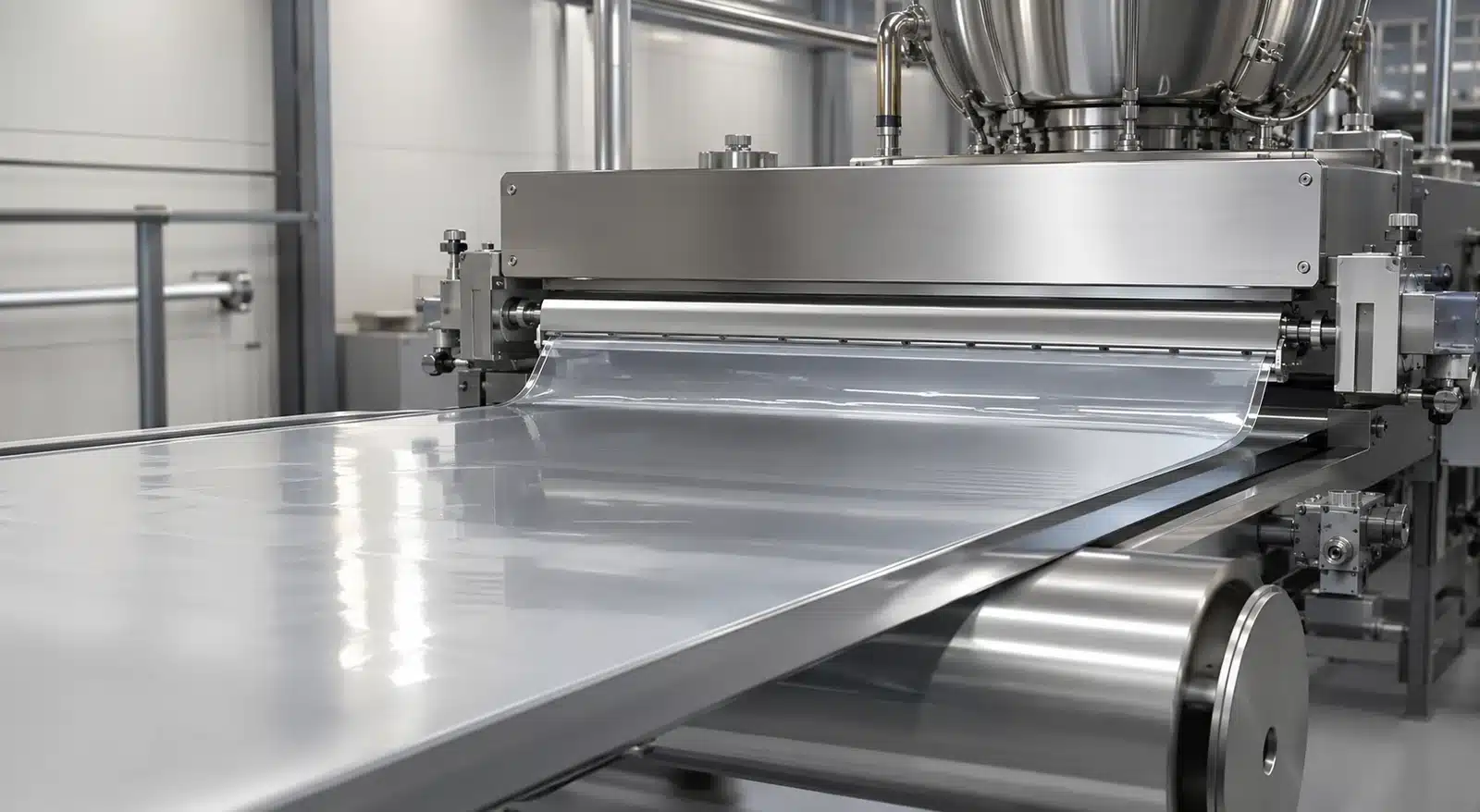
A casting die or coating head lays the solution onto a smooth, moving carrier—typically a belt or drum. The wet-layer profile depends on solution rheology, head geometry, gap or metering settings, carrier condition, 线速度, and flow stability. The objective is not merely to spread liquid; it is to establish a uniform wet web that will dry into the required thickness profile.
载体清洁度和表面状况影响剥离和表面质量。边缘控制也很重要,因为不稳定的边缘可能减少可用宽度或导致后续卷绕问题。在线测量可在生产线设计允许的情况下使用,但离线厚度图对于确认成品卷材仍然重要。.
4. 在受控条件下干燥
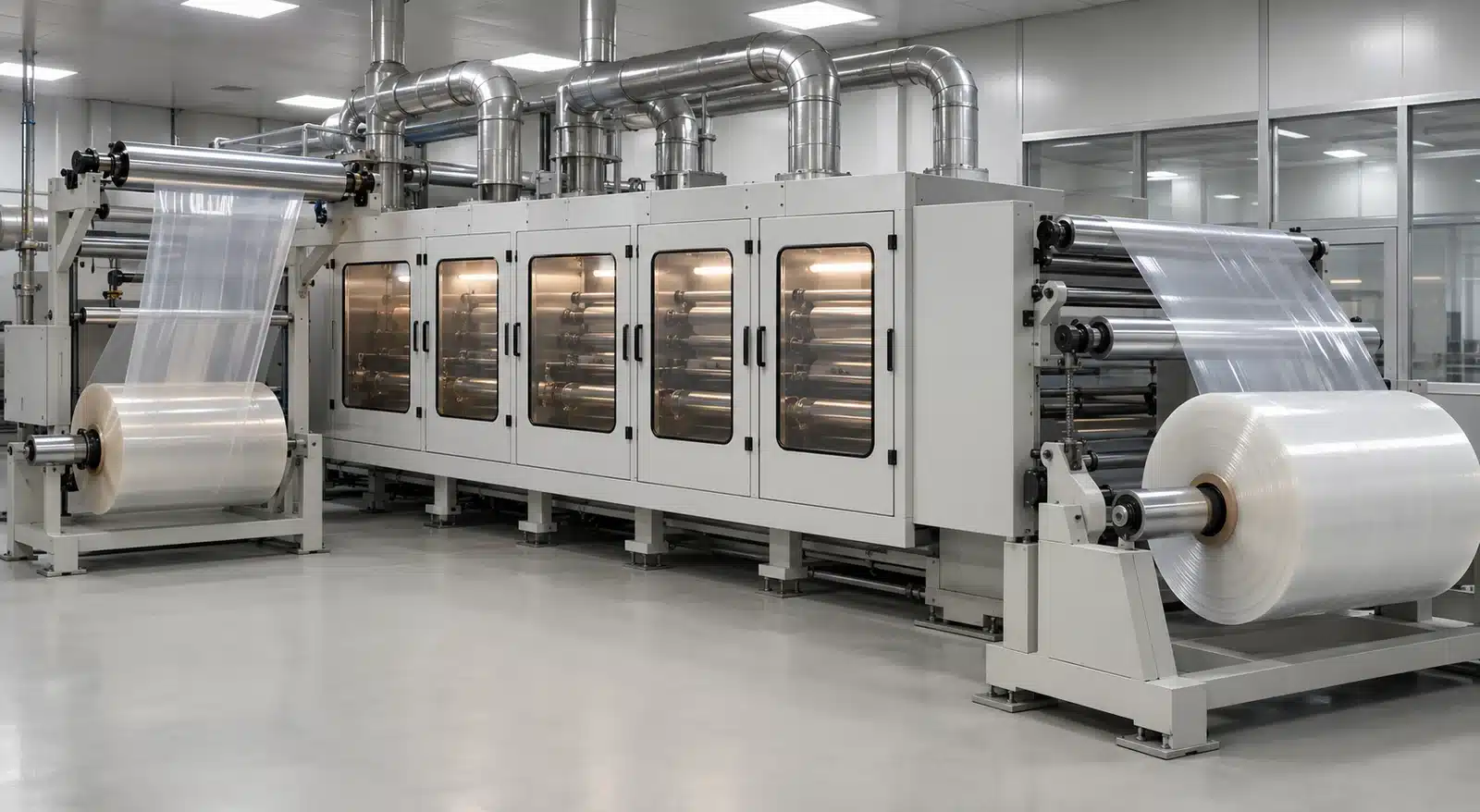
The wet web passes through heated drying zones, where water is removed progressively. Air temperature, humidity, velocity, exhaust, web temperature, residence time, and wet-薄膜厚度 interact. Drying too aggressively can form a surface skin while water remains below it, encouraging bubbles, internal stress, curl, or uneven moisture. Drying too slowly can limit output and leave a film that is difficult to release or wind consistently.
目标是具有受控残留水分的稳定薄膜——而不仅仅是最干的幅材。PVOH对湿气敏感,其湿度状况影响柔韧性、粘连倾向、尺寸、操作和测试结果。.
重要提示: 公布的温度或干燥时间不是可转移的生产设定点。有效的曲线属于确切的树脂、配方、湿厚度、设备、气流、线速度和质量目标。.
5. 释放、调理、分切和卷绕
充分干燥后,薄膜从载体上剥离并引导通过精整工序。去除边缘废料,幅材可能被调理,以使湿度和温度在最终检查和卷绕前稳定。必须控制张力、压区压力、对齐、卷材硬度以及接触表面,以避免皱纹、望远镜效应、粘连、拉伸或表面损伤。.
The master roll is slit to the required width and wound on specified cores. Finished rolls are protected from uncontrolled humidity and temperature during storage and transport. Packaging is therefore part of process control: a roll that leaves the line within specification can still change if its حاجز الرطوبة, sealing, or warehouse conditions are unsuitable.
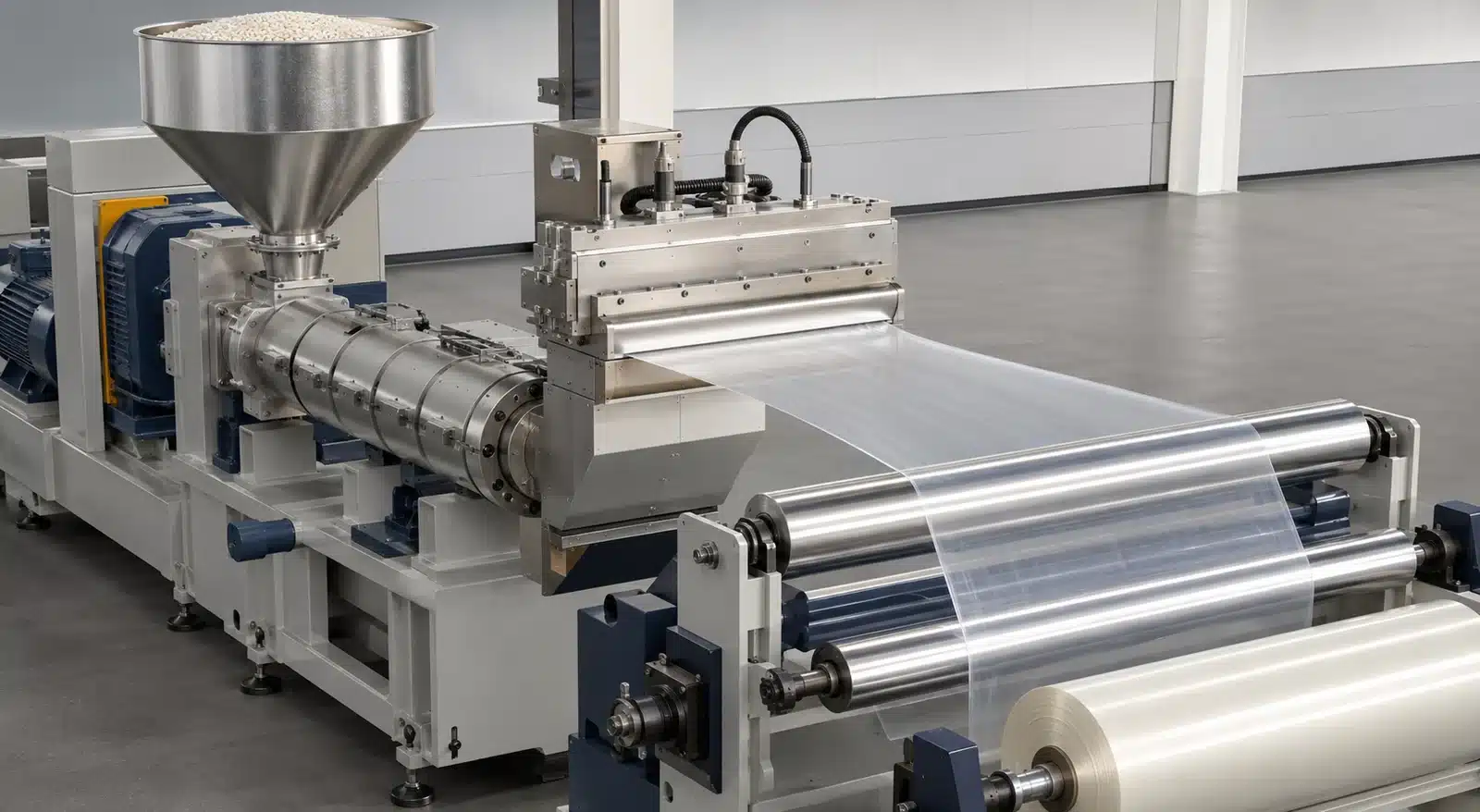
替代工艺:热塑性熔融挤出
PVOH薄膜也可以通过热塑性加工生产,包括吹膜或流延挤出配置。这是一个独立的工艺——而不是溶液流延后的精整步骤。比较制造工艺的研究将溶液流延、吹膜挤出和流延挤出视为不同的技术,并说明了为什么结果必须与所使用的工艺和配方相关联。.
为什么PVOH更难进行熔融加工
传统热塑性塑料被加热至流动,通过模头成型,然后冷却。PVOH更困难,因为其氢键结构和热敏性在充分流动和材料降解之间留下了相对狭窄的实际窗口。湿度、增塑、等级设计、剪切、停留时间和温度历史都很重要。.
如果树脂/配方不是为热塑性加工设计的,生产线可能面临不稳定流动、凝胶、变色、沉积物、气泡或退化的机械和溶解行为。因此,熔融工艺始于适合挤出的系统,而不是假设任何溶液级PVOH粉末都可以送入标准薄膜挤出机。.
挤出级系统中的变化
挤出级系统经过配制以实现受控流动和稳定性。进料湿度和增塑剂分布得到管理;材料通过挤出机输送和混合;熔体压力和温度历史得到控制;薄膜通过平模或环形模头成型,然后冷却、测厚、修边和卷绕。.
| 比较点 | 溶液流延法 | 热塑性熔融挤出 |
|---|---|---|
| 起始进料 | 经过过滤、脱气的PVOH水溶液配方 | 可热塑性加工的PVOH复合物 |
| 薄膜成型 | 将湿层计量到带或滚筒上 | 热加压材料通过模头成型 |
| 主要去除步骤 | 必须在受控干燥区去除水分 | 避免了大量流延水;成型后必须去除热量 |
| الضوابط الحرجة | 关键控制变量 | 溶液均匀性、流变性、气泡、干燥、残留水分 |
| 进料状况、增塑、剪切、停留时间、热历史 | 主要资格问题 | 是否已针对设备和热窗口验证了该等级/配方? |
两种工艺路线均非天然优越。正确选择取决于可用的树脂技术、目标薄膜性能、生产规模、能源和水资源管理、设备条件、质量能力以及应用验证。.
决定薄膜质量的过程控制
薄膜质量源于材料、配方、设备、环境和操作规范之间的相互作用。缺陷是进行调查的证据,而非单一原因的证明。制造商需要可追溯的批次记录和趋势数据,以将原材料变化与溶解、流延、干燥、挤出或卷绕效应区分开来。.
溶液质量与流变学
对于流延工艺,固含量、粘度、温度、混合历史以及配方组分的分散性会影响溶液流经过滤器和流延模头的流动方式。颗粒、凝胶、泡沫或污染物可能导致条纹、斑点、针孔、薄弱区域或模头沉积物。稳定的溶液陈化时间和保持条件也很重要,因为溶液在等待流延过程中可能会发生变化。.
干燥曲线与残余水分
干燥不仅决定线速度。蒸发曲线影响表面形成、内应力、剥离、卷曲以及进入卷绕时的水分状态。残余水分随后会影响加工和储存过程中的柔韧性和粘连性。由于PVOH会与环境交换水分,因此在比较批次时,必须控制调节和测试环境。.
厚度、表面与卷绕控制
厚度偏差可能源于计量、模头或流延辊状态、幅材速度、载体几何形状、热分布或横向流动。表面痕迹可能来自载体、污染物、操作或接触辊。卷绕缺陷可能反映张力、对中、压辊、卷材硬度、边缘轮廓或水分不均匀。.
| 观察现象 | 可能需要调查的工艺方向 | التحقق |
|---|---|---|
| 气泡或针孔 | 润湿不良、泡沫、脱气、污染、表面快速干燥 | 溶液检查、过滤/脱气记录、透光检查 |
| 厚度条纹或条痕 | 计量稳定性、模头状态、流变学、幅材速度、载体状态 | 横向厚度分布图与工艺趋势 |
| 卷曲或平整度差 | 干燥不均匀、残余水分梯度、幅材张力 | 调节后平整度检查与水分审核 |
| 粘连或退卷困难 | 水分、表面状态、卷绕压力、储存环境 | 在指定调节条件下的卷材退卷评估 |
| 脆性或拉伸性能变化 | 配方、水分状态、热历史、厚度偏差 | 在机器方向和横向进行调节后的机械性能测试 |
此表为诊断图谱,而非验收标准。相同的可见症状可能有多种原因,因此纠正措施应基于实测证据。.
制造商如何验证成品薄膜
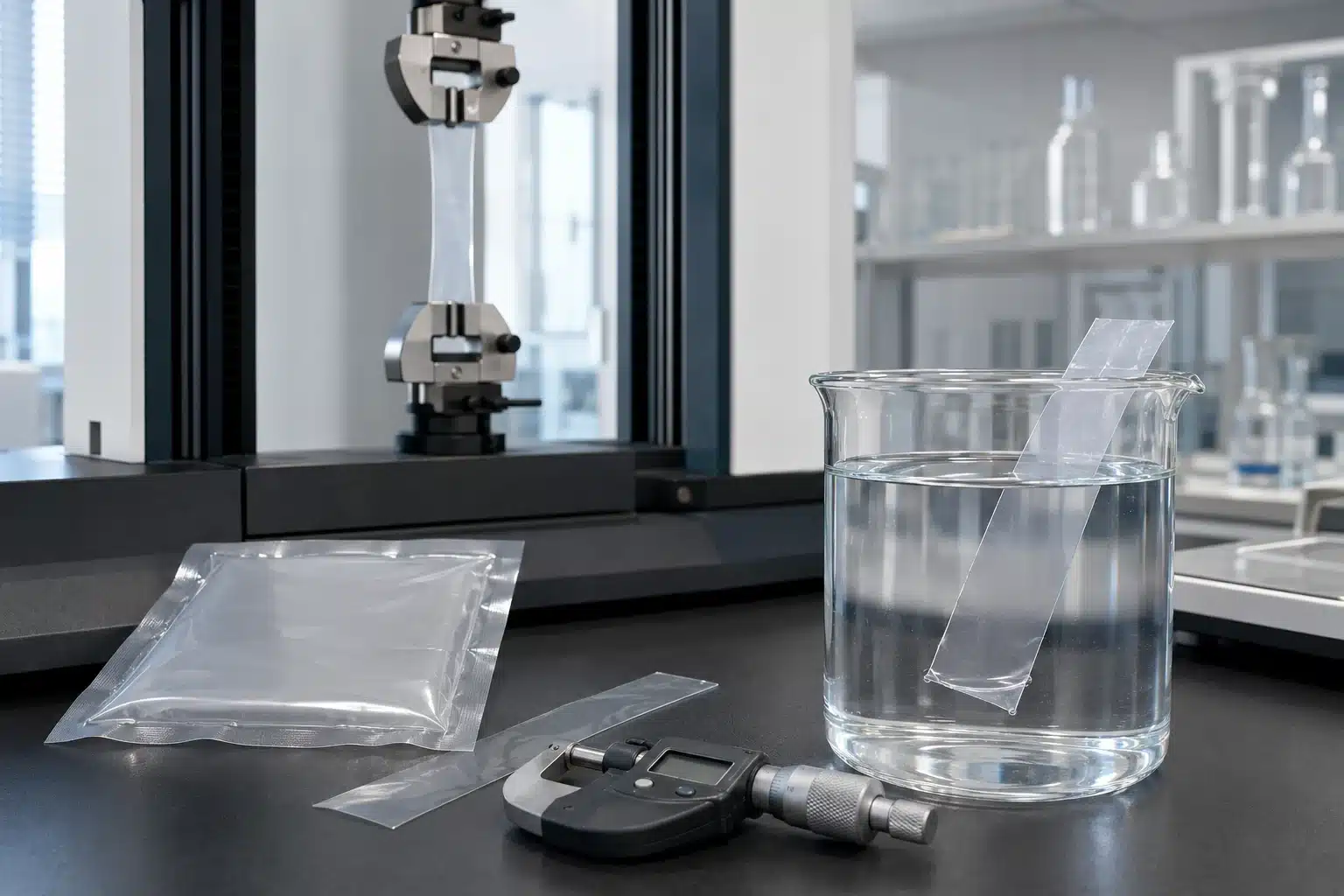
放行测试应将制造控制与预期的加工和使用联系起来。只有当证书值标识了薄膜批号、测试方法、试样方向、调节条件、单位和验收标准时,该值才有意义。.
厚度与外观均匀性
Thickness is measured across and along the web using a defined sampling plan ASTM D6988 is one guide.
仅凭平均值可能掩盖厚度分布的变化。买方应询问取样位置和层数、是否报告最小值和最大值,以及该方法与承诺的卷材公差之间的关系。.
力学与密封性能
ASTM D882在其规定范围内涵盖了薄塑料片的拉伸测试。对于PVOH薄膜,报告应指明机器方向或横向、试样厚度、调节环境、测试速度、夹持方式及失效行为。未经限定,不应直接比较不同方向或条件下的测试值。.
If the film will be heat sealed, the seal must be made under defined jaw temperature, pressure, dwell time, geometry, and conditioning. ASTM F88/F88M measures قوة الختم and identifies failure mode for flexible barrier materials, but it does not set a universal acceptable value or prove complete package integrity.
溶解性与产品兼容性
“若无方法说明,”水溶性”一词是不完整的。溶解或崩解结果可能随水温、水质、搅拌、试样尺寸、薄膜厚度、调节条件、暴露时间及所用终点而变化。一份有用的规范应说明所有这些条件,并在相关情况下区分薄膜破裂、崩解和完全溶解。.
The packed product can also.
重要提示: 薄膜数据表或孤立的薄膜测试不能证明成品包装合格。验证必须包括灌装并密封的系统、其储存分销过程及其最终使用的水条件。.
买方在批准PVA薄膜前应明确的规格
A useful specification starts with the application rather than with a generic request for “فيلم PVA.” Before approval, align the following inputs with the supplier and converter:
- 包装产品: 成分、浓度、水分活度、pH值、溶剂或表面活性剂、灌装温度、剂量及已知的不兼容性。.
- 使用条件: 目标水温范围、水质、搅拌、暴露时间及定义的溶解终点。.
- 薄膜结构: resin or grade family, modification where relevant, nominal thickness, tolerance, width, roll length, core, اتجاه اللف, and roll protection.
- 加工工艺: 印刷或套准需求、成型、灌装、热封设置、允许的密封口污染、线速度及幅材张力范围。.
- 储存与运输: 温度和相对湿度限制、阻隔包装要求、保质期方案及加工前的环境适应。.
- 放行测试: 取样计划、厚度测量方法、外观缺陷标准、力学测试方向与调节条件、密封方法与失效模式、溶解方法。.
- 系统验证: filled-package compatibility, 密封完整性, aging, transport, and end-use trials on the actual equipment and product.
- 文件与变更控制: 批次可追溯性、证书字段、批准样品状态、配方/工艺变更通知及重新验证触发条件。.
这些输入项使供应商能够提出并验证合适的薄膜。它们不能替代买方在其自身灌装、密封、储存和使用系统上进行的试验。.
关键要点
Most PVA PVOH water-soluble film is described as being produced by solution.
相关Bestypack资源
- فيلم PVA القابل للذوبان في الماء لأكياس منظفات الغسيل
- فيلم PVA القابل للانكماش والذوبان في الماء
- شركة تصنيع وتوريد أفلام PVA القابلة للذوبان في الماء
- شريط البذور القابل للذوبان في الماء من PVA
- دليل فيلم PVA: التأثير البيئي والخصائص
- دليل PVA: ما تحتاج إلى معرفته
 English
 Japanese
 French
 Spanish
 Korean
 Italian
 Portuguese
 Dutch
Dutch Arabic
 Russian
 German