
Yes, stretch film can often be recycled—but only when its complete construction fits a compatible polyethylene film stream and an actual collector will accept it. In the United States, pallet wrap and other flexible films usually do not belong in curbside recycling. A business should identify the film, confirm a recycler’s specifications, keep the material clean and separate, and document the route before making a recyclability claim. These checks affect waste handling, film specifications, supplier documentation, and any recycling instructions given to customers or warehouse teams.
The Short Answer: Yes, but Only Through the Right Route
For environmental claims, compare the design with the U.S. EPA’s recycling guidance and the actual local collection system.
For environmental claims, compare the design with the U.S. EPA’s recycling guidance and the actual local collection system.
Stretch film has a potential recycling pathway when the film is compatible with the intended recycling stream, collection is available, the material can be sorted and reprocessed, and there is an end market for the recovered resin. Missing any one of those elements can change the practical answer from “yes” to “not through this route.”
That distinction matters because made from a recyclable polymer is not the same statement as this used film will be recycled The Association of Plastic Recyclers recycling glossary describes recyclability through design access and markets rather than resin identity.
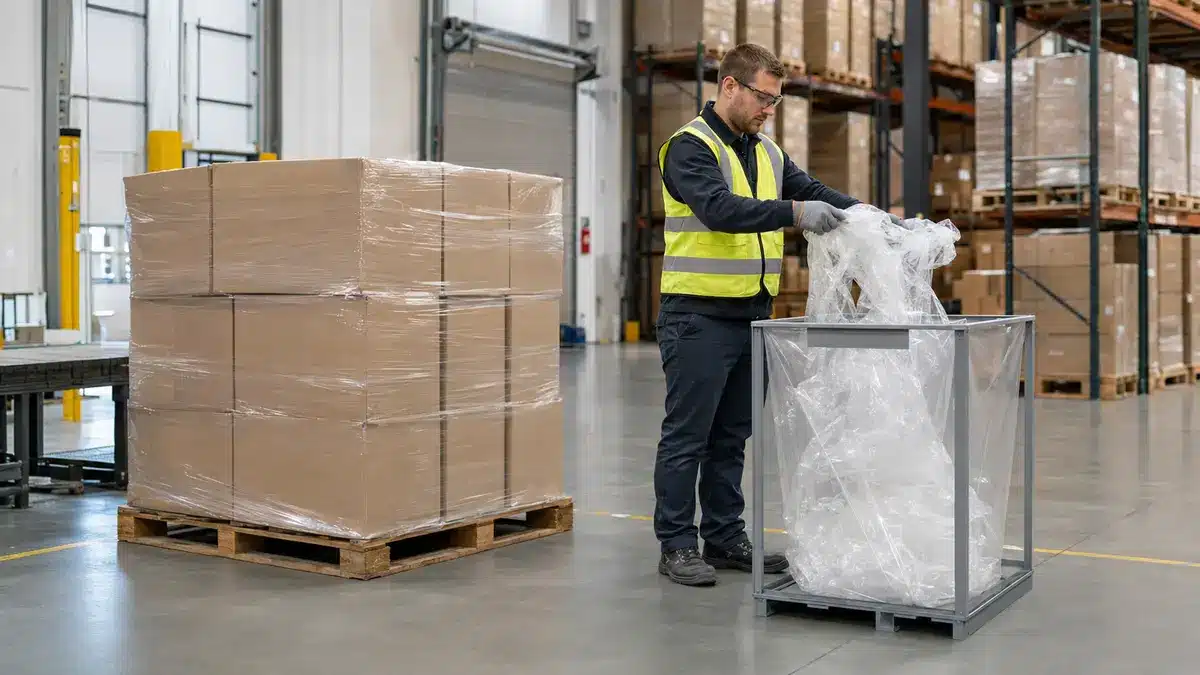
Important: Do not put stretch film into a general recycling bin merely because it stretches, looks like polyethylene, or carries a resin identification code. Confirm the collection route first.
Technical Recyclability Is Not the Same as Local Acceptance
Technical recyclability asks whether a material can be processed into usable recycled feedstock under suitable conditions Practical acceptance asks whether the actual film in its used condition can enter a collection program that sorts and sells that material A film may pass the first question but fail the second because no suitable collection.
For business decisions, use a complete-pathway test:
- Design: Is the full film construction compatible with the target PE film stream?
- Access: Is there a confirmed store drop-off, commercial pickup, backhaul, or other collection route?
- Preparation: Can the film be kept within the recycler’s contamination, moisture, sorting, and consolidation requirements?
- Market: Does the collector have an outlet for the recovered material?
What Makes Stretch Film Potentially Recyclable?
The base polymer is the first screening input, not the final answer. The complete film also includes any layers, colorants, cling systems, labels, tape, printing, and material acquired during use. Each feature can affect sorting, washing, reprocessing, or recycled-resin quality.
Polyethylene as the Base Material
Many pallet stretch films are polyethylene, commonly linear low-density polyethylene (LLDPE). A clean, source-separated PE film stream can be attractive to commercial recyclers because a warehouse may generate a relatively consistent material in one location.
However, “stretch film” describes a function rather than a verified formulation. Do not infer the exact polymer, grade, layer structure, additive package, or recycling compatibility from appearance. Ask the film supplier for a product-specific material or construction declaration when that information affects the recycling route. A #4 resin identification code can help identify an LDPE-family material, but the code does not prove that a local program collects it or that every component is compatible.
Construction Features That Can Change the Result
The APR Design Guide for PE Flexible packaging evaluates the package as a system: every design feature must be considered. Relevant inputs for stretch film can include:
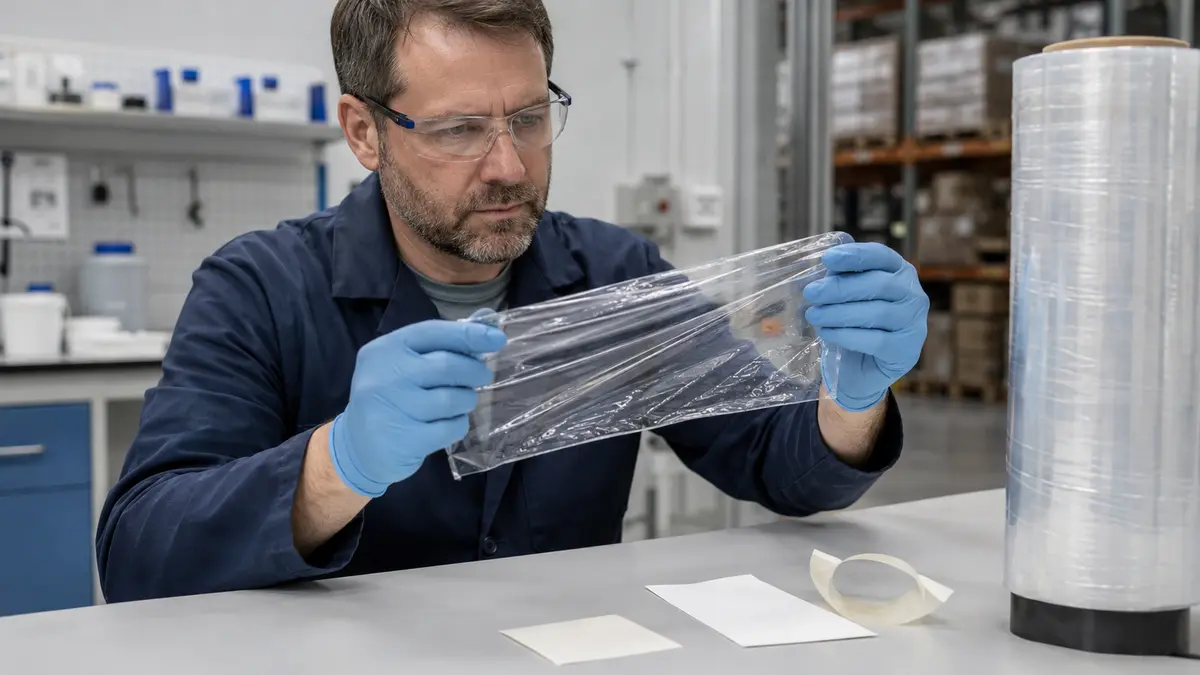
- non-PE layers or incompatible polymers in a coextruded structure;
- paper or non-compatible plastic labels;
- pressure-sensitive adhesive, sealing tape, or tape residue;
- heavy printing, pigments, or carbon-black color;
- additives or coatings that affect reprocessing;
- attached strapping, corner boards, clips, or other packaging components; and
- oils, food residue, soil, excessive moisture, or other contamination acquired in use.
None of these features should be treated as an automatic pass or failure without the recycler’s specification or an applicable design assessment. Printed or colored film, for example, may be accepted by one commercial outlet and excluded or downgraded by another.
Why Stretch Film Usually Does Not Belong in Curbside Recycling
Flexible film behaves differently from bottles, tubs, and other rigid containers in a conventional material recovery facility. It can wrap around sorting equipment, travel with paper, or become part of a residue stream instead of being recovered as PE film. The operational problem is one reason film is generally collected separately.
The U.S. Environmental Protection Agency advises that plastic bags and wraps generally cannot go in a curbside recycling bin and tells users to confirm local provider instructions. This is a route-specific statement, not a claim that film can never be recycled. Some communities may operate special programs, while qualifying household PE films may have retail drop-off options.
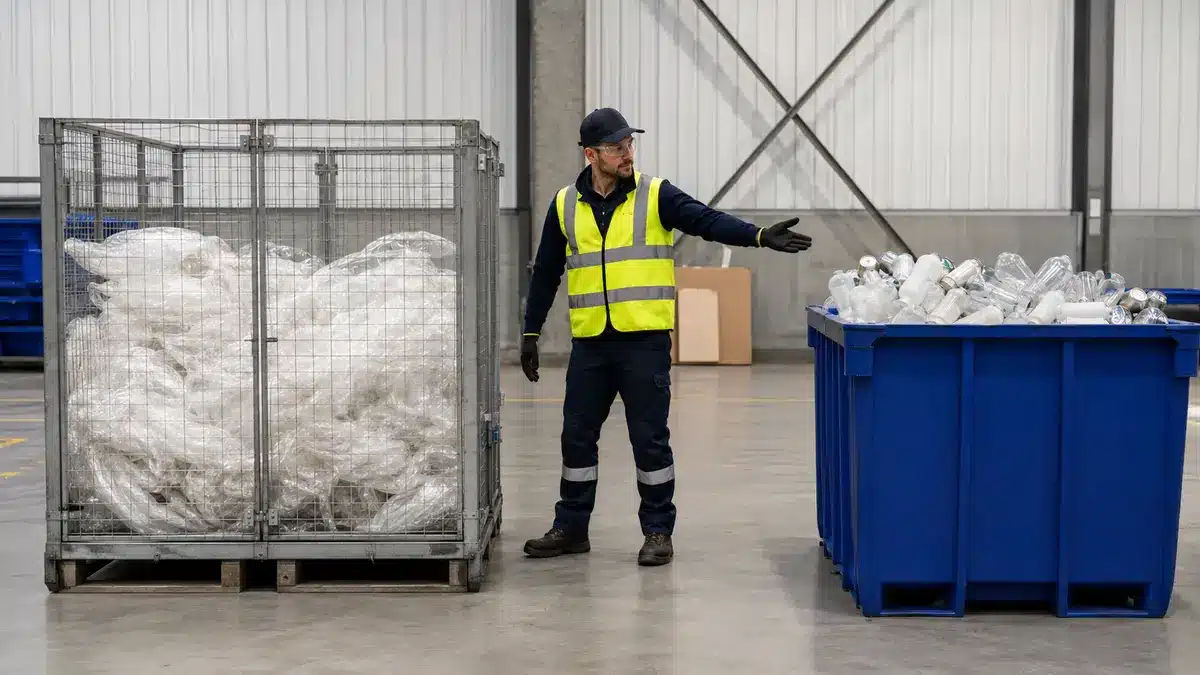
Warning: Follow the local program’s published instructions. “Wish-cycling” stretch film into a curbside bin can contaminate a load and does not create a recycling pathway.
Commercial operations normally need a different route: direct collection by a film recycler, a waste contractor with a defined PE film program, retailer or distributor backhaul, or another source-separated arrangement. The appropriate route depends on location, volume, construction, condition, and end-market requirements.
How Businesses Can Recycle Stretch Film
A workable program begins with the recycler, not the collection bin. Confirming requirements before accumulating material prevents a warehouse from producing a large volume that no outlet will accept.
1. Identify the Film Stream
Map where film arises and keep distinct streams separate until compatibility is confirmed. Inbound pallet wrap removed at receiving may differ from outbound production scrap, printed film, shrink film, agricultural film, or mixed flexible packaging.
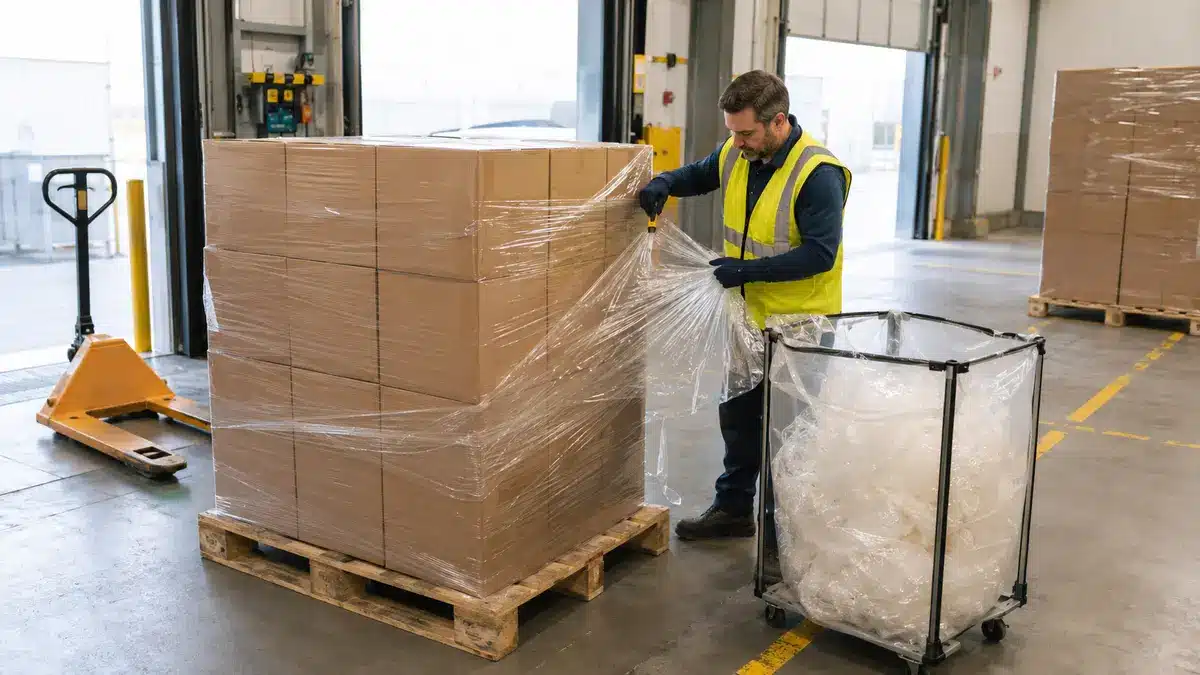
Record the information available for each stream:
- supplier and product or grade;
- base polymer and full layer construction;
- clear, colored, or printed condition;
- labels, tape, adhesive, and other attachments;
- source location and likely contamination;
- estimated generation volume and frequency; and
- whether the material is pre-consumer production scrap or used post-commercial film.
This record does not establish recyclability, but it gives a recycler enough information to screen the stream.
2. Confirm a Recycler Before Collection
Contact a local commercial recycler, broker, waste contractor, backhaul program, or other verified outlet. Provide specifications and, when requested, a representative sample. Ask for written answers covering:
- accepted polymers, constructions, colors, and printing;
- label, tape, paper, strapping, and moisture limits;
- acceptable collection containers and bale specifications;
- minimum pickup quantity or frequency;
- whether streams must remain segregated;
- transport, ownership, and rejected-load terms; and
- the intended reprocessing route or end market.
Retail Store Drop-off is designed for qualifying consumer PE film packages, not automatically for industrial volumes. How2Recycle notes that U.S. Store Drop-off eligibility is limited to qualifying pure PE films and that acceptance can vary by location. A warehouse should not send commercial quantities to a retail bin without the program operator’s approval.
3. Keep the Film Clean, Dry, and Separate
Place clearly identified collection points where employees remove pallet wrap. The shorter the distance between generation and the correct container, the fewer opportunities there are for film to enter trash or collect contaminants.
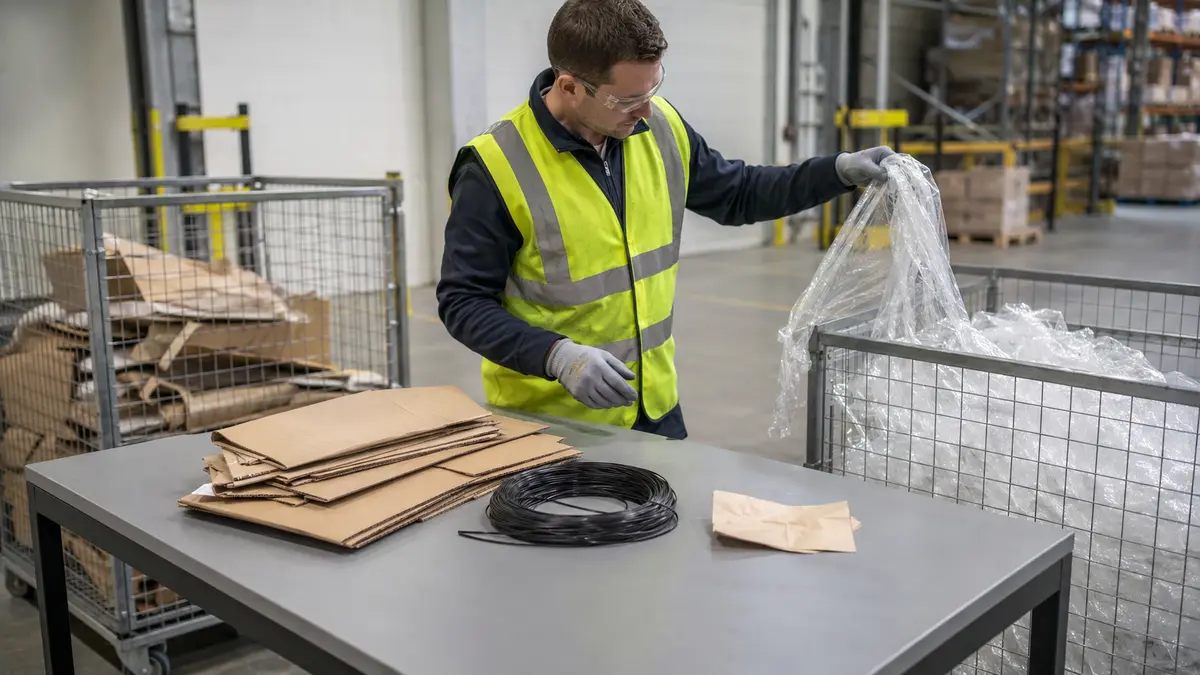
Use simple, stream-specific instructions:
- remove paper labels, tape, straps, and loose foreign objects when the recycler requires it;
- exclude food-soiled, oily, muddy, or chemically contaminated film unless explicitly accepted;
- keep rain, wash water, and floor debris out of the container;
- do not mix rigid plastics, cardboard, shrink sleeves, multilayer pouches, or unknown flexible films into a PE stretch-film stream; and
- isolate questionable material for review instead of guessing.
Photographs of acceptable and unacceptable material, approved by the recycler, can make training more consistent than a generic “plastic film” sign.
4. Consolidate and Record the Material
Loose stretch film is bulky and difficult to transport. Depending on volume and collector requirements, a business may consolidate it in dedicated clear bags, cages, gaylords, returnable containers, or bales. Baling can improve storage and freight efficiency at higher volumes, but bale dimensions, tie material, weight, and contamination criteria must come from the receiving recycler. Equipment selection and operation also require site-specific safety review and trained personnel.
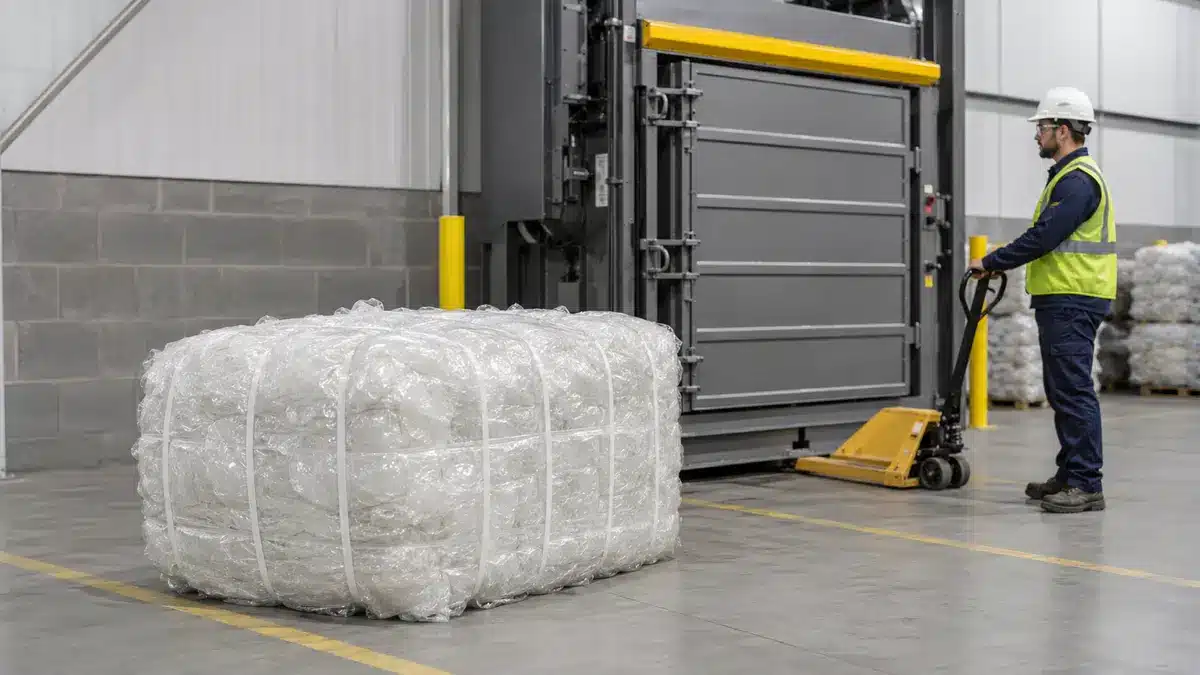
Maintain basic records for each shipment: source stream, date range, approximate or measured weight, collector, destination, rejection or downgrade notes, and any certificate or weight ticket supplied. These records help a business improve the program and support carefully worded diversion reporting. They do not, by themselves, prove that every pound became a new product.
Common Reasons a Stretch Film Load Is Rejected
Rejection usually reflects incompatibility, contamination, or logistics rather than one universal numerical threshold. The receiving recycler’s current specification remains controlling.
| Risk | Why It Can Matter | Practical Control |
|---|---|---|
| Mixed polymers or unknown flexible packaging | A PE film reprocessing stream may not tolerate incompatible resin or multilayer structures | Keep stretch film separate and obtain construction information |
| Paper, cardboard, strapping, clips, or rigid plastic | Foreign materials add sorting burden and can contaminate recycled feedstock | Remove attachments as specified and use film-only containers |
| Excessive labels, tape, or adhesive | Components may not separate cleanly during reprocessing | Confirm allowable label and adhesive systems with the recycler |
| Food, oil, chemicals, soil, or moisture | Contamination can affect safety, washing, yield, odor, and resin quality | Collect material at source, keep it covered, and exclude contaminated film |
| Unapproved print, pigment, or additive system | Color and additives can narrow the quality or end-market options for recycled resin | Disclose the exact film specification and provide a sample when requested |
| Loose, low-volume, or poorly packaged material | Transportation and handling may be uneconomic or unsafe for the chosen outlet | Match container, bale, quantity, and pickup method to written requirements |
If a load is rejected, record the reason and compare it with the incoming specification. Do not simply reclassify the material as recyclable for another outlet without new confirmation.
What Procurement Teams Should Verify Before Claiming Recyclability
Procurement can reduce uncertainty by making recycling evidence part of the film specification and supplier-document review. A useful evidence pack includes:
- exact product, grade, base polymer, and layer structure;
- color, print, label, tape, coating, and additive details relevant to reprocessing;
- an applicable design-for-recycling assessment or test, including its scope and version;
- the target market and the collection route available to intended users;
- written recycler or program acceptance criteria for the actual stream;
- known preparation instructions and contamination exclusions;
- the intended end market for recovered material, when substantiation requires it; and
- the precise wording and qualification of any on-pack, website, or customer claim.

The FTC Green Guides explain that environmental marketing claims should be truthful and substantiated and that recyclable claims may need qualification where appropriate recycling facilities are not broadly available. Claims should therefore match the evidence and geography. “Technically recyclable PE film; check the identified commercial program” conveys a different and narrower meaning than “100% recyclable everywhere.”
Important: A generic resin statement, recycling symbol, supplier brochure, or management-system certificate is not product-specific proof of recyclability. Ask what the evidence supports—and what it does not support.
For an RFQ request documents that apply to the exact film construction and target market If the supplier changes resin layer structure color print cling package recycled content or another relevant feature reassess the.
Frequently Asked Questions
Can Stretch Film Go in a Standard Recycling Bin?
Usually no in the United States. EPA guidance says plastic bags and wraps generally do not belong in curbside recycling, although local rules control. Use a confirmed film drop-off or commercial collection route instead. If the local program explicitly accepts stretch film, follow its preparation instructions.
Does Recycling Code #4 Prove That Stretch Film Will Be Recycled?
No. Code #4 identifies an LDPE-family resin; it does not verify the complete construction, contamination level, collection access, sorting behavior, reprocessing compatibility, or end market. Treat it as one identification input and confirm the actual pathway.
Can Printed or Colored Stretch Film Be Recycled?
It depends. Printing, pigment, labels, and additives can affect recycled-resin quality and end-market options, but acceptance criteria differ. Give the recycler the exact specification and a representative sample rather than assuming that all printed or colored film passes or fails.
Must Stretch Film Be Baled?
Not always. High-volume operations often bale film to reduce storage and transport volume, but smaller programs may use bags, containers, gaylords, cages, or backhaul systems. Confirm the collector’s quantity, bale, tie, and pickup requirements before purchasing equipment or changing the handling process.
Conclusion: Recyclability Depends on the Complete Pathway
Stretch film can be recyclable, especially when a business generates a clean and consistent PE film stream, but the polymer name is only the starting point. A defensible decision requires compatible design, a real collection route, preparation that meets the recycler’s specification, and an end market.
Before calling a film recyclable:
- identify the exact film construction;
- confirm local or commercial acceptance in writing;
- control contamination at the point of generation;
- consolidate the material as the recycler requires; and
- keep the evidence and claim wording aligned with the target market.
Where any of those inputs is missing, narrow the claim and state the verification still required. That is more accurate—and more useful—than treating recyclability as an unconditional material property.
Related Bestypack Resources
- The Ultimate Guide: PE vs. PVC Stretch Film
- stretch film
- BOPE Film Biaxially Oriented Polyethylene Film
- PE Film Manufacturer&Supplier
- PVA Film Guide: Environmental Impact and Characteristics
 English
 Japanese
 French
 Spanish
 Korean
 Italian
 Portuguese
 Dutch
Dutch Arabic
 Russian
 German