
“Polyolefin,” “폴리에틸렌,” and “PVC” are often presented as three equal film choices. Chemically, that framing is wrong: polyethylene is one member of the polyolefin family, while PVC is a separate polymer. Commercial packaging language adds another complication because “POF” commonly refers to a class of 수축 필름, not a complete formulation. A useful comparison must therefore move from taxonomy to the finished film, the packaging process, the test conditions, and the target market.
Start With the Taxonomy: PE Is a Polyolefin, PVC Is Not
미국 식품 접촉 관련 사항의 경우, 완제품 필름에 대한 주장을 승인하기 전에 eCFR 폴리머 조항을 검토하십시오.
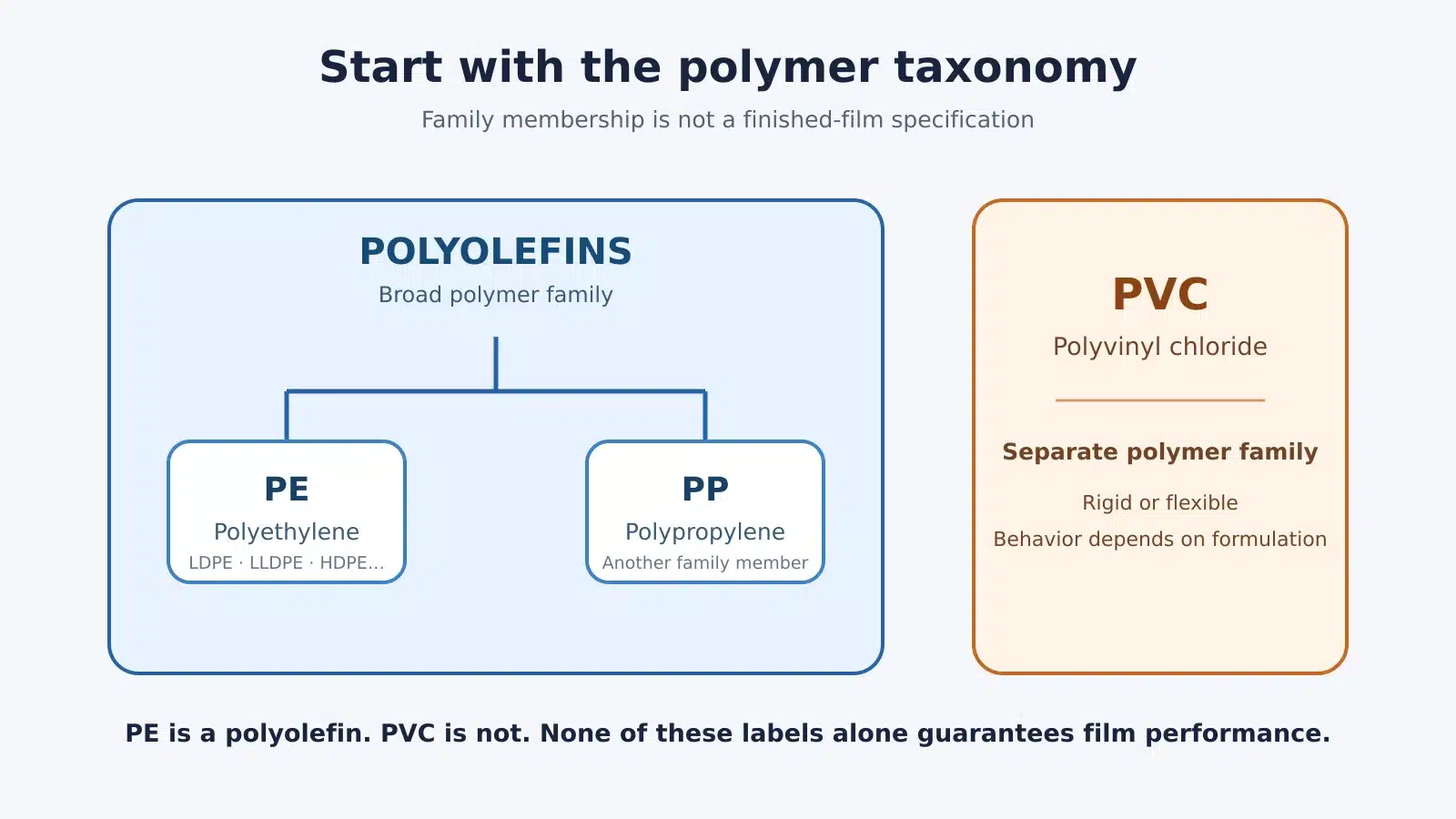
The first purchasing risk is a category error. “Polyolefin” is a family name; “polyethylene” identifies part of that family; and “PVC” identifies a different polymer. If an RFQ lists all three as parallel resins, two suppliers may interpret the request in different ways and still believe they answered it correctly.
Polyolefins Are a Polymer Family
Polyolefins are thermoplastic polymers produced from olefin monomers. In packaging discussions, polyethylene and 폴리프로필렌 are the two most familiar members. The family also covers many grades and copolymers, so the word 폴리올레핀으로 구성됩니다. alone does not state density, comonomer, orientation, additive package, layer structure, or finished-film performance.
This distinction is practical, not merely academic. A polypropylene-rich oriented film, an LLDPE 스트레치 필름, and a multilayer 폴리올레핀 수축 film can all fall under the broad polyolefin umbrella while serving very different packaging jobs.
Polyethylene Is One Member of That Family
Polyethylene, or PE, is made from ethylene-derived repeat units and is sold in multiple grade families. LDPE, LLDPE, MDPE, and HDPE differ in chain architecture and density ranges. Those differences influence how closely chains pack and affect properties such as stiffness, toughness, melt behavior, and seal response. The grade designation is useful, but it still is not a complete film specification.
A finished PE film can be blown or cast, mono- or multilayer, unoriented or directionally oriented, and formulated with slip, antiblock, processing aids, pigments, or other additives. Film gauge and converting history matter as well. Consequently, the safe statement is “PE is a polyolefin”; the unsafe shortcut is “all polyolefin films are PE films with the same behavior.”
PVC Belongs to a Separate Chlorine-Containing Polymer Family
聚氯乙烯, or PVC, is not a polyolefin. Its repeat structure contains chlorine, and commercial PVC can be formulated into rigid or flexible products. Packaging film is generally discussed on the flexible side of that range, where the compound and its additives strongly influence handling and performance.
The taxonomy tree is therefore simple:
- Polyolefins: a broad family that includes PE and PP.
- Polyethylene: one polyolefin member with several grade families.
- PVC: a separate polymer whose film behavior depends strongly on formulation.
This tree prevents naming errors, but it does not rank films. Performance decisions belong to the finished construction and its verified data.
What “POF” Usually Means in Packaging Film Discussions
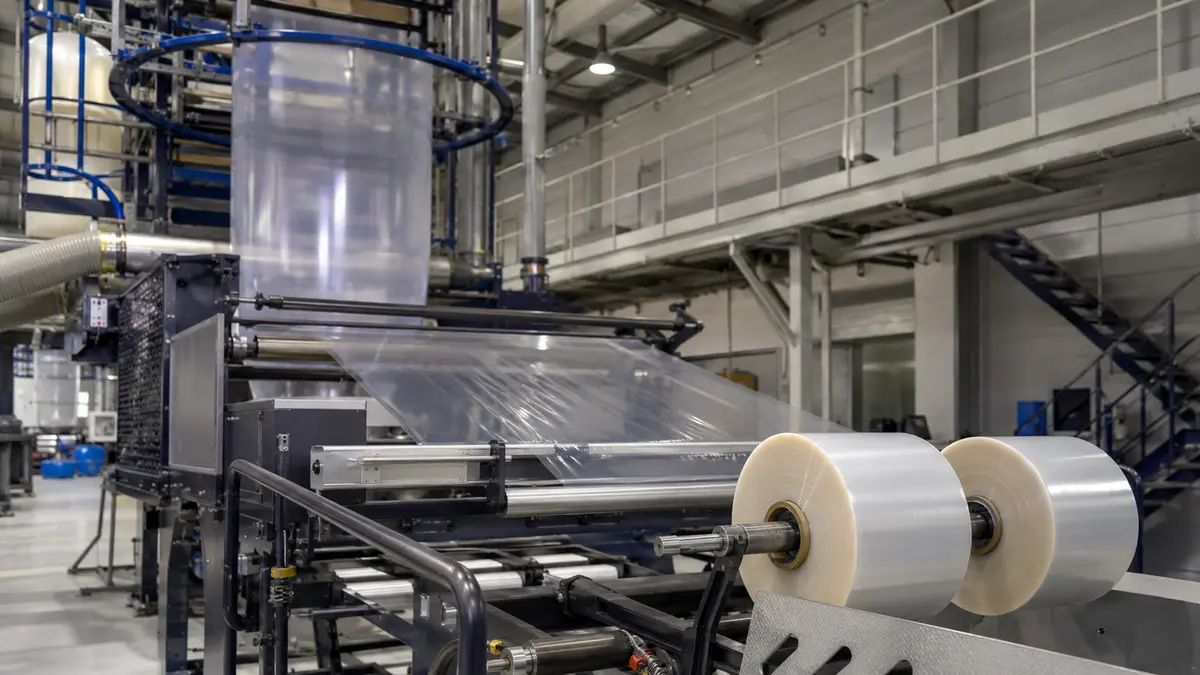
In packaging sales and operations, POF usually means polyolefin 수축 필름. It is useful shorthand for a commercial film category, especially in retail shrink wrapping, but it should not be mistaken for a single resin identity. Supplier literature shows that commercial POF products may be multilayer and coextruded; some grades are crosslinked or biaxially oriented. The precise combination varies by product.
That is why a specification reading only 60-gauge POF is incomplete It gives a film family and a thickness indication but may not identify the dominant polymers layer functions orientation crosslinking status shrink balance seal window approved use or recycling design Even two.
For sourcing, treat POF as the beginning of a supplier conversation. Request the technical data sheet and ask for the finished-film construction at a level the supplier can disclose, nominal thickness and tolerance, MD/TD shrink data with test conditions, seal guidance, food-contact documentation when relevant, and any recycling claim basis. This keeps commercial shorthand from becoming a false technical specification.
How Polymer Structure and Formulation Change Film Behavior
Film behavior is built through several levels: polymer chemistry, grade architecture, additive package, layer design, orientation, thickness, and conversion conditions. Comparing only the resin name skips most of the variables that the packaging line actually encounters.
PE Density and Branching Create Different Film Grades
PE chains can have different amounts and types of branching. Fewer branches generally allow closer chain packing and higher density; branching and comonomer choices alter crystallinity and molecular organization. Manufacturers use these levers, together with molecular-weight distribution and melt index, to create grades with different balances of stiffness, toughness, drawdown, optics, sealability, and processability.
LDPE often contributes melt strength and processing stability. LLDPE families can provide toughness and flexibility across blown- and cast-film applications. HDPE grades can offer a different stiffness and density profile. These are useful directions, not guaranteed film rankings. A thin, oriented, multilayer HDPE-containing film cannot be fairly compared with a thicker monolayer LDPE film by resin acronym alone.
PVC Film Properties Depend Heavily on Formulation and Additives
PVC resin can be transformed through compounding. Plasticizers are used when flexibility is needed, while stabilizers, lubricants, pigments, processing aids, and other additives may be selected for manufacturing and end-use requirements. The identity and amount of those components are formulation-specific.
This makes broad statements such as “PVC is always soft,” “PVC always seals at one temperature,” or “all PVC 필름 has the same food-contact status” unreliable. The finished compound, thickness, manufacturing route, and intended conditions of use must be known. The same discipline applies to PE and POF: additives, layers, and orientation can change surface friction, seal behavior, optics, shrink response, and recycling compatibility without changing the broad family label.
Polyolefin, PVC, and PE Films Compared on the Same Axes
The table below compares decision categories, not guaranteed values. “폴리올레핀 필름” is intentionally separated into commercial POF 수축 필름 film and PE 필름 so that a family label is not treated as a single resin specification.
| 결정 축 | 폴리염화비닐 배합; 유연 등급은 가소제와 안정제를 사용할 수 있음 | Flexible PVC film | PE 필름 |
|---|---|---|---|
| Identity | A supplier-defined polyolefin shrink-film construction often multilayer and possibly crosslinked… | A flexible compound based on PVC resin plus a formulation… | A film based primarily on one or more PE grades… |
| Typical packaging direction | High-clarity retail shrink and other supplier-qualified shrink formats | Certain shrink overwrap sleeve and specialty formats where the formulation… | Bags liners stretch or collation bulk shrink seals and many… |
| Process variables | Seal system shrink balance film gauge tunnel heat airflow and… | Formulation seal system heat history gauge and line conditions | Grade blend extrusion route gauge slip antiblock seal conditions and… |
| Mechanical evidence… | Request tensile tear impact seal and shrink data for the… | Request finished-film mechanical and shrink data for the exact formulation | Request finished-film data in MD and TD where direction matters |
| Optical evidence | Haze gloss and appearance should be measured on the supplied… | Clarity and appearance depend on formulation and surface condition | Optics vary widely with grade crystallinity processing additives and gauge |
No row establishes a universal winner. A film can be well suited to one format and poorly suited to another. It can also satisfy a laboratory property while failing on the line because friction, seal geometry, shrink balance, perforation, heat exposure, or product shape was not represented in the comparison.
Match the Film to the Packaging Format and Process
Start with the package job. Retail display shrink around a book or multipack is different from heavy-duty collation shrink, pallet stretch containment, a lidding web, or a high-barrier food package. A candidate that is appropriate in one format may not even be processed by the same equipment in another.
| Packaging situation | 주요 요구 사항 또는 위험 | Candidate direction to investigate | Trial limit |
|---|---|---|---|
| Clear retail shrink | Presentation, balanced shrink, clean seals, limited product distortion | Supplier-qualified POF or PVC shrink grade; PE shrink only when the construction and line fit the job | Confirm optics, seal appearance, shrink force, corners, and heat exposure on the product |
| Bulk or collation shrink | Load containment, puncture resistance, film yield, robust handling | PE shrink constructions are common candidates | Confirm holding performance, tunnel capacity, cooling, and distribution abuse |
| Stretch containment | Elastic recovery and 하중 안정성 without a shrink tunnel | Stretch-film construction, commonly PE-based | Do not substitute a shrink-film label for stretch-film performance data |
| Food overwrap or lidding | 실링 무결성, fog/optics, barrier, product compatibility, regulatory documents | A qualified finished structure, which may be multilayer | Validate the whole package, food, storage, time, and temperature conditions |
Next, map the line. The sealer type, seal-bar design, available temperature control, jaw pressure, dwell time, tunnel length, airflow, conveyor speed, product dimensions, and heat sensitivity define the operating window. Some machines can run multiple film families, but compatibility does not mean identical settings.
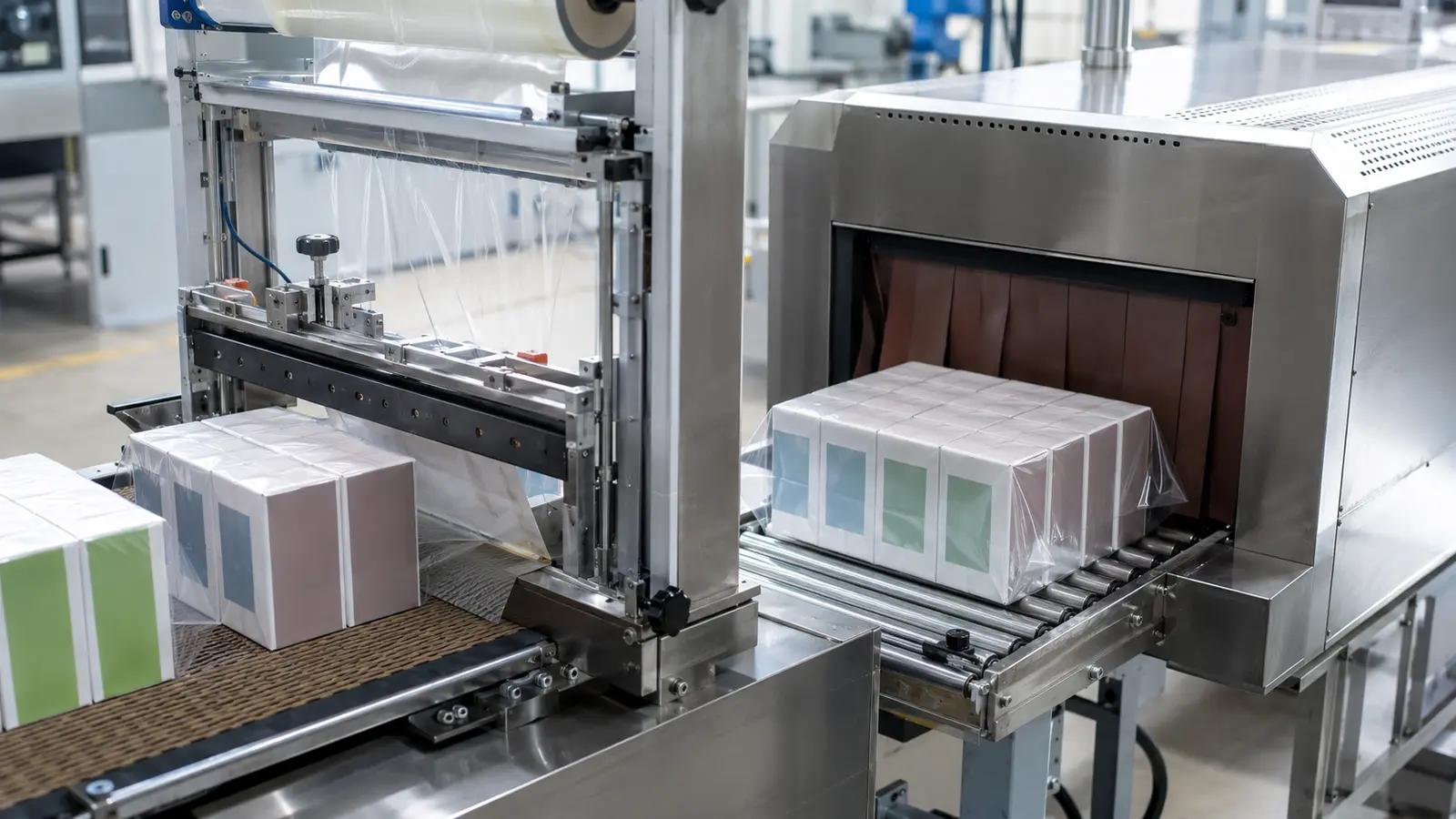
Finally, include distribution and presentation. Sharp edges, heavy products, refrigerated condensation, long storage, print requirements, tamper evidence, and opening behavior can change the best direction. The result of this stage should be a short list for testing—not a purchase decision based only on a polymer name.
Test the Finished Film, Not Just the Polymer Name
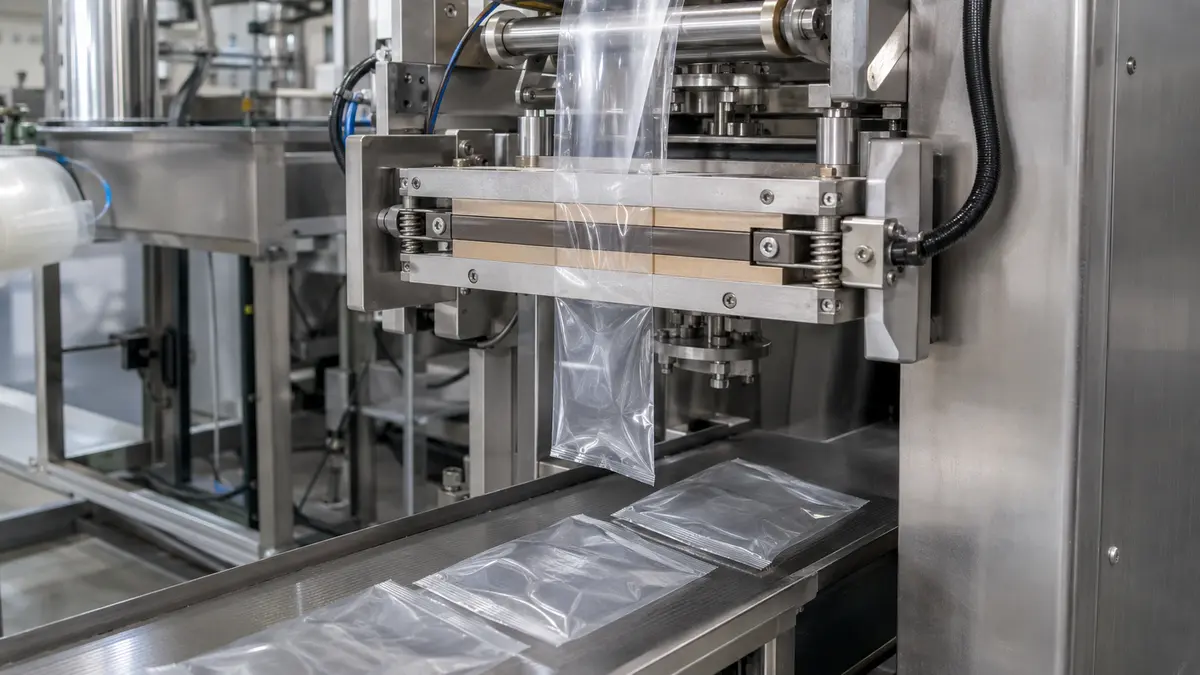
A reliable data package connects each decision to a method, specimen, conditions, and reporting unit. The exact current method edition should be confirmed when the RFQ or test plan is issued; the matrix below identifies common ASTM method families without reproducing proprietary procedures.
| Buyer question | Method family example | Conditions or reporting details to retain | 결과가 뒷받침할 수 있는 사항 |
|---|---|---|---|
| 필름은 인장에 어떻게 반응합니까? | ASTM D882 for thin plastic sheeting | Gauge, specimen dimensions, MD/TD, conditioning, strain rate, units | Relative tensile behavior under the stated method, not package abuse by itself |
| Will surfaces slide consistently? | ASTM D1894 | Film-to-film or film-to-other surface, side tested, temperature, dwell/loading details | Static and kinetic friction under stated surface conditions |
| How clear is the film? | ASTM D1003 for haze and luminous transmittance | Gauge, specimen condition, instrument/procedure identification | Optical transmission and wide-angle scattering, not shelf appearance alone |
| How strong is the seal? | ASTM F88/F88M | Materials sealed, seal conditions, specimen width, technique, rate, failure mode | Seal separation force and failure mode; package integrity requires more validation |
| How does the film resist impact or tear? | ASTM D1709 and D1922 families | Gauge, method variant, orientation, conditioning, units | Method-specific impact or tear response; methods are not numerically interchangeable |
| What are the gas and moisture barriers? | ASTM D3985 for OTR; ASTM F1249 for WVTR | Temperature, RH, specimen thickness, test side, area basis, gas, units, equilibrium criteria | Transmission through the tested film or structure under those conditions |
Shrink films also need shrink percentage or dimensional-change data shrink force where relevant and seal-window information under stated conditions Production qualification should add machinability visual defects seal integrity pack geometry throughput distribution simulation and shelf-life work appropriate.
Qualify Food-Contact and Regulatory Claims by Market and Use
식품 접촉 적합성은 “PE”, “POF” 또는 “PVC”의 보편적 속성이 아닙니다. 이는 특정 시장에서 특정 조건 하에 특정 물질 또는 제품에 관한 법적·기술적 결론입니다.
미국의 경우, 21 CFR 177.1520은 특정 올레핀 중합체에 대해 정체성, 규격, 추출 한계, 식품 유형 및 사용 조건을 규정합니다. FDA는 또한 승인이 의도된 용도 및 제한 사항에 연계될 수 있음을 명확히 합니다. 올바른 질문은 “PE가 FDA 승인을 받았는가?”가 아니라 “이 완제품 구조의 모든 관련 구성 요소가 의도된 식품 및 시간/온도 조건에 대해 적용 가능한 승인을 준수하는가?”입니다.”
유럽연합의 경우, 개정된 EU 규정 제10/2011호는 식품 접촉용 플라스틱 재료 및 제품에 대한 규칙을 수립합니다. 구성, EU 목록 제한, 전체 또는 특정 이행량, 적합성 선언서, 근거 문서 및 시험 조건이 모두 관련될 수 있습니다. EU 규정 제2025/351호가 해당 프레임워크를 개정하였으므로, 기존 적합성 선언서는 검토 없이 현재 유효한 것으로 간주해서는 안 됩니다.
재료 등재가 포괄적 승인을 의미하지 않는 이유
기초 중합체 등재는 완제품 포장재의 모든 첨가제, 착색제, 접착제, 잉크, 코팅, 재활용 함유 원료 또는 층을 자동으로 포함하지 않습니다. 또한 모든 식품 범주, 저장 기간, 고온 충전 조건, 레토르트 공정 또는 반복 사용에 대한 적합성을 입증하지도 않습니다.
공급업체에 정확한 등급 또는 필름 구조와 대상 시장에 연계된 선언서 또는 문서를 요청하십시오. 해당 문서에는 규제 근거, 의도된 식품 접촉면, 적용 가능한 식품 유형, 시간 및 온도 한계, 기능성 차단층 또는 이행 가정이 명시되어야 합니다. 포장재가 다층 구조인 경우, 책임은 실런트 수지에 국한되지 않습니다. 제품별 주장에는 제품별 증거가 필요하며, 본 문서는 BestY Pack 등급에 대한 적합성 주장을 하지 않습니다.
실제 포장재 흐름에서 재활용성 및 지속가능성을 평가하십시오.
“데이터 시트의 ”폴리올레핀“ 또는 ”PE” 표기는 그 자체로 포장재의 재활용 가능성을 보장하지 않습니다. 현재의 재활용 설계 시스템은 완제품 포장재 전체를 평가합니다. 층, 코팅, 라벨, 잉크, 접착제, 마개, 부속품, 안료, 충전제, 치수, 잔류물 및 광학 선별 거동이 결과를 변경할 수 있습니다.
APR 설계 가이드는 재활용성을 전체 포장재 평가로 취급합니다. RecyClass 또한 PE에 대한 흐름별 지침 및 평가 프로토콜을 제공하며, 유연 포장재, 혁신 및 비(非)PE 구성 요소에 대한 시험 경로를 포함합니다. 이러한 프레임워크는 기술적 호환성 질문에 답변합니다. 이는 지방자치단체 또는 매장 프로그램이 해당 품목을 수거할 것임을 입증하지는 않습니다.
이러한 수거 접근성 차이는 특히 중요합니다 유연 필름의 경우 두드러집니다. 미국 EPA는 봉투, 랩 및 필름이 일반적으로 가정용 커브사이드(도로변) 수거함에 넣어서는 안 되며, 대신 참여 소매점에서 수거될 수 있다고 조언합니다. 현지 지침이 우선합니다. 따라서 기술적으로 호환되는 PE 필름이라도 특정 시장에서는 편리한 수거 체계가 부재할 수 있습니다.
PVC 또한 동일하게 정밀한 언어 사용이 필요합니다. 전용 PVC 재활용 활동이 존재하므로 “절대 재활용 불가”라고 불러서는 안 됩니다. 동시에 전용 PVC 경로에 대한 증거가 PE 유연 필름 흐름과의 호환성을 입증하지는 않습니다. 다음 질문을 분리하여 유지하십시오:
- 포장재는 어떤 흐름을 위해 설계되었는가?
- 포장재 전체가 해당 흐름에 대한 현재의 기술 지침을 충족하는가?
- 대상 시장에서 포장재가 의미 있는 규모로 수거 및 선별되는가?
- 해당 시장에서 어떤 소비자 안내 및 주장 문구가 법적으로 뒷받침될 수 있는가?
명명된 지침, 버전 날짜, 필요한 경우 시험 결과 및 현지 접근성 증거를 사용하십시오. 완전하고 시장별 근거 없이 “친환경”, “그린” 또는 “100% 재활용 가능”과 같은 모호한 주장은 피하십시오.
방어 가능한 RFQ 및 기계 시험 계획 수립
강력한 RFQ는 “어떤 재료가 더 좋은가?”라는 질문을 정의된 투입 요소와 승인 증거로 전환합니다.
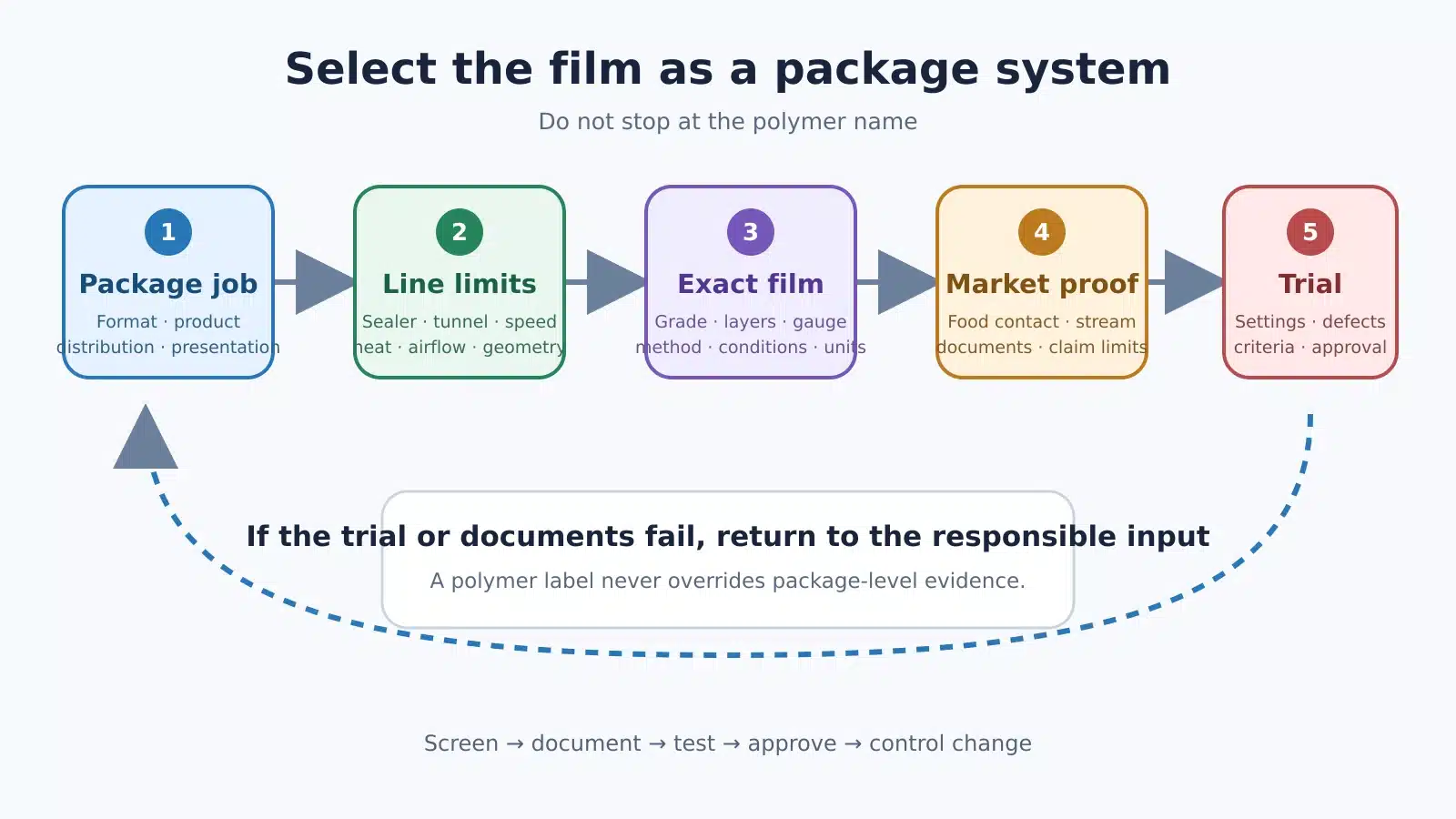
- 포장재 및 제품을 정의하십시오. 형식, 제품 치수 및 중량, 날카로운 모서리, 열 민감성, 식품 또는 비식품 용도, 보관, 유통, 표시, 개봉 및 위변조 방지 요구사항을 명시하십시오.
- 필름 요구사항을 정의하십시오. 수축, 스트레치, 뚜껑(리드), 백(bagging) 또는 기타 형식인지 명시하십시오. 중합체 계열 및 공개된 구조, 공칭 두께 및 허용 오차, 폭, 표면 처리, 가공에 관련된 첨가제, 배향 또는 가교 상태, 수축 균형 및 롤 요구사항을 요청하십시오.
- 장비 및 공정을 정의하십시오. 포장기/실링기 모델, 실링 시스템, 터널 치수, 사용 가능한 온도 및 기류 제어, 컨베이어 범위, 목표 처리량, 제품 간격 및 알려진 운전 제약 조건을 식별하십시오.
- 증거 패키지를 정의하십시오. 최신 기술 데이터 시트, 시험 방법, 버전, 단위, 전처리 조건 및 MD/TD 데이터, 해당되는 경우 각 대상 시장에 대한 식품 접촉 문서, 재활용성 평가 근거, 안전 및 취급 정보, 추적성 및 변경 관리 조건을 요청하십시오.
- 시험 프로토콜을 정의하십시오. 필름 로트, 두께, 폭, 실링 시간/온도/압력, 터널 온도, 기류 및 컨베이어 속도, line speed, 주변 조건, 제품 구성, 천공, 관찰된 결함, 스크랩, 가동 중단 시간 및 반복성을 기록하십시오.
- 가동 전에 승인 기준을 정의하십시오. 실링 무결성, 외관, 수축 적합성, 제품 변형, 처리량, 롤 취급, 하류 유통, 해당되는 경우 유통기한 또는 차단 성능 결과를 포함하고 승인을 문서화하십시오.
실용적인 경우 한 번에 하나의 제어 변수만 변경하십시오. 필름 변경이 두께, 폭, 천공 및 터널 설정도 함께 변경하는 경우, 성공적인 포장 결과만으로는 어떤 요인이 결과를 만들었는지 알 수 없습니다. 승인된 샘플, 설정, 시험 보고서, 공급업체 개정판 및 편차 기록을 보관하십시오. 이후의 배합 또는 제조 변경은 알려진 기준선과 대비하여 검토할 수 있습니다.
자주 묻는 질문
폴리에틸렌과 폴리올레핀은 같은 것입니까?
정확히 그렇지 않습니다. 폴리에틸렌은 폴리올레핀이지만, 폴리올레핀 계열은 더 넓으며 폴리프로필렌 및 기타 올레핀 기반 중합체와 공중합체도 포함합니다. RFQ에서는 폴리에틸렌을 의미할 때 PE 를 사용하십시오. 더 넓은 계열을 의도하는 경우에만 폴리올레핀으로 구성됩니다. 를 사용하고, 그 다음 등급, 구조 및 성능 요구사항을 추가하십시오.
POF가 항상 폴리에틸렌 필름을 의미합니까?
아닙니다. 포장 분야에서 POF는 일반적으로 상업용 폴리올레핀 수축 필름 범주를 의미합니다. 제품에는 여러 폴리올레핀 층 또는 구성 요소가 포함될 수 있으며 가교 또는 배향 처리될 수 있습니다. 해당 명칭은 PE 단독 구성을 입증하지 않습니다. 정확한 등급에 대한 공급업체의 구조 공개 및 기술 데이터를 요청하십시오.
PVC 필름이 항상 식품 포장에 부적합합니까?
포괄적인 답변은 방어할 수 없습니다. 적합성은 완제품 배합, 모든 관련 구성 요소, 대상 시장, 의도된 식품, 접촉 시간 및 온도, 그리고 뒷받침하는 적합성 문서에 따라 달라집니다. 일반적인 PVC 명칭은 적합성을 입증하지도, 금지를 입증하지도 않습니다.
수축 포장에 어떤 필름이 더 좋습니까?
더 좋은 필름은 포장재와 라인에 대해 적격성이 입증된 필름입니다. 소매용 투명 수축, 불규칙한 제품, 대량 묶음, 열 민감성 제품 및 식품 용도는 서로 다른 요구사항을 만듭니다. POF, PVC 및 PE 구조를 해당 요구사항에 대해 스크리닝한 다음, 조절된 시험 데이터와 통제된 기계 시험을 통해 정확한 등급을 비교하십시오.
PE 필름이 기계 설정 변경 없이 PVC를 대체할 수 있습니까?
그렇게 가정하지 마십시오. 실링 반응, 수축 곡선, 두께, 강성, 마찰, 천공 및 열 요구량이 다를 수 있습니다. 일부 장비는 여러 필름 계열을 처리할 수 있지만, 온도, 체류 시간, 기류, 컨베이어 속도 또는 필름 취급 방식의 조정이 필요할 수 있습니다. 이를 단순 대체가 아닌 통제된 적격성 평가로 취급하십시오.
구매자가 요청해야 할 문서 및 시험 데이터는 무엇입니까?
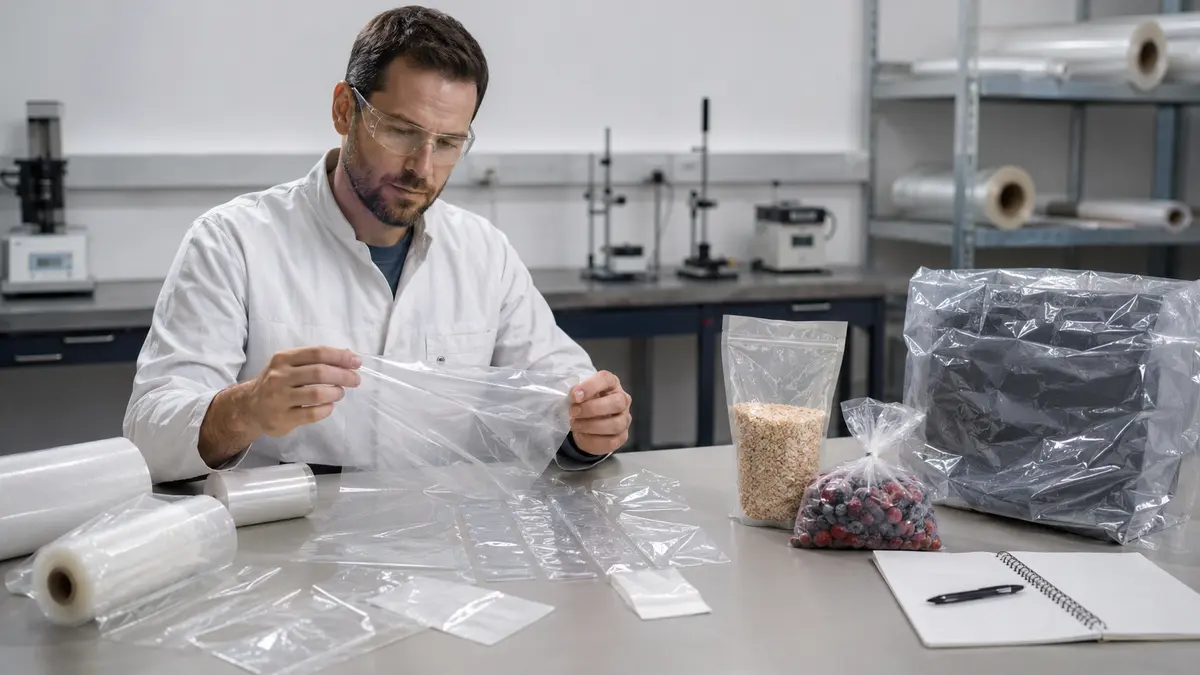
기술 데이터 시트 및 완제품 필름 구조, 공칭 두께 및 허용 오차, 방법 버전과 조건이 포함된 관련 MD/TD 기계적, 광학적, 수축, 실링, 마찰 및 차단 데이터, 해당되는 경우 시장 및 용도별 식품 접촉 문서, 재활용 평가 및 현지 주장 근거, 롤 및 추적성 규격, 안전 정보, 승인된 샘플, 기계 시험 기록 및 공급업체 변경 관리 약속을 요청하십시오.
최종 선정은 포장 시스템 결정으로 문서화되어야 합니다. 중합체 분류법은 초기 명명 오류를 방지하지만, 완제품 필름, 실제 기계, 의도된 시장 및 기록된 증거가 포장재의 사용 적합성을 결정합니다.
참고 자료
- Plastics Europe: Polyolefins
- Plastics Europe: Polyvinyl chloride (PVC)
- LyondellBasell: A Guide to Polyolefin Film Extrusion
- ASTM International: Plastics Standards
- eCFR: 21 CFR 177.1520 Olefin polymers
- EUR-Lex: Regulation (EU) No 10/2011, consolidated text
- APR Design Guide Overview
- RecyClass: Design for Recycling Guidelines
- US EPA: How Do I Recycle Common Recyclables?
 English
 Japanese
 French
 Spanish
 Korean
 Italian
 Portuguese
 Dutch
Dutch Arabic
 Russian
 German