
Cling film is a very common packaging material. It is mainly made by polymerizing ethylene as a raw material. There are three main types of cling film used in the market today. They are polyvinyl chloride (PVC) cling film, polyethylene cling film (PE), and polyvinylidene chloride (PVDC) cling film. Cling film has a very good barrier. It can preserve freshness to extend the shelf life and block dust. Different types of cling film have different properties. You need to choose the right type of cling film according to different products and different foods.
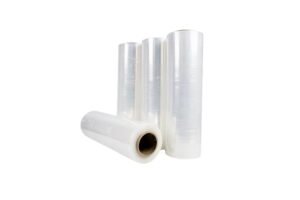
Types of Cling Film
Cling film can be roughly divided into two types. Ordinary cling film and microwave cling film. Both of them can be used for refrigerator preservation. But the latter can also be used in microwave ovens. The heat resistance and non-toxicity of microwave oven cling film are far better than those of ordinary cling film. According to the classification of raw materials, it can be divided into the following three kinds:
PVC cling film:
It is a polymer made by the polymerization of vinyl chloride under the action of an initiator. PVC cling film has excellent elasticity and good Tackiness. The cost price is low. Transparency is very good, and you can see the packaged products clearly.
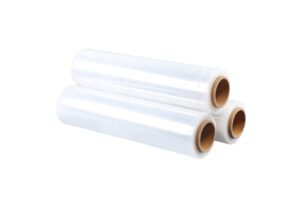
Application: It is mainly used for food packaging, but it will have some effect on human safety. But it can not be used for the preservation of oily food. Because the plasticizers, antioxidants, and other auxiliary materials added in the process of its production are toxic. It will decompose and produce Hydrogen Chloride gas under a high-temperature environment (48℃). It is harmful to the human body. It is not suitable for use in a temperature environment.
PE Cling Film:
It is a thermoplastic resin made from polymerized ethylene, which is then processed into cling film. PE cling film is very safe and reasonably priced. The barrier properties are also excellent. It is not recommended to be used at temperatures above 102 degrees Celsius.

Application: It is mainly used for food packaging. Usually, in the supermarket, it is used in cling film for fruits and vegetables.
PVDC Cling Film:
It is a high-quality cling film made of polymerized vinylidene chloride. It has excellent transparency and Glossiness. It has very good moisture-proof performance. Freshness preservation effect is good. It can extend the shelf life very well. The safety is also higher.
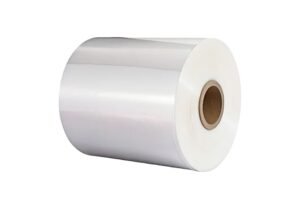
Application: Mainly used for the packaging of cooked food, meat, ham, sausage, and other products.
Comparison of Three Common Types of Cling Film
| Feature/Material | PVC (Polyvinyl Chloride) | PE (Polyethylene) | PVDC (Polyvinylidene Chloride) |
| Heat Resistance | Low. May decompose at higher temperatures (e.g., 48°C), releasing harmful substances; not suitable for heating. | Moderate. Suitable for refrigerator storage; specific heat-resistant types can be used in microwaves. | High. Good heat resistance, suitable for microwave use. |
| Adhesiveness | Good adhesion, excellent elasticity. | Relatively poor adhesion. | Good adhesion. |
| Safety | Low. Contains plasticizers, unsuitable for oily foods; releases toxic substances when heated. | High. No plasticizers, widely recognized as the safest cling film, suitable for all food types. | High. Good safety, suitable for various food packaging. |
| Transparency | High, good transparency. | Relatively low transparency. | High, excellent transparency. |
| Cost | Low cost. | Moderate cost. | Relatively high cost. |
| Recyclability (Environmental Impact) | Difficult to recycle. Hard to degrade, contains harmful chemicals, significant environmental impact. | Easier to recycle. Relatively low environmental impact. | Safer material, but recyclability depends on local policies. |
| Applications | Previously widely used for food packaging, now less common. Not suitable for oily foods or high-temperature use. | Current market leader. Used for fruits, vegetables, meats, supermarket semi-finished products, and refrigerator storage. | Mainly used for cooked foods, ham, premium foods requiring long-term freshness and strong barrier properties. |
| Market Trends | Declining market share, gradually replaced by safer materials like PE. | Dominates the market, most widely used. | Growing in the premium food packaging market. |
How to identify (PVC, PE, PVDC) plastic wrap?
The three types of plastic wrap look very similar, and it’s easy to get confused. But there are ways to recognize them.
- Appearance: Identify under the light. Usually, the best transparency is PVDC cling film, good transparency is PVC cling film, and general transparency is PE cling film. Glossiness comparison, PVDC and PVC cling film are also better, PE cling film’s Glossiness is average. Usually, the whole roll of plastic wrap, PVC plastic wrap, is yellow, and PE plastic wrap is white.
- Touch: Feel the thickness and flexibility of the three types of cling film by touching. Usually, the thinnest and toughest is PVC plastic wrap. Thicker but softer is PE plastic wrap. Thicker but stronger is PVDC cling film. Tackiness of PE cling film is low, and it can be rolled and unfolded by hand, while the tackiness of PVC cling film is high and not easy to unfold.
- Burning test: PE cling film will drip oil and keep burning like a candle after burning. PVC cling film will go out after leaving the fire source and will not drip oil, and it has a pungent and sour smell. PVDC plastic wrap is hard to ignite. After burning, it will turn black and go out quickly.
How to choose the Right Packaging Cling Film
Choosing the right cling film needs to consider the product characteristics, cost, environmental impact, whether recyclable, and other factors.
- Product characteristics: need to consider the characteristics of the cling film. PVDC’s heat resistance is the best, which can be heated in a microwave oven. PE cling film can also be used, but its heat resistance is moderate. PVC’s heat resistance is relatively low; Therefore, the use of the ambient temperature can not be more than 48 ° C, or there will be harmful substances.
- Application scenarios: all three are mainly suitable for food packaging scenarios. But PVC cling film is not suitable for packaging oily food, and is also not suitable for use in a temperature environment. Those who need to keep food fresh in the refrigerator can choose PE cling film. Those who need to pack high-end food and have higher insurance requirements can choose PVDC cling film.
- Environmental impact: It is necessary to consider whether there is any impact on the environment. Whether the three different types of cling film are recyclable or not. Cling film that is safer for the environment can be chosen as PVDC cling film. PE cling film is also less of an environmental factor. However, PVC is more difficult to recycle and produces harmful substances.
- Economics: Budget and cost need to be considered to choose the right cling film. Pvdc cling film is the most costly, PE cling film is moderately costly, and PVC cling film is relatively low-cost.
FAQ
Can packaging cling films be recycled?
Cling film can be recycled, but you need to go to a designated recycling location. Most curbside recycling programs do not accept cling wrap for recycling. So don’t put cling film in your curbside recycling garbage can. Plastic materials will be labeled with a number that represents the resin it is made from. Cling film is usually made from plastic resins #4 and #2. You can use this numbering information to determine whether or not you can recycle specific plastic packaging.
How long can packaging cling films keep food fresh?
Cling film to keep food fresh is a very common way to keep food fresh. Cling film is a plastic that creates a barrier. It prevents outside contaminants from reaching the food. It also maintains some breathability. However, this can also lead to oxygen exposure and moisture loss, which can lead to the growth of bacteria. For deli meats, meat slices usually stay fresh for 3-4 days, and whole cooked meats for 6-7 days. Soft cheeses (e.g., Brie, Camembert): about 6-7 days, hard cheeses can stay fresh for about 2 weeks.Fresh cut fruit (e.g., watermelon, cantaloupe): about 2-3 days. Green leafy vegetables: about 3-4 days.Rice or pasta (cooked): about 2-3 days.Fish (cooked): about 2-3 days

Hello, customers
My name is Jack Yu. I am the Business Manager at BestY Pack Plastic Products. My areas of expertise include film packaging, cold chain transportation packaging, and shrink products. Additionally, our factory manufactures protective gloves, and I can provide you with professional solutions to help you increase your market share and enhance consumer trust.
Email: ᅠjackyu@bestypack.com
Tel: +86 18368319351