
Printed stretch film can turn pallet wrap into a visible communication layer for branding, identification, handling messages, or exception recognition. It is most useful when that communication has a stable operational purpose and will be seen repeatedly. The trade-off is a more complex custom material: artwork, ink adhesion, legibility after stretch, wrapper settings, load containment, inventory, and end-of-life claims all require control. Approval should therefore depend on an exact sample, the intended wrapper and load, and agreed acceptance evidence—not appearance alone.
What Is Printed Stretch Film?
For polymer background, consult the NIH PubChem polyethylene overview before comparing finished-film claims.
For polymer background, consult the NIH PubChem polyethylene overview before comparing finished-film claims.
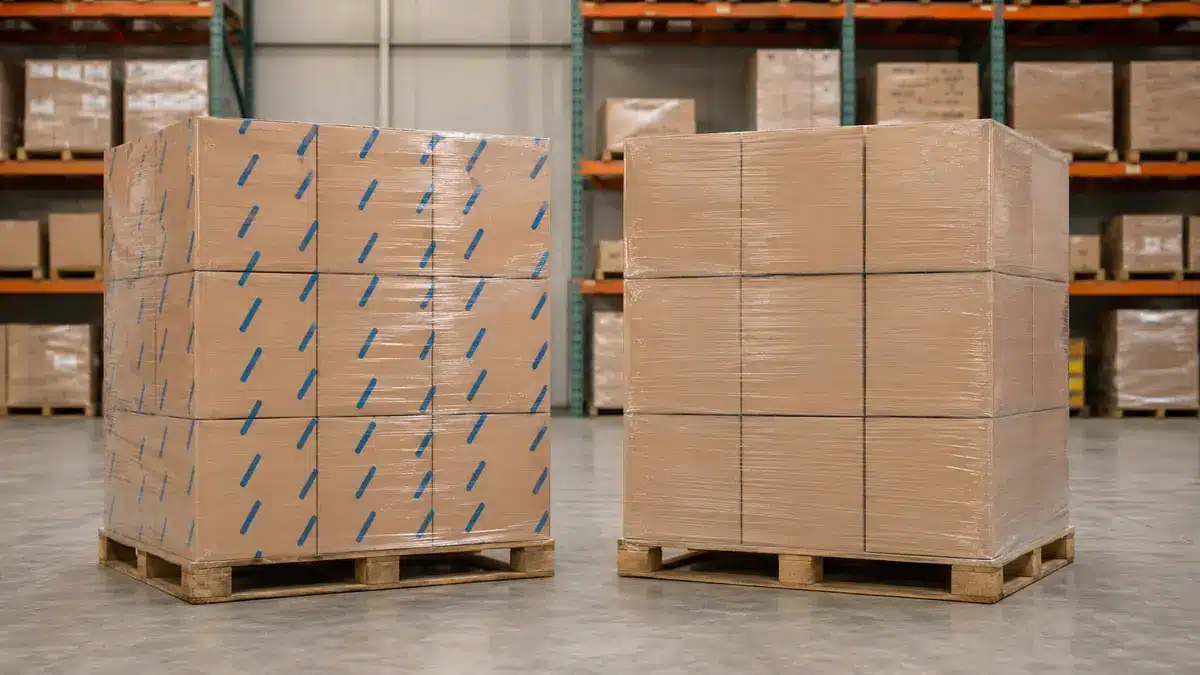
Printed stretch film is stretch wrap that carries repeated graphics, symbols, colors, or text. Like unprinted stretch film, its primary packaging job is to unitize or bundle a load through controlled elongation, elastic recovery, cling, and an applied wrap pattern. The print adds a communication function; it does not automatically improve holding force, puncture resistance, stretch, or protection.
The format is commonly used around palletized cartons, bundles, or other transport units. It should not be confused with shrink film, which is applied and then reduced by heat, or with a primary flexible package that directly contains a product. Those formats have different structures, processes, and compliance questions.
A buyer should define the.
Advantages of Printed Stretch Film
The benefits are strongest when print replaces a real communication task instead of serving as decoration. A clear objective also makes the extra cost and qualification work easier to evaluate.
Brand Visibility Across the Supply Chain
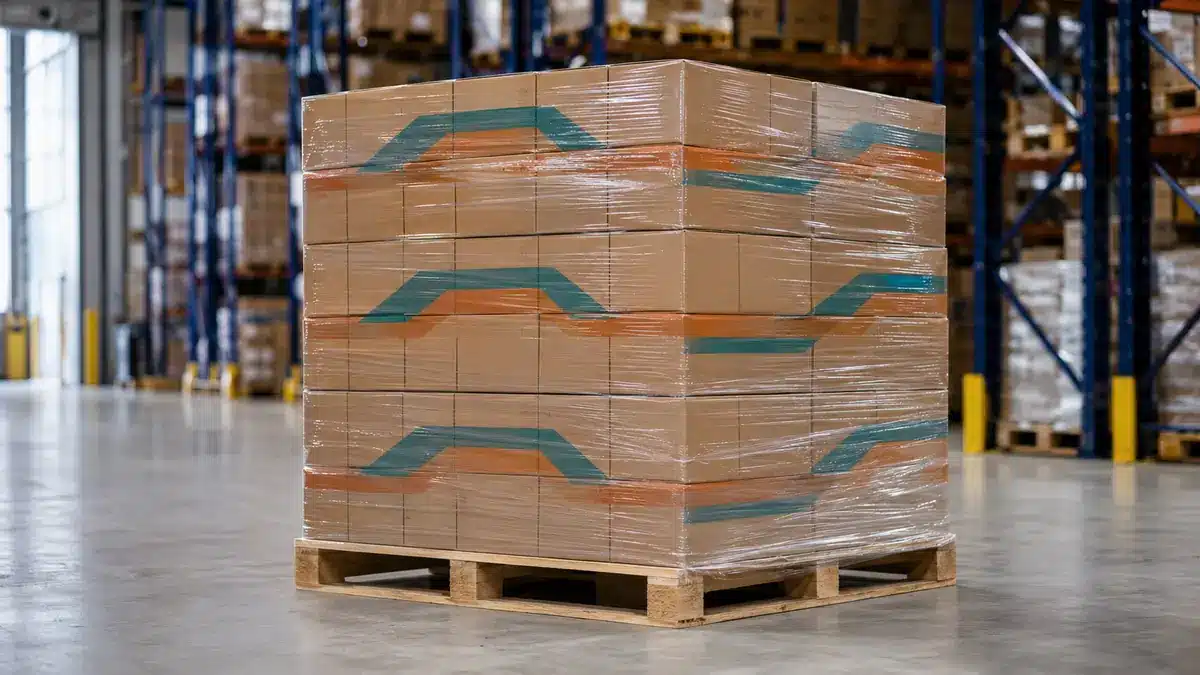
Repeated graphics can keep a brand visible while a pallet moves through warehouses, cross-docks, customer receiving areas, or pallet-based retail displays. This can create a more consistent presentation than a plain clear wrap, especially when the transport unit remains intact and visible for a meaningful part of its journey.
Visibility is not the same as marketing return Before approving custom print identify who will see the wrapped load at what distance under what lighting and for how long A small or detailed logo may disappear after the film stretches and overlaps A simple high-contrast repeat is usually easier to.
Pallet Identification and Handling Communication
Printed film can carry repeated handling cues, destination colors, owner identification, batch-family markings, or warehouse status messages. Because the information repeats around the load, it may remain visible when one face is blocked. This can support quick visual identification and reduce reliance on a single exposed label.
Use print for stable, low-density information. Variable data, long instructions, small barcodes, and frequently changing regulatory text may be better handled by labels or digital tracking systems. If a machine-readable code is required, validate scan grade after the intended stretch, overlap, curvature, glare, and handling—not only on the unstretched web.
Tamper Deterrence, Not Tamper Proofing
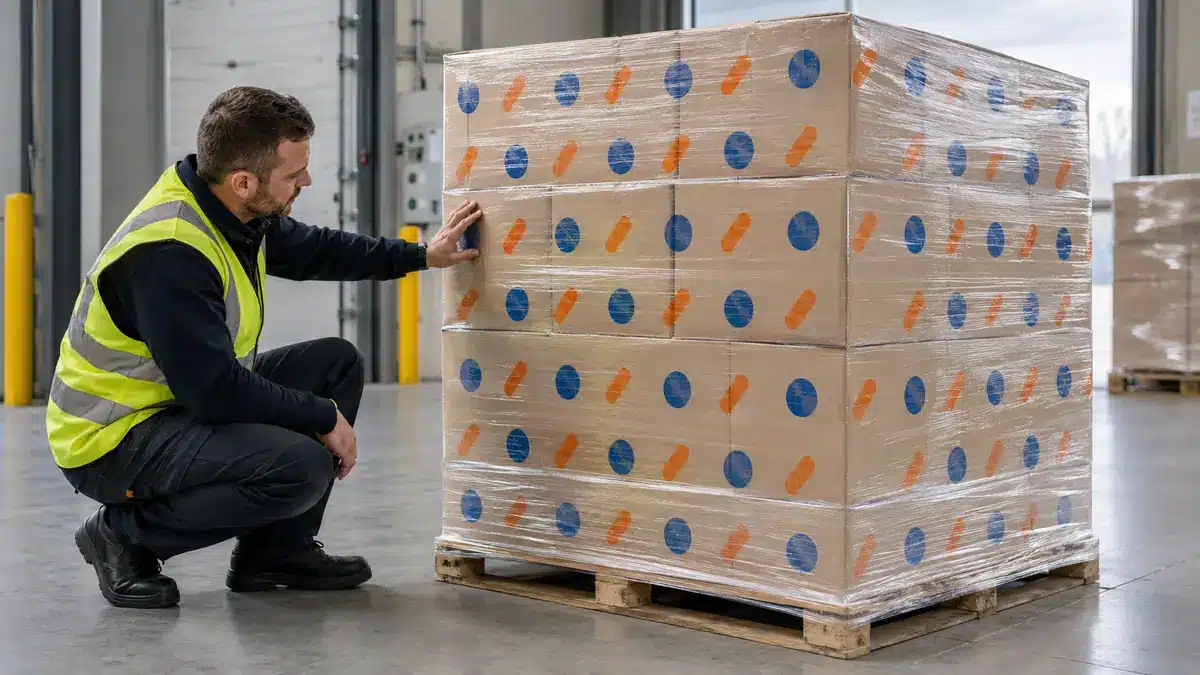
A distinctive, repeated design can make an ordinary replacement film or a disturbed wrap pattern easier to notice. That can deter casual interference and help receiving staff recognize an exception when they know what an intact load should look like.
Print alone does not create a tamper-proof system, and it may not meet a formal tamper-evident requirement. Film can be cut, removed, or replaced; damage may also occur through normal handling. If security matters, define the threat, the expected visible change, the inspection protocol, and the response to an exception. Combine the wrap with controlled seals, serialized identifiers, or other validated controls when the risk assessment requires them.
Disadvantages and Trade-Offs
Printed film adds artwork and ink to a material that must stretch, cling, unwind, and contain a load. The central disadvantage is therefore not just a higher roll price; it is the number of variables that must remain controlled from proof approval through pallet use.
Higher Custom-Conversion Cost and Order Commitments
Custom printing can add prepress, artwork preparation, color matching, setup, plates or other image carriers, proofing, press waste, and quality-control work. The commercial effect depends on the print process, number of colors, coverage, run length, roll format, and supplier. Published peer prices or minimum orders are not safe substitutes for a current quotation on the exact specification.
Inventory exposure also matters. A printed message can become obsolete when a logo, instruction, legal entity, destination code, or customer program changes. Slow-moving stock may tie up more cash than plain film, while small replenishment lots may carry a larger setup burden. Compare the complete program cost—including artwork control, inventory risk, line trials, and disposal of obsolete rolls—with alternatives such as stock film plus labels.
Print Distortion, Scuffing, and Legibility Risk
Artwork changes shape as the film elongates in the machine direction, narrows, and overlaps around a load. Repeat spacing, line weight, letterform, color density, and code geometry on a flat proof may therefore look different on the pallet. The amount of change depends on the exact film, applied stretch, wrapper, wrap pattern, load shape, and overlap.
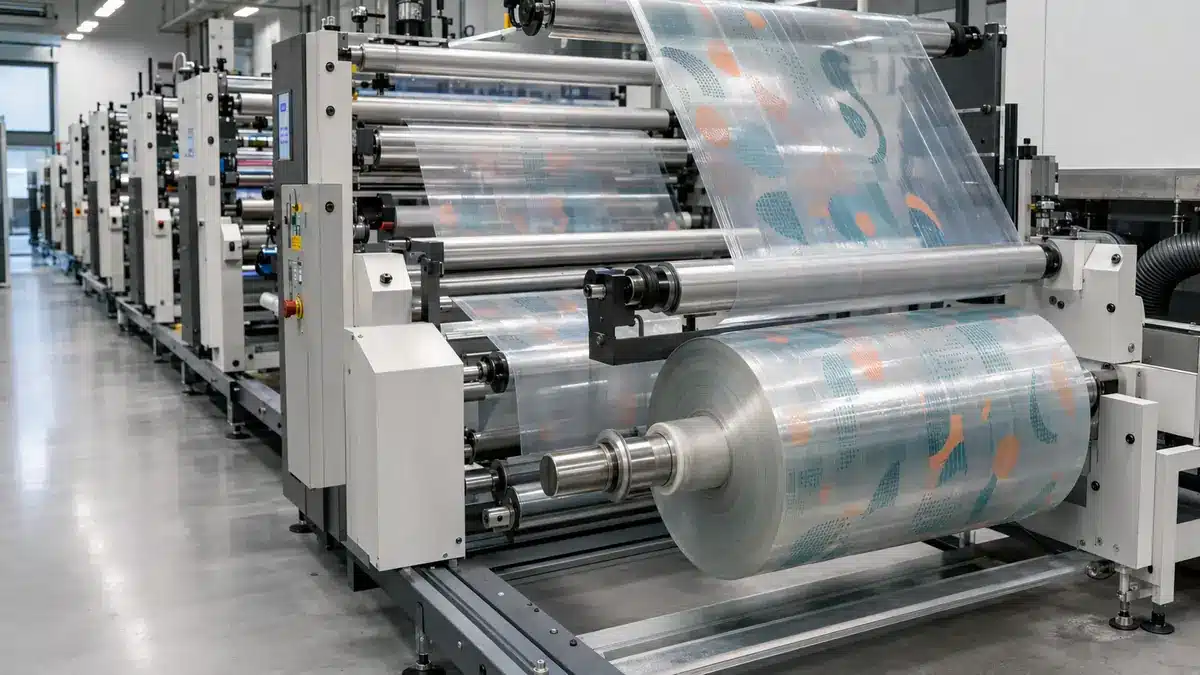
The printed surface also experiences winding, unwinding, rollers, pallets, forks, conveyors, and storage. Poor wetting or adhesion can produce weak print; friction can scuff it; and ink-to-film contact in the roll can contribute to set-off or blocking. Polymer films generally require surface-energy and ink compatibility control, but there is no universal treatment number that proves success. Specify the substrate, additives, treatment history, ink system, cure or drying conditions, and agreed adhesion, rub, and blocking checks.
Operational and Load-Performance Variables
Do not assume that a printed roll will run exactly like the current unprinted film. The complete construction may interact differently with unwind, cling side, rollers, pre-stretch elements, film tension, cut-and-clamp devices, or operator technique. Excessive breaks, neck-down, inconsistent tails, deposit buildup, or loss of print can reduce throughput even when the artwork looks acceptable.
Load containment is a system result not a property that can be approved from a logo proof The film thickness stretch behavior wrapper settings wrap pattern number and position of revolutions load geometry pallet condition temperature and handling route all contribute ASTM D4649 provides a framework for buyer seller selection specification and application of stretch film but it does not turn a generic material description into a.
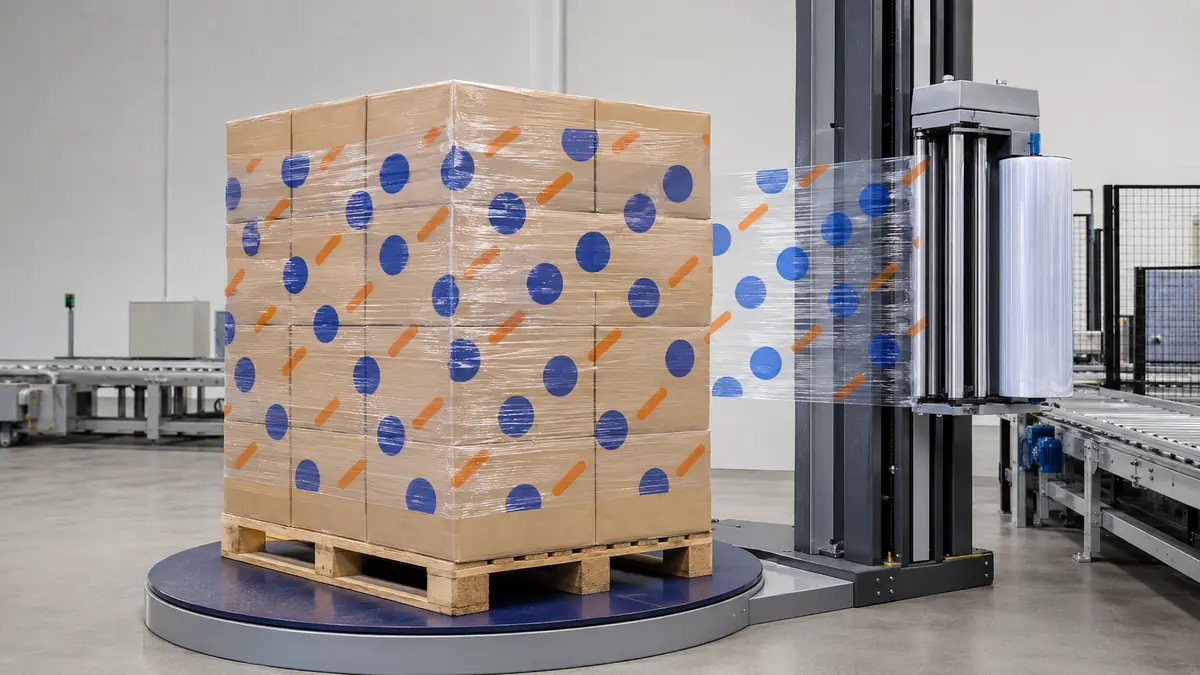
Important: Approve the printed construction and the applied wrapping process together. If either changes, decide whether proofing, line trials, or load validation must be repeated.
End-of-Life and Claim-Substantiation Limits
The base film may belong to a commonly recovered polymer family, but print is part of the finished construction. Ink chemistry, color, coverage, coatings, contamination, collection access, sorting, and reprocessor acceptance can affect the practical end-of-life route. A resin name or recycling symbol does not, by itself, prove that a printed roll is accepted or produces suitable recyclate.
Claims must match the market. In the United States, 16 CFR 260.12 requires recyclable claims to reflect established collection and recovery and to be qualified when access is limited; a component that significantly limits recycling also affects the claim. Other markets use different rules and infrastructures. Ask for evidence covering the complete printed construction and the destination market, and avoid unqualified terms such as “100% recyclable,” “eco-friendly,” or “zero waste.”
Printed vs. Unprinted Stretch Film: When Each Fits
The safer default is the simplest film that performs the packaging task. Printing earns its place when it solves a defined communication problem that labels, color coding, or existing systems cannot solve as effectively.
| Decision axis | Printed stretch film | Unprinted stretch film |
|---|---|---|
| Best fit | Repeated branding, identification, handling cues, or controlled exception recognition | Load unitization where no repeated message is needed |
| Communication | Repeats around the load but must remain legible after stretch and overlap | Relies on separate labels, documents, or warehouse systems |
| Commercial profile | Adds custom setup, proofing, order, and obsolete-inventory exposure | Usually offers simpler sourcing and greater message flexibility |
| Qualification | Requires artwork proof plus print, line, load, and handling checks | Still requires film and load qualification, but no print approval |
| Operating risk | Adds ink adhesion, rub, blocking, deposit, and legibility variables | Removes print-related variables but not film, wrapper, or load variables |
| End-of-life review | Must assess the base film and the complete print construction | Must still verify local collection and recovery for the unprinted construction |
This comparison is qualitative. A supplier quotation and a controlled trial are needed to determine the actual cost and operating effect for a specific program.
How to Specify and Validate Printed Stretch Film
A flat proof confirms artwork intent; it does not confirm production, wrapping, or load performance. Build the approval path around the exact film, print, equipment, pallet, and market.
Define the Film and Wrapping Inputs
Give suppliers the same baseline so their proposals can be compared:
- hand or machine application, including wrapper make, model, pre-stretch system, and relevant control settings;
- current film specification and approved control roll, including nominal thickness, tolerance, width, roll length, core, roll diameter, cling configuration, and any known surface treatment;
- load height, weight, geometry, edge or puncture risks, pallet type and condition, and product movement risk;
- wrap pattern, overlap, reinforcement zones, target film use per load, and the buyer’s load-containment acceptance method;
- expected production rate, roll-change practice, indoor or outdoor exposure, temperature range, storage duration, and transport/handling route;
- target market and whether the wrap can contact unpackaged food or another regulated product.
Use units and measurement methods consistently. Do not compare thickness, force, stretch, cling, or containment results across different methods as if they were equivalent.
Lock the Print and Artwork Inputs
The print specification should remove ambiguity before production:
- approved artwork revision, orientation, print repeat, image location, print side, number of colors, color references, coverage, and registration tolerance;
- intended applied stretch and overlap used to compensate or judge artwork distortion;
- minimum readable letter size or symbol size on the wrapped load, viewing distance, lighting, and any machine-readable code requirement;
- substrate and additive description, treatment method and age, ink and coating system, drying or cure controls, and supplier-recommended storage conditions;
- agreed tests for adhesion, rub/scuff resistance, blocking or set-off, color, registration, and legibility, including the test method and acceptance limit;
- proof sequence, retained master sample, change-control rules, and disposition of obsolete printed inventory.
If the supplier cannot disclose proprietary formulations, request a controlled specification and declaration that still identifies what is fixed, what may change, what evidence supports the application, and which changes trigger requalification.
Run a Qualification Trial
Use an ordered trial so a visually acceptable print cannot bypass application evidence:
- Approve the artwork proof for content, orientation, repeat, color references, and expected stretch compensation. Mark it as a design approval, not a performance approval.
- Inspect a production-representative sample roll. Verify roll identification, dimensions, print side, visible defects, adhesion, rub, blocking or set-off, and any agreed incoming checks.
- Run the roll on the intended hand process or wrapper. Record settings, applied stretch basis, film use, breaks, neck-down, unwind, cling, tail behavior, deposits, throughput, and operator observations.
- Wrap the actual or representative load using the approved pattern. Measure load containment or stability with the buyer’s defined method, then expose the load to the intended handling and storage route.
- Inspect print legibility, scuffing, disturbance visibility, pallet condition, and load performance at agreed checkpoints. Compare results with the control film.
- Approve a controlled specification, retained sample, artwork revision, trial record, acceptance criteria, and change-notification plan. Reject or revise the candidate if any critical criterion remains unresolved.
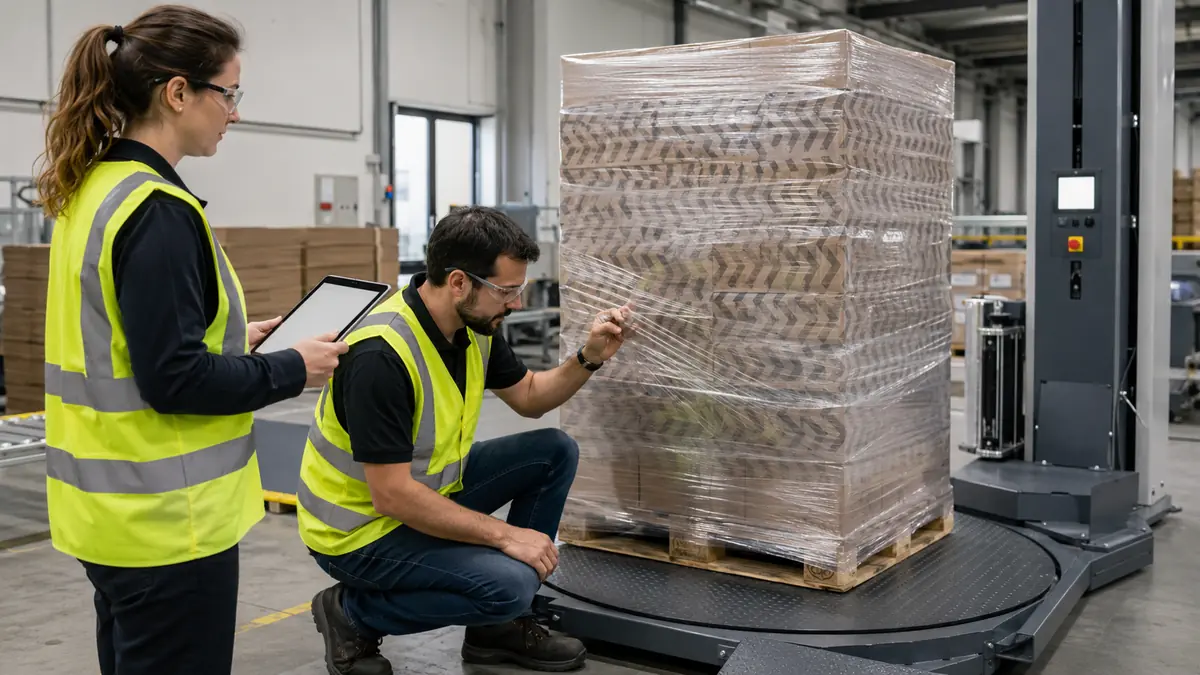
The trial should be repeated when a change can affect the result—for example, a new film construction, thickness, additive package, treatment, ink system, artwork coverage, roll format, wrapper, setting, load, or environment.
Frequently Asked Questions
Does printed stretch film make a pallet tamper-evident?
No, not by print alone. A distinctive repeat can deter casual interference or make a changed wrap easier to notice, but formal tamper evidence requires a defined mechanism, intact reference condition, inspection method, and response. Evaluate the actual threat and use validated seals or identifiers when the application needs stronger evidence.
Can printed stretch film be recycled?
It depends. Assess the complete film, ink, color, coverage, coatings, contamination, and local collection and reprocessing system. A PE description does not guarantee acceptance or a market for the recovered material. Any recyclable claim must be supported and qualified for the market where the claim appears.
Can printed stretch film contact food?
Only when the exact film, additives, ink or coating position, potential migration, intended food, contact condition, time, temperature, and target market are covered by appropriate documentation. U.S. FDA authorization is use-specific; a general resin statement or supplier logo is not enough. If the wrap only surrounds closed cartons, record that secondary-packaging configuration rather than implying direct-food-contact approval.
Does printing reduce stretch or load containment?
It cannot be assumed either way. Printing introduces treatment, ink, coverage, and surface-interaction variables, while load containment depends on the film and the applied wrapping system. Compare the exact printed roll with a control on the intended wrapper, settings, pattern, load, environment, and agreed test method.
Final Decision: When Is Printed Stretch Film Worth It?
Printed stretch film is worth evaluating when a stable, repeated message creates measurable value across the load’s actual journey. It is a weak choice when the design changes frequently, visibility is limited, volumes do not support custom conversion, or labels and warehouse systems already solve the task.
Proceed only when all of these conditions are met:
- the message, audience, viewing condition, and useful life are defined;
- the business case includes setup, inventory, proofing, trial, and obsolete-stock risk;
- the artwork remains legible at the intended stretch, overlap, handling, and storage conditions;
- the exact roll runs acceptably on the intended hand or machine process;
- the wrapped load meets the buyer’s containment or stability criteria;
- sustainability, recycling, security, and food-contact statements are supported for their actual markets and uses; and
- the approved specification, master sample, evidence, and change-control triggers are documented.
Until those checks pass, printed stretch film should remain a qualified candidate—not an assumed upgrade.
Related Bestypack Resources
- Stretch Film vs. Cling Film: What’s the Difference?
- Machine Stretch Film Blown & Cast
- LLDPE Stretch Film Manufacturer&Supplier
- Stretch Film Guide: Applications, Advantages, Features
- Ultimate Guide: Advantages and Uses of Black Stretch Film
- stretch film
 English
 Japanese
 French
 Spanish
 Korean
 Italian
 Portuguese
 Dutch
Dutch Arabic
 Russian
 German