
LLDPE-Stretchfolie ist eine hochelastische Polyethylen Folie, die zur Ladungssicherung auf Paletten ohne Wärmeeinwirkung dient. Die Folie wird beim Auftragen gedehnt, und ihre elastische Rückstellung erzeugt eine nach innen gerichtete Kraft, die dazu beiträgt, dass die Ladung während Handhabung, Lagerung und Transport gegen Verrutschen gesichert bleibt. Für einen Käufer ist jedoch “LLDPE-Stretchfolie” lediglich die Ausgangsbeschreibung. Eine zuverlässige Leistung hängt vom Harz- und Folienaufbau, der Ladung, der Wickelmaschine, der aufgebrachten Dehnung und Kraft, dem Wickelmuster sowie der Vertriebsumgebung ab.
Dieser Leitfaden behandelt diese Variablen als ein System. Er unterstützt Beschaffungs-, Verpackungs-, Qualitäts- und Technikteams dabei, Folientypen zu vergleichen, eine aussagekräftige Spezifikation zu erstellen, kontrollierte Palettenversuche durchzuführen, akzeptierte Kosten pro Ladung zu messen und Ansprüche zu vermeiden, die ohne produktspezifische Nachweise nicht haltbar sind.
Was ist LLDPE-Stretchfolie?
Für polymerchemische Hintergründe konsultieren Sie NIH PubChem. Überblick über Polyethylen bevor Sie Angaben zu fertigen Folien vergleichen.
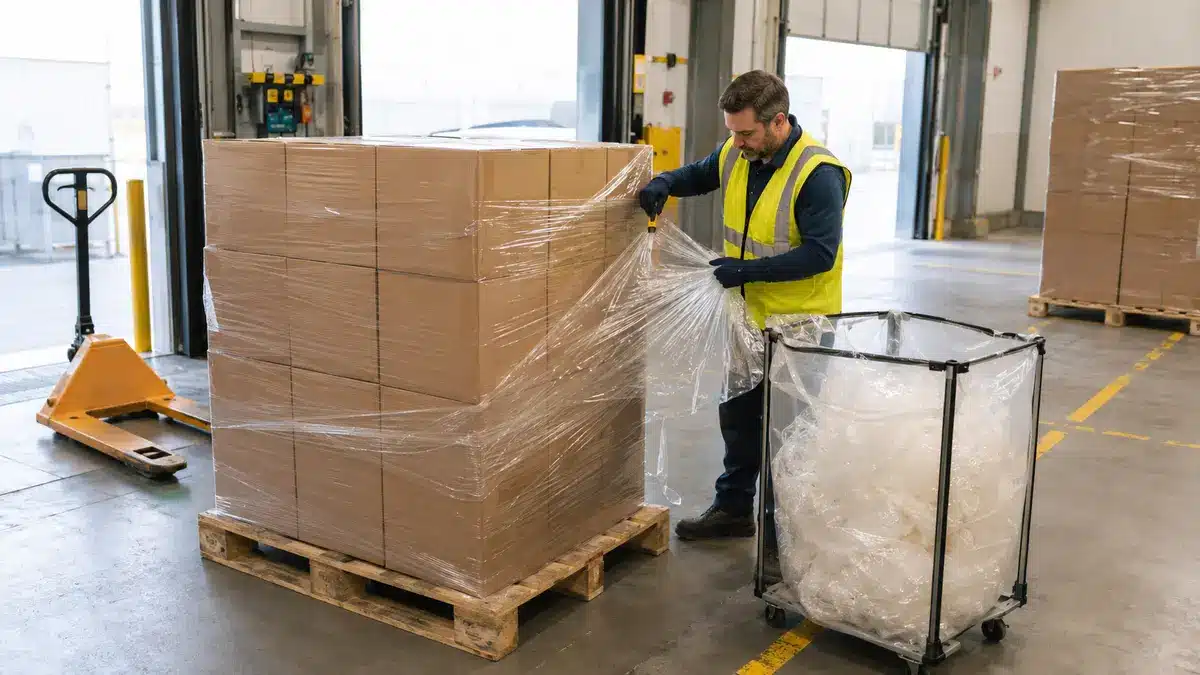
Lineares Polyethylen niedriger Dichte, kurz LLDPE, ist eine Familie von Ethylen-Copolymeren, die in vielen flexiblen Folienanwendungen eingesetzt wird. Harzhersteller bieten Typen mit unterschiedlicher Dichte, Schmelzfluss, Comonomer, molekularer Architektur, Additivpaketen und Verarbeitungsfenstern an. Diese Unterschiede sind von Bedeutung: Die Bezeichnung “LLDPE” definiert keinen bestimmten Dehnungsprozentsatz, Stichfestigkeitswert, Klebrigkeitsgrad oder Folienrezeptur.
Stretchfolien-Konverter verwenden üblicherweise Strukturen auf LLDPE-Basis, da diese Materialfamilie eine sinnvolle Balance aus Flexibilität, Dehnung, Zähigkeit und Durchstoßfestigkeit. bietet. Dow identifiziert Stretchfolie als LLDPE-Anwendung und beschreibt sein LLDPE-Portfolio hinsichtlich Zugfestigkeit, Schlagzähigkeit, Durchstoßfestigkeit, Dehnung und Flexibilität. ExxonMobil positioniert LLDPE-Typen ebenfalls für Gieß- und Blasfolienanwendungen. Diese Beschreibungen beziehen sich auf die Harzfamilie und stellen keine garantierten Werte für jede fertige Rolle dar.
Fertige Stretchfolie kann ein- oder mehrschichtig sein und verschiedene Polyethylen-Typen, Haft- oder Gleitadditive, Verarbeitungshilfsstoffe, Farbstoffe, UV-Stabilisatoren oder recycelter Anteil. enthalten. Die genaue Konstruktion sollte daher aus den aktuellen technischen Daten und Spezifikationen des Lieferanten stammen und nicht aus der allgemeinen Materialbezeichnung.
Wie die LLDPE-Struktur die Stretchfolienleistung unterstützt
LLDPE-Molekülketten weisen kontrollierte Kurzkettenverzweigungen auf, die durch Copolymerisation erzeugt werden. Im Vergleich zu einer breit verzweigten LDPE-Struktur kann diese Struktur eine starke Kombination aus Dehnbarkeit und Zähigkeit unterstützen. Folienentwickler passen dann Harzmischungen, Schichtverteilung, Orientierung während des Wickelns und Additive an, um Abrollverhalten, Klebrigkeit, Stichfestigkeit, elastische Rückstellung und Lastaufnahme zu optimieren.
Die praktische Lehre ist einfach: Die Polymerchemie schafft ein Leistungsfenster, aber die Palette sieht ein aufgebrachtes Foliensystem. Zwei Rollen mit der Kennzeichnung “LLDPE, 17 µm” können sich unterschiedlich verhalten, da sich Harztypen, Schichtstrukturen, Additive, Dickenprofile und Fertigungskontrollen unterscheiden. Die Qualifizierung sollte daher Fertigfoliendaten und die Leistung der gewickelten Ladung unter denselben Bedingungen vergleichen.
Hinweis für Käufer: Genehmigen Sie keine Folie allein auf Basis von Harztyp und Nenndicke. Fordern Sie die Spezifikation der Fertigfolie, Prüfmethoden, Toleranzen, Rollenkonfiguration, Lagerungsgrenzen und eine repräsentative Probe für Linien- und Ladungsversuche an.
Wie Stretchfolie eine Palette zusammenhält
Stretchfolie leistet mehr als nur das Abdecken von Kartons. Bei korrekter Anwendung erzeugt sie ein kontinuierliches, gespanntes Netzwerk um die Ladung und kann die Ladung mit der Palette verbinden. Das Wickelmuster platziert mehrere Folienschichten dort, wo sie benötigt werden, während Überlappungen zur Kraftverteilung beitragen und offene Wege reduzieren.
Ladungsstabilität beginnt weiterhin mit der Palette und der Konstruktion der Ladeeinheit. Schwache Kartons, übermäßiger Überhang, schlechte Säulenausrichtung, Hohlräume, instabile Misch-SKU-Muster oder eine beschädigte Palette können nicht immer durch zusätzliche Folie korrigiert werden. Die Stretchfolienumwicklung sollte zusammen mit dem Produkt, der Primär- und Sekundärverpackung, der Palette, dem Stapelmuster, der Handhabungsausrüstung und den Transportgefahren geplant werden.
ASTM D4649-20 2025 beschreibt die Auswahlspezifikation und Anwendung von Stretchfolien zur Ladeeinheitenverstärkung und Palettierung in Innenräumen. Der Anwendungsbereich umfasst Lagerung und Transport in Lagerhäusern und geschlossenen Fahrzeugen, deckt jedoch keine Leistung bei Außenbewitterung ab. Die Norm weist außerdem auf extreme Temperaturen hin.
Vorreckung, Wickelkraft und Containment-Kraft
Diese Begriffe beschreiben verschiedene Teile des aufgebrachten Systems:
- Vorstreckung ist die Dehnung, die auf die Folie angewendet wird, bevor sie die Ladung erreicht, üblicherweise durch einen motorisierten oder mechanisch getriebenen Folienwagen. Eine angegebene Maschineneinstellung ist kein Nachweis dafür, dass die gelieferte Folienausdehnung dieser Einstellung entspricht.
- Wickelkraft ist die Kraft oder Spannung, die beim Kontakt der Folie mit der Ladung ausgeübt wird. Zu wenig kann eine lockere Wicklung erzeugen; zu viel kann Kartons zerdrücken, Ecken nach innen ziehen oder Folienrisse verursachen.
- Containment-Kraft ist die kumulierte nach innen gerichtete Kraft, die durch die aufgebrachten Folienschichten an einer definierten Stelle der Ladung erzeugt wird. Sie sollte an konsistenten oberen, mittleren und unteren Positionen gemessen werden, da das Wickelmuster unterschiedliche Werte erzeugen kann.
- Elastische Rückstellung und Spannungsretention beschreiben, wie die Folie nach der Dehnung und über die Zeit reagiert. Sofortige Straffheit und erhaltene Kraft nach Lagerung oder Transport sind nicht unbedingt identisch.
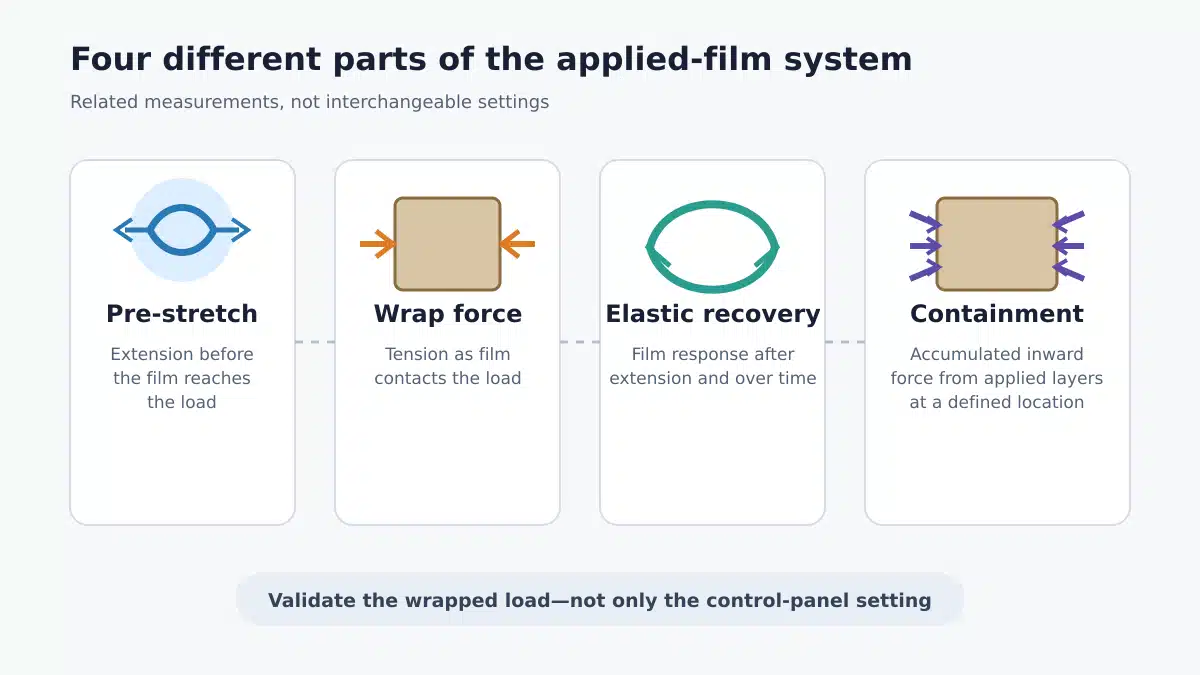
Mehr Vorreckung ist nicht automatisch besser. Das Optimum ist der höchste stabile Betriebspunkt, den die spezifische Folie, Wickelmaschine, Ladung und Umgebung tolerieren können, während die geforderte Anwendungsleistung erhalten bleibt. Validieren Sie die tatsächliche Wicklung, nicht nur die Zahl am Bedienfeld.
Haupttypen von LLDPE-Stretchfolie
Stretchfolienkategorien überlappen sich. “Hand” und “Maschine” beschreiben die Anwendung; “Cast” und “Blas” beschreiben die Folienherstellung; “vorgereckt” beschreibt den Folienzustand; und “farbig”, “belüftet” oder “UV-stabilisiert” beschreiben zusätzliche Funktionen. Eine Kaufspezifikation sollte jede relevante Dimension benennen.
Handfolie vs. Maschinenfolie
Handfolie ist für die manuelle Anwendung mit einem verlängerten Kern oder Spender konzipiert. Sie eignet sich für niedrige oder variable Palettenvolumina, unhandliche Standorte und Ladungen, die schwierig auf einer Wickelmaschine zu platzieren sind. Ihre Einschränkungen sind Bedienerermüdung, ergonomische Belastung und Schwankungen bei Folienreckung, Überlappung, Wickelkraft und Umdrehungen.
Maschinenfolie ist für kompatible halbautomatische oder automatische Wickelgeräte ausgelegt. Ein gesteuerter Schlitten und ein reproduzierbares Rezept können die Konsistenz verbessern und die Erfassung von Materialverbrauchsdaten erleichtern. Maschinenfolie muss zum Vordehnungssystem, zur Geschwindigkeit, Rollenbreite, zum Kern, maximalen roll dimensions, zur Bremse oder zum motorisierten Schlitten, zum Klemm-/Schneidesystem und zum Lastprofil der Wickelmaschine passen.
Treffen Sie die Entscheidung auf Basis von Durchsatz, Wiederholbarkeit, Ergonomie, Ladungsrisiko, Geräteverfügbarkeit und akzeptierten Kosten pro Ladung.
Castfolie vs. Blasfolie
Gießfolie wird durch eine Flachdüse extrudiert und auf Kühlwalzen abgeschreckt. Sie wird häufig gewählt, wenn Klarheit, geräuscharmes Abwickeln, Dickengleichmäßigkeit und kontrollierte Maschinenhandhabung wichtig sind. Blasfolie wird durch eine Ringdüse als Schlauch extrudiert und als Blase gekühlt. Viele Blasfolienprodukte werden für anspruchsvolle Anwendungen mit hoher Durchstoß-, Weiterreiß- und Lastaufnahmefestigkeit ausgewählt.
Dies sind Tendenzen, keine Garantien. Moderne Cast- und Blasprodukte haben überlappende Leistungsbereiche, daher sollten spezifische Produkte unter denselben Bedingungen verglichen werden.
| Entscheidungsfaktor | Castfolien-Tendenz | Blasfolien-Tendenz | Qualifizierungsfrage |
|---|---|---|---|
| Optik | Häufig hohe Klarheit und Glanz | Häufig geringere Klarheit | Müssen Etiketten oder Barcodes sichtbar bleiben? |
| Abrollen | Häufig leiser und glatter | Kann lauter sein | Ist Maschinen- oder Leitungsgeräusch wichtig? |
| Dickenprofil | Häufig sehr gleichmäßig | Produktabhängig | Erfordert die Wickelmaschine enge Rollenkonsistenz? |
| Stich- und Weiterreißfestigkeit | Typabhängig | Häufig für schwierige Kanten ausgewählt | Welches Versagen tritt an der tatsächlichen Ladung auf? |
| Kosten und Durchsatz | Häufig effizient bei hoher Ausbringung | Produkt- und regionsabhängig | Was sind die akzeptierten Kosten pro Ladung? |
Vorgereckte und Spezialfolien
Vorgereckte Folie wird während der Herstellung gedehnt und für die spätere Anwendung neu aufgewickelt. Sie kann die für das manuelle Wickeln erforderliche Kraft reduzieren und die Konsistenz zwischen Bedienern verbessern, hat jedoch weniger ungenutzte Dehnungsreserve als eine nicht vorgereckte Folie. Bewerten Sie ihre aufgebrachte Containment-Kraft und Retention an der Zielladung, anstatt eine Gleichwertigkeit aus einem “Muttermaß” anzunehmen.”
Spezialoptionen umfassen einseitig haftende Folie, farbige oder opake Folie, UV-stabilisierte Typen, belüftete Folie, antistatische Konstruktionen und Folie mit Recyclinganteil. Jede Option verändert den Qualifizierungsplan; insbesondere Außenanwendungen erfordern definierte Bewitterungsbedingungen.
Wichtige Spezifikationen, die Käufer vergleichen sollten
Eine nützliche Stretchfolienspezifikation trennt Rollengeometrie, Fertigfolieneigenschaften, Anwendungsbedingungen und Leistung der gewickelten Ladung. Die Kombination all dieser Aspekte in einer vagen Aussage – wie “hohe Festigkeit, 80 Gauge” – erschwert den Lieferantenvergleich.
Dicke, Breite, Länge und Rollenkonfiguration
Geben Sie die Dicke in Mikrometern an und, wo erforderlich, die entsprechende lokale Gauge-Konvention. Da “Gauge” in verschiedenen Märkten unterschiedlich interpretiert werden kann, sollten der Mikrometerwert und die Toleranz maßgeblich sein. Definieren Sie das Verfahren zur Dickenmessung, den Probenahmeplan, die Durchschnitts- und Punkttoleranzen sowie ob das Ergebnis die gesamte Bahn abdeckt.
Definieren Sie außerdem Nettofolienbreite, nutzbare Länge oder Nettomasse, Kerninnendurchmesser, Kernlänge, Rollenaußendurchmesser, Rollenmasse, Wickelrichtung, Toleranz für Teleskopierung, Kantenzustand, Spleißrichtlinie, Palettierung und Kennzeichnung. Maschinenanwender sollten alle Rollengrenzen mit dem Hersteller der Wickelmaschine abstimmen.
Die Folienausbeute wird durch Dicke und Dichte beeinflusst, aber die berechnete Länge sollte nicht die verifizierte Rollenlänge oder -masse ersetzen. Vergleichen Sie Einkaufs- und Betriebsdaten auf derselben Grundlage.
Klebrigkeit, Optik, Durchstoßfestigkeit, Reißfestigkeit und elastische Rückstellung
Zu den wichtigsten Eigenschaften der Fertigfolie können gehören:
- Klebrigkeit und Abwicklung: Einseitige oder zweiseitige Klebrigkeit, Innen-/Außenorientierung, Abwickelkraft, Blocking und Endlaschenhalt.
- Zugverhalten: Zugfestigkeit, Dehnung, Modul und Kraft bei festgelegter Dehnung, angegeben nach Methode, Richtung, Probekörper, Geschwindigkeit, Konditionierung und Dicke.
- Durchstoß- und Schlagfestigkeit: Prüfgeometrie, Stempel- oder Dart-Methode, die Folien, Konditionierung und Versagensdefinition.
- Reißfestigkeit: Initiierung und Propagation sind unterschiedlich; die relevante Methode sowie Maschinen-/Querrichtung müssen angegeben werden.
- Elastische Rückstellung und Spannungsretention: Dehnungsniveau, Haltezeit, Temperatur und Messintervall müssen definiert werden.
- Optik und Reibung: Trübung, Glanz, Klarheit und Reibungskoeffizient erfordern Methode und Oberflächenorientierung.
ASTM D882 wird üblicherweise für Zugfestigkeitseigenschaften dünner Kunststofffolien verwendet, während der aktuelle ASTM-Verpackungsnormenkatalog spezielle Stretchfolienmethoden für Abzugshaftung, elastische Rückstellung, Vibration, Schlag, Abrieb, mechanische Handhabung und Leistung der aufgebrachten Folie auflistet. Eine Methode.
Auswahl von LLDPE-Stretchfolie für eine Palettenladung
Der robusteste Auswahlprozess beginnt mit der Ladung und endet mit einer kontrollierten Verteilungsvalidierung. Er beginnt nicht mit einer universellen Dicken-Tabelle.
Definieren Sie die Ladungs- und Verteilungsrisiken
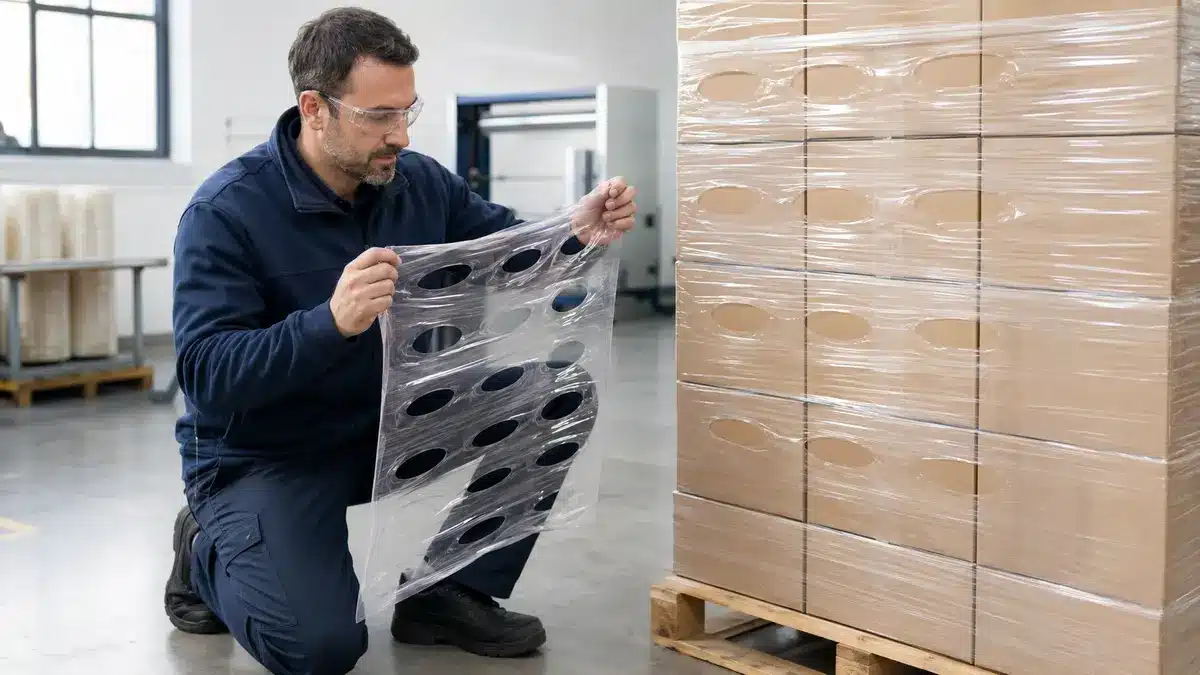
Erfassen Sie die Palettenabmessungen, Ladehöhe und -masse, Produkt- und Kartonkonstruktion, Stapelmuster, Reibungskoeffizient zwischen den Lagen, Überhang oder Unterhang, Hohlräume, scharfe Kanten, Vorsprünge und Empfindlichkeit gegenüber Druckbelastung. Klassifizieren Sie, ob die Ladung gleichmäßig und stabil, verformbar oder unregelmäßig und schwer zu sichern ist.
Kartieren Sie die Route: Lagerverweilzeit, Temperaturbereich, Feuchtigkeits- oder Kondensationseinwirkung, Gabelstaplerhandhabung, Lkw- oder Bahntransport, Anzahl der Umschläge, Teilladungshandhabung, Vibration, horizontale Beschleunigung und jede Außeneinwirkung. Identifizieren Sie das tatsächlich zu verhindernde Versagen – Kartonbewegung, Lagenverschiebung, Umkippen, Durchstoßung, Abrieb, Lösen der Folienendlasche, Palettentrennung, Staub oder gelegentliches Spritzwasser.
Passen Sie die Folie an den Wickelprozess an
Für manuelles Wickeln berücksichtigen Sie Rollenergonomie, Spenderart, erreichbare Dehnung, Überlappungskontrolle und Bedienervariation. Für maschinelles Wickeln erfassen Sie das Wicklermodell, den Wagen-Typ, die Vorstreck-Getriebeübersetzung, die Wickelkraftsteuerung, die Drehteller- oder Dreharmgeschwindigkeit, die Folienzuführgeschwindigkeit, die Anzahl der oberen und unteren Wicklungen, Bandagen- oder Seilwicklung, Ladehöhenerkennung und Klemm-/Schnittverhalten.
Erstellen Sie eine Shortlist von Folien, deren Rollenkonfiguration und Betriebsfenster zum Prozess passen. Die Leistung auf einem Wickler oder durch einen Bediener garantiert nicht die Leistung auf einem anderen.
Führen Sie einen kontrollierten Palettenversuch durch
Verwenden Sie repräsentative Produkte, Kartons, Paletten und Umgebungsbedingungen. Halten Sie das Ladungsmuster konstant und ändern Sie jeweils eine Hauptvariable. Für jeden Kandidaten:
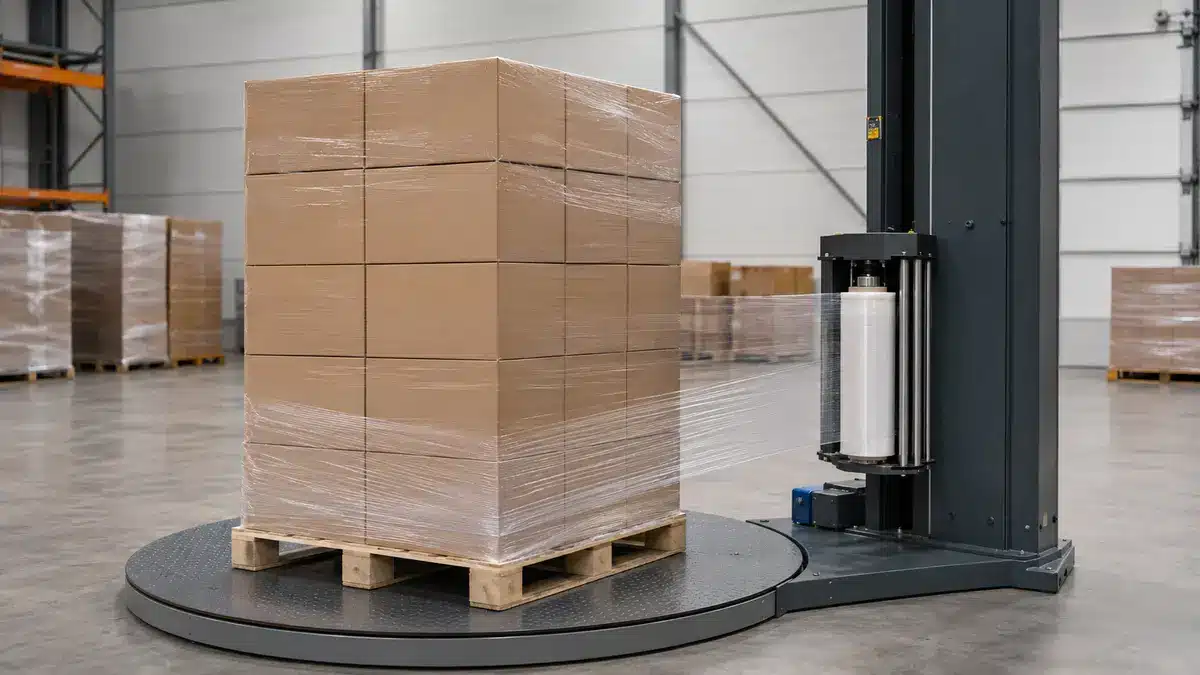
- Verifizieren Sie Rollenidentität, Dicke, Breite, Masse, Zustand und Lagerhistorie.
- Dokumentieren Sie Maschineneinstellungen oder das manuelle Wickelverfahren.
- Messen Sie den Folienverbrauch pro Palette nach Masse oder verifizierter Länge.
- Erfassen Sie Wicklungszahlen, Überlappung, angewandte Dehnung wo messbar und Rückhaltekraft an definierten Positionen.
- Prüfen Sie auf Bahnbrüche, Durchstoßungen, Einschnürungen, gequetschte Ecken, schlechte Palettenhaftung und lose Endlaschen.
- Überprüfen Sie nach einer definierten Verweilzeit erneut, um Kraftrückhaltung und Ladungsbewegung zu beobachten.
- Unterziehen Sie die gewickelte Ladeeinheit einem Verteilungstest, der für die vorgesehene Route repräsentativ ist.
Genehmigen Sie eine Spezifikation erst nach Definition der Annahmegrenzen und Änderungskontrolle. Eine neue Harzmischung, Dicke, Additiv, Kern, Rollenlänge, Wicklereinstellung oder ein neues Palettenmuster kann eine Revalidierung rechtfertigen.
Prüfung und Validierung der Stretchfolienleistung
Die Prüfung sollte von der Materialcharakterisierung über die Messung der angewandten Folie bis hin zur Leistung der Ladeeinheit fortschreiten. Jede Ebene beantwortet eine andere Frage.
| Prüfebene | Beantwortete Frage | Beispielmethoden oder Aufzeichnungen | Wichtige Bedingungen |
|---|---|---|---|
| Fertigfolie | Ist die Rolle mit ihrer Spezifikation konsistent? | Dickenkartierung, ASTM D882 Zugfestigkeit, Durchstoß-/Schlagprüfung, Reißfestigkeit, Klebrigkeit, Abwicklung | Richtung, Dicke, Konditionierung, Geschwindigkeit, Stempel oder Geometrie |
| Angewandte Folie | Was hat der Wickler auf die Ladung aufgebracht? | Aufgebrachte Dehnung, Folienmasse pro Palette, Wickelmuster, containment force, Endstückhaltung | Wicklereinstellungen, Ladungsposition, Messhöhe, Verweilzeit |
| Ladeeinheit | Übersteht das Gesamtsystem die Route? | Mechanische Handhabung, horizontaler Aufprall, Vibration, Transportsimulation | Palette und Ladungsaufbau, Gefahrenprofil, des Recyclers oder Programms |
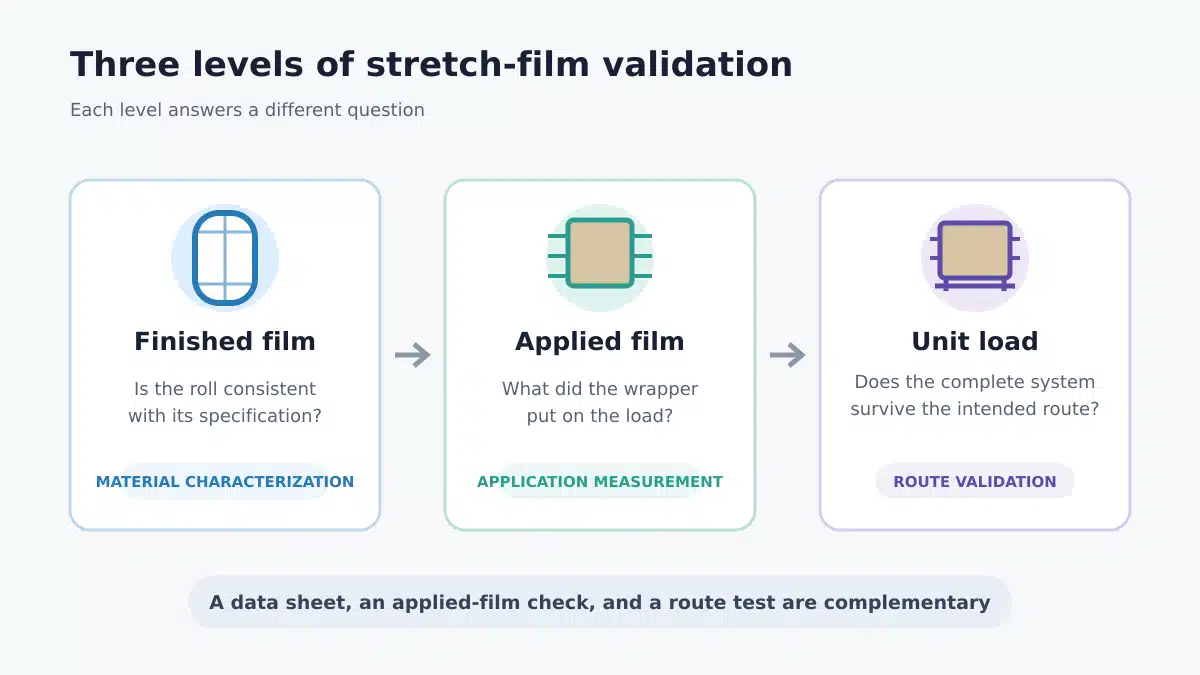
ASTM D4649 bietet Leitlinien für die Auswahl und Verwendung von Stretchfolien. Der ASTM-Verpackungskatalog listet außerdem D5331 für mechanische Handhabung, D5414 für horizontalen Aufprall, D5415 für vibrationsbedingte Rückhaltung, D5458 für Abzugshaftung, D5459 für elastische Rückstellung und Spannungsretention sowie D8314 für die Leistung der aufgebrachten Folie auf. Verifizieren Sie die übernommene Ausgabe vor der Prüfung.
Vergleichen Sie nicht Werte, die durch unterschiedliche Methoden, Probekörperrichtungen, Dicken, Temperaturen oder Dehnungshistorien erzeugt wurden, als wären sie gleichwertig. Die Labormaterialfestigkeit sagt nicht automatisch eine stabile Palette voraus, und ein hoher anfänglicher Rückhaltewert ersetzt keine Verteilungsvalidierung.
Validierungsregel: A Lieferantendaten Das Datenblatt legt eine Produktbasislinie fest; eine Prüfung der aufgebrachten Folie stellt fest, was die Wickelmaschine geliefert hat; ein streckenrepräsentativer Ladeeinheitentest stellt fest, ob das Gesamtsystem die Abnahmekriterien des Projekts erfüllt.
Reduzierung der Folienkosten ohne Schwächung der Ladungsstabilität
Die nützlichste Einkaufskennzahl sind die akzeptierten Kosten pro Ladung:
Akzeptierte Kosten pro Ladung = (verwendete Folienkosten + Wickelarbeitszeit + Ausrüstungskosten + erwartete Schäden und Nacharbeit) ÷ akzeptierte Ladungen
Mindestens sollten Rollenkosten, verifizierte Folienmasse pro Palette, Paletten pro Rolle, Bahnbruchabfall, Stillstandszeiten sowie Schäden oder Nachwickelrate erfasst werden. Dies deckt Scheinersparnisse auf. Eine günstigere Rolle kann teurer sein, wenn sie mehr Material verbraucht, häufiger reißt oder mehr zurückgewiesene Ladungen verursacht.
Eine Reduzierung der Folienstärke kann den Materialverbrauch senken, doch die Dicke ist nur eine Variable. Hochleistungsfolien können eine andere Struktur oder Steifigkeit aufweisen, um die erforderliche Anpresskraft bei geringerer Masse zu erzielen. Jede Änderung muss gegen eine definierte Ausgangsbasis erfolgen:
- Laden, Palette, Wickler, Route und Akzeptanzkriterien einfrieren.
- Aktuelle Folienmasse pro akzeptierter Palette messen.
- Jeweils nur einen Kandidaten und eine Wickelrezepturänderung testen.
- Oberen, mittleren und unteren Halteeffekt nach der Ruhezeit bestätigen.
- Die relevanten Handhabungs- und Verteilungstests durchführen.
- Die Produktion nach dem Start mit Kontrollgrenzen überwachen.
Eine Optimierung kann auch durch die Reparatur verschlissener Vorstreckrollen, die Kalibrierung der Folienzuführung, die Beseitigung unnötiger Kopfwicklungen, die Verbesserung des Palettenmusters, den Schutz scharfer Kanten, die Stabilisierung schwacher Kartons oder die Automatisierung eines variablen manuellen Prozesses erfolgen. Ziel ist das geringste Material, das wiederholt eine akzeptierte Ladung erzeugt – nicht die dünnste Folie.
Überlegungen zu Recycling und Nachhaltigkeit
LLDPE-Stretchfolie kann mit Polyethylenfolien-Recyclingprozessen kompatibel sein, wenn sie sauber ist, korrekt gesammelt und von einem qualifizierten Recycler angenommen wird. Das macht nicht jede gebrauchte Rolle in jedem Markt “recycelbar”. Sammelzugang, Verunreinigungen, Etiketten, Farbe, Additive, Mischmaterialien, lokale Vorschriften, Sortierung, Ballenqualität und Endmarktnachfrage beeinflussen alle das tatsächliche Ergebnis.
Die Association of Plastic Recyclers erläutert den Recyclingprozess und betont, dass Sammlung und Aufbereitung darüber entscheiden, ob Kunststoff einem Rückgewinnungsprozess zugeführt wird. Flexible Folien sollten nur in einen Sammelweg gelangen, der sie ausdrücklich akzeptiert. Gewerbliche Lagerhäuser können bessere Rückgewinnungsmöglichkeiten haben, da Stretchfolie aus dem Hinterhaus in relativ sauberen, konzentrierten Mengen gesammelt werden kann. Bestätigen Sie die aktuelle Annahmespezifikation des empfangenden Recyclers, bevor Sie eine Behauptung aufstellen oder ein Sammelprogramm ändern.
Beginnen Sie mit der Schadensvermeidung, der Verwendung nicht mehr Folie als die validierte Ladung erfordert, der Sammlung sauberer Folie und der Wahl eines glaubwürdigen Rückgewinnungswegs. Rezyklatanteil kann die Dehnbarkeit oder andere Leistungsmerkmale je nach Rohstoff und Folienkonstruktion verändern. Ein produktspezifisches technisches Datenblatt und ein Ladungstest bleiben erforderlich, wenn Rezyklatanteil oder eine andere Konstruktionsänderung eingeführt wird.
Vermeiden Sie unbedingte Begriffe wie “100% recycelbar”, “umweltfreundlich” oder “Null Abfall”. Geben Sie die geografische Region, den Sammelweg, die Produktkonstruktion, die Rezyklatbasis, die Zertifizierungsmethode und die Einschränkungen hinter jeder Nachhaltigkeitsbehauptung an.
Häufige Stretchwickelprobleme und Korrekturmaßnahmen
Die Fehlersuche sollte Folienfehler, Ausrüstungseinstellungen, Ladungsdesign und Umgebungsursachen trennen. Der Folienwechsel ist nicht immer die erste oder einzige Lösung.
| Symptom | Mögliche Ursachen | Prüfungen und Korrekturmaßnahmen |
|---|---|---|
| Häufige Bahnbrüche | Beschädigte Rollenkante, übermäßige Kraft, verschmutzte oder verschlissene Rollen, scharfe Ladungskante, ungeeignetes Folienfenster | Rolle und Schlitten prüfen, Einfädelung und Walzen verifizieren, jeweils eine Einstellung reduzieren, schützen oder… |
| Palettenverschiebung im Transport | Unzureichender oder ungleichmäßiger Halteeffekt, schwache Palettenhaftung, instabiler Stapel, Kartonverformung | Rückhaltung oben, Mitte, unten messen, Basiswicklungen und Palettenaufnahme prüfen, Ladungsmuster verbessern, streckenrepräsentativen Lauf durchführen… |
| Zerquetschte Kartons | Übermäßige Wickelkraft, schwache Pappe, ungestützte Hohlräume, konzentrierte Bandagen | Kartonstauchfestigkeit und Palettenmuster prüfen; Kraft reduzieren oder Lagen umverteilen; Sekundärverpackung bei Bedarf verstärken |
| Folienenden lösen sich | Falsche Klebeorientierung, Verunreinigung, unzureichendes Andrücken, schlechter Schnitt-/Siegelzyklus | Innen-/Außenflächen bestätigen; Klemm- und Andrücksystem prüfen; Endbehandlungseinstellungen verifizieren |
| Übermäßiger Folienverbrauch | Geringe abgegebene Streckung, übermäßige Umdrehungen, dicke Altfolie, variables Handwickeln | Tatsächliche Folienmasse und Streckung verifizieren; Schlitten kalibrieren; Rezeptur standardisieren; Alternativen mit geringerer Masse testen |
| Paletten kleben zusammen | Freiliegende Klebeschicht auf der Außenfläche oder übermäßiger Folienüberstand | Einseitige Klebeorientierung bestätigen; Bahnausrichtung und Palettenprofil kontrollieren |
Das Symptom dokumentieren, bevor mehrere Variablen angepasst werden. Ein kurzer Produktionsversuch mit kontrollierten Änderungen ist aussagekräftiger als der gleichzeitige Austausch von Folie und Wickelrezeptur.
Häufig gestellte Fragen
Besteht alle Stretchfolie aus LLDPE?
Nein. LLDPE ist eine gängige Basis für Palettenstretchfolie, aber fertige Folien können mehrere Polyethylenqualitäten, mehrschichtige Strukturen, Additive, Farbmittel, Rezyklatanteil oder andere Spezialkomponenten enthalten. Bestätigen Sie die genaue Produktkonstruktion und die geltenden technischen Daten beim Lieferanten.
Was ist der Unterschied zwischen Stretchfolie und Schrumpffolie?
Stretchfolie wird gedehnt und unter Spannung aufgebracht; die elastische Rückstellung hilft, die Ladung zu halten. Schrumpffolie wird mit Spiel aufgebracht und anschließend Wärme ausgesetzt, sodass sie sich zusammenzieht. Materialien, Ausrüstung, Energieeinsatz und Ladungsinteraktion unterscheiden sich, daher sind sie nicht austauschbar, nur weil beide Produkte unitisieren können.
Ist dickere Stretchfolie immer stärker?
Nicht unbedingt. Die Dicke trägt zum Material bei, aber die Endleistung hängt auch von der Harzauswahl, dem Schichtdesign, der Fertigungskonsistenz, Additiven, Prüfmethode und Anwendung ab. Eine dünnere technisch optimierte Folie kann eine dickere Standardfolie in einem Test übertreffen, während die dickere Folie in einem anderen Test nachsichtiger sein kann. Vergleichen Sie produktspezifische Daten und Wickelladungstests.
Wie stark sollte LLDPE-Stretchfolie vorgestreckt werden?
Es gibt keinen universellen Prozentsatz. Der nutzbare Bereich hängt von Folie, Schlitten, Geschwindigkeit, Wickelkraft, Ladungsgeometrie, Temperatur und erforderlichem Halteeffekt ab. Beginnen Sie innerhalb der dokumentierten Fenster der Folien- und Ausrüstungslieferanten, verifizieren Sie die abgegebene Streckung und erhöhen Sie nur, solange Bahnstabilität und Akzeptanzkriterien der Ladung zufriedenstellend bleiben.
Kann LLDPE-Stretchfolie recycelt werden?
Sie kann recycelbar sein, wo ein geeigneter Polyethylenfolien-Sammel- und Recyclingweg existiert. Halten Sie sie sauber und trocken, entfernen Sie unzulässige Verunreinigungen und befolgen Sie die Regeln des empfangenden Programms. Legen Sie flexible Folie nicht in die Wertstofftonne am Straßenrand, es sei denn, das lokale Programm akzeptiert sie ausdrücklich.
Welche Informationen sollte ich einem Stretchfolien-Lieferanten senden?
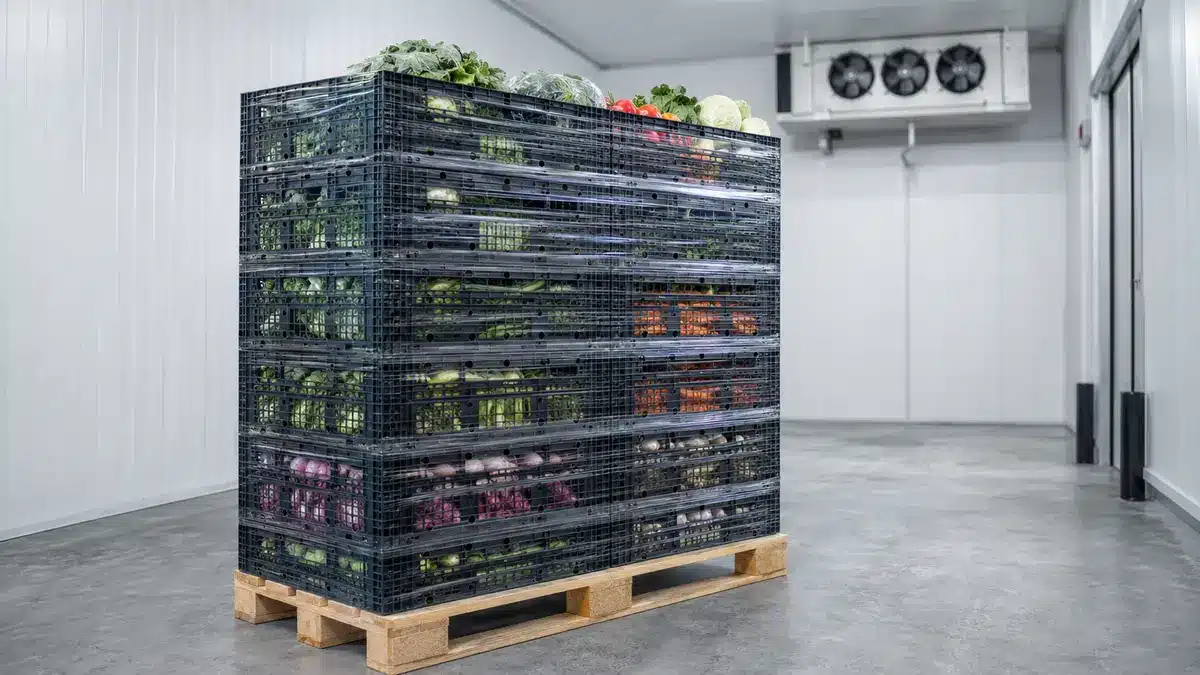
Geben Sie Palettenabmessungen, Ladungshöhe und -masse, Karton- oder Produkttyp, Stapelmuster, scharfe Kanten, aktuelle Folien- und Rollenspezifikation, Wicklermodell und -schlitten, aktuelle Einstellungen und Wickelmuster, Folienmasse pro Palette, Schadenshistorie, Durchsatz, Lager- und Transportbedingungen, Zielmarkt, erforderliche Tests und Akzeptanzkriterien an. Repräsentative Fotos und Versuchsmuster sind nützlich, sollten aber gemessene Daten nicht ersetzen.
Verwandte Bestypack-Ressourcen
- Der Unterschied zwischen Polyolefin, PVC und Polyethylen
- Ultimativer Leitfaden zu BOPE-Folie: Vorteile, Anwendungen, Arten
- Welche verschiedenen Arten gängiger Isolierverpackungen gibt es?
- CPP-Folien: Optimale flexible Verpackungslösungen
- Flexible Food Packaging A Guide to What You
- Leitfaden für heißsiegelfähige Folien: Anwendungen, Typen, Funktionen
- Der ultimative Leitfaden: Alle Arten von Schaumstoffverpackungen
 English
 Japanese
 French
 Spanish
 Korean
 Italian
 Portuguese
 Dutch
Dutch Arabic
 Russian
 German