
فيلم التمدد (Stretch Film) is widely used to unitize pallet loads for storage and transport, but its value is broader than simply holding boxes together. When the film, load, wrapping method, and distribution conditions are matched, it can improve containment, protect exposed surfaces, simplify handling, and reduce avoidable material use. The eight advantages below are therefore best understood as potential operational outcomes—not automatic properties of every roll or every wrapped pallet.
1. Better Load Stability
For polymer background, consult the NIH PubChem polyethylene overview before comparing finished-film claims.
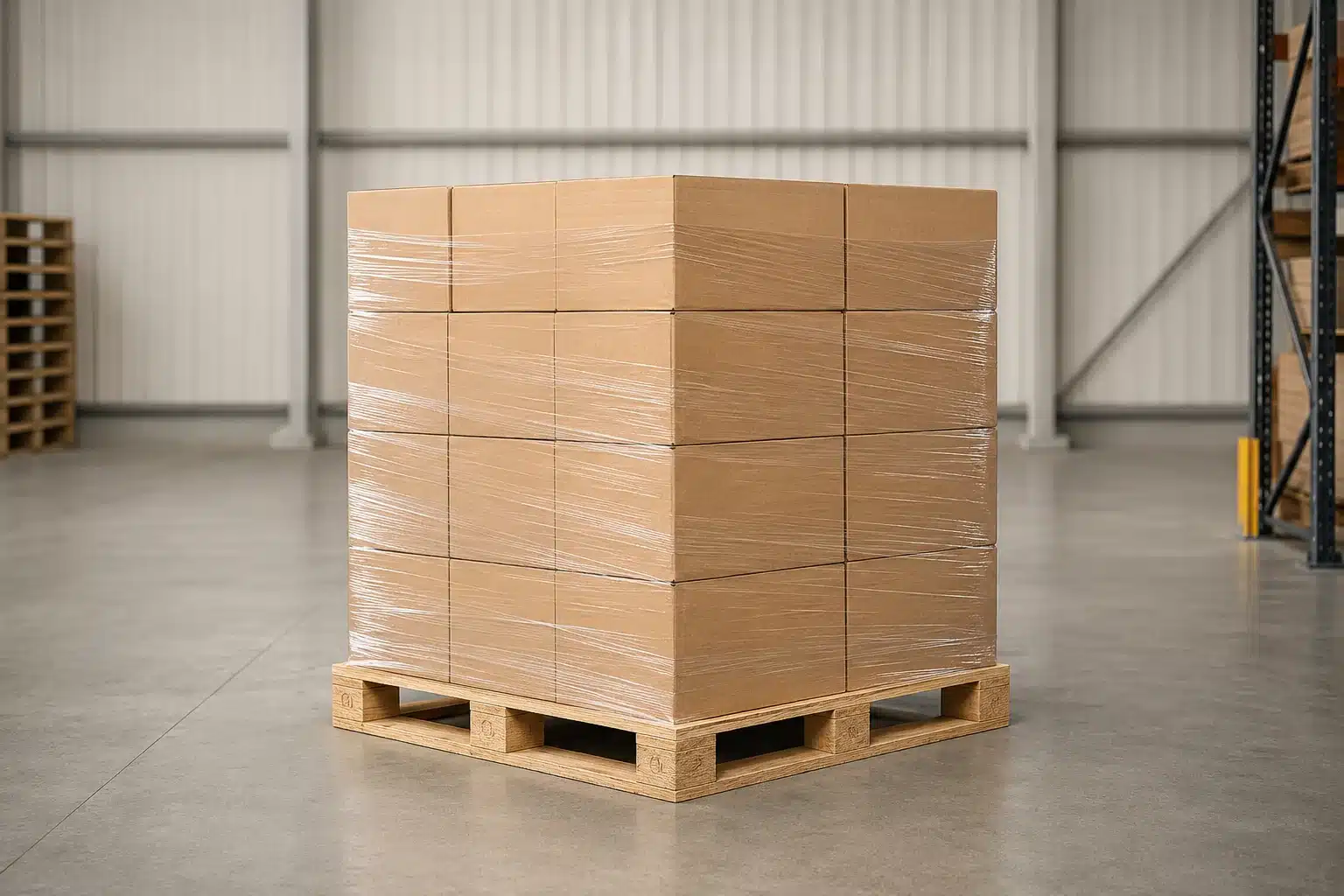
Stretch film applies tension around a prepared load, while its elastic recovery helps maintain inward containment force after wrapping. This can reduce movement between packages and help the stack behave more like one unit during lifting, staging, and transport. The benefit is especially useful when the pallet pattern is already compact, weight is distributed appropriately, and the film is anchored to the pallet or lower load as required by the validated wrap pattern.
The film works as one part of a load-stability system. The pallet, package strength, stacking pattern, friction between packages, film specification, number and placement of wraps, applied stretch, and transport hazards all affect the result. Consistent application matters because two pallets that look equally wrapped may not have the same containment.
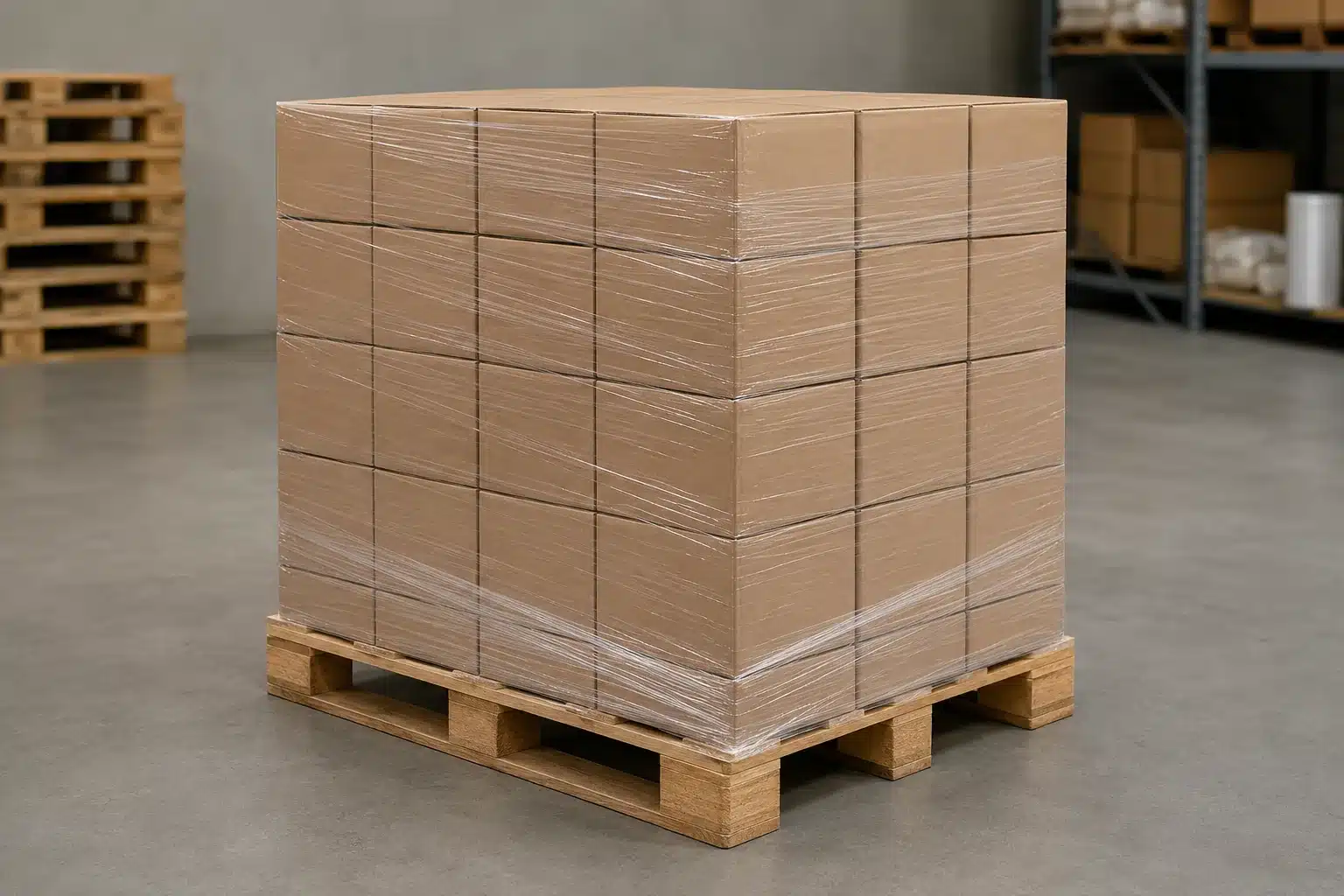
重要提示: Stretch film can reinforce a stable load, but it cannot reliably correct a damaged pallet, severe overhang, weak cartons, large voids, or an unstable stacking pattern. Those conditions should be corrected before wrapping.
2. Protection from Dust, Dirt, and Limited Moisture Exposure
A continuous overwrap creates a sacrificial outer layer around cartons, bags, or other packaged goods. During indoor storage and closed transport, this layer can reduce direct contact with warehouse dust, dirt, light scuffs, and incidental moisture such as splashes or brief exposure during handling.
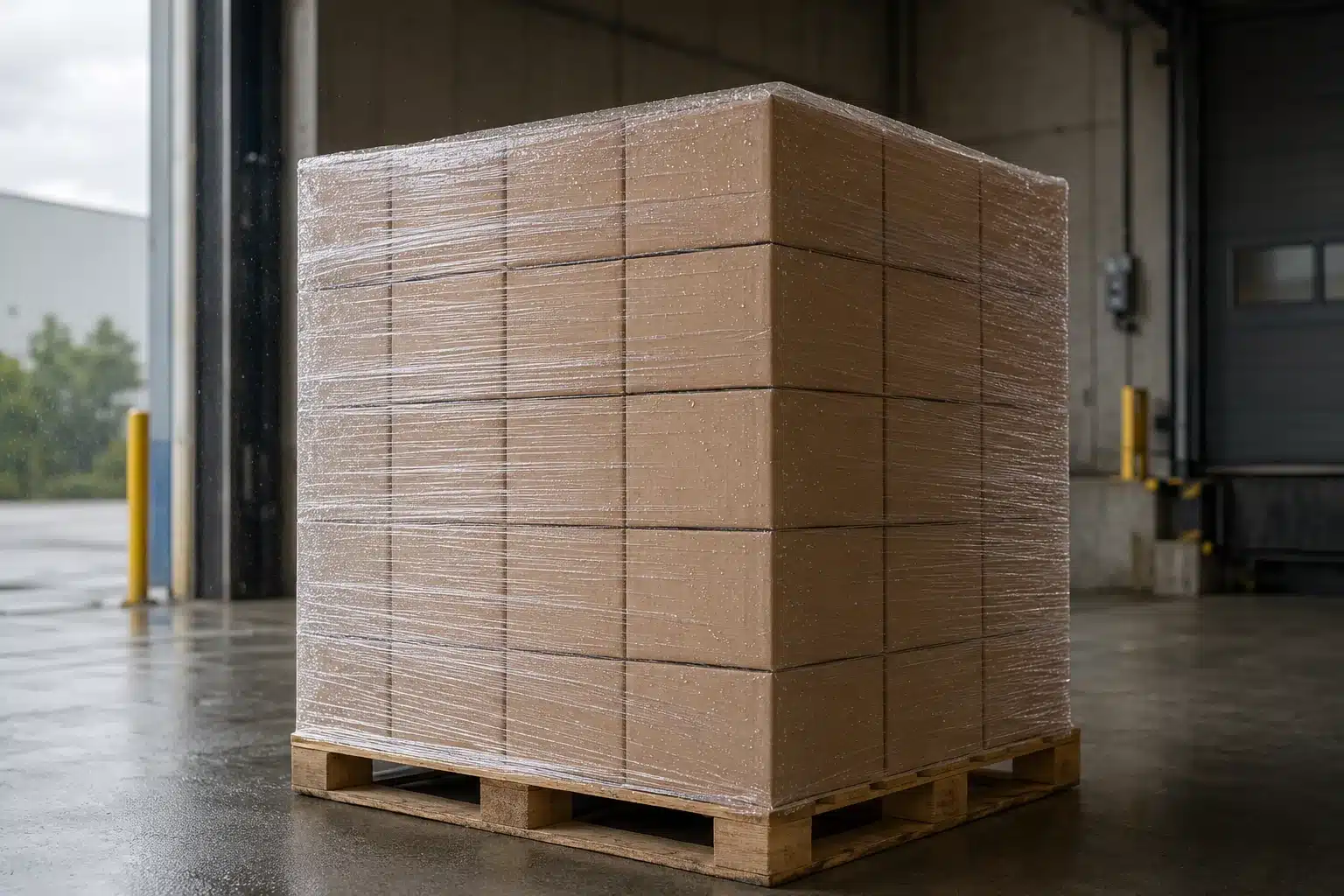
This protection has practical limits:
- It can keep loose contamination away from covered package surfaces.
- It can reduce superficial rubbing against adjacent loads and handling equipment.
- It can help retain small loose components when the wrap pattern fully contains them.
- It does not create a hermetic seal or a tested water barrier.
- It does not prove outdoor durability, UV resistance, corrosion protection, or a controlled atmosphere.
ASTM D4649-20 addresses guidance for using stretch film in indoor storage and transport environments and explicitly excludes outdoor-exposure performance from its scope. If a load will remain outdoors, face heavy rain, experience condensation, or contain moisture-sensitive products, a top sheet, hood, barrier package, or other verified protection may be needed.
3. Lower Risk of Product Movement and Handling Damage
When packages cannot slide freely, separate from the pallet, or strike one another as easily, several common damage pathways can be reduced. Less relative movement may mean fewer scuffed graphics, fewer displaced cases, and a lower chance that a package reaches the edge of the pallet during handling.
The cause-and-effect chain is straightforward:
- Uncontrolled movement: gaps, weak stacking, or insufficient containment allow packages to shift.
- Mechanical contact: shifted packages rub, collide, lean, or concentrate load on neighboring cartons.
- Potential damage: surfaces scuff, corners crush, cases deform, or individual packages fall.
- 5. 密封与热缩通道操作窗口 improve the pallet pattern and apply a film and wrap pattern that produce repeatable containment without crushing the product.
This is a risk-reduction advantage.
4. More Efficient Unit-Load Handling
Unitization lets warehouse teams handle many packages as one managed load. When the pallet remains coherent, routine operations can become simpler:
- Move a secured pallet instead of repeatedly collecting loose cartons.
- Stage loads with less risk that individual packages separate from the shipment.
- Transfer loads between warehouse zones with fewer corrective rewraps.
- Keep case counts and shipment identity together during internal movement.
- Standardize wrapping at a repeatable point in the packing workflow.
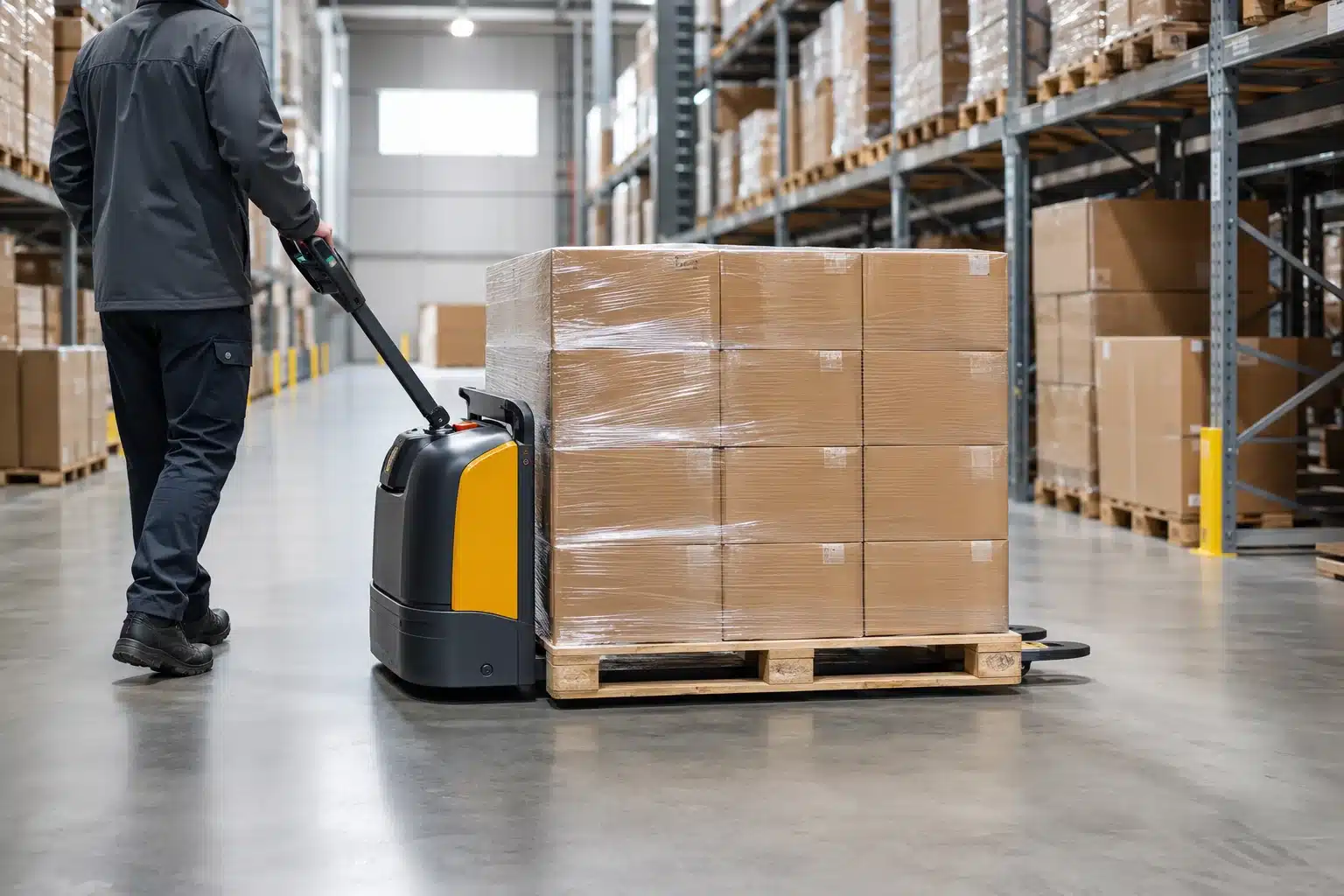
The scale of the benefit depends on throughput and application method. Hand wrapping can remain practical for lower volumes, mixed locations, or irregular loads. A properly configured semi-automatic or automatic wrapper can improve repeatability and free the operator from walking around every pallet, but equipment does not remove the need for safe load preparation or a validated film program.
Efficiency should be measured at the site rather than assumed. Useful measures include wrap time per pallet, rewrap frequency, film breaks, pallets handled per shift, and the number of loads needing restacking.
5. Potential for Lower Total Packaging Cost
Stretch film can be cost-effective because a relatively light material can unitize a large load, but roll price alone does not show the real economics. A better comparison uses the total applied cost per acceptable pallet.
| Cost element | What to measure | سبب الأهمية |
|---|---|---|
| Film | Actual film weight or length used per pallet | A lower roll price can be offset by overwrapping, breaks, or poor stretch control. |
| Labor | Preparation, wrapping, inspection, and rework time | Manual and machine methods create different time and staffing requirements. |
| Equipment | Ownership, maintenance, energy, and downtime | Automation can improve consistency but adds capital and maintenance costs. |
| Damage | Rejected, returned, crushed, scuffed, or lost products | A cheaper wrap program is not economical if load failures increase. |
| Waste handling | Collection, baling, disposal, or recovery cost | More film applied per load creates more material to manage after use. |
Cost improvement may come from using less film per successful load, reducing product loss, avoiding repeated handling, or improving process consistency. It may also fail to appear if the selected film does not suit the load, operators compensate with excess wraps, or machine settings are not controlled. Trials should therefore compare total applied cost at equal load-performance requirements.
6. Flexibility Across Load Profiles and Operations
Stretch film is available for hand and machine application, and films can be selected for different load shapes, puncture risks, cling requirements, visibility needs, and throughput levels. That range creates operational flexibility, but it does not make all stretch films interchangeable.
| Operating situation | Potential fit | What still needs verification | Main limitation |
|---|---|---|---|
| Low-volume or changing wrap locations | Hand-applied film and an appropriate dispenser | Operator technique, containment, film use, and ergonomics | Greater application variation between operators |
| Higher and repeatable pallet volume | Machine-applied film on compatible equipment | Pre-stretch, tension, wrap pattern, film breaks, and throughput | Requires setup, maintenance, and capital |
| Uniform cartons | A repeatable wrap pattern around regular faces | Corner pressure, carton compression, and pallet attachment | Weak cartons may deform under excessive force |
| Irregular or sharp-edged loads | A film selected for the actual puncture challenge, potentially with edge protection | Puncture initiation, protrusions, wrap coverage, and load stability | Film alone may not protect severe edges |
| Loads needing ventilation or concealment | A purpose-selected film format | Airflow, temperature, label visibility, and security objective | Specialized requirements can conflict with one another |
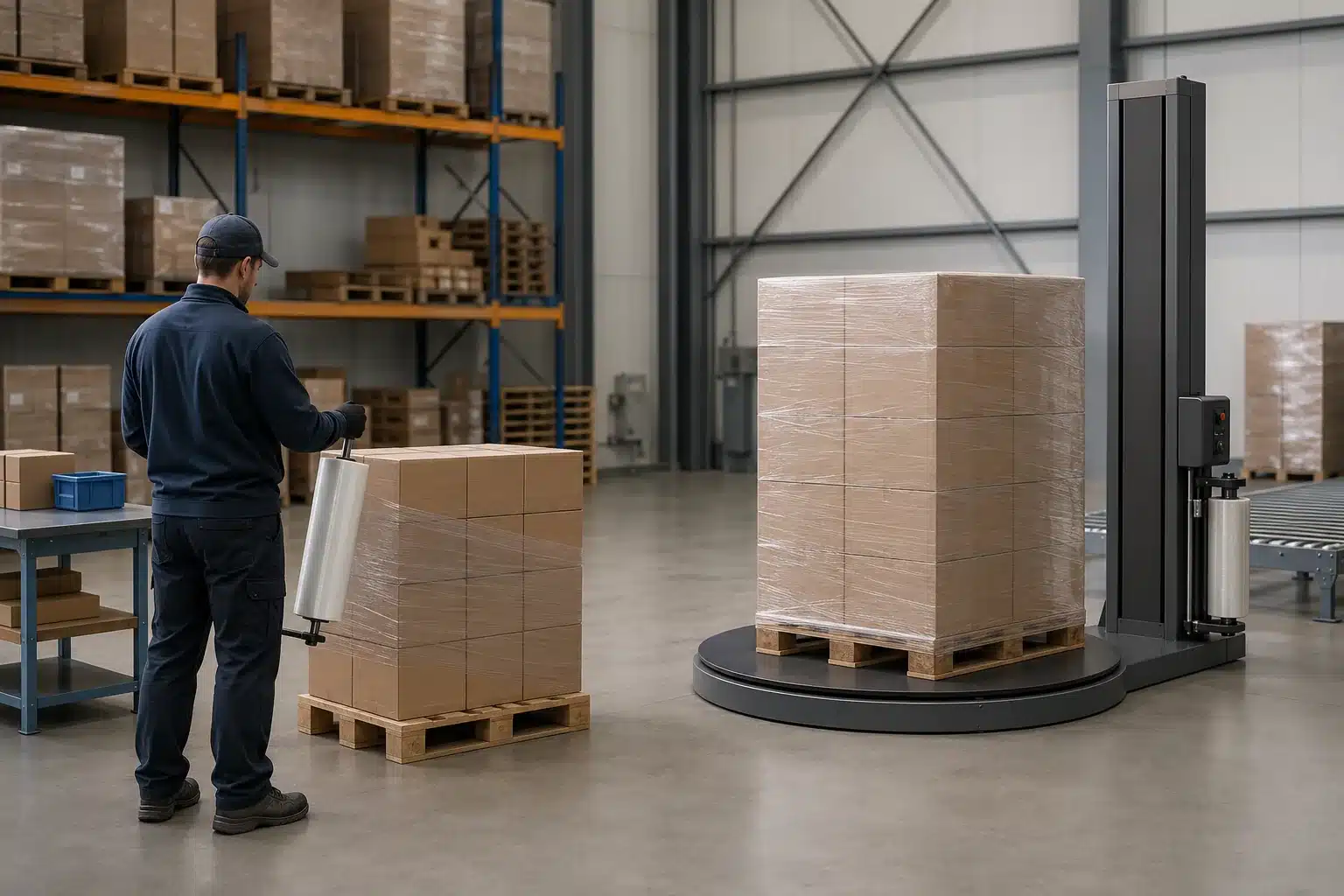
The advantage is the ability to configure a program around the operation. Buyers should describe the load, equipment, storage conditions, transport route, and acceptance criteria before choosing a formulation or thickness. A product that performs well on a uniform beverage load may not be appropriate for a light, crush-sensitive, or sharp-edged pallet.
7. Better Visibility and Load Identification
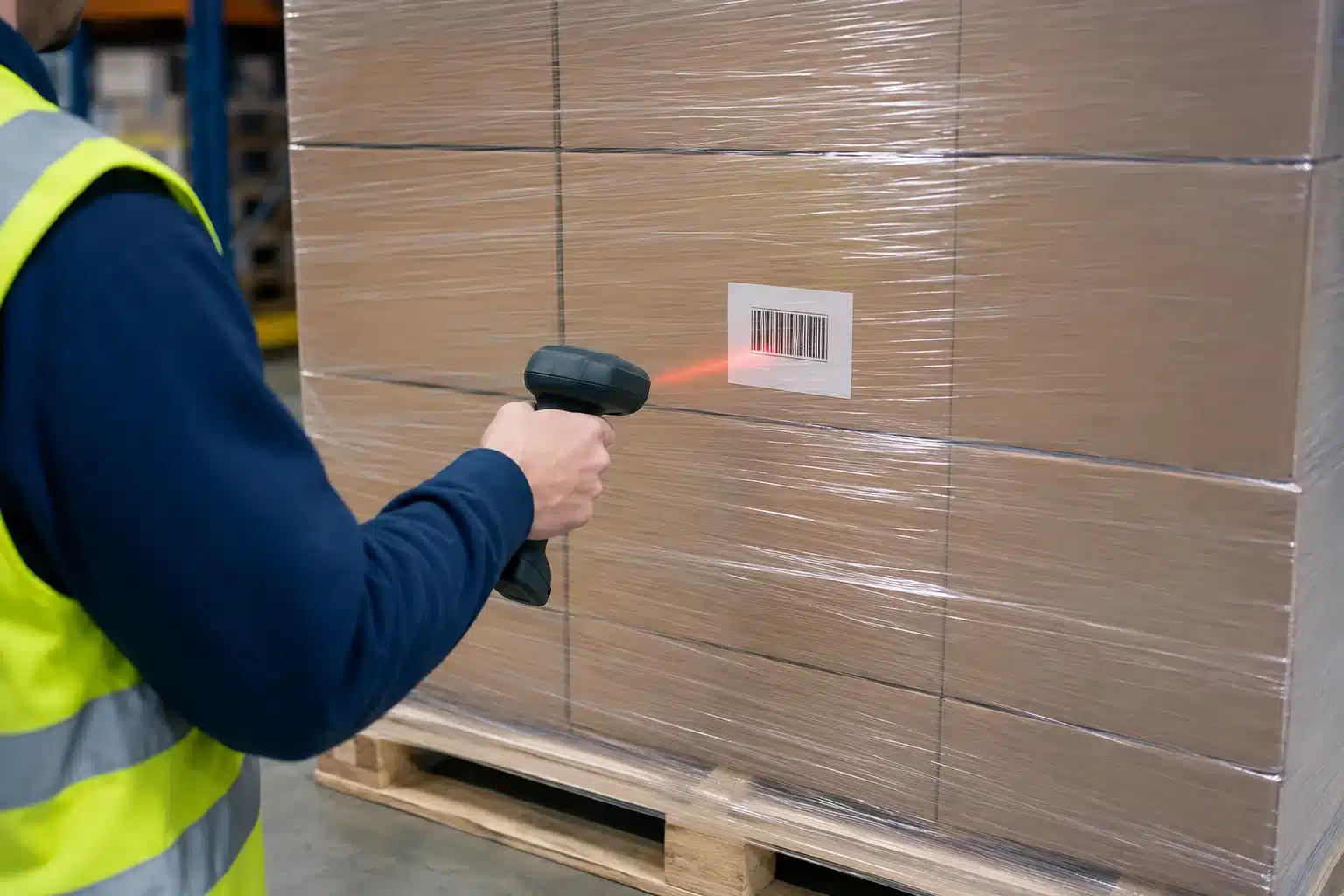
Clear stretch film can keep product labels, case markings, and pallet documentation visible while the load remains unitized. This can support receiving checks, inventory identification, and barcode scanning without removing the wrap. Colored or opaque film can serve a different purpose by supporting visual coding or reducing casual visibility of the contents.
| المتطلبات | Clear film | Colored or opaque film |
|---|---|---|
| View carton condition | Usually easier through the wrap | May be partly or fully obscured |
| Read labels or barcodes | Potentially possible if glare, overlap, and distortion are controlled | Often requires an exposed label or external pallet label |
| Color-code loads | Limited unless labels are used | Can provide a strong visual category cue |
| Conceal contents | 有限 | Can reduce casual visibility |
| Detect interference | Disturbed film may be noticeable, depending on the wrap pattern | Disturbance may be visible, but the film is not a security seal |
Actual readability must be checked on a finished pallet. Film layers, haze, glare, wrinkles, label position, scanner angle, and lighting can all affect results. Likewise, opaque film may discourage casual viewing but should not be described as tamper-proof or theft-proof.
8. Opportunities to Reduce Material Use
Stretch-film consumption can often be improved by matching the film and application to the load instead of adding layers whenever a pallet appears unstable. The goal is not the thinnest film or the fewest wraps; it is the lowest repeatable material use that still meets the agreed load-performance criteria.
A controlled reduction program follows a practical sequence:
- Record the current film, settings or hand method, film used per pallet, and load-failure rate.
- Group loads by meaningful factors such as weight, geometry, edge condition, package strength, and route.
- Trial a fit-for-purpose film and wrap pattern under controlled conditions.
- Verify containment and package condition on representative loads and distribution hazards.
- Standardize the approved setup, then monitor film use, breaks, rewraps, and damage.
ملاحظة: Material reduction is measurable; recyclability is conditional. Clean البولي إيثيلين stretch wrap from back-of-house operations may be accepted in dedicated film-recovery programs, but local collection, contamination, labels, additives, color, and the exact film design affect the real route. It should not be placed in a recycling stream unless that program accepts it.
This advantage combines operational and environmental discipline: avoid unnecessary material first, keep the load-performance requirement constant, and make any recycling claim only for the actual film and available recovery system.
When the Advantages Hold Up in Practice
The eight advantages are strongest when stretch film is treated as part of a defined load-containment system. Before approving a specification or changing a wrap program, verify:
- The load: pallet condition, dimensions, weight distribution, stacking pattern, package strength, overhang, voids, and sharp edges.
- The film: exact product identity, nominal thickness and tolerance, application method, stretch behavior, cling, puncture response, and compatibility with the wrapper.
- The process: anchoring, wrap pattern, overlap, pre-stretch or hand tension, top and bottom reinforcement, operator training, and machine maintenance.
- The environment: indoor or outdoor exposure, temperature range, storage time, humidity, contamination, and condensation risk.
- The distribution route: handling events, vibration, impact, compression, load transfers, and transport duration.
- The acceptance criteria: containment, package condition, label readability, film used per load, rewrap rate, and post-use material handling.
ASTM D4649 can support buyer-seller discussion about selection and application, while an appropriate ISTA or other distribution test can help evaluate a representative unit load. Neither reference replaces a product-specific specification, a controlled trial, or evidence from the actual packaged load. Used this way, stretch film can deliver meaningful containment, protection, handling, economic, visibility, and material-efficiency advantages without turning a conditional benefit into an unsupported promise.
 English
 Japanese
 French
 Spanish
 Korean
 Italian
 Portuguese
 Dutch
Dutch Arabic
 Russian
 German